Because Every Tooth Deserves Care.

Post-Extraction Swelling & Bruising - Is It Dry Socket or Normal Healing?
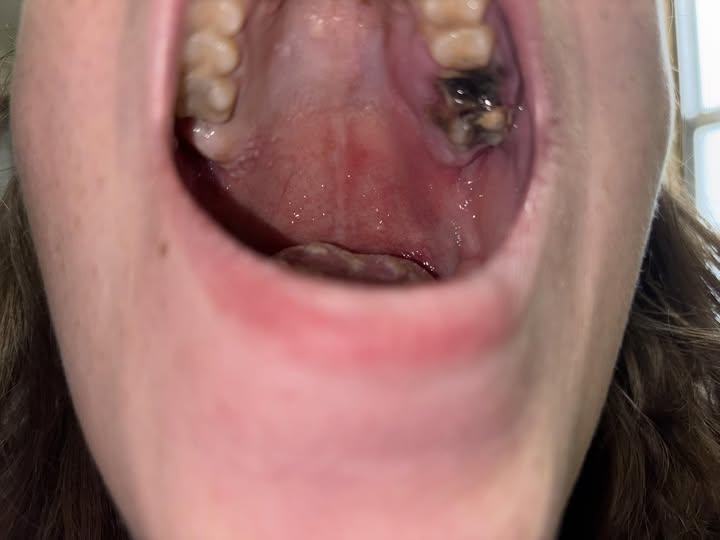
Image:
Severity:
Teeth Problems:
Quick summary of the situation you described
-
Tooth was extracted 2 days ago.
-
Swelling started before extraction and has not gone down since.
-
Area is now bruised. Extraction was difficult/traumatic.
-
You did not take antibiotics (previous C. difficile).
-
You cannot take typical OTC pain meds (alpha-gal + stomach issues).
-
You avoided smoking, sucking straws, and brushing the site.
Possible diagnoses (differential)
-
Normal post-op inflammation/hematoma from a traumatic extraction
-
A difficult extraction often causes local soft-tissue bruising and swelling that can persist for several days. Bruising is consistent with tissue/soft-tissue trauma. Pain usually decreases gradually over 2–7 days.
-
-
Alveolar osteitis (dry socket)
-
Typical timing: 2–4 days after extraction. Classic signs: severe, throbbing pain radiating to ear/temple, an empty-looking socket with exposed bone, foul taste/odor, and lack of normal improvement. Dry sockets usually present with increased pain (not decreased) starting ~48–72 hours post-op. Swelling is less typical or mild.
-
-
Post-extraction infection / abscess
-
Signs include increasing swelling, redness, fever, spreading facial swelling, worsening pain, pus/drainage, or systemic symptoms. Infection risk is greater after a traumatic extraction but antibiotics are not always indicated unless clinical infection is present.
-
-
Hematoma
-
Localized collection of blood can cause persistent swelling and bruising; pain may be present but often less severe than dry socket.
-
Which is most likely here?
-
Because swelling and bruising were present before and persisted, and extraction was difficult, post-op inflammation/hematoma from trauma is a strong possibility.
-
If your pain is worse now than immediately after extraction (especially severe, radiating pain 48–72 hours after), dry socket becomes more likely.
-
Infection is possible if swelling is increasing, you have fever, spreading redness, or purulent drainage.
I cannot give a definitive diagnosis without seeing the socket (photo/clinical exam), but your history raises concern for either traumatic healing (hematoma/bruising) or early dry socket — so you should have the socket rechecked soon.
What to check (examination checklist for your dentist or for photos you can send them)
-
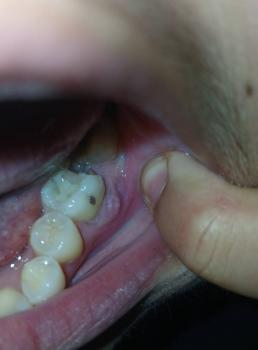
Is there an empty-looking socket with exposed pale bone?
-
Is there foul odor or pus/greyish discharge?
-
Is the pain worsening or radiating toward the ear/temple?
-
Is swelling increasing day-to-day or spreading to neck/eye area?
-
Any fever or difficulty breathing/swallowing?
If possible, take a close, well-lit photo (without probing) and send to your dentist.
Immediate home care you can safely try (since many meds are not an option)
Do these unless your dentist instructs otherwise:
-
Warm saline rinses (starting 24 hours after extraction):
-
Mix 1/2–1 tsp salt in 8 oz (240 mL) warm water; gently rinse 4–6×/day and after meals. This helps remove debris and reduces bacterial load.
-
-
Cold then warm compresses:
-
First 24–48 hours: apply cold pack to the outside of the cheek 10–20 minutes ON, 10 minutes OFF to reduce swelling.
-
After 48 hours: switch to warm compresses to encourage drainage/healing.
-
-
Keep head elevated while resting to reduce swelling.
-
Soft diet and avoid chewing on the side of the extraction.
-
Avoid vigorous rinsing, spitting, or puckering, but gentle saline is okay.
-
Topical measures: some people get temporary relief from a cotton pellet soaked in clove oil (eugenol) applied briefly to the socket — but this can irritate soft tissues and may contain allergens. Because you have alpha-gal and medication sensitivities, check with your dentist or physician before topical agents.
-
Oral hygiene: continue gentle brushing of other teeth; avoid direct brushing of the socket until advised.
-
If you have a medicated dressing at the clinic (e.g., Alvogyl) — return to your dentist to have it placed/changed. These dressings relieve pain quickly and protect the socket while it heals.
Important: Because you cannot take common oral analgesics, discuss alternatives promptly with your dentist/physician (see below).
Pain control alternatives & medication notes (you must check safety with your MD/dentist)
-
Acetaminophen (paracetamol) is often used if tolerated. You didn’t explicitly say you can’t take acetaminophen — if you can, it may help. Confirm with your physician.
-
If acetaminophen is not tolerated, a dentist may use local measures (medicated packing, local anesthetic gel) or, rarely, prescribe an alternative analgesic appropriate to your allergies/medical history. Don’t take antibiotics or analgesics without professional guidance given your CDI and alpha-gal issues.
-
Because of your past C. difficile, antibiotics should only be used if there is clinical infection — not as routine prophylaxis.
Timeline — what to expect
-
0–48 hours: peak swelling/pain from extraction and trauma; bruising visible.
-
48–72 hours: pain should start to improve. If pain worsens at 48–72 hours, think dry socket.
-
3–7 days: most traumatic swelling and pain decrease substantially. Socket begins granulation tissue formation.
-
7–14 days: most sockets show clear healing; residual discomfort usually minimal.
-
If symptoms persist or worsen at 10–14 days, consider complications: persistent dry socket, secondary infection, retained root fragment, or (rare) osteomyelitis — these require definitive assessment.
So if by day 7 you haven’t improved or if pain is worsening now (day 2 → day 3), contact your dentist urgently.
If it takes 14 days — what could scale up (possible complications)
-
Persistent alveolar osteitis (dry socket) causing prolonged severe pain and delayed healing.
-
Secondary infection / abscess — may require drainage and antibiotics (but antibiotics must be carefully chosen because of CDI history).
-
Retained root or sequestrum (dead bone) — may cause ongoing pain and require surgical removal.
-
Osteomyelitis (rare) — serious infection of the jaw bone; signs: severe pain, spreading swelling, fever, numbness; needs urgent care.
-
Delayed soft-tissue healing in smokers or with systemic problems (diabetes, immunosuppression).
If any spreading swelling, fever, difficulty breathing/swallowing, or rapidly worsening pain occurs at any time → seek emergency care immediately.
Practical immediate next steps (actionable)
-
Call your dentist today and describe: extraction was difficult, swelling present before procedure, now bruised and pain not improving 2 days after. Ask for urgent recheck or advice.
-
If you cannot see your dentist promptly, visit an urgent dental clinic or ER if you have worsening pain, fever, spreading swelling, or trouble breathing/swallowing.
-
Ask your dentist about placing a medicated dressing (pain relief and protection) in the socket — often provides quick relief for dry socket and is standard management.
-
Discuss pain medication alternatives with your dentist and your physician (safe choices given alpha-gal and prior C. diff).
-
Use the directory you provided to find a nearby clinic: https://cebudentalimplants.com/map-dental-clinic
Red flags — go to ER or call dentist immediately if:
-
Fever > 38°C (100.4°F) or rigors.
-
Rapidly spreading facial/neck swelling, difficulty breathing, or swallowing.
-
Severe, uncontrolled pain despite home measures.
-
Bleeding that won’t stop after gentle pressure for 20–30 min.
-
Numbness/tingling spreading beyond the local area.
Examination & treatment your dentist may perform
-
Visual inspection and gentle irrigation of the socket.
-
Remove debris and place medicated dressing/paste (e.g., eugenol-containing dressing) for pain control.
-
If infection is present, they may take radiographs and consider appropriate antibiotic therapy (balancing CDI risk) — sometimes topical care + drainage suffices.
-
If retained root fragment or necrotic bone suspected, surgical management may be needed.
Related Clinical Cases
Patients with lower front gum inflammation may also experience tartar buildup, periodontal disease, gum abscesses, or tooth decay. Explore these related clinical case studies.