Missing Teeth? Find Your Smile Again.

Severe Bone Infection Around Tooth Roots X-Ray Case
Image:
Severity:
Teeth Problems:
Severe Bone Infection Around Tooth Roots — X-Ray Findings, Warning Signs, and Treatment
What Does a Severe Infection Around Tooth Roots Mean?
A severe infection around tooth roots may begin when bacteria enter the inner pulp of a tooth through deep decay, a crack, trauma, or an existing dental restoration that allows bacteria to reach the pulp. When the pulp becomes irreversibly damaged or dies, infection can develop around the root tip and spread into the surrounding tissues.
In more advanced cases, the infection may affect the alveolar bone, which supports the teeth. A serious infection involving the jawbone itself is called osteomyelitis of the jaw. However, a dental abscess near a root does not automatically mean that osteomyelitis is present.
The distinction matters because treatment depends on whether the infection is confined to the root area, has spread into the surrounding soft tissues, or has involved the bone more extensively.
How Can a Dental X-Ray Reveal Infection Around the Roots?
Dental X-rays help dentists examine the structures that cannot be seen during a routine visual examination. Depending on the stage and extent of the disease, imaging may show:
-
A dark area near the root tip: This may indicate loss of normal bone density associated with inflammation or infection around the root.
-
Changes in the bone surrounding several teeth: These may be associated with periodontal disease, spreading infection, or other bone conditions.
-
Loss of supporting bone: This can occur in advanced periodontal disease or other destructive processes and requires clinical interpretation.
-
Changes in the normal outline of the root or surrounding bone: These may suggest a chronic inflammatory process or another dental or bone abnormality.
An important limitation is that a dark area on an X-ray is not proof of a severe bone infection. Some lesions develop slowly, and early infection may not be clearly visible on conventional dental radiographs. Other conditions can produce similar appearances.
The dentist must interpret the image together with symptoms, the condition of the tooth, gum examination, pulp vitality testing when appropriate, and other diagnostic findings. If a deep infection is suspected, additional imaging such as a CT scan may be considered to assess its extent.
Warning Signs That Require Prompt Dental Assessment
Symptoms vary depending on the source, location, and severity of the infection. Possible warning signs include:
-
Persistent or throbbing toothache
-
Pain when biting or pressure on the affected tooth
-
Swelling or redness of the gums
-
Pus drainage or a persistent unpleasant taste
-
Facial or jaw swelling
-
A tooth that feels loose or tender
-
Fever, fatigue, or swollen lymph nodes
-
Persistent localized jawbone pain or tenderness
A dental abscess can occasionally cause relatively little pain, so the absence of severe toothache does not reliably exclude infection.
Seek urgent dental care if you suspect a dental abscess or notice increasing swelling. If you develop difficulty breathing or swallowing, swelling beneath the tongue or in the neck, rapidly spreading facial swelling, or severe difficulty opening your mouth, go to an emergency department immediately. Swelling around the eye or changes in vision also require emergency assessment.
How Is a Severe Tooth-Root or Jawbone Infection Treated?
Treatment is directed at eliminating the source of infection, controlling its spread, and preserving healthy tissue where possible.
1. Root canal treatment
If the tooth can be predictably restored, root canal treatment may remove infected or dead pulp tissue, clean the root canal system, and seal it. A suitable permanent restoration, sometimes including a crown, may then be required.
2. Drainage of an abscess
If pus has accumulated, a dentist may need to establish drainage through the tooth or by making an appropriate incision. Drainage helps control the collection of pus, but the underlying cause must also be treated.
3. Tooth extraction
If the tooth is too damaged to restore, or its prognosis is poor, extraction may be necessary to remove the source of infection. The dentist will determine whether the surrounding infected tissue also requires treatment.
4. Antibiotics when indicated
Antibiotics may be appropriate when there is spreading infection, systemic illness, or another clinical indication. They are not a substitute for necessary root canal treatment, drainage, or extraction. A localized dental abscess often requires definitive dental treatment rather than antibiotics alone.
Patients should not self-prescribe antibiotics, use leftover medication, or change a prescribed course without consulting the treating clinician.
5. Specialist treatment for jaw osteomyelitis
When true jawbone infection is suspected or confirmed, referral to an oral and maxillofacial surgeon or another appropriate specialist may be necessary. Treatment can involve eliminating the dental source, obtaining samples for microbiological testing when indicated, removing nonviable tissue, and administering an appropriately selected antibiotic regimen. Severe cases may require hospital treatment and intravenous antibiotics.
The treatment plan depends on the cause, extent of bone involvement, the patient's overall health, and the response to initial treatment.
Can the Jawbone Recover After a Severe Dental Infection?
Recovery is possible, but the outcome depends on the extent of the infection, whether the source is eliminated, and how much viable bone remains.
After successful treatment of a root-related infection, the surrounding bone may gradually repair and become more visible as healing progresses on follow-up X-rays. This process can take months, and radiographic healing does not necessarily occur at the same rate as symptom improvement.
Established osteomyelitis may require longer treatment and specialist monitoring. Extensive destruction of supporting bone may not fully reverse, and a tooth that has lost substantial support may have a poor prognosis.
Follow-up appointments are important even if pain and swelling disappear. A reduction in symptoms alone does not prove that the infection has completely resolved.
What Should Patients Do While Waiting for Treatment?
Until a dentist can assess the tooth:
-
Maintain gentle oral hygiene without injuring the swollen area.
-
Eat soft foods and avoid chewing on the affected side.
-
Use an over-the-counter pain reliever only if it is safe for you and according to its label or a clinician's advice.
-
Do not squeeze, puncture, or attempt to drain a swelling yourself.
-
Do not apply aspirin directly to the gum or use caustic substances on the tissue.
-
Do not delay definitive dental care because pain temporarily improves.
Home care can provide temporary comfort, but it cannot reliably eliminate a deep tooth-root infection or established jawbone infection.
Frequently Asked Questions
1. Does a dark area around a tooth root on an X-ray mean the jawbone is infected?
Not necessarily. A dark area may represent inflammation-related bone loss around a tooth root, but other conditions can look similar. A dentist must evaluate the tooth, symptoms, examination findings, and imaging before establishing a diagnosis.
2. Can an infected tooth destroy the surrounding jawbone?
Yes. An untreated infection originating in a tooth can damage the bone around the root. In some cases, infection can extend into the jawbone and cause osteomyelitis. The degree of damage varies, and not every root infection progresses to bone infection.
3. What is the difference between a dental abscess and jaw osteomyelitis?
A dental abscess is a localized collection of pus associated with a tooth or surrounding tissues. Jaw osteomyelitis is an infection and inflammatory process involving the bone itself. They can occur together, but they are not interchangeable diagnoses.
4. Can antibiotics alone cure a severe tooth-root infection?
Often, no. Antibiotics may help control spreading infection or systemic symptoms, but they do not reliably remove dead pulp tissue or eliminate the underlying source. Root canal treatment, drainage, or extraction may be needed. Confirmed osteomyelitis requires an individualized treatment plan.
5. Is jawbone infection always painful?
No. Pain and tenderness are common, but symptoms vary. Some dental infections produce intermittent discomfort or relatively few symptoms. Persistent swelling, drainage, unexplained bone changes, or a tooth that becomes loose should be assessed even if pain is mild.
6. How long does it take for bone around an infected tooth to heal?
Healing time depends on the size of the lesion, the treatment performed, and the patient's health. Clinical improvement may occur before complete bone repair is visible on X-rays. Follow-up imaging may be needed over several months, as determined by the dentist.
7. When is a CT scan needed for a suspected jawbone infection?
A conventional dental X-ray may be sufficient for many localized root infections. CT imaging may be considered when the infection appears extensive, deep facial or neck spaces may be involved, the diagnosis remains uncertain, or a specialist needs to assess the extent of disease. The appropriate scan depends on the clinical question.
8. Can a tooth be saved if the infection has reached the surrounding bone?
Sometimes. A restorable tooth with adequate remaining support may be treated with root canal therapy and appropriate restoration. If the tooth is fractured, severely damaged, or has insufficient supporting bone, extraction may be recommended. Bone involvement alone does not automatically mean that extraction is necessary.
9. What happens if a dental bone infection is ignored?
The infection may persist, damage supporting tissues, or spread into nearby facial and neck spaces. In severe cases, spreading infection can compromise the airway or cause systemic illness. Suspected infection should therefore be assessed promptly rather than monitored at home indefinitely.
10. When should a patient go to the hospital instead of waiting for a dental appointment?
Go to an emergency department immediately if you have difficulty breathing or swallowing, rapidly progressing facial or neck swelling, swelling under the tongue, significant difficulty opening your mouth, or swelling around the eye with vision changes. Fever with worsening swelling or feeling severely unwell also warrants urgent medical assessment.
Expert Clinical Takeaway
A severe infection around tooth roots should never be diagnosed from an X-ray alone. The most important steps are to identify the source, determine whether the infection is localized or spreading, and assess whether the jawbone itself is involved.
Early definitive treatment can prevent further damage and may allow the affected tooth to be preserved. When osteomyelitis or deep-space infection is suspected, timely specialist assessment is essential.
Medical information notice: This educational content does not replace a dental examination or individualized diagnosis. Treatment decisions should be made by a qualified dental or medical professional based on the patient's clinical findings and imaging.
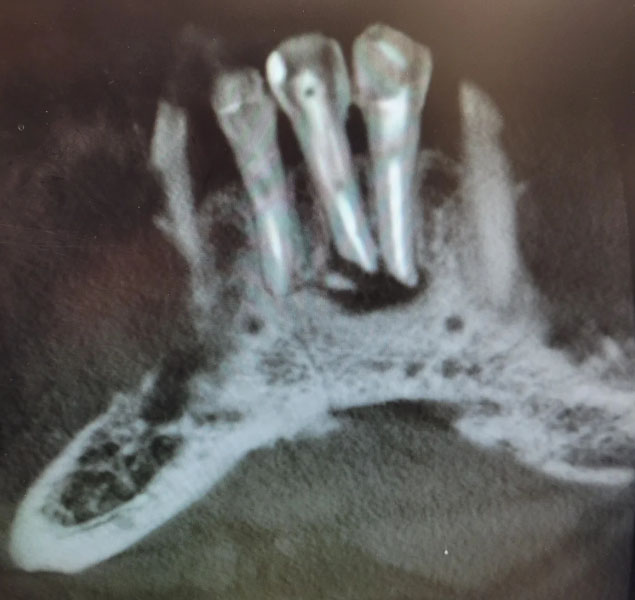
Severe Bone Infection Around Tooth Roots X-Ray Case Analysis
What Is Seen in This Case
The X-ray image shows severe bone loss and dark radiolucent areas around the roots of multiple teeth. The surrounding jawbone appears irregular, hollowed, and damaged, which strongly indicates advanced infection spreading through the bone.
The tooth roots are clearly visible with loss of normal bone support, a serious sign that the infection is no longer limited to the gums.
Most Likely Diagnosis
Based on X-ray findings, the most likely conditions include:
-
Advanced dental abscess
-
Chronic periapical infection
-
Jawbone infection (osteomyelitis)
-
Severe periodontal disease with bone loss
-
Failed or untreated root canal infection
This is an advanced-stage dental infection.
What Causes This Level of Bone Infection
Common causes include:
-
Long-standing untreated tooth abscess
-
Failed root canal treatment
-
Severe gum disease left untreated
-
Repeated infections in the same area
-
Delayed dental care due to pain tolerance or cost
Once bacteria reach the bone, the condition becomes harder to treat.
Is This a Serious Problem
Yes — this is critical.
If untreated, it may scale up into:
-
Progressive jawbone destruction
-
Tooth loss
-
Chronic facial pain
-
Spread of infection to sinuses or bloodstream
-
Systemic infection requiring hospitalization
Bone infections do not heal on their own.
Recommended Treatment Process
Immediate Assessment (Days 1–2)
-
Urgent dental or oral surgery consultation
-
Full dental X-ray or CBCT scan
-
Infection severity assessment
Active Treatment Phase (Days 3–10)
Treatment may include:
-
Surgical drainage of infection
-
Extraction of severely infected teeth
-
Deep bone cleaning (curettage)
-
Strong antibiotic therapy
-
Possible referral to oral surgeon
Healing and Stabilization Phase (Days 11–14+)
-
Infection control
-
Pain reduction
-
Bone healing begins slowly
-
Planning for future tooth replacement
Bone healing may take weeks to months, depending on severity.
Expected Healing Time
-
Pain and swelling reduction: 3–7 days
-
Infection control: 1–2 weeks
-
Bone regeneration: several months
Early treatment improves outcomes significantly.
What Happens If Treatment Is Delayed
Delaying care can lead to:
-
Irreversible bone loss
-
Loss of multiple teeth
-
Facial swelling and deformity
-
Spread of infection to vital organs
-
Life-threatening complications
This condition should be treated as urgent.
What Patients Should Do Immediately
-
Seek dental or hospital care urgently
-
Do not rely on painkillers alone
-
Avoid smoking or alcohol
-
Maintain gentle oral hygiene
Home remedies cannot cure bone infections.
Professional Comment
This X-ray shows a severe dental abscess with jawbone involvement, a critical condition requiring urgent professional treatment. Early intervention can stop the infection and preserve remaining bone structure.
Visit a Dental Clinic Near You
For urgent bone infection and abscess care, visit:
https://cebudentalimplants.com/map-dental-clinic
Related Clinical Cases
Patients with lower front gum inflammation may also experience tartar buildup, periodontal disease, gum abscesses, or tooth decay. Explore these related clinical case studies.