Your Smile, Our Passion.

Delta Dental Implant Coverage Guide (2026 Expert Guide)
Language :
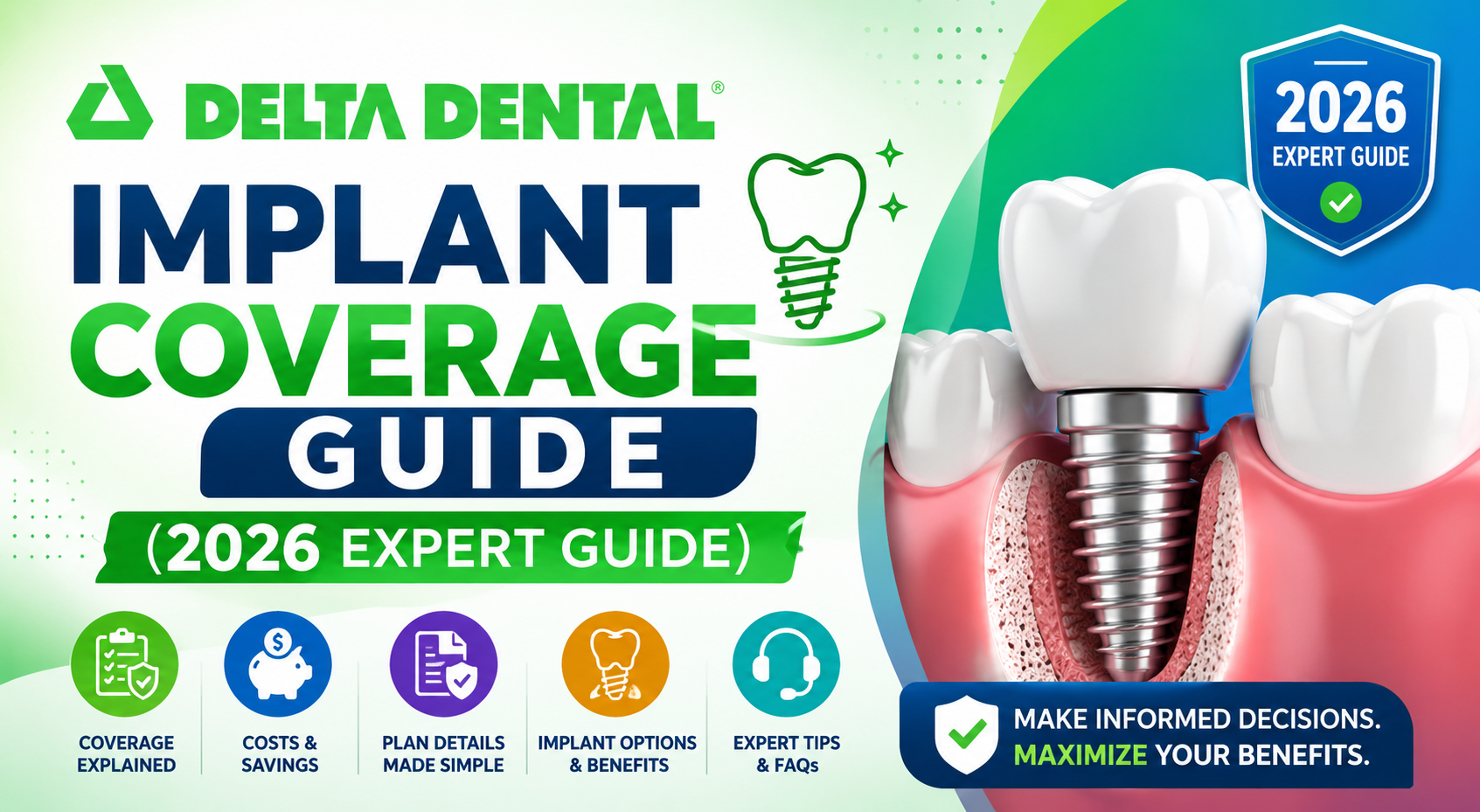
Dental implants have become one of the most popular and reliable solutions for replacing missing teeth in the United States. Patients today want treatment that looks natural, feels stable, and lasts for many years. Because of this, implants are increasingly preferred over traditional bridges and removable dentures.
One of the first questions many patients ask during a consultation is:
“Does Delta Dental cover dental implants?”
The answer is:
Sometimes — but coverage depends entirely on your specific Delta Dental plan.
As a dental professional in the United States, I can confidently say that Delta Dental has expanded implant coverage significantly over the years. However, many patients still misunderstand:
- What is actually covered
- How annual maximums work
- Why some procedures are denied with long process
- How waiting periods affect benefits
- Why two Delta Dental plans may offer very different coverage
This guide explains:
- How Delta Dental implant coverage works
- What procedures may be covered
- Common exclusions and limitations
- PPO vs HMO differences
- How patients maximize benefits
- Smart strategies to reduce out-of-pocket costs
If you are considering dental implants and currently have Delta Dental insurance — or are thinking about enrolling — this guide will help you better understand your options from the perspective of a U.S. dental expert.
What Are Dental Implants?
A dental implant is an artificial tooth root, usually made from titanium, placed into the jawbone to replace a missing tooth.
A complete implant restoration typically includes:
- Implant post
- Abutment
- Custom dental crown
Implants may also support:
- Bridges
- Implant-supported dentures
- Full-mouth restorations
Unlike removable dentures, implants provide:
- Greater stability
- Better chewing ability
- Improved comfort
- Jawbone preservation
Why Dental Implants Are Expensive
Implant treatment involves multiple stages and advanced technology.
The total cost often includes:
- Consultation
- Digital X-rays
- 3D CBCT scans
- Tooth extraction
- Bone grafting
- Surgical implant placement
- Healing phase
- Crown fabrication
Average U.S. implant costs:
| Procedure | Average Cost |
|---|---|
| Implant surgery | $1,500–$3,500 |
| Implant crown | $1,000–$3,000 |
| Bone graft | $400–$3,000 |
| Full implant case | $3,000–$7,000+ |
Because of these costs, insurance coverage can significantly reduce financial burden.
Does Delta Dental Cover Implants?
Yes — many Delta Dental plans now include implant benefits.
However, not all plans are identical.
Coverage depends on:
- PPO vs HMO plan
- Employer-sponsored plan
- Individual marketplace plan
- State-specific policies
- Annual benefit levels
- Waiting periods
Some Delta Dental plans:
- Cover implants partially
- Cover implant crowns only
- Cover medically necessary implantse
- Exclude implants entirely
Delta Dental PPO vs DeltaCare USA (HMO)
This is one of the most important differences patients should understand.
Delta Dental PPO Plans
PPO plans generally provide:
- Better implant coverage
- More provider flexibility
- Partial out-of-network reimbursement
- Access to specialists
These plans are usually preferred for major restorative procedures.
DeltaCare USA (HMO)
DeltaCare USA plans often feature:
- Lower monthly premiums
- Fixed copays
- Restricted provider networks
However, implant coverage may be:
- Limited
or - Not included
Patients considering implants usually benefit more from PPO coverage.
What Implant Procedures Delta Dental May Cover
Delta Dental often separates implant treatment into different categories.
Coverage may apply differently to each phase.
1. Consultation and Diagnostic Imaging
Many Delta Dental plans cover:
- Oral exams
- Panoramic X-rays
- Diagnostic imaging
Coverage may range:
80%–100%
2. Tooth Extractions
If a damaged tooth must be removed before implant placement, Delta Dental often provides partial coverage.
Coverage commonly ranges:
70%–80%
depending on the plan.
3. Bone Grafting
Bone grafting coverage varies widely.
Some plans:
- Partially cover medically necessary grafts
Others classify grafting as:
- Preparatory
- Non-covered
- Cosmetic-adjacent
This is one of the most commonly misunderstood implant-related procedures.
4. Implant Surgery
Many PPO plans now provide:
30%–50% coverage
for implant placement surgery.
However, annual maximums often limit reimbursement.
5. Implant Crown and Abutment
The visible crown portion may receive separate restorative coverage.
Typical reimbursement ranges:
40%–60%
depending on plan details.
Understanding Annual Maximums
One of the biggest frustrations patients experience is the annual maximum limit.
Most Delta Dental plans include yearly caps such as:
- $1,000
- $1,500
- $2,000
- $3,000
Unfortunately, implant treatment often exceeds these amounts quickly.
Example:
| Procedure | Cost |
|---|---|
| Implant surgery | $2,500 |
| Crown | $1,800 |
| Bone graft | $1,200 |
Even with partial coverage, yearly limits reduce total reimbursement.
Waiting Periods for Implant Coverage
Many Delta Dental plans require waiting periods before major services activate.
Typical waiting periods:
- 6 months
- 12 months
- Sometimes 24 months
Patients who enroll after already needing implants may not receive immediate benefits.
Missing Tooth Clauses
Some plans deny implant coverage if:
- The tooth was missing before enrollment
This is called a:
Missing Tooth Clause
Patients should always ask:
“Does my policy include a missing tooth exclusion?”
before starting treatment.
Why Implant Claims Are Sometimes Denied
Patients often assume:
“My insurance covers implants.”
But claims may still be denied for several reasons:
- Waiting period not completed
- Annual maximum reached
- Missing tooth clause
- Out-of-network provider
- Lack of pre-authorization
- Bone graft exclusion
- Frequency limitations
This is why benefit verification is extremely important.
Pre-Authorization and Predetermination
Most implant offices submit:
Predetermination requests
to Delta Dental before treatment begins.
This process estimates:
- Coverage amounts
- Patient responsibility
- Covered procedures
While not a guarantee, it helps reduce financial surprises.
In-Network vs Out-of-Network Providers
Delta Dental PPO plans often reimburse more when using:
In-network dentists
Advantages may include:
- Lower negotiated fees
- Reduced out-of-pocket costs
- Simpler claims processing
However, some patients prefer experienced implant specialists who may be outside the network.
Can Medical Insurance Help Too?
Sometimes yes.
If implants are connected to:
- Facial trauma
- Cancer surgery
- Severe infections
- Jaw reconstruction
medical insurance may contribute to portions of treatment.
Coordination between:
- Dental insurance
and - Medical insurance
can sometimes reduce costs significantly.
How Patients Maximize Delta Dental Implant Benefits
Experienced dental offices often use smart scheduling strategies.
1. Split Treatment Across Calendar Years
Example:
- Implant surgery in December
- Crown placement in January
This may allow patients to use:
Two annual maximums
instead of one.
2. Use PPO Specialists
PPO plans typically offer stronger implant reimbursement than HMO-style plans.
3. Combine Insurance With Financing
Patients may combine benefits with:
- CareCredit
- Sunbit
- HSA/FSA funds
- In-house financing
to reduce upfront burden.
Delta Dental and Full-Mouth Implants
Full-mouth implant cases are more complex financially.
Examples include:
- All-on-4
- Implant-supported dentures
- Full arch reconstruction
Insurance may contribute partially, but most patients still have significant out-of-pocket costs because:
- Treatment exceeds annual maximums
- Surgical phases are extensive
- Additional grafting may be required
Are Implants Better Than Bridges?
From a long-term dental perspective, implants often provide major advantages.
Dental Implant Advantages
- Preserves jawbone
- Does not damage neighboring teeth
- Feels natural
- Long lifespan
- Better chewing function
Bridge Limitations
- Requires shaving adjacent teeth
- Bone loss continues
- Shorter lifespan in some cases
This is why more Americans are choosing implants despite higher upfront costs.
Does Delta Dental Cover Implant Dentures?
Some PPO plans provide partial coverage for:
- Implant-supported overdentures
- Implant-retained dentures
Coverage varies greatly by policy.
Patients should request detailed benefit verification before treatment planning.
Financing Options When Coverage Is Limited
Even with Delta Dental coverage, patients frequently finance portions of care.
Common options include:
- CareCredit
- Sunbit
- In-house financing
- Monthly payment plans
- HSA/FSA accounts
Some offices also offer:
- Cash discounts
- Membership plans
- Bundled implant pricing
Expert Advice From a U.S. Dental Perspective
As dental professionals, we regularly see patients misunderstand how implant insurance works.
Many people believe:
“Insurance will pay for everything.”
Unfortunately, that is rarely true.
Modern Delta Dental PPO plans can help substantially, but patients still need to understand:
- Annual maximums
- Waiting periods
- Benefit limitations
- Missing tooth exclusions
The smartest approach is:
- Verify benefits early
- Submit predeterminations
- Coordinate treatment timing carefully
- Work with experienced implant offices
Patients who plan strategically often save thousands of dollars.
Questions to Ask Delta Dental Before Implant Treatment
Before beginning treatment, ask:
- Does my specific plan cover implants?
- What percentage is covered?
- Is there a waiting period?
- What is my annual maximum?
- Is bone grafting covered?
- Are implant crowns covered separately?
- Is my dentist in-network?
- Is pre-authorization required?
- Does my plan include a missing tooth clause?
- Can treatment phases span two calendar years?
These questions help prevent unexpected expenses.
Final Thoughts
Delta Dental implant coverage has improved considerably in recent years, especially through PPO plans that recognize implants as important restorative treatment rather than purely cosmetic dentistry.
While many Delta Dental plans now provide meaningful assistance for:
- Implant surgery
- Crowns
- Extractions
- Diagnostic imaging
patients still face important limitations such as:
- Annual maximums
- Waiting periods
- Missing tooth clauses
- Partial reimbursement structures
The key to maximizing benefits is understanding your specific policy and working with an experienced implant office that can help coordinate treatment strategically.
Dental implants are not simply cosmetic procedures. They restore:
- Oral function
- Jawbone stability
- Confidence
- Long-term quality of life
For many Americans, implants remain one of the best long-term investments in oral health.
FAQ: Delta Dental Implant Coverage
Does Delta Dental PPO cover implants?
Many Delta Dental PPO plans provide partial implant coverage, although benefits vary by policy and employer plan.
Does DeltaCare USA cover implants?
Some DeltaCare USA plans offer limited implant benefits, but coverage is generally more restricted than PPO plans.
How much does Delta Dental pay for implants?
Coverage commonly ranges from 30%–50% for implant-related procedures, subject to annual maximums.
Does Delta Dental cover bone grafting?
Some plans partially cover medically necessary bone grafts, while others exclude them entirely.
Is there a waiting period for implant coverage?
Yes. Many Delta Dental plans require 6–24 months before major restorative benefits become active.
Related Topics
- Affordable Dental Insurance for Implants in the USA
- Dental Implant Cost in America (2026 Guide)
- Medicare Advantage Dental Implant Coverage Explained
Can tooth extraction cause infection? Mild inflammation is normal, but increasing swelling, fever, or severe pain may indicate infection. Learn more about post-extraction infection warning signs in this detailed guide.
Book a consultation with our Cebu dental specialists for proper evaluation and care.
Ready to get expert guidance?
If you’re experiencing severe pain or delayed healing, book a consultation with our Cebu dental specialists to get proper evaluation and care.
Consultation or contact page .
Book a Consultation
For severe discomfort or delayed healing, book a consultation with our Cebu dental specialists today.
Looking for a dentist? Browse our Cebu dental directory to find trusted clinics near you.
Medical Review and Clinical Basis
This article is based on clinical dental guidelines and real patient recovery patterns observed after tooth extraction procedures. The information reflects common post-extraction healing stages, including normal clot formation, gum tissue repair, and signs of possible complications such as dry socket or infection.
While mild discomfort is expected after a dental extraction, worsening pain after Day 3, bad odor, exposed bone, or spreading pain may require professional evaluation. These symptoms are consistent with known post-extraction complications described in standard dental practice.
About Cebu Dental Implants
Cebu Dental Implants provides comprehensive tooth extraction, surgical procedures, and dental implant services in the Philippines. Our team evaluates post-extraction healing, manages complications such as dry socket, and advises patients on proper aftercare to prevent infection and delayed healing.
If you experience severe pain or unusual symptoms after extraction, early professional assessment is recommended to prevent further complications.
Important Medical Disclaimer
This content is for educational purposes only and does not replace professional dental diagnosis. Every patient heals differently. If symptoms worsen or do not improve within a few days, consult a licensed dentist for proper evaluation and treatment.
Author
This article was prepared by the Cebu Dental Implants content team in consultation with licensed dental professionals experienced in tooth extraction and implant procedures.
Related Clinical Cases
Patients with lower front gum inflammation may also experience tartar buildup, periodontal disease, gum abscesses, or tooth decay. Explore these related clinical case studies.