Modern Dentistry, Timeless Smiles.

Why Are My Teeth Crumbling? Causes, Treatment & Emergency Dental Care in New York
Language :
Topics:
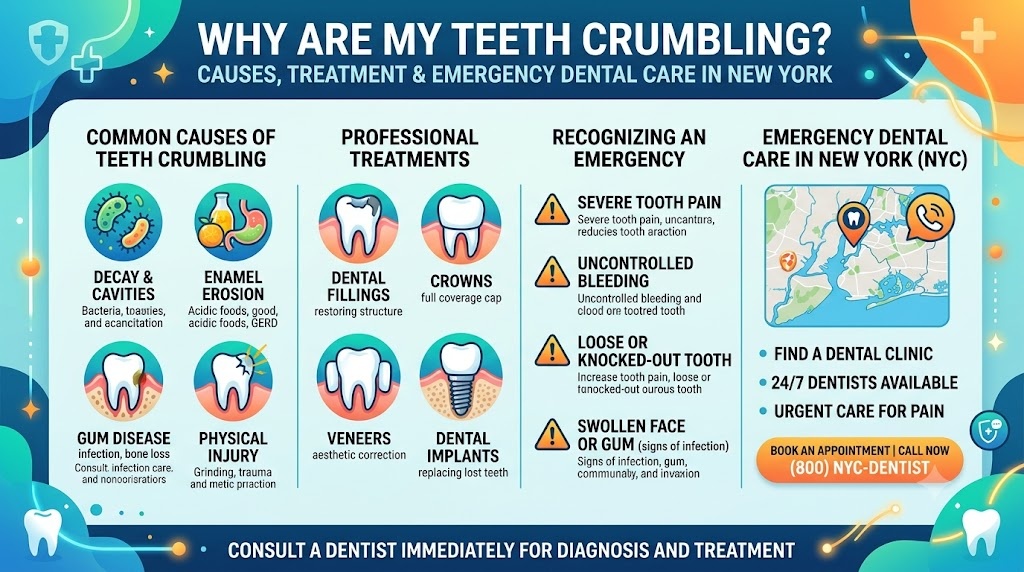
Having teeth that gradually crumble, chip, or break apart is never a normal part of aging. Whether it starts with tiny pieces breaking off while eating or entire sections of a tooth suddenly collapsing, this condition usually indicates that the tooth has become structurally weak due to an underlying dental disease.
For residents of New York, this should be treated as an urgent dental problem rather than something to "watch and wait." Teeth cannot regenerate once significant enamel or dentin has been lost. Without timely treatment, what begins as a small fracture can quickly progress into severe infection, nerve damage, tooth loss, and expensive restorative procedures.
The encouraging news is that modern dentistry offers highly successful treatments for crumbling teeth. Early diagnosis often allows dentists to preserve the natural tooth using conservative procedures instead of extraction.
This comprehensive guide explains why teeth crumble, the warning signs you should never ignore, available treatments, and what you should do while waiting to see a licensed dentist in New York.
Understanding Tooth Structure
To understand why teeth crumble, it helps to know how a healthy tooth is built.
Each tooth consists of several layers:
- Enamel – the hard outer protective shell and the hardest substance in the human body.
- Dentin – the softer layer beneath enamel that supports the tooth.
- Dental pulp – contains nerves and blood vessels that keep the tooth alive.
- Root cementum – covers the root below the gumline.
- Jawbone and periodontal ligament – anchor the tooth securely.
Although enamel is extremely hard, it cannot repair itself once damaged. Repeated wear, acid attack, decay, or trauma gradually weakens the structure until pieces begin breaking away.
Signs Your Teeth Are Becoming Structurally Weak
Many patients notice subtle warning signs months before major damage occurs.
Common symptoms include:
- Small chips while eating
- Rough or sharp edges
- Teeth appearing shorter
- Increased sensitivity
- Cracks visible in the enamel
- Food becoming trapped inside teeth
- Pain when biting
- Teeth breaking repeatedly
- Fillings frequently falling out
- Teeth looking translucent around the edges
These symptoms indicate that the tooth structure is deteriorating.
The Most Common Causes of Crumbling Teeth
1. Severe Tooth Decay
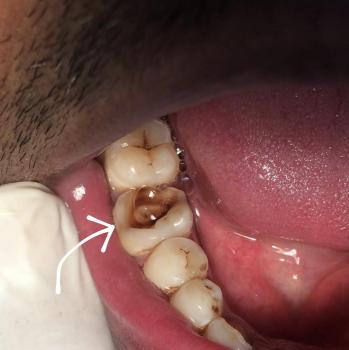
Advanced dental decay is one of the leading reasons teeth crumble.
Bacteria feed on sugars inside the mouth and produce acids that dissolve enamel. Once decay penetrates into dentin, the process accelerates dramatically.
Eventually:
- large cavities develop
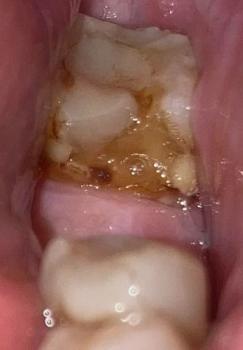
- the tooth becomes hollow
- chewing pressure causes collapse
Many patients are surprised because the tooth may not hurt until extensive destruction has already occurred.
2. Enamel Erosion
Unlike cavities, enamel erosion occurs from acid rather than bacteria.
Common causes include:
- soda
- sports drinks
- citrus fruits
- energy drinks
- wine
- chronic acid reflux
- frequent vomiting
Over time, acids dissolve the mineral content of enamel.
As enamel thins:
- teeth become yellow
- edges become transparent
- teeth chip easily
- chewing surfaces flatten
Eventually the remaining tooth structure cannot tolerate normal chewing forces.
3. Bruxism (Teeth Grinding)
Millions of adults grind their teeth during sleep without realizing it.
Grinding places tremendous pressure on teeth.
Over years it causes:
- microscopic fractures
- worn chewing surfaces
- cracked fillings
- broken crowns
- fractured enamel
Eventually entire cusps of teeth may snap off.
4. Large Old Fillings
Older amalgam fillings often occupy most of the tooth.
Over decades:
- fillings expand and contract
- surrounding enamel weakens
- tiny fractures develop
Patients frequently report:
"The filling was fine yesterday, then half the tooth broke off."
5. Hidden Tooth Fractures
Tiny cracks often develop after:
- chewing ice
- biting popcorn kernels
- chewing hard candy
- trauma
- sports injuries
Initially these cracks are invisible.
Each chewing cycle widens the fracture until a major section breaks away.
6. Dry Mouth (Xerostomia)
Saliva protects teeth by:
- washing away bacteria
- neutralizing acids
- delivering minerals
- repairing early enamel damage
Without enough saliva:
- cavities develop rapidly
- enamel weakens
- decay progresses faster
- teeth become brittle
Common causes include:
- medications
- diabetes
- autoimmune disease
- radiation therapy
- aging
7. Nutritional Deficiencies
Healthy teeth require adequate amounts of:
- calcium
- phosphorus
- vitamin D
- magnesium
- vitamin K
- protein
Poor nutrition weakens both teeth and supporting bone.
8. Acid Reflux Disease (GERD)
Stomach acid is far stronger than food acids.
Nighttime reflux repeatedly bathes teeth in acid.
Dentists often recognize GERD before physicians because they see:
- smooth enamel loss
- thinning teeth
- widespread erosion
9. Smoking
Smoking contributes by:
- reducing saliva
- increasing gum disease
- slowing healing
- encouraging plaque buildup
Smokers often develop multiple dental problems simultaneously.
10. Aging Combined With Wear
Although aging alone does not cause teeth to crumble, decades of:
- chewing
- grinding
- restorations
- acid exposure
- minor fractures
gradually weaken teeth.
Why You Should Never Ignore Crumbling Teeth
Many patients postpone treatment because the tooth doesn't hurt.
Unfortunately, pain is often a late symptom.
Without treatment, the damage usually worsens.
Potential complications include:
- severe cavities
- nerve infection
- dental abscess
- facial swelling
- bone loss
- gum infection
- tooth loss
- expensive reconstruction
Early treatment is almost always less invasive and less costly.
When Does It Become a Dental Emergency?
Seek immediate dental care if you experience:
- severe tooth pain
- facial swelling
- pus around the gums
- fever
- swelling extending toward the eye
- difficulty swallowing
- difficulty breathing
- inability to fully open your mouth
These symptoms may indicate a spreading dental infection requiring urgent treatment.
Diagnosis: What Happens During Your Dental Visit?
A New York dentist will perform a comprehensive examination.
This usually includes:
Medical History
The dentist asks about:
- medications
- acid reflux
- grinding
- dry mouth
- diet
- previous dental work
Clinical Examination
The dentist checks:
- visible fractures
- cavities
- gum disease
- loose teeth
- bite alignment
Digital X-Rays
X-rays reveal:
- hidden decay
- root fractures
- bone loss
- abscesses
- impacted teeth
Bite Analysis
Grinding or bite imbalance often contributes to repeated fractures.
Treatment Options
Treatment depends on how much healthy tooth remains.
Composite Bonding
Small chips can often be repaired using tooth-colored composite resin.
Benefits include:
- minimally invasive
- completed in one visit
- natural appearance
- affordable
Dental Inlays and Onlays
When damage is larger than a filling but smaller than a crown, custom restorations provide additional strength.
They preserve more natural tooth structure.
Dental Crowns
Crowns are among the most common treatments for weakened teeth.
A crown completely covers the damaged tooth.
Benefits include:
- restores chewing strength
- protects against future fractures
- natural appearance
- long lifespan with proper care
Modern crowns are commonly made from porcelain, ceramic, zirconia, or porcelain fused to metal.
Root Canal Therapy
If bacteria reach the pulp:
- infected tissue is removed
- canals are disinfected
- the tooth is sealed
- a crown restores function
Root canals eliminate infection while preserving the natural tooth whenever possible.
Tooth Extraction
Some teeth cannot be saved.
Examples include:
- vertical root fractures
- severe decay below the gumline
- advanced bone loss
- split teeth
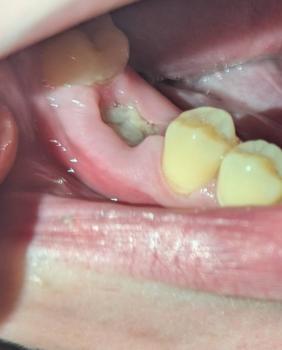
Extraction removes the source of infection and pain.
Replacing a Missing Tooth
After extraction, replacement is important.
Options include:
Dental Implant
A titanium implant replaces the root.
Benefits:
- prevents bone loss
- looks natural
- functions like a real tooth
- protects neighboring teeth
Dental Bridge
A bridge replaces the missing tooth by attaching to adjacent teeth.
Partial Denture
Suitable when several teeth are missing.
What Happens If You Delay Treatment?
Ignoring crumbling teeth can result in:
- repeated fractures
- chronic infection
- gum disease
- jawbone deterioration
- shifting teeth
- bite collapse
- digestive problems from poor chewing
Treatment also becomes significantly more expensive as damage progresses.
What You Should Do Before Seeing the Dentist
Until your appointment:
Avoid chewing on the damaged side.
This reduces additional fractures.
Eat Soft Foods
Choose foods like:
- yogurt
- eggs
- mashed potatoes
- soup
- oatmeal
- smoothies
Avoid:
- nuts
- popcorn
- ice
- hard candy
- crusty bread
Brush Gently
Use:
- a soft toothbrush
- fluoride toothpaste
Avoid aggressive brushing.
Rinse With Warm Salt Water
Salt water helps reduce bacteria and soothe irritated tissues.
Avoid Temperature Extremes
Very hot or cold foods may trigger pain.
Reduce Sugar
Sugar feeds cavity-causing bacteria.
Avoid Acidic Drinks
Limit:
- soda
- citrus juice
- sports drinks
- energy drinks
Do Not Delay Care
Temporary filling kits sold in pharmacies are only short-term solutions.
They should never replace professional treatment.
Preventing Future Tooth Damage
Good preventive care greatly reduces the risk of future fractures.
Healthy habits include:
- brushing twice daily with fluoride toothpaste
- flossing every day
- regular professional cleanings
- wearing a night guard if you grind your teeth
- limiting sugary snacks
- drinking water throughout the day
- treating acid reflux
- quitting smoking
- maintaining a balanced diet rich in calcium and vitamin D
- visiting your dentist every six months
Why Early Treatment Saves Money
Many patients delay care because they worry about cost.
Ironically, delaying treatment often results in more expensive procedures.
For example:
- A small cavity may only require a filling.
- A larger cavity may require a crown.
- A deep infection may require a root canal and crown.
- A severely damaged tooth may need extraction and replacement with a dental implant.
Early intervention often preserves more natural tooth structure and avoids complex treatment.
Living With Healthy Teeth Again
After treatment, most patients regain comfortable chewing, improved appearance, and restored confidence. Modern restorative dentistry can rebuild damaged teeth so they look and function much like natural teeth. With proper oral hygiene, routine dental visits, and attention to habits such as grinding or frequent acid exposure, these restorations can last for many years.
The key is addressing the problem before irreversible damage occurs. Even if only one tooth is crumbling today, the underlying cause may affect other teeth as well. A comprehensive dental examination allows your dentist to identify contributing factors and create a personalized plan to protect your entire smile.
Final Thoughts
Gradually crumbling or breaking teeth are a clear sign that something is compromising the strength of your teeth. Common causes include advanced tooth decay, enamel erosion, chronic teeth grinding, hidden fractures, dry mouth, nutritional deficiencies, and aging restorations. Left untreated, these conditions can lead to infection, severe pain, tooth loss, and more extensive dental treatment.
If you live in New York and notice that your teeth are chipping, cracking, or breaking apart, schedule an appointment with a licensed dentist as soon as possible. Early diagnosis and treatment can often save your natural teeth, relieve discomfort, and prevent serious complications. Protecting your oral health today can help preserve your smile, your ability to eat comfortably, and your overall well-being for years to come.
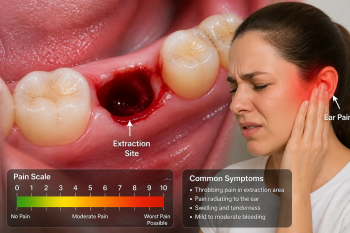
Can tooth extraction cause infection? Mild inflammation is normal, but increasing swelling, fever, or severe pain may indicate infection. Learn more about post-extraction infection warning signs in this detailed guide.
Book a consultation with our Cebu dental specialists for proper evaluation and care.
Ready to get expert guidance?
If you’re experiencing severe pain or delayed healing, book a consultation with our Cebu dental specialists to get proper evaluation and care.
Consultation or contact page .
Book a Consultation
For severe discomfort or delayed healing, book a consultation with our Cebu dental specialists today.
Looking for a dentist? Browse our Cebu dental directory to find trusted clinics near you.
Medical Review and Clinical Basis
This article is based on clinical dental guidelines and real patient recovery patterns observed after tooth extraction procedures. The information reflects common post-extraction healing stages, including normal clot formation, gum tissue repair, and signs of possible complications such as dry socket or infection.
While mild discomfort is expected after a dental extraction, worsening pain after Day 3, bad odor, exposed bone, or spreading pain may require professional evaluation. These symptoms are consistent with known post-extraction complications described in standard dental practice.
About Cebu Dental Implants
Cebu Dental Implants provides comprehensive tooth extraction, surgical procedures, and dental implant services in the Philippines. Our team evaluates post-extraction healing, manages complications such as dry socket, and advises patients on proper aftercare to prevent infection and delayed healing.
If you experience severe pain or unusual symptoms after extraction, early professional assessment is recommended to prevent further complications.
Important Medical Disclaimer
This content is for educational purposes only and does not replace professional dental diagnosis. Every patient heals differently. If symptoms worsen or do not improve within a few days, consult a licensed dentist for proper evaluation and treatment.
Author
This article was prepared by the Cebu Dental Implants content team in consultation with licensed dental professionals experienced in tooth extraction and implant procedures.
Related Clinical Cases
Patients with lower front gum inflammation may also experience tartar buildup, periodontal disease, gum abscesses, or tooth decay. Explore these related clinical case studies.

Other topics:
Other Dental Clinic