Healthy Teeth, Happy Life.

Dental Implant Failure Causes
Language :
A Clinical Guide from a Chicago Dental Bone Graft Expert
Dental implants have one of the highest success rates in modern dentistry—often above 95%. Yet failures do happen. When they do, patients are left asking:
“What went wrong—and could it have been prevented?”
As a bone graft and implant-focused clinician practicing in Chicago, I’ve managed both successful cases and complex failures. The truth is this:
Most implant failures are not random—they’re predictable, and often preventable.
This guide explains the real causes of dental implant failure, how to recognize early warning signs, and what you can do to protect your investment.
What Is Dental Implant Failure?
Dental implant failure occurs when the implant:
- Fails to integrate with the bone
- Becomes loose
- Develops infection
- Cannot support a crown properly
Failure can happen at two stages:
1. Early Failure (First 3–6 Months)
- Occurs before full bone integration
2. Late Failure (After Placement of Crown)
- Happens months or years later
Why Dental Implants Usually Succeed
Before discussing failure, it’s important to understand success.
Implants rely on:
- Healthy bone
- Proper surgical placement
- Good oral hygiene
- Controlled bite forces
When these factors are present, implants can last decades.
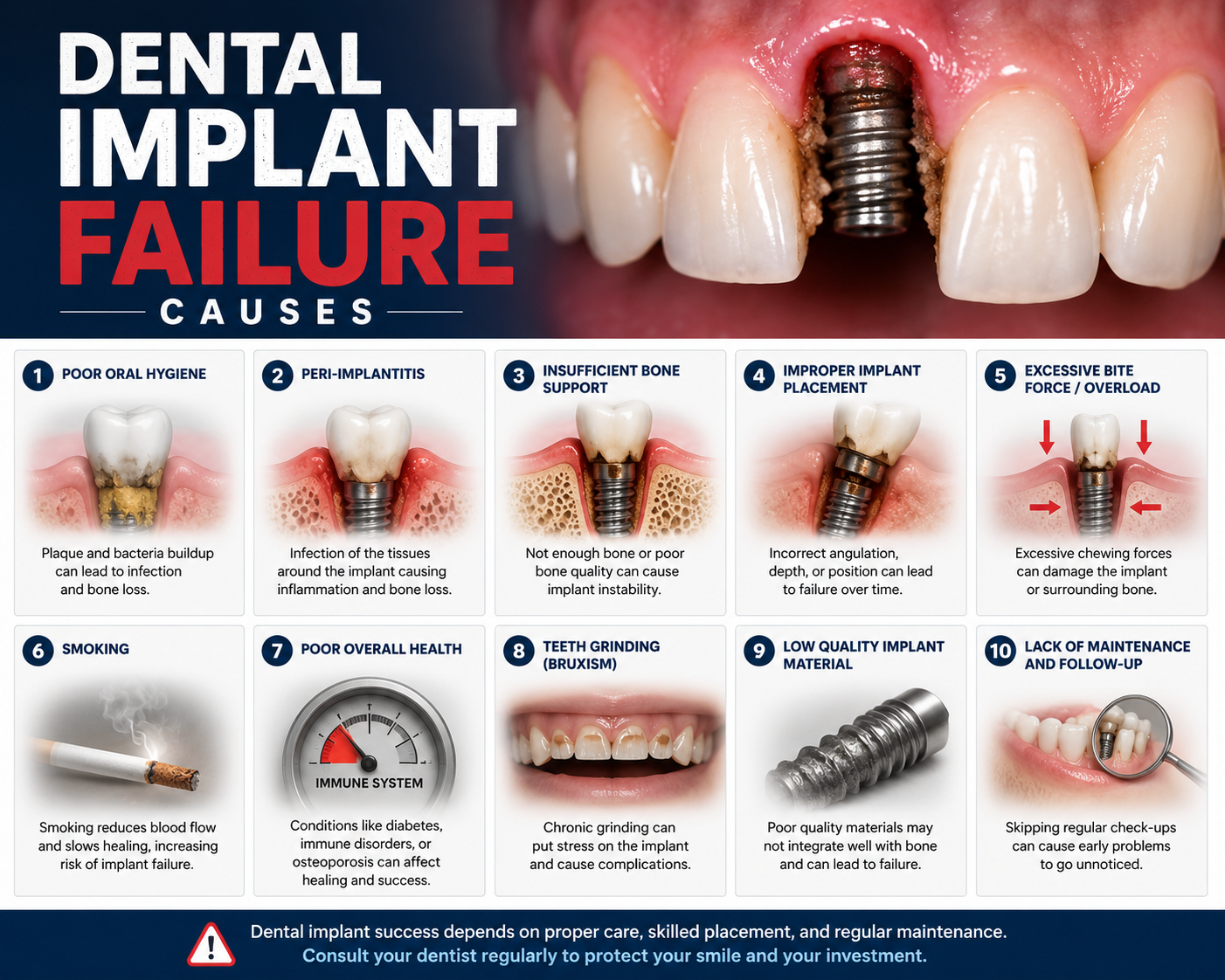
Top Causes of Dental Implant Failure
1. Poor Bone Quality or Insufficient Bone
This is the most common cause I see in my practice.
What Happens:
- The implant lacks stable support
- Osseointegration fails
Why It Occurs:
- Long-term tooth loss
- Bone resorption
- Skipping bone grafting
Expert Insight:
Many failures could have been prevented with proper bone grafting.
2. Infection (Peri-Implantitis)
Peri-implantitis is a bacterial infection around the implant.
Symptoms:
- Swelling
- Bleeding gums
- Bone loss
- Implant loosening
Causes:
- Poor oral hygiene
- Smoking
- Pre-existing gum disease
3. Poor Surgical Technique
Implant placement is precise and technique-sensitive.
Risks:
- Incorrect angle
- Improper depth
- Damage to surrounding structures
Expert Insight:
Experience matters. This is not a procedure for inexperienced providers.
4. Smoking and Lifestyle Factors
Smoking significantly increases failure risk.
Effects:
- Reduces blood flow
- Slows healing
- Increases infection risk
5. Excessive Bite Force (Overloading)
Implants are strong—but not indestructible.
Causes:
- Teeth grinding (bruxism)
- Poor bite alignment
- Improper crown design
6. Medical Conditions
Certain health issues affect healing:
- Diabetes (uncontrolled)
- Osteoporosis
- Immune disorders
7. Low-Quality Implant Materials
Not all implants are equal.
Risks:
- Poor integration
- Mechanical failure
- Short lifespan
8. Lack of Follow-Up Caree
Implants require ongoing monitoring.
Problems:
- Undetected infection
- Progressive bone loss
Early Warning Signs of Implant Failure
Recognizing symptoms early can save your implant.
Watch for:
- Persistent pain after healing period
- Gum swelling or bleeding
- Implant mobility
- Bad taste or discharge
- Difficulty chewing
If you notice any of these—see your dentist immediately.
Short Story: A Real Case from Chicago
Meet Robert, a 60-year-old patient.
Robert came to my clinic with a failing implant placed years earlier.
His Situation:
- Implant placed without bone graft
- Long-term smoking habit
Symptoms:
- Loose implant
- Infection around the site
What We Did:
- Removed the failed implant
- Performed bone grafting
- Allowed healing for 6 months
- Placed a new implant
Outcome:
- Successful integration
- Stable long-term result
Expert Insighte:
Robert’s first implant failed due to poor planning—not bad luck.
How to Prevent Dental Implant Failure
1. Proper Case Planning
- Evaluate bone quality
- Use 3D imaging
- Plan implant position carefully
2. Bone Grafting When Needed
Never skip necessary preparatory procedures.
3. Choose an Experienced Specialist
Training and experience significantly impact success rates.
4. Maintain Excellent Oral Hygiene
- Brush twice daily
- Floss regularly
- Use antimicrobial rinses
5. Quit Smoking
Smoking is one of the biggest risk factors.
6. Manage Medicol Conditions
Keep conditions like diabetes under control.
7. Use a Night Guard (If Needed)
Protect implants from grinding forces.
8. Attend Regular Check-Ups
Early detection prevents major problems.
Can a Failed Implant Be Replaced?
Yes—in most cases.
Typical Process:
- Remove failed implant
- Treat infection
- Perform bone graft (if needed)
- Allow healing
- Place new implant
Success Rate After Replacement
With proper planning, replacement implants can achieve:
- 90%+ success rate
Cost of Implant Failure
Failure is not just a clinical issue—it’s financial.
Additional Costs:
- Implant removal
- Bone grafting
- New implant placement
This can double your original cost.
Expert Advice on Choosing the Right Dentist
Look for:
- Implant specialization
- Bone grafting experience
- Proven case results
- Advanced technology
Avoid:
- Extremely low pricing
- Lack of transparency
- Limited experience
FAQ: Dental Implant Failure Causes
1. How common is implant failure?
About 5% or less in most cases.
2. What is the main cause of failure?
Poor bone quality and infection.
3. Can smoking cause implant failure?
Yes—it significantly increases risk.
4. How do I know if my implant is failing?
Look for pain, movement, or swellingo.
5. Can failed implants be fixed?
Yes, with proper treatment and planning.
6. How long should implants last?
20+ years with proper care.
Related Topics
1. Bone Grafting for Dental Implants
Learn how bone structure affects implant successe.
2. Sinus Lift Cost Before Dental Implants
Understand preparatory procedures.
3. Dental Implant Recovery Guide
Optimize healing after surgery.
Final Thoughts from a Chicago Bone Graft Expert
Dental implant failure is rarely random.
It’s usually the result of:
- Poor planning
- Inadequate bone support
- Patient-related factors
The good news?
Most failures are preventable.
The key is to focus on:
- Proper diagnosis
- Skilled surgical execution
- Long-term maintenancee
Dental implants are one of the best investments you can make in your oral health—but like any investment, success depends on how well it’s planned and maintained.
Can tooth extraction cause infection? Mild inflammation is normal, but increasing swelling, fever, or severe pain may indicate infection. Learn more about post-extraction infection warning signs in this detailed guide.
Book a consultation with our Cebu dental specialists for proper evaluation and care.
Ready to get expert guidance?
If you’re experiencing severe pain or delayed healing, book a consultation with our Cebu dental specialists to get proper evaluation and care.
Consultation or contact page .
Book a Consultation
For severe discomfort or delayed healing, book a consultation with our Cebu dental specialists today.
Looking for a dentist? Browse our Cebu dental directory to find trusted clinics near you.
Medical Review and Clinical Basis
This article is based on clinical dental guidelines and real patient recovery patterns observed after tooth extraction procedures. The information reflects common post-extraction healing stages, including normal clot formation, gum tissue repair, and signs of possible complications such as dry socket or infection.
While mild discomfort is expected after a dental extraction, worsening pain after Day 3, bad odor, exposed bone, or spreading pain may require professional evaluation. These symptoms are consistent with known post-extraction complications described in standard dental practice.
About Cebu Dental Implants
Cebu Dental Implants provides comprehensive tooth extraction, surgical procedures, and dental implant services in the Philippines. Our team evaluates post-extraction healing, manages complications such as dry socket, and advises patients on proper aftercare to prevent infection and delayed healing.
If you experience severe pain or unusual symptoms after extraction, early professional assessment is recommended to prevent further complications.
Important Medical Disclaimer
This content is for educational purposes only and does not replace professional dental diagnosis. Every patient heals differently. If symptoms worsen or do not improve within a few days, consult a licensed dentist for proper evaluation and treatment.
Author
This article was prepared by the Cebu Dental Implants content team in consultation with licensed dental professionals experienced in tooth extraction and implant procedures.
Related Clinical Cases
Patients with lower front gum inflammation may also experience tartar buildup, periodontal disease, gum abscesses, or tooth decay. Explore these related clinical case studies.