Smile Again with Comfort and Confidence.

Why Is My Gum Bleeding So Much When I Brush? I'm Starting to Panic.
Image:

Severity:
Teeth Problems:
"I was brushing my teeth this morning like I always do, and suddenly there was blood everywhere. Not just a tiny spot—more than usual. I rinsed my mouth and saw red in the sink. My heart started racing. Did I brush too hard? Is something seriously wrong with my gums? Am I going to lose my teeth?"
If this sounds familiar, you're not alone. Many patients feel panic when they suddenly notice significant gum bleeding.
What Could Be Happening?
1. Gum Inflammation (Gingivitis)
The most common cause is inflammation caused by plaque and bacteria along the gumline. When gums become irritated, even gentle brushing can trigger bleeding.
Symptoms:
- Bleeding during brushing or flossing
- Red, swollen gums
- Bad breath
- Tender gum tissue
2. Gum Infection
If bacteria have been building up for weeks or months, the infection can make gums very fragile and prone to bleeding.
3. Early Gum Disease
Bleeding is often one of the first warning signs of periodontal disease. Many patients are surprised because they have little or no pain.
4. Vitamin Deficiency
Low levels of Vitamin C or Vitamin K can sometimes make gums bleed more easily.
5. Medications
Blood thinners, aspirin, and some medications can increase bleeding from the gums.
6. Brushing Too Aggressively
A hard-bristled toothbrush or excessive force can traumatize already sensitive gums.
Why Are My Gums Bleeding So Much When I Brush? Expert Dental Case Analysis and Warning Signs
Understanding Heavy Gum Bleeding: What Your Mouth May Be Telling You
Seeing blood in the sink while brushing your teeth can be frightening, especially when the bleeding appears suddenly or happens every day. Some people immediately worry that they are damaging their teeth, developing a serious infection, or losing their gums.
The first step is to understand that bleeding gums are a symptom, not a diagnosis. The most common explanation is gingivitis, an early form of gum disease caused by plaque accumulation. However, persistent, spontaneous, or unusually heavy bleeding deserves a proper dental assessment.
According to the National Institute of Dental and Craniofacial Research (NIDCR), plaque can irritate the gums, causing redness, swelling, and bleeding. If it hardens into tartar, professional dental cleaning is needed to remove it. Untreated gum disease can progress to damage of the tissues and bone supporting the teeth.
The key question is not simply how much blood you see. It is also where the bleeding occurs, how frequently it happens, whether the gums are swollen or painful, and whether other symptoms are present.
Dental Case Analysis: What Could Cause Gums to Bleed Heavily?
The following clinical scenarios illustrate common patterns that dentists consider when evaluating patients with bleeding gums. They are educational examples, not diagnoses of an individual patient.
Case Pattern 1: Bleeding During Almost Every Brushing Session
Possible explanation: Plaque-induced gingivitis
A patient reports that the gums bleed when brushing, particularly around the gumline and between the teeth. The gums may look red, swollen, or tender.
This pattern is consistent with gingivitis, although a dental examination is needed to confirm the cause. Plaque bacteria trigger inflammation in the gum tissues, making them more likely to bleed when touched.
Recommended approach:
-
Brush twice daily for two minutes using fluoride toothpaste and a soft-bristled toothbrush.
-
Clean between the teeth daily using floss or appropriately sized interdental brushes.
-
Arrange a dental examination, especially if bleeding is recurrent.
-
Ask whether professional cleaning is needed to remove hardened plaque or tartar.
Early plaque-induced gingivitis can often be reversed with effective oral hygiene and appropriate professional care.
Case Pattern 2: Gums Bleed Even Though the Patient Brushes Gently
Possible explanation: Established gum inflammation or periodontal disease
Some patients assume that gentle brushing should completely prevent bleeding. However, inflamed gum tissue can bleed even with gentle contact.
If bleeding is accompanied by persistent bad breath, gum recession, loose teeth, changes in the way teeth fit together, or pain while chewing, periodontitis must be considered.
Periodontitis affects the supporting tissues and bone around the teeth. It cannot be diagnosed reliably from bleeding alone; dentists may need to measure periodontal pockets and take dental X-rays when indicated.
Recommended approach: Arrange a comprehensive periodontal examination. Depending on the findings, treatment may include professional cleaning or scaling and root planing, along with an individualized home-care plan.
Case Pattern 3: Bleeding Begins After Changing a Toothbrush or Starting Flossing
Possible explanation: Mechanical irritation or previously unnoticed gum inflammation
A new toothbrush, excessive brushing pressure, stiff bristles, or incorrect flossing technique can injure gum tissue. Bleeding may also become noticeable when a person begins cleaning between teeth that have accumulated plaque.
Do not automatically assume that all bleeding is caused by the new toothbrush or floss. Pre-existing gingivitis may be contributing.
Recommended approach:
-
Use a soft-bristled toothbrush and gentle, controlled movements.
-
Avoid forcefully snapping floss into the gums.
-
Clean between the teeth carefully and consistently.
-
Seek dental advice if bleeding persists, recurs, or appears unusually heavy.
Avoid stopping all oral hygiene simply because the gums bleed. Gentle cleaning helps remove the plaque that may be causing inflammation.
Case Pattern 4: Gums Bleed Spontaneously or the Bleeding Seems Excessive
Possible explanation: A problem requiring prompt evaluation
Bleeding that occurs without brushing, repeatedly starts on its own, or is difficult to stop should not automatically be attributed to gingivitis.
Possible causes include significant gum inflammation, local injury, medication-related bleeding, or a medical condition affecting blood clotting or blood cells. Some medicines, including anticoagulants and antiplatelet drugs, can increase bleeding.
Recommended approach:
-
Contact a dentist or medical professional promptly, particularly if the bleeding is heavy or recurrent.
-
Apply gentle, continuous pressure with clean gauze to a specific bleeding area.
-
Seek emergency medical care if bleeding is substantial, will not stop with firm continuous pressure, or is accompanied by fainting, severe weakness, or difficulty breathing.
-
Do not stop prescribed blood-thinning medication without guidance from the prescribing clinician.
Case Pattern 5: Bleeding Gums Along With Swelling, Pain, or Pus
Possible explanation: Significant gum disease or a dental infection
Bleeding accompanied by localized swelling, pus, a bad taste, or tooth pain may indicate an infection or another dental problem.
A dental abscess may require drainage, treatment of the affected tooth, or another procedure depending on the source. Antibiotics alone do not reliably eliminate the underlying cause of most dental infections.
Recommended approach: Obtain urgent dental assessment. If facial or neck swelling progresses rapidly, or there is difficulty swallowing, breathing, or opening the mouth, seek emergency medical care.
Why Are My Gums Bleeding So Much?
Several factors can contribute to bleeding gums:
-
Plaque buildup: Bacterial plaque along the gumline is the most common cause of gingivitis.
-
Tartar accumulation: Hardened plaque cannot be removed adequately with ordinary brushing and requires professional cleaning.
-
Brushing too aggressively: Excessive pressure and hard bristles can traumatize the gums.
-
Inconsistent cleaning between teeth: Plaque can remain in areas a toothbrush cannot reach effectively.
-
Smoking or tobacco use: Tobacco increases the risk of periodontal disease and can interfere with healing.
-
Hormonal changes: Pregnancy and certain hormonal changes can increase gum sensitivity to plaque.
-
Diabetes and other health conditions: Some conditions can increase susceptibility to gum inflammation or affect healing.
-
Medications or bleeding disorders: Certain medicines and medical conditions may increase bleeding or cause it to occur more easily.
A dentist may ask about recent medication changes, medical history, the duration of bleeding, and whether bruising or nosebleeds occur elsewhere.
What Should You Do Immediately When Your Gums Bleed?
Step 1: Stay calm and identify the bleeding pattern
Check whether bleeding happens only during brushing or also at other times. Note whether one area or several areas are affected, and whether swelling, pain, pus, or loose teeth are present.
Step 2: Continue gentle oral hygiene
Use a soft toothbrush, fluoride toothpaste, and gentle movements along the gumline. Clean between the teeth carefully each day. Do not scrub harder in an attempt to remove plaque.
Step 3: Control active bleeding
If a specific area is bleeding, apply gentle, continuous pressure using clean gauze. Avoid repeatedly lifting the gauze to check whether bleeding has stopped. If the bleeding is substantial or does not stop, obtain urgent medical attention.
Step 4: Arrange a dental appointment
Recurring bleeding should be examined rather than managed indefinitely with home remedies. A dentist can assess plaque, tartar, gum inflammation, periodontal pockets, and other possible causes.
Step 5: Follow the recommended treatment plan
Professional cleaning may be sufficient for gingivitis. More advanced periodontal disease may require deeper cleaning and ongoing periodontal maintenance. If a systemic condition or medication is suspected, coordination with a physician may also be necessary.
When Is Bleeding Gum Disease an Emergency?
Most cases of bleeding during brushing are not medical emergencies, but certain warning signs require faster action.
Seek urgent dental care for persistent bleeding, significant gum swelling, severe gum pain, pus, loose teeth, or a lump or ulcer that needs evaluation.
Seek emergency medical care immediately for:
-
Heavy bleeding that does not stop with firm, continuous pressure.
-
Rapidly spreading facial or neck swelling.
-
Difficulty breathing or swallowing.
-
Fainting, severe weakness, or other signs of significant blood loss.
Do not wait for a routine appointment if breathing or swallowing is affected.
Can Bleeding Gums Recover Naturally?
Mild gingivitis caused by plaque may improve substantially when plaque is removed consistently and any necessary professional cleaning is completed. However, bleeding that temporarily improves does not prove that the underlying problem has been resolved.
Tartar cannot be removed reliably by brushing, and established periodontitis requires professional assessment and treatment. Damaged supporting bone does not simply grow back because bleeding has stopped.
The safest approach is to identify the cause rather than rely on symptoms alone.
Expert Dental Conclusion
When patients report that their gums bleed heavily during brushing, the first consideration is often plaque-induced gingivitis. Nevertheless, the amount of bleeding, its duration, associated symptoms, medical history, and medication use all matter.
A dentist should examine persistent or recurrent bleeding, particularly when it occurs spontaneously or is accompanied by swelling, bad breath, gum recession, pus, or loose teeth.
The most important message is simple: do not panic, but do not ignore repeated bleeding. Early evaluation can identify treatable gum disease and help prevent avoidable damage to the tissues supporting your teeth.
Frequently Asked Questions About Bleeding Gums
1. Why do my gums bleed so much when I brush my teeth?
The most common cause is gingivitis due to plaque accumulation along the gumline. Other possibilities include brushing trauma, periodontitis, medication effects, and medical conditions that affect bleeding. A dental examination can help determine the cause.
2. Is it normal for gums to bleed every day?
No. Although bleeding gums are common, daily bleeding is not a sign of healthy gums. Arrange a dental examination rather than assuming that daily bleeding is normal.
3. Should I stop brushing if my gums bleed?
Usually, no. Continue brushing gently with a soft-bristled toothbrush and fluoride toothpaste. Avoid forceful scrubbing. If bleeding is heavy, spontaneous, or difficult to control, seek prompt professional advice.
4. Can gingivitis cause heavy bleeding?
Inflamed gums may bleed easily, but the severity of bleeding varies. Heavy or persistent bleeding should not automatically be attributed to gingivitis because other dental and medical causes may be involved.
5. How long does it take for bleeding gums to improve?
Mild plaque-related gingivitis may begin improving over several days with effective oral hygiene, but recovery varies according to severity and whether professional treatment is needed. If bleeding persists, worsens, or recurs, arrange a dental assessment rather than waiting indefinitely.
6. Can brushing too hard make my gums bleed?
Yes. Excessive pressure, stiff bristles, or poor brushing technique can injure the gums. Use a soft-bristled brush and gentle pressure. However, bleeding may also indicate underlying inflammation, even when brushing is gentle.
7. Can tartar cause bleeding gums?
Yes. Tartar provides a surface where plaque can accumulate and irritate the gums. Once plaque hardens into tartar, a dental professional must remove it using appropriate instruments.
8. Are bleeding gums a sign of periodontitis?
They can be, but bleeding alone cannot distinguish gingivitis from periodontitis. Periodontitis may also cause deep periodontal pockets, gum recession, bone loss, persistent bad breath, and loose teeth. A periodontal examination is needed.
9. Can vitamin deficiencies cause bleeding gums?
Certain nutritional deficiencies, including severe vitamin C deficiency, can contribute to gum bleeding. However, plaque-induced inflammation is a much more common explanation. Do not assume that you need supplements without considering your diet, medical history, and dental findings.
10. Can stress cause bleeding gums?
Stress may affect oral hygiene habits and is associated with factors that can worsen gum health. However, bleeding gums should not be blamed on stress alone. Plaque, periodontal disease, local injury, medications, and medical conditions should be considered.
11. Can diabetes make my gums bleed?
Diabetes can increase susceptibility to gum disease, especially when blood glucose is poorly controlled. If you have diabetes and recurring bleeding gums, inform your dentist and maintain appropriate medical follow-up.
12. Can blood pressure medicine cause gum bleeding?
Some medicines may affect the gums, and certain drugs can influence bleeding risk. Do not assume that blood pressure medication is responsible without an assessment. Tell your dentist about all prescription medicines and supplements you use, and consult your prescribing clinician before making medication changes.
13. Should I take antibiotics for bleeding gums?
Not usually. Plaque-induced gingivitis is generally managed through effective oral hygiene and professional cleaning when needed. Antibiotics are reserved for selected infections or clinical situations in which a clinician determines they are appropriate. Never take leftover antibiotics or start them without medical advice.
14. Does salt water stop gum bleeding?
A mild warm salt-water rinse may provide temporary comfort for some irritated oral tissues, but it does not remove tartar or treat established periodontal disease. It is not a substitute for dental assessment. Active bleeding may require direct pressure.
15. Can mouthwash cure bleeding gums?
Some antimicrobial mouthwashes can help reduce plaque and gingivitis when used appropriately alongside brushing and interdental cleaning. They do not replace mechanical plaque removal or professional treatment when tartar or periodontal disease is present. Ask a dentist whether a particular mouthwash is suitable.
16. Why do my gums bleed even when I use a soft toothbrush?
Soft bristles reduce the risk of mechanical injury, but they do not eliminate bleeding caused by inflamed gum tissue. Persistent bleeding despite gentle brushing warrants a dental examination.
17. What if my gums bleed without brushing?
Spontaneous bleeding requires more careful assessment, particularly if it is recurrent, heavy, or difficult to stop. A dentist or physician may need to investigate gum disease, medication effects, local injury, or a medical condition affecting blood clotting.
18. When should I see a dentist for bleeding gums?
Book a dental appointment for recurrent bleeding, even if there is no pain. Seek urgent care for severe swelling, pus, loose teeth, or substantial bleeding. Go to an emergency department immediately if breathing or swallowing becomes difficult or bleeding is severe and uncontrolled.
19. Can bleeding gums cause tooth loss?
Bleeding itself does not directly cause tooth loss. However, bleeding may be a sign of periodontal disease, which can damage the supporting tissues and bone around teeth. Untreated advanced periodontitis can ultimately lead to tooth loss.
20. What is the best way to prevent bleeding gums?
Brush twice daily for two minutes with fluoride toothpaste, use a soft-bristled toothbrush, clean between the teeth daily, avoid tobacco, and attend regular dental examinations. If bleeding continues despite good home care, seek professional assessment.
Medical Disclaimer
This educational article explains common causes and warning signs of bleeding gums. It does not establish a diagnosis or replace an individual dental or medical examination. The appropriate treatment depends on the cause, severity, medical history, and examination findings.
Clinical References
-
National Institute of Dental and Craniofacial Research (NIDCR): Periodontal (Gum) Disease.
-
American Dental Association (ADA): Dental Floss and Interdental Cleaners.
-
American Dental Association (ADA): Home Oral Care.
-
National Health Service (NHS): Gum Disease.
These references provide additional information about gum disease, plaque control, preventive care, and when to seek professional assessment.
When Should You Be Concerned?
- Bleeding continues for several days
- Gums are swollen or painful
- Teeth feel loose
- There is pus or a bad taste in your mouth
- Bleeding occurs without brushing
What Should You Do Right Now?
- Continue gentle brushing with a soft-bristled toothbrush.
- Don't stop brushing completely. Many people stop because they see blood, but plaque buildup can make the problem worse.
- Floss carefully.
- Rinse with warm salt water.
- Schedule a dental examination if the bleeding persists beyond a few days.
A Reassuring Thought
Most cases of gum bleeding are related to inflammation and can improve significantly with professional cleaning and better oral hygiene. While seeing blood can be frightening, it does not automatically mean you will lose your teeth.
Patient Thought:
"I was terrified when I saw the blood. But after seeing my dentist, I learned that my gums were inflamed from plaque buildup. With treatment and proper cleaning, the bleeding gradually stopped. What felt like a crisis turned out to be a warning sign that helped me take action before the problem became serious."
Important: If the bleeding is heavy, sudden, difficult to stop, or accompanied by swelling, fever, severe pain, or loose teeth, seek dental care as soon as possible.
Related Clinical Cases
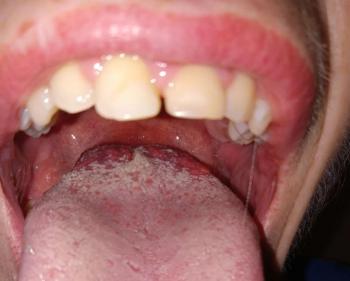
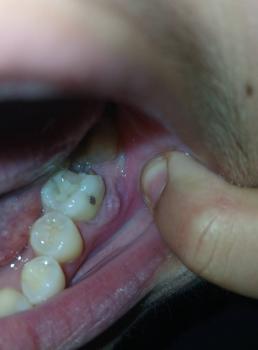
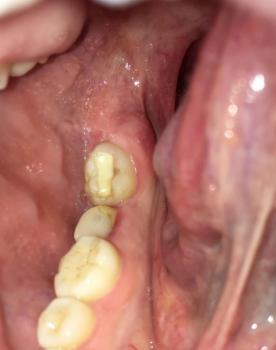
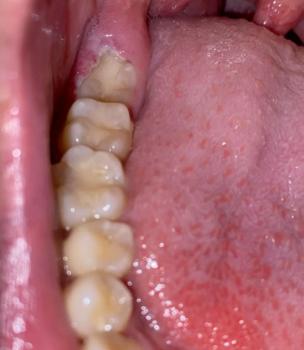
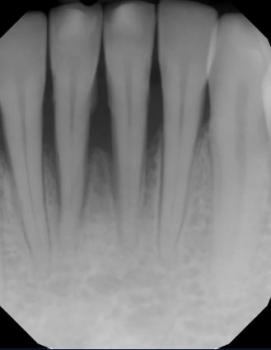
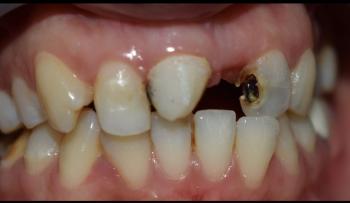
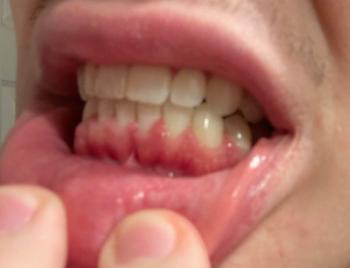
Patients with lower front gum inflammation may also experience tartar buildup, periodontal disease, gum abscesses, or tooth decay. Explore these related clinical case studies.

Other topics:
Other Dental Clinic