From Pain to Perfect — We Care for Your Smile.

Signs of Infection After Tooth Extraction: What to Watch For and What to Do
Language :
Topics:
A clinical, advisory guide from a U.S. dental implant & bone graft specialist practicing in Idaho
When “Normal Healing” Isn’t So Normal
In my practice in Idaho, I regularly hear patients say:
“I thought this was just part of healing… but something feels off.”
That instinct matters.
After a tooth extraction, some discomfort is expected—but infection is not. The challenge is that early infection can look similar to normal healing, which is why many patients delay getting help.
From a clinical standpoint, timing and symptom patterns are everything. This guide will help you identify the real signs of infection, understand what’s happening biologically, and know exactly when to acte.
What Is an Infection After Tooth Extraction?
After a tooth is removed, the body forms a protective blood clot and begins healing. An infection occurs when bacteria invade the extraction site, disrupting this process.
Unlike Dry Socket, which is caused by loss of the blood clot, infection is a bacterial condition that can spread if untreated.
Why Infections Happen
Even with proper care, infections can occur. Common causes include:
- Bacteria entering the socket
- Food debris trapped in the area
- Poor oral hygiene
- Compromised immune system
- Smoking or early contamination
From a bone graft perspective, infections are especially concerning because they can affect bone integrity and future implant success.
Normal Healing vs Infection: Key Differences
| Feature | Normal Healing | Infection |
|---|---|---|
| Pain | Improves daily | Worsens or persists |
| Swelling | Peaks at 2–3 days, then decreases | Continues or increases |
| Taste | Mild, temporary | Strong, foul |
| Fever | None | Possible |
| Discharge | None | Pus present |
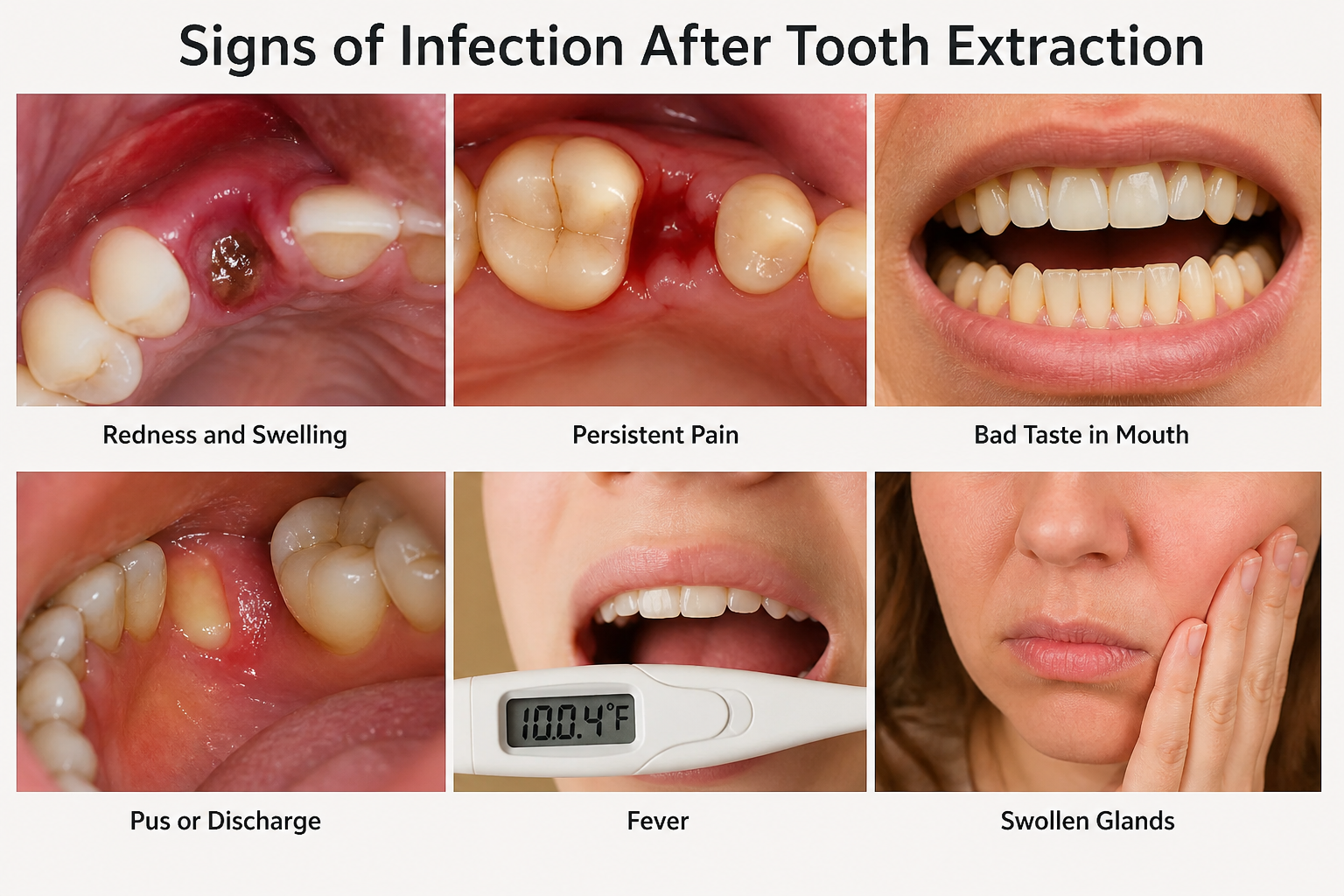
Early Signs of Infection (Do Not Ignore)
Recognizing early symptoms can prevent serious complications.
1. Persistent or Worsening Pain
Pain should improve after 2–3 days.
Red flag:
Pain that:
- Gets worse instead of better
- Feels throbbing or deep
- Does not respond to medication
2. Swelling That Doesn’t Go Down
Mild swelling is normal.
Warning signs:
- Swelling increasing after day 3
- Facial swelling
- Tightness in jaw
3. Pus or Discharge
This is one of the clearest signs of infection.
- Yellow or white fluid
- Bad taste
- Visible discharge from socket
4. Bad Taste or Foul Odor
A mild taste is normal during healing.
Not normal:
- Strong, persistent foul taste
- Bad breath that doesn’t improve
5. Fever or General Illness
Systemic symptoms may include:
- Fever
- Fatigue
- Chills
This indicates the infection may be spreading.
6. Difficulty Opening the Mouth (Trismus)
- Jaw stiffness
- Pain when opening mouth
Often associated with deeper infection.
7. Delayed Healing
If the socket:
- Looks unchanged after 1 week
- Remains inflamed
- Shows no progress
This may indicate infection.
Advanced Signs of Infection
In more serious cases:
- Swelling spreads to neck or face
- Difficulty swallowing
- Severe pain
- High fever
These require immediate medical attention.
Causes of Infection: Clinical Perspectivee
From my experience in Idaho, infections usually result from:
1. Poor Aftercare
- Not rinsing properly
- Ignoring hygiene
2. Smoking
- Reduces blood flow
- Slows healing
- Increases bacterial growth
3. Food Contamination
- Debris trapped in socket
- Leads to bacterial buildup
4. Pre-existing Conditions
- Diabetes
- Immune disorders
How Infections Affect Dental Implants
From a bone graft specialist’s standpoint:
Untreated infection can:
- Destroy bone
- Delay implant placement
- Require additional surgery
Healthy healing is essential for long-term success.
What to Do If You Suspect Infection
Step 1: Contact Your Dentist Immediately
Do not wait for symptoms to worsen.
Step 2: Follow Professional Treatment
Treatment may include:
- Antibiotics
- Cleaning the sockete
- Drainage (if needed)
Step 3: Maintain Hygiene
- Gentle rinsing
- Soft brushing
- Avoid irritation
What NOT to Do
- Do not ignore symptoms
- Do not self-medicate
- Do not poke the area
- Do not continue smoking
These can worsen the infection.
Prevention Tips (Expert Advice)
First 24 Hours
- Protect the blood clot
- Avoid disturbance
Days 2–7
- Use saltwater rinses
- Maintain gentle hygiene
Long-Term
- Follow dentist instructions
- Attend follow-ups
Real Case Insight (Idaho Practice)
A patient delayed treatment, assuming symptoms were normal.
Symptoms:
- Increasing pain
- Swelling
- Bad taste
Diagnosis: Infection
Outcome:
- Required antibiotics
- Delayed implant plan
Another patient acted early:
Symptoms:
- Mild swelling
- Slight discomfort
Diagnosis: Early infection
Outcome:
- Treated quickly
- No complications
Medical Insight: Why Timing Matters
Infections progress in stages:
- Early: localized
- Moderate: spreading
- Advanced: systemic
Early intervention is always easier and more effective.
FAQ: Signs of Infection After Tooth Extraction
How do I know if I have an infection?
Look for worsening pain, swelling, pus, and bad taste.
When does infection usually start?
Typically within a few days after extraction.
Is swelling always a sign of infection?
No, mild swelling is normal—but increasing swelling is not.
Can infection heal on its own?
Rarely. Most cases require treatment.
Do I always need antibiotics?
Often, yes—especially if symptoms are moderate or severe.
Can infection affect dental implants?
Yes, it can delay or complicate implant placement.
When should I seek emergency care?
If you have fever, severe swelling, or difficulty breathing/swallowing.
Related Topics You Should Explore
1. Signs of Dry Socket vs Infection
Learn how to distinguish between two common complications.
2. Blood Clot After Tooth Extraction Explained
Understand the foundation of healing.
3. Tooth Extraction Healing Timeline
Know what’s normal at each stage of recovery.
Final Thoughts from an Idaho Expert
Infections after tooth extraction are treatable—but timing is everything.
From my experience in Idaho, the biggest mistake patients make is waiting too long.
Here’s my advice:
- If pain worsens → get evaluated
- If swelling increases → act early
- If something feels off → trust that instinct
Early care leads to faster healing, fewer complications, and better long-term outcomes.
Don’t wait—because when it comes to infection, time matters more than anything else.
Can tooth extraction cause infection? Mild inflammation is normal, but increasing swelling, fever, or severe pain may indicate infection. Learn more about post-extraction infection warning signs in this detailed guide.
Book a consultation with our Cebu dental specialists for proper evaluation and care.
Ready to get expert guidance?
If you’re experiencing severe pain or delayed healing, book a consultation with our Cebu dental specialists to get proper evaluation and care.
Consultation or contact page .
Book a Consultation
For severe discomfort or delayed healing, book a consultation with our Cebu dental specialists today.
Looking for a dentist? Browse our Cebu dental directory to find trusted clinics near you.
Medical Review and Clinical Basis
This article is based on clinical dental guidelines and real patient recovery patterns observed after tooth extraction procedures. The information reflects common post-extraction healing stages, including normal clot formation, gum tissue repair, and signs of possible complications such as dry socket or infection.
While mild discomfort is expected after a dental extraction, worsening pain after Day 3, bad odor, exposed bone, or spreading pain may require professional evaluation. These symptoms are consistent with known post-extraction complications described in standard dental practice.
About Cebu Dental Implants
Cebu Dental Implants provides comprehensive tooth extraction, surgical procedures, and dental implant services in the Philippines. Our team evaluates post-extraction healing, manages complications such as dry socket, and advises patients on proper aftercare to prevent infection and delayed healing.
If you experience severe pain or unusual symptoms after extraction, early professional assessment is recommended to prevent further complications.
Important Medical Disclaimer
This content is for educational purposes only and does not replace professional dental diagnosis. Every patient heals differently. If symptoms worsen or do not improve within a few days, consult a licensed dentist for proper evaluation and treatment.
Author
This article was prepared by the Cebu Dental Implants content team in consultation with licensed dental professionals experienced in tooth extraction and implant procedures.
Related Clinical Cases
Patients with lower front gum inflammation may also experience tartar buildup, periodontal disease, gum abscesses, or tooth decay. Explore these related clinical case studies.