From Pain to Perfect — We Care for Your Smile.

The Hidden Truth: What Really Happens Inside an Untreated Cavity (Even With Good Dental Care)
Language :
Topics:
Even With Good Care, Cavities Can Still Attack: The Hidden Truth
You brush, you floss, you see your dentist regularly — yet you still get cavities. If you live in an advanced country like the United States or Ireland, this can feel surprising, even unfair. Despite access to clean water, fluoridation, and modern dentistry, tooth decay remains one of the most common chronic diseases worldwide. Why? Because cavities are a complex interplay of diet, genetics, saliva, oral bacteria, and often, subtle habits we overlook.
But what happens when a cavity goes untreated, even in a mouth that receives generally good care? The reality beneath the surface is more serious than most people realize.
This Is What an Untreated Cavity Really Looks Like — From the Inside
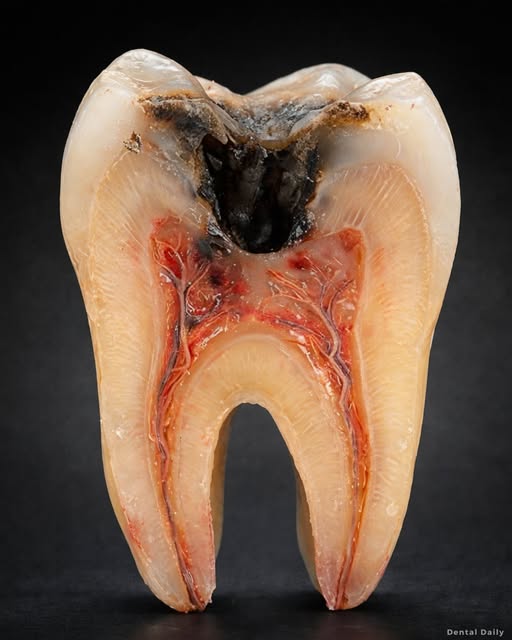
Imagine a cross-section of a tooth. At the top, a dark, jagged area invades the hard white enamel. This is advanced dental caries, where bacteria have produced acids that permanently destroyed the enamel and tunneled into the softer dentin beneath. This destruction often spreads wider inside the tooth than the visible hole on the surface suggests.
Beneath that decay lies the pulp chamber — the tooth’s vital core, rich in nerves, blood vessels, and connective tissue. In an infected tooth, this chamber is no longer a calm space. It is shown here inflamed and exposed, a condition called pulpitis. The body’s immune response causes swelling, but because the pulp is trapped inside rigid tooth walls, this swelling creates intense pressure and pain.
The Turning Point: When a Cavity Becomes an Emergency
Once decay reaches this depth, the discomfort changes. It’s no longer just a transient “toothache” when something sweet or cold hits it.
It becomes:
-
Nerve infection (bacteria infiltrating the pulp tissue)
-
Severe inflammation (throbbing, persistent, often radiating pain)
-
A gateway for bacteria to enter your bloodstream, potentially affecting other parts of your body.
The pain may become constant, keep you up at night, and worsen when you lie down. An abscess — a pus-filled pocket at the root tip — may form as the infection fights its way out.
The Treatment Shift: From Simple to Serious
At this stage, a simple filling is no longer an option. The infection inside the tooth’s nerve chamber must be addressed. Treatment typically requires one of two paths:
-
Root Canal Therapy: The infected pulp is removed, the inner chamber is cleaned, disinfected, and sealed. This saves the tooth but is more complex, time-consuming, and costly than early intervention.
-
Tooth Extraction: The tooth is removed entirely. This leads to bone loss, shifting teeth, and the need for an implant, bridge, or denture to restore function.
Both options are significantly more invasive, expensive, and time-intensive than catching and treating decay early with a small filling.
The Takeaway: Vigilance in Any Country
Living in a country with advanced dental care doesn’t make you immune. It gives you the tools to prevent and intercept. The key is:
-
Go beyond brushing: Floss daily to clean where cavities often start — between teeth.
-
Mind your diet: Frequent snacking, especially on sugars and acids, fuels cavity-causing bacteria.
-
Listen to your teeth: Sensitivity is an early warning system. Don’t ignore it.
-
Keep regular check-ups: Small cavities are silent. Your dentist and X-rays can find them before they reach the pulp.
A cavity is a progressive disease. Today’s tiny demineralization is tomorrow’s root canal if left unchecked. Even with excellent care, staying informed and proactive is your best defense against the hidden destruction happening from the inside out.
Looking for dentist : Visit directory list
Related Clinical Cases
Patients with lower front gum inflammation may also experience tartar buildup, periodontal disease, gum abscesses, or tooth decay. Explore these related clinical case studies.