Dentures That Feel Natural, Look Beautiful.

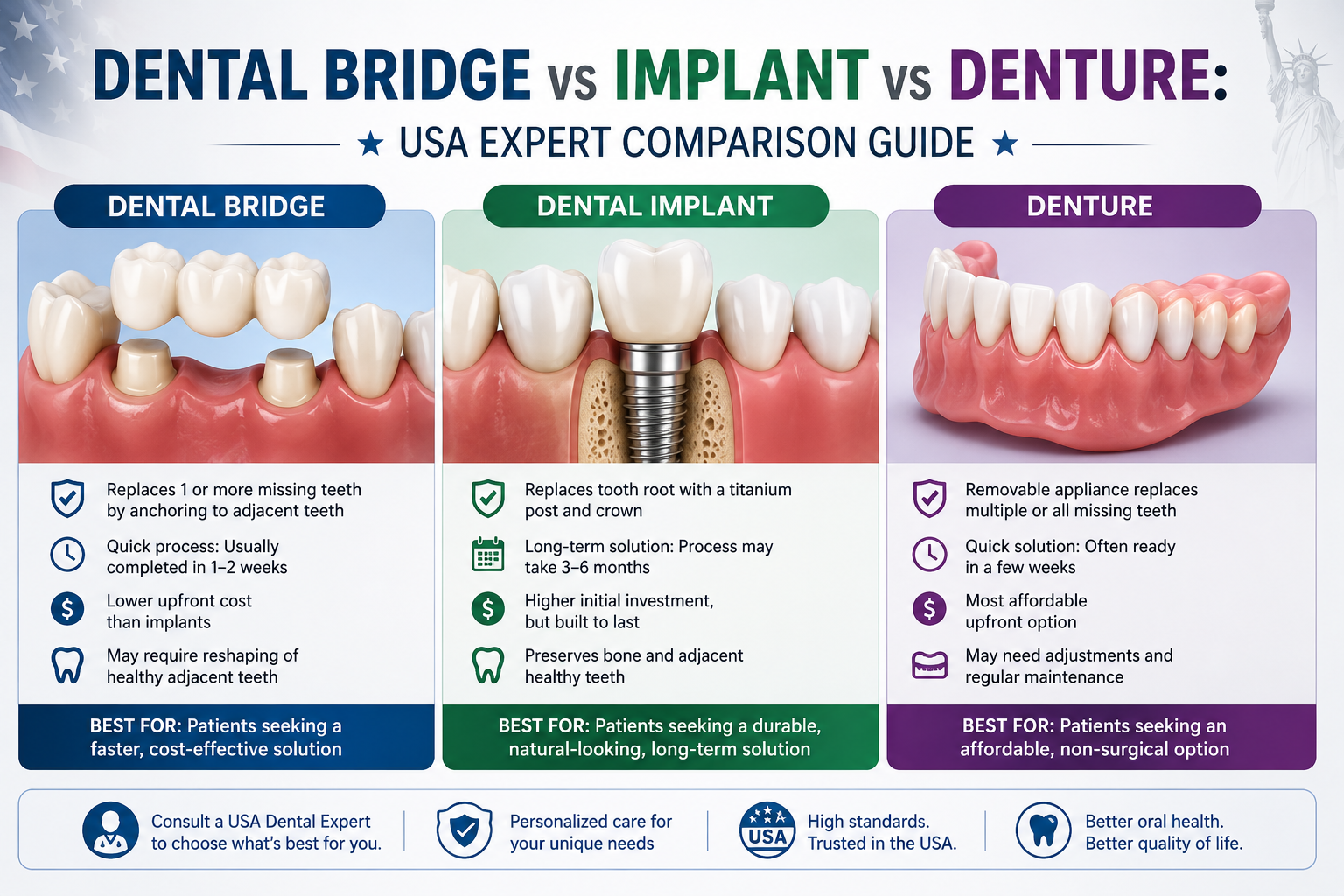
Dental Bridge vs Implant vs Denture: USA Expert Comparison Guide
Language :
Topics:
Missing teeth can affect far more than your smile. They can change how you eat, speak, and even how confident you feel during daily conversations. In Maryland, many adults struggle with tooth loss due to gum disease, tooth decay, sports injuries, aging, or accidents. The good news is that modern dentistry offers several effective solutions to restore your smile and oral health.
The three most common tooth replacement options are dental bridges, dental implants, and dentures. Each treatment has advantages, limitations, costs, and long-term considerations. Choosing the right one depends on your oral health, budget, bone condition, lifestyle, and personal goals.
This comprehensive guide explains the differences between dental bridges, implants, and dentures in simple beginner-friendly language. Whether you are missing one tooth or several teeth, understanding these treatments can help you make the best decision for your future dental health in Maryland, USA.
Why Replacing Missing Teeth Matters
Many people delay treatment after losing a tooth because they think it is only a cosmetic problem. However, untreated tooth loss can create serious dental complications over time.
Problems Caused by Missing Teeth
Bone Loss in the Jaw
When a tooth is lost, the jawbone underneath no longer receives stimulation from chewing. Over time, the bone begins to shrink.
Shifting Teeth
Nearby teeth can drift into the empty space, causing bite problems and crooked alignment.
Difficulty Chewing
Missing teeth reduce chewing efficiency and may limit healthy food choices.
Speech Problems
Tooth gaps can affect pronunciation and speech clarity.
Facial Changes
Bone loss may lead to a sunken facial appearance, making a person appear older.
Replacing missing teeth early often prevents more expensive dental problems later.
Understanding Dental Bridges
What Is a Dental Bridge?
A dental bridge is a fixed restoration that replaces one or more missing teeth by attaching an artificial tooth to neighboring natural teeth.
The supporting teeth are called “abutment teeth,” while the false tooth in the middle is called a “pontic.”
Types of Dental Bridges
Traditional Bridge
The most common type. Crowns are placed on the teeth beside the missing gap.
Cantilever Bridge
Supported by only one neighboring tooth.
Maryland Bridge
Uses metal or porcelain wings bonded behind adjacent teeth.
Implant-Supported Bridge
Supported by implants instead of natural teeth.
Advantages of Dental Bridges
Faster Treatment
Most bridges can be completed within two to three dental visits.
Lower Initial Cost
Bridges are often less expensive upfront than implants.
Natural Appearance
Modern porcelain bridges blend well with surrounding teeth.
Fixed Solution
Unlike dentures, bridges do not move during eating or speaking.
Disadvantages of Dental Bridges
Requires Altering Healthy Teeth
Neighboring teeth usually need reshaping for crowns.
Does Not Prevent Bone Loss
The missing tooth root is not replaced.
Limited Lifespan
Bridges may need replacement after 10–15 years.
Cleaning Challenges
Special flossing techniques are often needed.
Understanding Dental Implants
What Is a Dental Implant?
A dental implant is an artificial tooth root made of titanium or zirconia that is surgically placed into the jawbone. Once healed, a crown is attached to restore the missing tooth.
Dental implants are considered the gold standard for tooth replacement in modern dentistry.
How Dental Implants Work
Step 1: Implant Placement
The titanium post is surgically inserted into the jawbone.
Step 2: Healing Period
The implant fuses with the bone through a process called osseointegration.
Step 3: Abutment Placement
A connector piece is attached.
Step 4: Crown Placement
A custom crown completes the restoration.
Advantages of Dental Implants
Most Natural Feel
Implants function very similarly to natural teeth.
Prevents Bone Loss
The implant stimulates the jawbone like a real tooth root.
Long-Term Solution
With proper care, implants may last decades.
Protects Neighboring Teeth
Healthy teeth are not shaved down.
Improved Chewing Strength
Patients can usually eat normally again.
Disadvantages of Dental Implants
Higher Initial Cost
Implants cost more upfront than bridges or dentures.
Longer Treatment Time
Healing may take several months.
Surgery Required
Some patients may feel nervous about oral surgery.
Bone Grafting May Be Needed
Patients with severe bone loss may require additional procedures.
Understanding Dentures
What Are Dentures?
Dentures are removable appliances that replace missing teeth and surrounding tissue.
They can replace several teeth or an entire arch.
Types of Dentures
Full Dentures
Replace all teeth in the upper or lower jaw.
Partial Dentures
Replace several missing teeth while remaining teeth stay intact.
Implant-Supported Dentures
Dentures stabilized using implants for improved security.
Advantages of Dentures
Most Affordable Option
Dentures are usually the least expensive solution.
Non-Surgical
Traditional dentures do not require surgery.
Faster Process
Can often be completed quickly.
Suitable for Extensive Tooth Loss
Good option for patients missing many teeth.
Disadvantages of Dentures
May Move While Eating
Traditional dentures can slip or shift.
Bone Loss Continues
Dentures do not stop jawbone shrinkage.
Reduced Bite Force
Chewing efficiency is lower than implants.
Requires Daily Removal
Must be cleaned and soaked regularly.
Adjustment Period
Some patients struggle adapting to dentures.
Dental Bridge vs Implant vs Denture Comparison
Appearance
Dental Implants
Usually provide the most natural appearance.
Bridges
Very aesthetic when properly matched.
Dentures
Modern dentures look good but may appear less natural over time.
Comfort
Implants
Most comfortable because they function like real teeth.
Bridges
Generally comfortable once adjusted.
Dentures
May cause sore spots initially.
Durability
Implants
Often last 20 years or more.
Bridges
Typically last 10–15 years.
Dentures
Usually require replacement every 5–10 years.
Cost Comparison in Maryland, USA
Single Dental Implant
Approximately $3,000–$6,000 per tooth.
Dental Bridge
Approximately $2,000–$5,000 depending on materials.
Partial Denture
Approximately $800–$2,500.
Full Denture
Approximately $1,500–$4,000.
Prices vary based on specialist experience, materials, sedation, imaging, and additional procedures.
Which Option Is Best for You?
Dental Implants May Be Best If:
- You want a long-term solution
- You have healthy jawbone support
- You want maximum chewing strength
- You prefer fixed teeth
- You want to preserve bone health
Dental Bridges May Be Best If:
- Adjacent teeth already need crowns
- You want a faster solution
- You prefer a non-surgical option
- Bone loss prevents immediate implants
Dentures May Be Best If:
- You are missing many teeth
- You want the lowest upfront cost
- Surgery is not medically recommended
- You need full arch replacement
Bone Loss and Tooth Replacement
Why Bone Loss Matters
Bone loss is one of the biggest long-term concerns after tooth extraction.
When bone shrinks:
- Facial support decreases
- Dentures may loosen
- Future implants become harder
- Chewing function weakens
Which Option Prevents Bone Loss?
Dental Implants
Best solution for preserving bone.
Bridges
Do not stimulate the jawbone.
Dentures
Traditional dentures may actually accelerate bone shrinkage over time.
Recovery Time Comparison
Dental Bridge Recovery
Healing Time
Usually minimal discomfort.
Return to Normal Activities
Often within 24–48 hours.
Dental Implant Recovery
Initial Healing
Several days to one week.
Bone Integration
3–6 months on average.
Denture Adjustment
Adaptation Period
Several weeks for speech and chewing adjustment.
Eating With Bridges, Implants, and Dentures
Dental Implants
Allow the strongest chewing force.
Bridges
Good chewing ability but slightly less than implants.
Dentures
Soft foods may be easier initially.
Oral Hygiene Requirements
Caring for Dental Implants
- Brush twice daily
- Floss around implants
- Regular professional cleanings
- Avoid smoking
Caring for Bridges
- Use floss threaders
- Clean under pontics
- Maintain gum health
Caring for Dentures
- Remove nightly
- Soak in denture solution
- Brush gently
- Clean gums daily
Risks and Complications
Dental Implant Risks
- Infection
- Implant failure
- Nerve irritation
- Sinus complications in upper jaw cases
However, implant success rates are very high when performed by experienced professionals.
Bridge Risks
- Decay under supporting crowns
- Fracture
- Gum disease around abutment teeth
Denture Risks
- Gum irritation
- Slippage
- Difficulty chewing certain foods
- Bone shrinkage
Insurance Coverage in Maryland, USA
Dental insurance coverage varies significantly.
Many Plans May Cover:
- Part of bridges
- Partial denture costs
- Diagnostic imaging
- Tooth extractions
Implants Coverage
Some insurance plans now partially cover implants, but many still consider them elective.
Patients should review:
- Annual maximums
- Waiting periods
- Implant exclusions
- Deductibles
Financing Options for Tooth Replacement
Many Maryland dental clinics offer financing options to help patients manage treatment costs.
Common Financing Solutions
Monthly Payment Plans
Spread costs over time.
Healthcare Financing Programs
Third-party medical financing companies may assist qualified patients.
Flexible Spending Accounts (FSA)
May help reduce out-of-pocket costs.
Health Savings Accounts (HSA)
Can often be used for dental procedures.
Choosing the Right Dental Specialist in Maryland
Look for These Qualities
Experience
Choose providers with years of implant and restorative experience.
Modern Technology
3D imaging and digital scanning improve precision.
Comprehensive Consultations
A good dentist explains all options clearly.
Strong Reviews
Patient feedback can reveal treatment quality and communication style.
Questions to Ask During Your Consultation
Important Questions
- Am I a candidate for implants?
- How much bone loss do I have?
- Will I need bone grafting?
- What are my long-term maintenance costs?
- How long will treatment take?
- What financing options are available?
Common Myths About Tooth Replacement
Myth 1: Dentures Always Look Fake
Modern dentures can appear highly natural.
Myth 2: Implants Are Only Cosmetic
Implants improve both appearance and oral function.
Myth 3: Bridges Last Forever
Bridges eventually require maintenance or replacement.
Myth 4: Tooth Loss Is Normal With Aging
Many adults keep healthy natural teeth for life with proper care.
Long-Term Value Comparison
Cheapest Upfront Option
Dentures usually cost less initially.
Best Long-Term Investment
Implants often provide the greatest long-term value due to durability and bone preservation.
Balanced Mid-Range Option
Bridges may offer a good balance between cost and convenience.
Psychological Benefits of Tooth Replacement
Replacing missing teeth often improves more than oral function.
Patients commonly report:
- Improved self-confidence
- Better social comfort
- More willingness to smile
- Easier public speaking
- Improved quality of life
A healthy smile can positively affect both professional and personal relationships.
Maryland Lifestyle Considerations
In Maryland, many adults live active lifestyles involving professional work, social events, seafood dining, athletics, and travel. Reliable tooth replacement matters for comfort and confidence.
Implants are especially popular among patients wanting stability during active lifestyles, while dentures remain practical for large-scale tooth replacement.
Urban areas such as Baltimore, Annapolis, Columbia, and Bethesda often provide access to advanced implant technologies and cosmetic restorative dentistry.
Frequently Asked Questions (FAQs)
Are dental implants painful?
Most patients report less discomfort than expected. Local anesthesia and sedation help make the procedure manageable.
How long do dental implants last?
With proper care, implants may last decades or even a lifetime.
Are dentures uncomfortable?
Modern dentures are more comfortable than older versions, but some adjustment is still normal.
Can I switch from dentures to implants later?
Yes. Many patients upgrade to implant-supported restorations after years of wearing dentures.
Which option looks the most natural?
Dental implants generally provide the most realistic appearance and feel.
Choosing between a dental bridge, implant, or denture is a major decision that affects your comfort, confidence, oral health, and long-term finances.
Dental implants offer the most natural and durable solution for many Maryland patients, especially when bone preservation and long-term function are priorities. Bridges provide a reliable fixed option with faster treatment, while dentures remain an affordable and effective solution for replacing multiple missing teeth.
The best treatment depends on your personal needs, oral health condition, bone structure, budget, and goals. An experienced Maryland dental professional can evaluate your situation and help create a treatment plan tailored specifically for you.
Replacing missing teeth early often leads to better oral health outcomes, improved confidence, and a stronger quality of life for years to come.
Can tooth extraction cause infection? Mild inflammation is normal, but increasing swelling, fever, or severe pain may indicate infection. Learn more about post-extraction infection warning signs in this detailed guide.
Book a consultation with our Cebu dental specialists for proper evaluation and care.
Ready to get expert guidance?
If you’re experiencing severe pain or delayed healing, book a consultation with our Cebu dental specialists to get proper evaluation and care.
Consultation or contact page .
Book a Consultation
For severe discomfort or delayed healing, book a consultation with our Cebu dental specialists today.
Looking for a dentist? Browse our Cebu dental directory to find trusted clinics near you.
Medical Review and Clinical Basis
This article is based on clinical dental guidelines and real patient recovery patterns observed after tooth extraction procedures. The information reflects common post-extraction healing stages, including normal clot formation, gum tissue repair, and signs of possible complications such as dry socket or infection.
While mild discomfort is expected after a dental extraction, worsening pain after Day 3, bad odor, exposed bone, or spreading pain may require professional evaluation. These symptoms are consistent with known post-extraction complications described in standard dental practice.
About Cebu Dental Implants
Cebu Dental Implants provides comprehensive tooth extraction, surgical procedures, and dental implant services in the Philippines. Our team evaluates post-extraction healing, manages complications such as dry socket, and advises patients on proper aftercare to prevent infection and delayed healing.
If you experience severe pain or unusual symptoms after extraction, early professional assessment is recommended to prevent further complications.
Important Medical Disclaimer
This content is for educational purposes only and does not replace professional dental diagnosis. Every patient heals differently. If symptoms worsen or do not improve within a few days, consult a licensed dentist for proper evaluation and treatment.
Author
This article was prepared by the Cebu Dental Implants content team in consultation with licensed dental professionals experienced in tooth extraction and implant procedures.
Related Clinical Cases
Patients with lower front gum inflammation may also experience tartar buildup, periodontal disease, gum abscesses, or tooth decay. Explore these related clinical case studies.