Building Confidence One Smile at a Time.

Traumatic Tongue Injury: Expert Dental Guide to First Aid, Treatment, and Healing
Image:
Severity:
Teeth Problems:
A traumatic tongue injury occurs when the tongue is damaged by accidental biting, sharp or broken teeth, dental restorations, orthodontic appliances, sports injuries, or other forms of physical trauma. Because the tongue contains many blood vessels and is constantly moving during speaking, swallowing, and chewing, even a small wound can become painful or bleed noticeably.
Most minor tongue injuries heal without surgery. However, deep cuts, uncontrolled bleeding, increasing swelling, and wounds that fail to heal require professional assessment.
1. Dental Case Analysis: Understanding a Traumatic Tongue Lesion
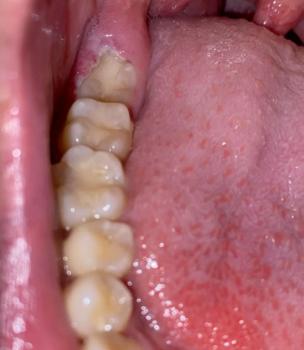
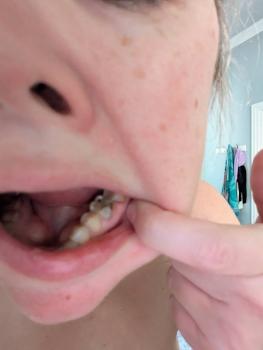
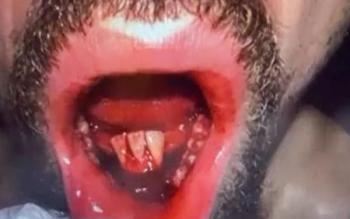
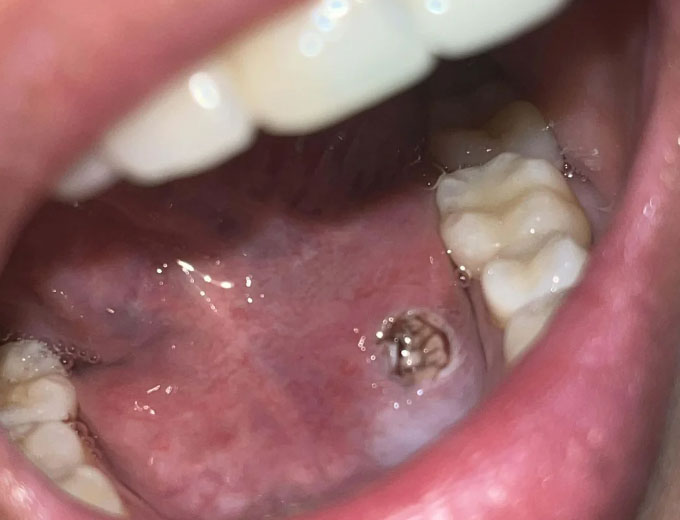
In the referenced case, the described lesion is localized to the underside or side of the tongue, with a darker central area and surrounding tissue irritation. A possible explanation is a traumatic ulcer caused by accidental biting or repeated contact with a sharp tooth edge.
Provisional clinical considerations include:
-
Traumatic tongue ulcer: A localized sore developing after the tongue is bitten or rubbed against an irritating surface.
-
Tongue laceration: A cut that may have irregular edges and bleed depending on its depth.
-
Repeated mechanical irritation: Continued rubbing from a chipped tooth, sharp cusp, rough filling, denture, or orthodontic appliance.
-
Other oral lesions: Aphthous ulcers, infections, inflammatory conditions, and other persistent lesions may resemble traumatic injuries.
These are possible explanations, not a confirmed diagnosis. A dental professional must examine the lesion, review the injury history, and assess its size, depth, location, and healing pattern.
2. Immediate First Aid for a Tongue Injury
The first priority is to control bleeding and protect the airway.
Step 1: Assess the severity. Check whether the person can breathe normally, swallow saliva, speak, and open the mouth. Significant swelling or difficulty breathing requires emergency medical care.
Step 2: Control bleeding. If the wound is accessible and the person is alert, gently apply firm, continuous pressure with clean gauze for 15–20 minutes. Do not repeatedly lift the gauze to check the wound. Never place loose gauze deep in the mouth of a person who is drowsy or unable to protect their airway.
Step 3: Rinse gently. Once bleeding is controlled, gently rinse with clean water. A mild salt-water rinse may help keep the mouth clean during recovery, provided the person can rinse and spit safely.
Step 4: Reduce discomfort. A cold drink or small ice chips may help soothe a minor injury if the person is fully alert and can swallow safely. A cold compress held against the outside of the face may also reduce discomfort.
Step 5: Arrange dental assessment when necessary. Deep, gaping, or persistently bleeding wounds may require urgent treatment, including evaluation for sutures.
For severe bleeding, do not delay emergency care while attempting home treatment.
3. Treatment Options Recommended by Dental Professionals
Treatment depends on the wound's depth, location, cause, and severity.
Minor tongue injury
-
Gentle oral hygiene and adequate hydration.
-
Soft, cool foods while chewing is uncomfortable.
-
Avoidance of spicy, acidic, very hot, crunchy, or sharp foods.
-
Appropriate pain relief, selected according to the person's age, medical history, allergies, and other medications.
Injury caused by a sharp tooth or dental restoration
A dentist should examine the suspected source of irritation. A chipped tooth, rough filling, or sharp cusp may need professional smoothing or repair. Orthodontic wax may temporarily cover an irritating brace component, but it does not replace treatment of a significant wound.
Deep cut or significant laceration
A dentist, oral surgeon, or emergency clinician should evaluate whether the wound requires cleaning, closure, or further investigation. Injuries involving the tongue's edge or tip, deep tissue, or persistent bleeding deserve particular attention.
Possible infection
Increasing pain, spreading redness or swelling, fever, pus, or worsening symptoms warrant prompt assessment. Antibiotics are not routinely necessary for uncomplicated traumatic ulcers; a qualified clinician should determine whether an infection is present and whether medication is indicated.
4. Tongue Injury Healing Timeline
Healing varies according to the size and depth of the wound, ongoing irritation, and the person's general health.
-
First 24–72 hours: Pain, tenderness, and mild localized swelling may occur. Bleeding from a minor injury should stop with appropriate pressure.
-
Days 3–7: A minor injury should generally show progressive improvement, with less pain and easier eating.
-
Days 7–14: Many superficial traumatic ulcers heal substantially or completely during this period.
-
After 14 days: A persistent ulcer or unexplained lesion should be examined by a dentist or physician, even if it is not painful.
A wound that becomes larger, more painful, increasingly swollen, or newly infected should be evaluated sooner rather than waiting for the expected healing period.
5. Warning Signs: When Is a Tongue Injury an Emergency?
Seek emergency medical care immediately if any of the following occurs:
-
Difficulty breathing or swallowing saliva.
-
Rapidly increasing tongue, mouth, or throat swelling.
-
Heavy bleeding or bleeding that does not stop after 15–20 minutes of continuous direct pressure.
-
A deep or extensive tongue cut.
-
Serious facial trauma, suspected jaw fracture, or a significant injury following an accident.
Arrange urgent dental or medical assessment for worsening pain, fever, spreading swelling, pus, difficulty eating or drinking, or a wound that is not healing as expected.
A persistent ulcer lasting two weeks or longer requires professional examination to exclude other causes, including potentially serious oral disease.
6. How to Prevent Repeated Tongue Injuries
Prevention begins by identifying the mechanical cause.
-
Have chipped teeth and rough restorations examined and repaired.
-
Ask a dentist to assess braces, dentures, or other appliances that repeatedly rub the tongue.
-
Avoid chewing hard objects and refrain from biting the tongue intentionally.
-
Use an appropriate mouthguard during contact sports when recommended.
-
Maintain gentle oral hygiene without scraping or traumatizing the injured area.
-
Seek evaluation for repeated unexplained tongue biting, especially if it occurs during sleep or alongside other symptoms.
7. Clinical Perspective: Why Follow-Up Matters
A traumatic tongue ulcer should improve when the source of injury is removed. However, the appearance of a lesion alone cannot reliably distinguish trauma from every other oral condition.
A dentist should reassess a lesion that persists, recurs at the same site, becomes firm or enlarges, develops unexplained bleeding, or is accompanied by a neck lump. Depending on the findings, referral to an oral medicine specialist or oral and maxillofacial surgeon, or a biopsy, may be appropriate.
Important clinical principle: Do not assume that a dark center, white coating, or circular appearance proves infection or confirms a traumatic ulcer. Clinical history and examination are essential.
Frequently Asked Questions About Traumatic Tongue Injuries
1. How long does a traumatic tongue injury take to heal?
Many minor tongue injuries improve within several days and heal within approximately 7–14 days. Deeper wounds may take longer. Persistent or worsening lesions need professional evaluation.
2. What causes a dark spot or dark center on a tongue wound?
A dark area may represent dried blood, a small blood clot, bruised tissue, or another type of lesion. Its appearance alone cannot establish the cause. A dentist should examine unexplained, enlarging, or persistent dark lesions.
3. Can a sharp tooth cause a tongue ulcer?
Yes. A chipped tooth, sharp cusp, rough filling, or dental appliance can repeatedly traumatize the tongue. A dentist can identify and correct the source of irritation.
4. Should I use salt water for a tongue injury?
A gentle rinse with mild salt water may help keep the mouth clean after bleeding has stopped. Avoid vigorous rinsing immediately after an injury, and do not use rinses if swallowing or spitting is unsafe.
5. Do tongue injuries always need stitches?
No. Many small, superficial injuries heal without sutures. Deep, gaping, extensive, or persistently bleeding cuts require prompt assessment to determine whether closure or other treatment is needed.
6. Do I need antibiotics for a traumatic tongue ulcer?
Not usually. Antibiotics do not routinely help uncomplicated traumatic ulcers. They may be considered if a clinician identifies a bacterial infection or another specific indication.
7. What foods should I avoid while my tongue heals?
Avoid very hot foods, spicy sauces, acidic fruits, hard chips, sharp crackers, and other foods that aggravate the wound. Soft foods and cool or lukewarm drinks are often more comfortable.
8. Is it normal for a tongue wound to develop a white or yellow surface?
A superficial ulcer may develop a pale or yellowish fibrin layer as part of normal healing. This appearance alone does not establish that the wound is infected. Increasing pain, swelling, fever, pus, or deterioration should prompt assessment.
9. When should I worry about a tongue ulcer that does not heal?
Arrange a dental or medical examination if an ulcer lasts two weeks or longer, enlarges, repeatedly returns, becomes firm, bleeds without an obvious cause, or is accompanied by a neck lump. Do not wait two weeks if serious warning signs develop.
10. Can I treat a tongue injury at home?
A small, uncomplicated injury may be managed with gentle oral hygiene, a soft diet, hydration, and appropriate pain relief. Deep wounds, uncontrolled bleeding, significant swelling, or breathing and swallowing difficulties require professional or emergency care.
11. Can a traumatic tongue injury become infected?
Infection is possible, although many minor wounds heal normally. Worsening pain, spreading redness or swelling, fever, and pus are reasons to seek prompt professional assessment.
12. Which dental professional should examine a tongue injury?
A general dentist can assess many minor injuries and identify sharp teeth or restorations. Deep lacerations, complex injuries, persistent unexplained lesions, or suspected serious oral disease may require an oral surgeon, oral medicine specialist, or hospital-based clinician.
Medical Disclaimer
This educational article supports, but does not replace, an in-person examination by a licensed dentist or medical professional. The referenced case is based on a description of a lesion and does not establish a definitive diagnosis. Seek emergency care for breathing difficulties, rapidly increasing swelling, or uncontrolled bleeding.
References for Further Reading
-
Cleveland Clinic — Dental Trauma: https://my.clevelandclinic.org/health/diseases/16916-dental-injuries
-
Cleveland Clinic — Dental Emergencies: https://my.clevelandclinic.org/health/articles/11368--dental-emergencies-what-to-do
-
NHS — Emergency and urgent dental care: https://www.nhs.uk/nhs-services/dentists/how-to-find-an-nhs-dentist-in-an-emergency/
-
Original case analysis — Traumatic Tongue Injury Case Analysis and Healing Timeline: https://cebudentalimplants.com/traumatic-tongue-injury-case-analysis
Teeth Case – Full Analysis and Provisional Diagnosis (Zoom 100%)
This assessment is based on a single image. A definitive diagnosis requires an in-person oral examination. Soft-tissue lesions can resemble each other; persistent or worsening symptoms require professional evaluation.
1. Visual Findings (Deep Examination)
-
Tongue (ventral/lateral surface):
-
A localized circular lesion with a dark central area consistent with traumatic injury (commonly from accidental biting, sharp tooth edge, or recent dental work).
-
Surrounding tissue shows mild inflammation without obvious widespread swelling.
-
-
Teeth near lesion:
-
Adjacent molars appear intact; a sharp cusp or rough edge may be contacting the tongue during chewing.
-
-
Saliva and tissue response:
-
Moist environment supports healing, but repeated trauma can delay recovery.
-
2. Most Likely Diagnosis (Provisional)
-
Traumatic tongue ulcer or bite injury
-
Localized soft-tissue inflammation
-
Secondary irritation from tooth contact (sharp cusp/restoration)
3. Differential Considerations (If Not Healing)
-
Recurrent aphthous ulcer (less likely if a clear bite history exists)
-
Infected traumatic ulcer
-
Chronic irritation lesion (if repeatedly traumatized)
4. Recommended Treatment Process
Phase 1: Immediate Care (Days 1–3)
-
Identify and eliminate the source of trauma (sharp tooth edge or restoration smoothing).
-
Warm saline rinses 2–3 times daily.
-
Topical protective gel or barrier paste as advised by a dentist.
-
Soft diet; avoid spicy, acidic, or hard foods.
Phase 2: Healing Support (Days 4–7)
-
Continued oral hygiene with gentle brushing.
-
Analgesic mouth rinse if pain persists.
-
Monitor lesion size and pain reduction.
Phase 3: Re-evaluation (Days 8–14)
-
Lesion should show significant reduction in size and tenderness.
-
If no improvement, clinical review is required to rule out infection or other pathology.
Expected healing time:
-
Minor traumatic tongue injuries: 7–14 days when the cause is removed.
5. If Healing Takes 14 Days or More – What May Scale Up
-
Persistent ulceration and pain
-
Secondary bacterial infection
-
Difficulty eating or speaking
-
Scar formation
-
Need for biopsy if lesion does not resolve (to exclude non-traumatic causes)
6. Home Care Guidance (Interim)
-
Avoid chewing on the affected side.
-
Do not pick or scrape the lesion.
-
Avoid alcohol and tobacco.
-
Maintain hydration.
7. Professional Commentary
Traumatic tongue lesions usually heal quickly once the source of injury is eliminated. Recurrent biting or sharp tooth edges are common causes. Any tongue lesion persisting beyond two weeks should be examined promptly.
Visit Nearest Dental Clinic
Find a nearby clinic for examination and smoothing of sharp tooth edges:
https://cebudentalimplants.com/map-dental-clinic
Related Clinical Cases
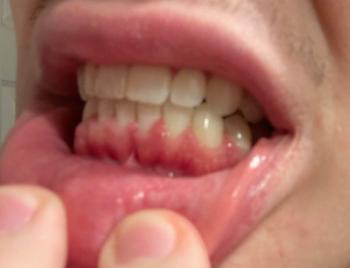
Patients with lower front gum inflammation may also experience tartar buildup, periodontal disease, gum abscesses, or tooth decay. Explore these related clinical case studies.