Building Confidence One Smile at a Time.

Beyond the Drill: Investing in the Future of Philippine Dentistry with AI and Regenerative Tech
Language :
Topics:
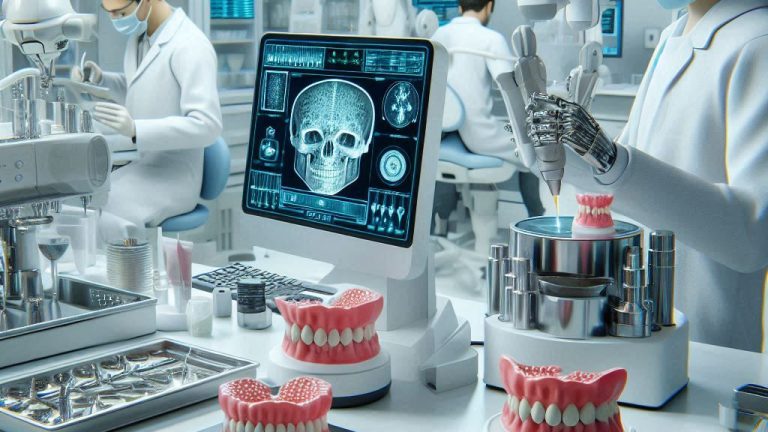
For dental businesses and investors in the Philippines, the convergence of AI, digital workflows, and regenerative technologies presents a monumental opportunity to lead the market. Here is a strategic framework to capitalize on this innovation wave.
Strategic Opportunity Map
The dental technology landscape can be broken down into three converging innovation areas. The following table outlines their current state, practical applications, and market potential for the Philippine context.
| Innovation Area | Current State & Key Development | Practical Clinical & Business Application | Philippine Market Potential |
|---|---|---|---|
| AI & Automation | Current: AI diagnostics are commercially available and being integrated into clinic workflows |
.
Next Wave: AI-powered CRM and administrative automation (like Maxicare's system)
| . | - AI Diagnostics: Analyze X-rays for cavities, bone loss with ~90% accuracy, serving as a "second opinion" |
- Administrative AI: Automate insurance approvals, patient scheduling, and follow-ups
| . | High & Immediate. Addresses local challenges of diagnostic consistency and clinic operational efficiency. Early adopters can brand themselves as high-tech, high-precision leaders |
| . | |
| Regenerative Dentistry & Biotech | Current: Pulp-dentin regeneration is in clinical trials |
. Stem cell biobanking is a growing commercial market.
Future: Enamel regeneration and whole-tooth regeneration are in early research stages
| . | - Biobanking Services: Partner with or establish facilities to collect and store dental stem cells (e.g., from wisdom teeth) |
| . - Advanced Procedures: Offer cutting-edge regenerative treatments (e.g., for damaged pulp) as they gain regulatory approval. |
Strategic Long-term Play. Positions a practice or business at the absolute forefront of global dentistry. Requires significant investment in partnerships, training, and possibly navigating future regulations |
| . | |
| Digital Workflows & 3D Design | Current: 3D Digital Smile Design (DSD), intraoral scanning, and chairside milling/printing are standard in advanced clinics |
| . | - 3D Smile Design: Use intraoral scans and 3D software to plan and show patients previews of cosmetic results |
| . - In-house Production: 3D print surgical guides, models, and temporary crowns, reducing wait times and lab costs. |
High for Competitive Differentiation. Directly enhances patient experience, case acceptance, and practice efficiency. Essential for attracting cosmetic dentistry and dental tourism patients |
| . |
Actionable Business Pathways
To translate these opportunities into action, consider these targeted strategies:
-
For Clinic Owners & Practitioners:
-
Start with Digital Integration: Invest in an intraoral scanner and 3D smile design software. This is the foundational step that improves case presentation, acceptance, and paves the way for in-house manufacturing
-
-
Augment with AI Diagnostics: Integrate an FDA-approved AI diagnostic software. It enhances your diagnostic credibility, improves patient trust, and streamlines workflow
-
Upskill Relentlessly: Commit to continuous education in digital dentistry and AI. The learning curve is an investment in your clinic's future capabilities
-
For Investors & Business Builders:
-
Develop Specialized "Tech-Forward" Clinics: Create a brand focused on AI diagnostics, full digital workflows, and premium cosmetic outcomes. Target both local affluent patients and the dental tourism market.
-
Explore Biobanking Ventures: Investigate partnerships to establish dental stem cell biobanking services in the Philippines. This taps into a growing global market and prepares for future regenerative therapies
-
Build a Support Ecosystem: Consider businesses that support the tech transition: providing 3D printing services for local clinics, offering specialized training in new software/hardware, or developing localized AI tools.
-
-
Key Considerations for the Philippine Market
Successfully navigating this transition requires awareness of several critical factors:
-
The "Dentist + AI" Partnership: The goal is augmentation, not replacement. AI provides data-driven insights, but the final diagnosis, treatment planning, and human touch remain with the clinician
-
. Marketing should emphasize this enhanced capability.
-
Cost vs. Strategic Value: Initial investments are significant. Frame them not as expenses, but as strategic investments in brand differentiation, operational efficiency, and the ability to command premium fees
-
Navigating Regulation & Ethics: Stay informed about future regulations for biologics (stem cells) and medical AI
-
. Adhere strictly to data privacy laws when implementing AI systems.
Embracing these innovations is the definitive path to moving beyond the "industrial age" model. By strategically integrating AI, digitization, and preparing for biotech, Philippine dental businesses can scale efficiently, offer unparalleled care, and establish themselves as leaders in the next era of global dentistry.
I hope this strategic overview provides a clear roadmap. To dive deeper into planning, would you be interested in a financial model comparing the ROI of different technology investments (e.g., AI software vs. 3D printer), or an analysis of specific AI diagnostic platforms suitable for the Southeast Asian market?
Looking for dentist : Visit directory list
Related Clinical Cases
Patients with lower front gum inflammation may also experience tartar buildup, periodontal disease, gum abscesses, or tooth decay. Explore these related clinical case studies.