Because Every Tooth Deserves Care.

Post-Extraction Healing Check: Is This Normal After a Back Lower Tooth Removal?
Image:

Severity:
Client concern: “I had my back left bottom tooth removed on Friday. Is this normal, or am I just paranoid?”
Zoom 100% Visual Assessment (Based on the Image Provided)
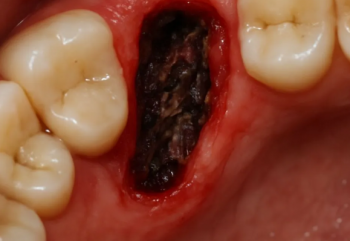
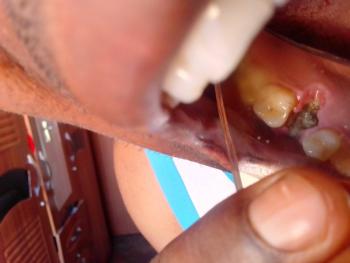
At full zoom, the area shown appears to be a recent extraction socket on the lower left posterior (back) jaw, behind the last standing molar. The socket contains a gray-white to yellowish material with surrounding pink tissue.
What this most likely represents
-
Healing blood clot covered by fibrin (a normal healing layer)
-
Early granulation tissue, which is part of the natural repair process
-
Mild food debris trapped in the socket (common in lower molars)
What it does not immediately look like
-
There is no obvious exposed dry bone
-
No heavy pus discharge visible
-
No black, empty socket appearance typical of classic dry socket
Based on appearance alone, this can be normal healing, especially within the first few days after extraction.
Deep Examination: What’s Happening Inside the Socket
After a tooth extraction, the body follows this sequence:
Day 0–3
-
Blood clot forms to protect the bone and nerves
-
White or yellow film (fibrin) may appear
-
Mild pain, swelling, and tightness are normal
Day 4–7
-
Granulation tissue develops
-
Socket may look white/cream colored
-
Discomfort should slowly decrease
Day 7–14
-
Gum tissue begins closing over the socket
-
Sensitivity reduces significantly
-
Chewing becomes more comfortable
What you are seeing fits early healing, especially if the extraction was done on Friday.
Is This Dry Socket? (Most Common Fear)
Dry socket usually includes:
-
Severe, worsening pain 3–5 days after extraction
-
Pain radiating to ear, jaw, or temple
-
Foul taste or strong odor
-
Visible empty socket with exposed bone
If you are not experiencing increasing pain or strong odor, dry socket is unlikely at this stage.
14-Day Healing Timeline (Expected)
-
Pain: Should improve daily, not worsen
-
Appearance: White/yellow tissue is normal early on
-
Closing: Gum tissue partially closes by day 10–14
-
Full bone healing: 6–8 weeks (not visible externally)
Process to Execute (What You Should Do Now)
-
Do not disturb the socket
-
No picking, probing, or forceful rinsing
-
-
Rinse gently
-
Warm saltwater 2–3x daily starting 24 hours after extraction
-
-
Avoid
-
Smoking, alcohol, straws, hard or crunchy food
-
-
Maintain oral hygiene
-
Brush nearby teeth gently, avoid direct contact with the socket
-
-
Observe symptoms
-
Monitor pain level, swelling, taste, and smell
-
What Issues Can Scale Up If Ignored
If proper care is not followed, the following may develop:
-
Dry socket (alveolar osteitis)
-
Localized infection
-
Delayed healing
-
Persistent inflammation
-
Food impaction leading to odor or pain
Early dental review prevents these from escalating.
When to See a Dentist Immediately
Visit a dental clinic if you experience:
-
Increasing pain after day 3
-
Strong foul smell or taste
-
Pus or spreading swelling
-
Fever
-
Difficulty opening mouth
Professional Comment
From the image and timing described, this looks within normal healing range, and mild concern is understandable but not paranoia. Lower back teeth take longer to heal due to dense bone and constant movement during chewing.
Visit a Dentist Near You
For peace of mind and proper evaluation, we recommend a post-extraction check with a licensed dentist.
Find a nearby clinic using our directory:
https://cebudentalimplants.com/map-dental-clinic
Teeth Case
 |
 |
 |
 |
 |
 |