We Bring Back the Sparkle in Your Smile.

Ear Pain After Tooth Extraction? The Hidden Jaw-to-Ear Connection Explained
Language :
Topics:
By a USA Dental Health Educator
When Michael, a 42-year-old accountant from Ohio, had his lower molar removed, he expected soreness in his jaw. What he didn't expect was a sharp ache deep inside his ear that began the next morning.
"I thought I had an ear infection," he recalled. "The tooth was gone, so why did my ear hurt more than my mouth?"
His experience is surprisingly common.
Many patients become concerned when ear pain develops after a tooth extraction. In most cases, the discomfort isn't coming from the ear itself. Instead, it's the result of the complex network of nerves connecting the teeth, jaw, and ear.
Understanding why this happens can help you recover with confidence—and recognize when symptoms require immediate dental care.
Why Ear Pain Happens After a Tooth Extraction
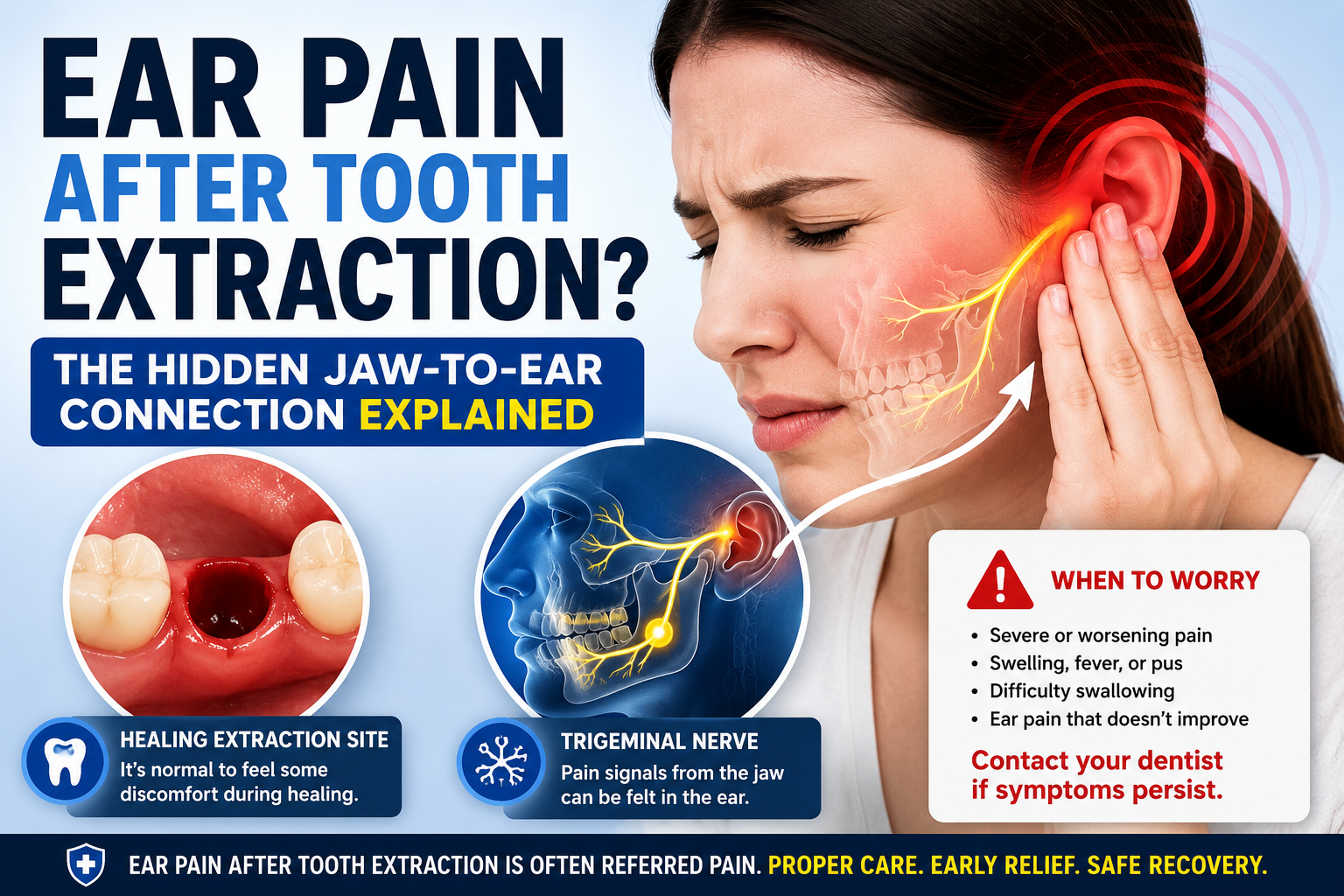
The lower jaw shares nerve pathways with the ear through branches of the trigeminal nerve, the largest sensory nerve of the face.
After a tooth is removed, the surrounding tissues naturally become inflamed. The brain can sometimes interpret these pain signals as coming from the ear, a phenomenon known as referred pain.
This is especially common after:
- Lower wisdom tooth extraction
- Lower molar removal
- Difficult surgical extractions
- Procedures requiring significant jaw opening
Although the ear feels painful, the source of the discomfort is usually the healing tissues inside the mouth.
Normal Symptoms During Healing
Most patients experience some combination of:
- Mild to moderate ear pain
- Jaw soreness
- Tender gums
- Mild facial swelling
- Difficulty opening the mouth completely
- Pain when chewing
- Temporary sensitivity around nearby teeth
These symptoms often peak between the second and third day before gradually improving.
When Ear Pain May Signal a Problem
Persistent or worsening ear pain can sometimes indicate an underlying complication rather than normal healing.
Dry Socket
One of the most common causes is dry socket (alveolar osteitis).
Normally, a protective blood clot forms inside the extraction site. If that clot dissolves or becomes dislodged too early, the underlying bone and nerves become exposed.
Typical signs include:
- Severe throbbing pain beginning 2–5 days after extraction
- Pain radiating to the ear
- Bad breath
- Unpleasant taste
- Empty-looking extraction socket
Dry socket is painful but treatable by your dentist.
Infection
Bacteria can sometimes enter the extraction site before complete healing.
Symptoms may include:
- Increasing swelling
- Fever
- Pus drainage
- Persistent bad taste
- Severe pain
- Swollen lymph nodes
Prompt dental treatment usually includes cleaning the area and, when appropriate, prescribing antibiotics.
The Bigger Picture: Why Teeth Sometimes Need Extraction
Many extractions are preventable.
Across the United States, tooth decay and gum disease remain the two leading causes of tooth loss.
Tooth Decay
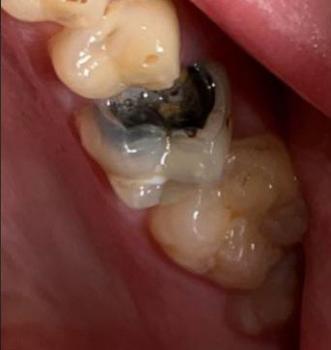
Tooth decay begins when bacteria such as Streptococcus mutans feed on sugars and starches left on the teeth.
These bacteria produce acids that remove minerals from tooth enamel.
Without treatment:
- White spots develop.
- Cavities form.
- Decay reaches the dentin.
- Infection spreads into the dental pulp.
- Root canal treatment may become necessary.
- If the tooth cannot be saved, extraction is the final option.
Dry mouth caused by medications or certain medical conditions significantly increases the risk of rapid decay because saliva normally helps protect teeth from acid attack.
Gum Disease
Gum disease starts quietly.
Plaque accumulates around the gumline and eventually hardens into tartar.
Gingivitis
Early gum disease causes:
- Red gums
- Swelling
- Bleeding during brushing
At this stage, the disease is usually reversible with professional cleaning and improved oral hygiene.
Periodontitis
If untreated, inflammation extends deeper below the gums.
The infection gradually destroys:
- Gum tissue
- Periodontal ligament
- Jawbone supporting the teeth
Eventually, teeth become loose and may require extraction.
Smoking remains the strongest risk factor for severe periodontal disease, while diabetes, hormonal changes, genetics, and weakened immunity also increase risk.
Modern Dental Treatments
Today's dentists have many options to save teeth before extraction becomes necessary.
These include:
- Professional fluoride treatments
- Dental sealants
- Composite fillings
- Porcelain restorations
- Root canal therapy
- Scaling and root planing
- Local antimicrobial therapy
- Bone grafting
- Gum graft surgery
- Periodontal pocket reduction procedures
Early diagnosis almost always results in simpler, less expensive treatment.
Oral Health in America
Current public health data show that oral disease continues to affect millions of Americans.
Studies indicate:
- Nearly 42% of adults aged 30 and older have some form of periodontal disease.
- Around 8% have severe periodontitis.
- Approximately 1 in 5 adults has at least one untreated cavity.
- More than 90% of adults experience tooth decay at some point during their lifetime.
- Tooth decay remains the most common chronic disease affecting children in the United States.
These numbers highlight why routine dental examinations remain essential even when symptoms are absent.
How to Relieve Ear Pain After an Extraction
Most patients recover comfortably by following their dentist's instructions.
Helpful measures include:
- Take prescribed or recommended pain medication as directed.
- Apply a cold compress during the first 24 hours.
- Rest and avoid strenuous activity.
- Eat soft foods.
- Stay hydrated.
- Avoid smoking or vaping.
- Do not drink through a straw.
- Keep the extraction site clean without disturbing the blood clot.
- Begin gentle saltwater rinses only when instructed by your dentist.
Recovery usually progresses steadily over one to two weeks.
Emergency Warning: When You Should Seek Immediate Medical Care
Although uncommon, dental infections can spread beyond the tooth into the face and neck.
This condition, known as dental-origin facial cellulitis, is a medical emergency.
Seek immediate emergency care if you develop:
- Difficulty breathing
- Difficulty swallowing
- Rapidly spreading facial swelling
- Swelling extending toward the eye or neck
- High fever
- Chills
- Extreme fatigue
- Confusion
- Severe headache
- Stiff neck
- Drooling because swallowing becomes difficult
These symptoms may indicate a rapidly spreading infection that requires urgent hospital treatment to prevent airway compromise or bloodstream infection.
The Bottom Line
Ear pain after a tooth extraction is often a normal part of healing and usually results from referred pain traveling through shared facial nerves—not from an ear infection.
However, worsening pain, fever, swelling, foul drainage, or difficulty swallowing should never be ignored.
Routine dental visits, excellent oral hygiene, limiting sugary foods and drinks, and treating cavities or gum disease early remain the best ways to protect your teeth and avoid future extractions.
Listening to your body's warning signs—and seeking care promptly when something doesn't feel right—can make the difference between a routine recovery and a serious dental emergency.
Can tooth extraction cause infection? Mild inflammation is normal, but increasing swelling, fever, or severe pain may indicate infection. Learn more about post-extraction infection warning signs in this detailed guide.
Book a consultation with our Cebu dental specialists for proper evaluation and care.
Ready to get expert guidance?
If you’re experiencing severe pain or delayed healing, book a consultation with our Cebu dental specialists to get proper evaluation and care.
Consultation or contact page .
Book a Consultation
For severe discomfort or delayed healing, book a consultation with our Cebu dental specialists today.
Looking for a dentist? Browse our Cebu dental directory to find trusted clinics near you.
Medical Review and Clinical Basis
This article is based on clinical dental guidelines and real patient recovery patterns observed after tooth extraction procedures. The information reflects common post-extraction healing stages, including normal clot formation, gum tissue repair, and signs of possible complications such as dry socket or infection.
While mild discomfort is expected after a dental extraction, worsening pain after Day 3, bad odor, exposed bone, or spreading pain may require professional evaluation. These symptoms are consistent with known post-extraction complications described in standard dental practice.
About Cebu Dental Implants
Cebu Dental Implants provides comprehensive tooth extraction, surgical procedures, and dental implant services in the Philippines. Our team evaluates post-extraction healing, manages complications such as dry socket, and advises patients on proper aftercare to prevent infection and delayed healing.
If you experience severe pain or unusual symptoms after extraction, early professional assessment is recommended to prevent further complications.
Important Medical Disclaimer
This content is for educational purposes only and does not replace professional dental diagnosis. Every patient heals differently. If symptoms worsen or do not improve within a few days, consult a licensed dentist for proper evaluation and treatment.
Author
This article was prepared by the Cebu Dental Implants content team in consultation with licensed dental professionals experienced in tooth extraction and implant procedures.
Teeth Case
 |
 |
 |
 |
 |
 |