Your Smile, Perfected with Precision.

From Spare Parts to Living Tissues: How 3D Bioprinting is Launching Dentistry's Regenerative Revolution
Language :
Topics:
Beyond the Drill: How 3D Bioprinting is Redefining the Future of Dentistry
We stand at the precipice of the most profound shift in healthcare since the discovery of antibiotics. For decades, dentistry has been defined by a core principle: subtraction. We drill, we extract, we prepare. But a seismic change is underway, moving us from a model of repair and replacement to one of true regeneration and rebirth. The convergence of Artificial Intelligence (AI), advanced 3D printing, and biotechnology isn't just improving our tools—it's rewriting the very definition of what's possible in the oral cavity.
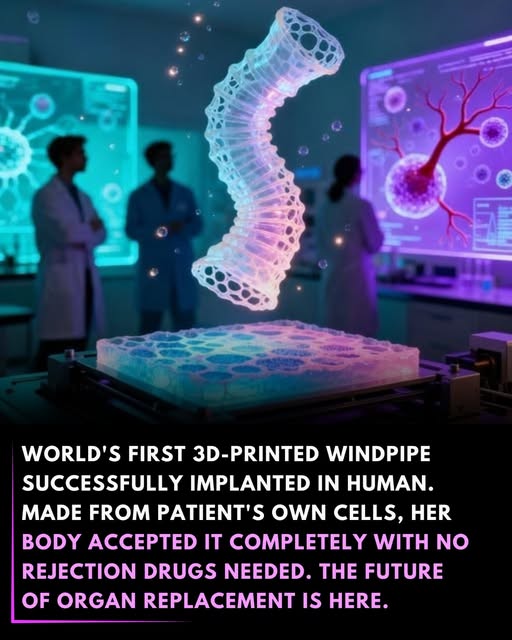
This is not a distant dream. As you've highlighted, the science is rapidly becoming reality. The recent landmark case from South Korea—where a woman received a fully 3D-printed, living windpipe made from her own cells—isn't just a medical miracle. It's a clear signal that the era of printing human tissues and organs has begun. Her body accepted it, healed around it, and treated it as its own. No rejection, no donor, no lifetime of immunosuppressant drugs. This breakthrough is the blueprint for the future of all medicine, and dentistry is poised to be at the forefront of this revolution.
The Evolution from Spare Parts to Living Replacements
Today, we use 3D printing to craft stunningly accurate crowns, bridges, and surgical guides. These are sophisticated "spare parts," but they are inert. The next evolutionary leap, accelerating toward 2030 and beyond, is bioprinting—the layer-by-layer fabrication of living, functional tissues.
Imagine this future for your patients:
-
Regenerating Bone and Gum: Instead of using donor bone or synthetic granules for an implant site, a dentist could scan the defect and print a bioactive, patient-specific scaffold. This scaffold would be infused with the patient's own growth factors and cells, guiding the body to regenerate perfect, living jawbone and periodontal tissue.
-
Biological Tooth Replacement: The ultimate goal: printing a fully functional, living tooth. Research is already exploring creating "tooth buds" using a patient's dental pulp stem cells printed onto a bioactive framework. This bio-tooth would then be implanted to erupt and integrate like a natural tooth, complete with a living root and nerve connection.
-
Salivary Gland Restoration: For patients suffering from dry mouth due to disease or radiation, bioprinting could offer a cure. Scientists are working on printing miniature salivary glands that could be implanted to restore natural saliva production and protect oral health.
-
Personalized Cancer Reconstruction: For oral cancer patients, surgeons could use pre-operative scans to bioprint an exact, living replica of the jaw, palate, or facial structures to be removed, enabling perfect anatomical and functional restoration after surgery.
How AI Supercharges the Bioprinting Revolution
AI is the essential catalyst that will make this scalable and precise. It acts as the intelligent architect and foreman of this biological construction project:
-
The Designer: AI algorithms can analyze a patient's CT/MRI scans to design a perfectly tailored, intricate 3D model of the needed tissue—optimizing pore size for cell growth and blood vessel formation in ways impossible for a human to calculate.
-
The Composer: AI can help formulate the perfect "bio-ink"—a custom blend of the patient's own cells, nutrients, and supportive materials that will behave predictably during and after printing.
-
The Quality Controller: During the printing process, AI-powered vision systems can monitor the print in real-time, ensuring every layer is placed with microscopic accuracy and flagging any anomalies instantly.
A Roadmap to 2030 and Beyond: The Phased Adoption
This transformation won't happen overnight, but its arc is clear:
-
Now to 2030: The Hybrid Era. We will see a blend of today's technology with early bioprinting. 3D-printed, cell-seeded scaffolds for bone regeneration will become standard. "Smart" implants coated with bioactive layers that actively promote healing and integration will enter the mainstream.
-
2030-2050: The Age of Complex Tissues. This period will see the successful bioprinting and implantation of more complex composite tissues—think gum tissue complete with its vascular network, or segments of the temporomandibular joint (TMJ). In-office bioprinters for simple soft tissue grafts could become a reality in advanced clinics.
-
2050-2100: The Full Regeneration Horizon. This is the frontier: fully functional, vascularized organs and complex structures. The printing of a living tooth with a pulp chamber and root system, or an entire section of the jaw for major trauma, would represent the culmination of this century-long technological evolution.
Conclusion: The Dentist as Regenerative Architect
For dental professionals, this shift is monumental. The skill set evolves from master craftsperson to biological architect and conductor of healing. The focus moves from operating on teeth to orchestrating the body's innate ability to regenerate itself.
The South Korean trachea transplant is our generation's "Sputnik moment"—a stunning proof of concept that a new frontier is open. The message for dentistry is unequivocal: the future is not about better ways to drill and fill. The future is about harnessing AI and bioprinting to help the body heal and rebuild itself. The massive, global change is coming. It will redefine our profession, our practices, and, most importantly, the health and quality of life for every patient we serve. The question is no longer "if," but "how soon"—and how ready we will be to lead this new era.
Looking for dentist : Visit directory list
Related Clinical Cases
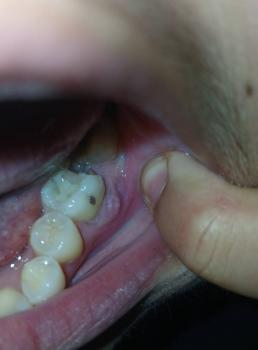
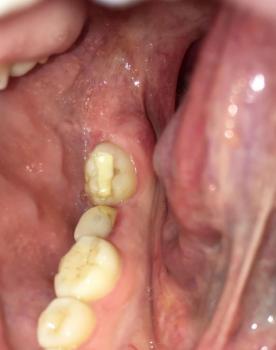
Patients with lower front gum inflammation may also experience tartar buildup, periodontal disease, gum abscesses, or tooth decay. Explore these related clinical case studies.


Other topics:
Other Dental Clinic
 |
 |
 |
 |