Your Smile, Our Passion.

10 Year-Old with Crooked Front Teeth: Understanding Early Tooth Misalignment and When to See the Dentist
Image:
Severity:
Teeth Problems:
Quick summary (one-line)
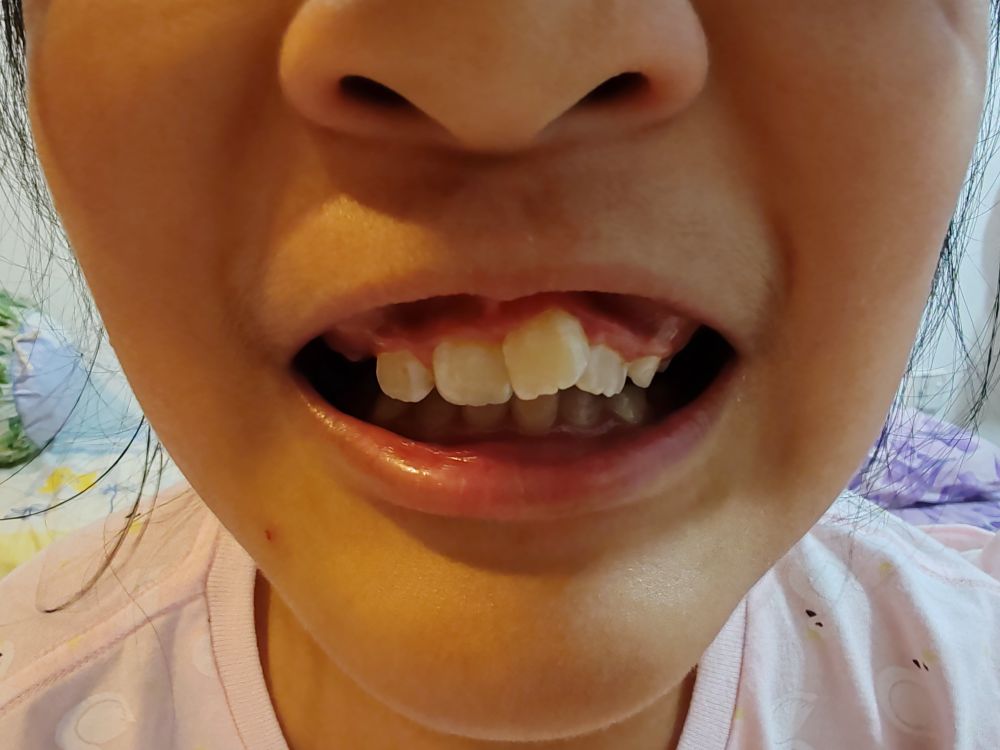
This looks like a typical mixed-dentition alignment issue in a ~10-year-old: the upper front permanent incisors are crowded/rotated and erupting unevenly. It’s common and usually treatable, but a dental exam and X-rays are recommended to plan the right timing and treatment.
What I see (photo-based findings)
-
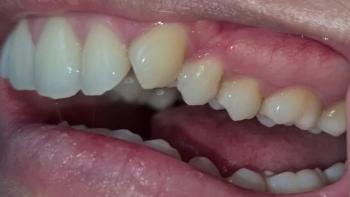
Mixed dentition: permanent upper incisors are present and some primary teeth remain (normal at this age).
-
Upper central/lateral incisors appear crowded and one incisor is rotated/overlapping its neighbor.
-
Slight gingival prominence above the incisors (likely normal eruption tissue rather than infection).
-
No obvious pus, major swelling, or traumatic injury visible in the photo.
Likely causes
-
Arch (jaw) size too small for the erupting permanent teeth → crowding/rotation.
-
Normal eruption sequence and timing variability (some teeth erupt rotated then self-align a bit).
-
Possible retained primary tooth or lack of space from early loss of a baby tooth (can contribute).
-
Less likely from trauma or infection based on this photo.
Red flags (seek urgent care if any are present)
Go to a dentist right away if your daughter has:
-
Significant pain, spreading facial swelling, fever, or difficulty breathing/swallowing.
-
A loose tooth that is very mobile or any pus/drainage.
If none of the above, it’s not an emergency.
What the dentist will likely do / what I recommend next
-
Clinical exam + dental X-rays (panoramic or bitewing/PA) to check tooth positions, unerupted teeth, root development, and whether any supernumerary tooth or retained roots are present.
-
Monitor vs. interceptive treatment decision:
-
If space is adequate and eruption is ongoing, dentist may monitor for a few months — many minor rotations improve as neighboring teeth erupt.
-
If space deficiency or asymmetric eruption is present, an interceptive approach may be recommended (removal of a retained primary tooth, space regaining, or other simple measures).
-
-
Referral to a pediatric dentist or orthodontist for alignment planning if crowding is significant.
-
Possible treatments later: fixed braces (metal/ceramic) or aligners once more permanent teeth are present; sometimes simple removable appliances or extraction of specific baby teeth are used earlier to guide eruption.
Timeframes — realistic expectations
-
Change in 14 days: unlikely. Teeth do not meaningfully realign in two weeks.
-
Short-term monitoring: 1–6 months (to let eruption continue and decide if interceptive steps are needed).
-
Interceptive treatment (if recommended) may take months (6–12 months) to create space or guide eruption.
-
Comprehensive orthodontic treatment (braces) usually occurs later and commonly lasts 12–36 months, depending on severity.
What could happen if left untreated
-
Crowding/rotation may persist or get worse as more permanent teeth erupt.
-
Increased risk of bite problems (malocclusion), abnormal wear, difficulty cleaning leading to cavities or gum inflammation, and possible psychosocial effects (self-consciousness).
-
Many children can wait until growth allows full orthodontic treatment; but early intervention is helpful in some cases.
At-home care now
-
Maintain excellent brushing and flossing to avoid cavities or gum inflammation around erupting teeth.
-
Soft diet if any tenderness.
-
Avoid hard poking at loose primary teeth.
-
Observe for pain, swelling, or changes — report them to your dentist.
Recommended next step
Book a check with a pediatric dentist or general dentist for exam + radiographs. If you want to pick a clinic near you, you can search the directory you mentioned: https://cebudentalimplants.com/map-dental-clinic — take these photos and the age info to the appointment.
Final practical advice
-
Don’t panic — this is common and usually manageable.
-
If there’s no pain or swelling, an appointment in the next 2–6 weeks for an exam and X-ray is reasonable.
-
If the child is distressed by appearance, mention that to the dentist; they can advise whether earlier interceptive steps are appropriate.
If you’d like, I can:
-
Draft a short message you can copy to the dentist describing the problem and what you want checked; or
-
List specific questions to ask the pediatric dentist/orthodontist at the visit.
Related Clinical Cases
Patients with lower front gum inflammation may also experience tartar buildup, periodontal disease, gum abscesses, or tooth decay. Explore these related clinical case studies.