Building Confidence One Smile at a Time.

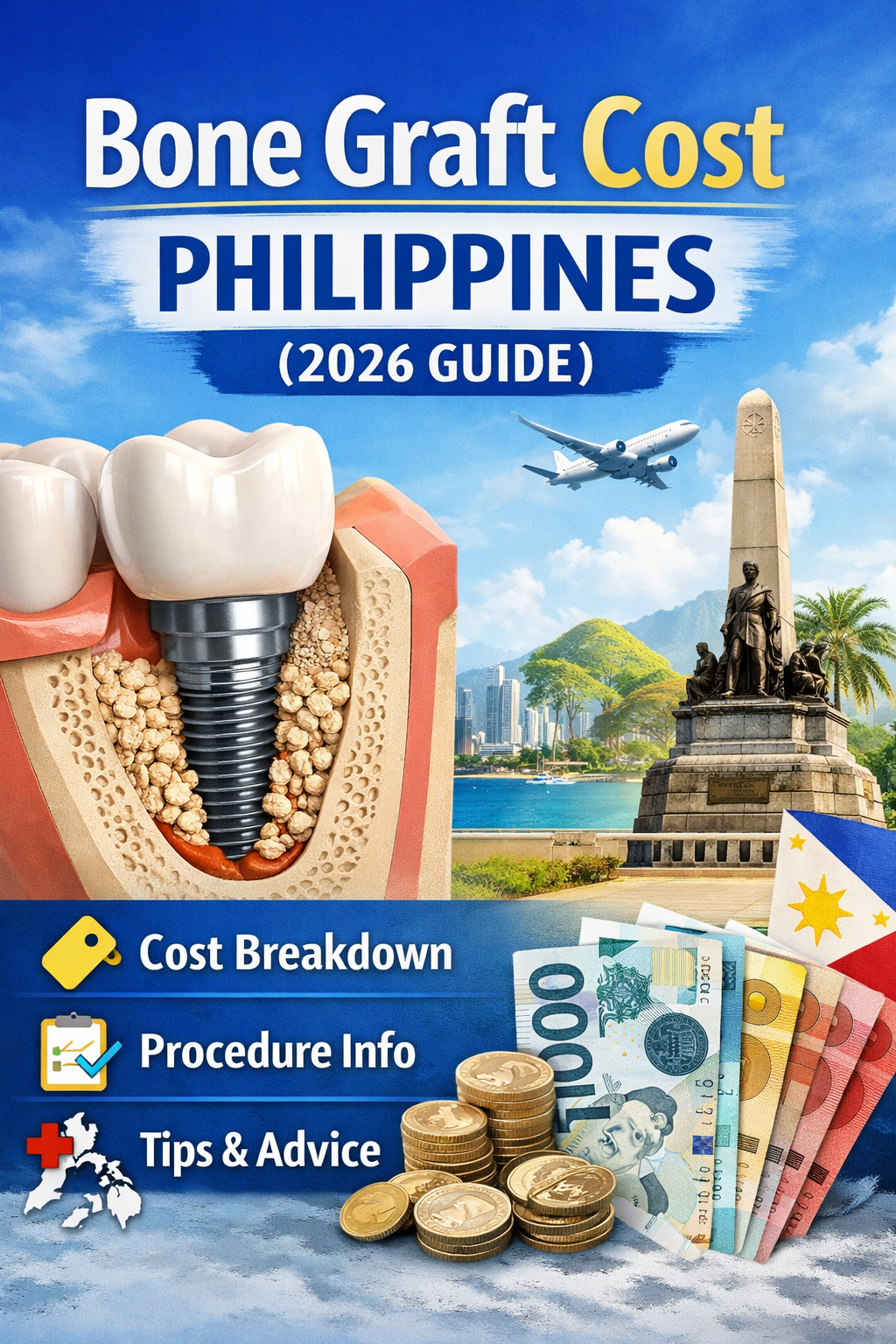
Bone graft cost Philippines (2026 Guide)
Language :
Topics:
Bone graft cost Philippines (2026 Guide)
Quick summary
Most Filipinos and many dental patients worldwide focus on implant costs and skip the important first step: evaluating bone volume. Bone grafting is often required to provide a stable foundation for implants. Skipping this step — or placing implants without proper imaging and planning — can cause implant failure, added expense, and complex corrective surgery. This guide explains typical costs, why grafts matter, how to get the right pre-operative checks, and how to protect yourself.
What is a bone graft and why is it needed before implants?
Short explanation
A bone graft rebuilds or augments the jawbone where teeth have been lost or where bone volume is insufficient. Grafts restore height/width of the alveolar ridge or lift the sinus floor (sinus lift) so an implant can properly integrate (osseointegrate) with the bone.
Common types of grafts
-
Socket preservation (after extraction)
-
Ridge augmentation (horizontal or vertical)
-
Sinus lift (maxillary sinus augmentation)
-
Block grafts (for large defects)
-
Guided bone regeneration using membrane + particulate graft
Typical bone graft cost in the Philippines (2026 price ranges)
Prices vary by city, clinic reputation, graft type, material used, and whether general anesthesia/IV sedation is required. Below are approximate ranges to help planning. Always confirm with the clinic for an itemized quote.
-
Socket preservation: ₱6,000 – ₱20,000
-
Simple particulate bone graft (small defects): ₱10,000 – ₱40,000
-
Ridge augmentation (moderate): ₱25,000 – ₱80,000
-
Block graft (large defects): ₱60,000 – ₱150,000+
-
Sinus lift (lateral approach): ₱45,000 – ₱150,000+
Note: These are ballpark figures. Imported graft materials (xenograft, allograft) or use of growth factors (PRF/PRP) increase costs.
Why many Filipinos overlook bone grafting (and the consequence)
Many patients focus on the headline implant price and assume it’s a single-step treatment. Common reasons bone grafts are overlooked:
-
Clinics advertise low implant prices and omit grafting scenarios.
-
Patients want to “save time” and expect implants to be finished in one trip.
-
Lack of patient education about bone loss after extractions.
-
Some clinics prioritize quick sales over comprehensive diagnostics.
Consequences: Implants placed in insufficient bone can fail to integrate, become mobile, develop infection, or require removal. Failed implants produce further bone loss and make future rehabilitation more complicated and expensive.
Imaging and diagnosis: why X‑ray and CBCT matter before implants
Before any implant, you must have proper imaging. A 2D periapical or panoramic X‑ray is useful, but Cone‑Beam CT (CBCT) gives three‑dimensional views of bone volume, density, nerve position, and sinus anatomy. Detailed imaging enables a proper plan: whether a graft is required, its size, and the safest implant position.
Key patient actions:
-
Ask for a CBCT scan or 3D imaging report before accepting implant surgery.
-
Request that the dentist explains why a graft is or isn’t needed and show the scan.
-
Get an itemized treatment plan and timeline that includes grafting when indicated.
How common are implant failures related to insufficient bone? (realistic analysis)
There is no single national registry in the Philippines that records all dental implant failures; therefore precise nationwide counts are not available publicly. However, global and regional studies show implant failure is a measurable risk and that insufficient bone / lack of osseointegration is a common contributor.
-
Recent retrospective analyses and reviews report overall implant survival rates typically above 90% over many years, but a minority of cases fail — commonly due to infections, poor placement, and inadequate bone volume.
-
Some clinical series show insufficient bone or lack of osseointegration accounting for roughly 10–20% of identified failure causes in certain study groups. (Local clinic reports and patient stories from the Philippines also highlight cases where implants placed without adequate grafting led to complications.)
Because national statistics are limited, consider clinic‑level outcomes, ask for success rate data, and request referrals or before/after case records.
As a client you need protection: a short checklist before any implant
-
Get documented imaging: Ask for a panoramic X‑ray and a CBCT 3D scan report. Keep copies.
-
Itemized treatment plan: It must list grafting, implant brand, material, and all costs.
-
Second opinion: For complex cases ask another qualified implantologist or oral surgeon to review images.
-
Consent and risks: Ensure you receive and sign an informed consent that explains grafting, alternatives, and potential complications.
-
Clinic reputation proof: Request photos, case studies, and patient testimonials for similar procedures.
-
Warranty / aftercare: Ask about follow‑up schedule, warranty for implant success, and responsibility if a failure occurs.
-
Ask about training and technology: Surgeons who use guided surgery, CBCT planning, and digital workflows generally have better predictability.
What to do if you suspect your implant was placed without proper evaluation
-
Demand to see your pre‑op imaging. If none exists, request a CBCT immediately.
-
Ask for a written explanation why grafting was not performed and the clinical rationale.
-
Seek a second opinion from an oral and maxillofacial surgeon.
-
Document symptoms (mobility, pain, swelling) and take photographic records.
How to price and budget your entire implant plan (implant + graft)
A realistic budget must include:
-
CBCT imaging: ₱3,000 – ₱10,000
-
Bone graft (as listed above)
-
Implant fixture(s): ₱25,000 – ₱120,000+ per implant depending on brand
-
Abutment & crown: ₱10,000 – ₱60,000 per tooth
-
Sedation or hospital fees (if needed)
Example total for a single implant with graft: ₱60,000 – ₱220,000 depending on graft type, implant brand, and clinic location.
Choosing clinics in the Philippines (what to ask)
-
Do you use CBCT for every implant case? (If not, why?)
-
Can I see full case records for a similar situation? (Before/after photos, radiographs)
-
Which graft material do you use and why? (autograft, allograft, xenograft, synthetic)
-
Who removes my sutures and monitors healing? What is the follow‑up schedule?
Final advice and patient empowerment
Bone grafting is not an optional add‑on when the bone is insufficient — it’s part of the predictable pathway to a successful implant. As a patient in the Philippines (or a foreigner seeking treatment), insist on proper imaging, a clear treatment plan, and a transparent cost breakdown. If a clinic pressures you to skip diagnostic steps or pushes a “complete implant in 1 day” narrative without clear justification, get a second opinion.
Looking for dentist : Visit directory list
Related Clinical Cases
Patients with lower front gum inflammation may also experience tartar buildup, periodontal disease, gum abscesses, or tooth decay. Explore these related clinical case studies.