Because Every Tooth Deserves Care.

Advanced Root Resorption in Massachusetts: Can a Tooth Still Be Saved? Expert Diagnosis, Treatment, Costs, and the Risks of Delaying Care
Language :
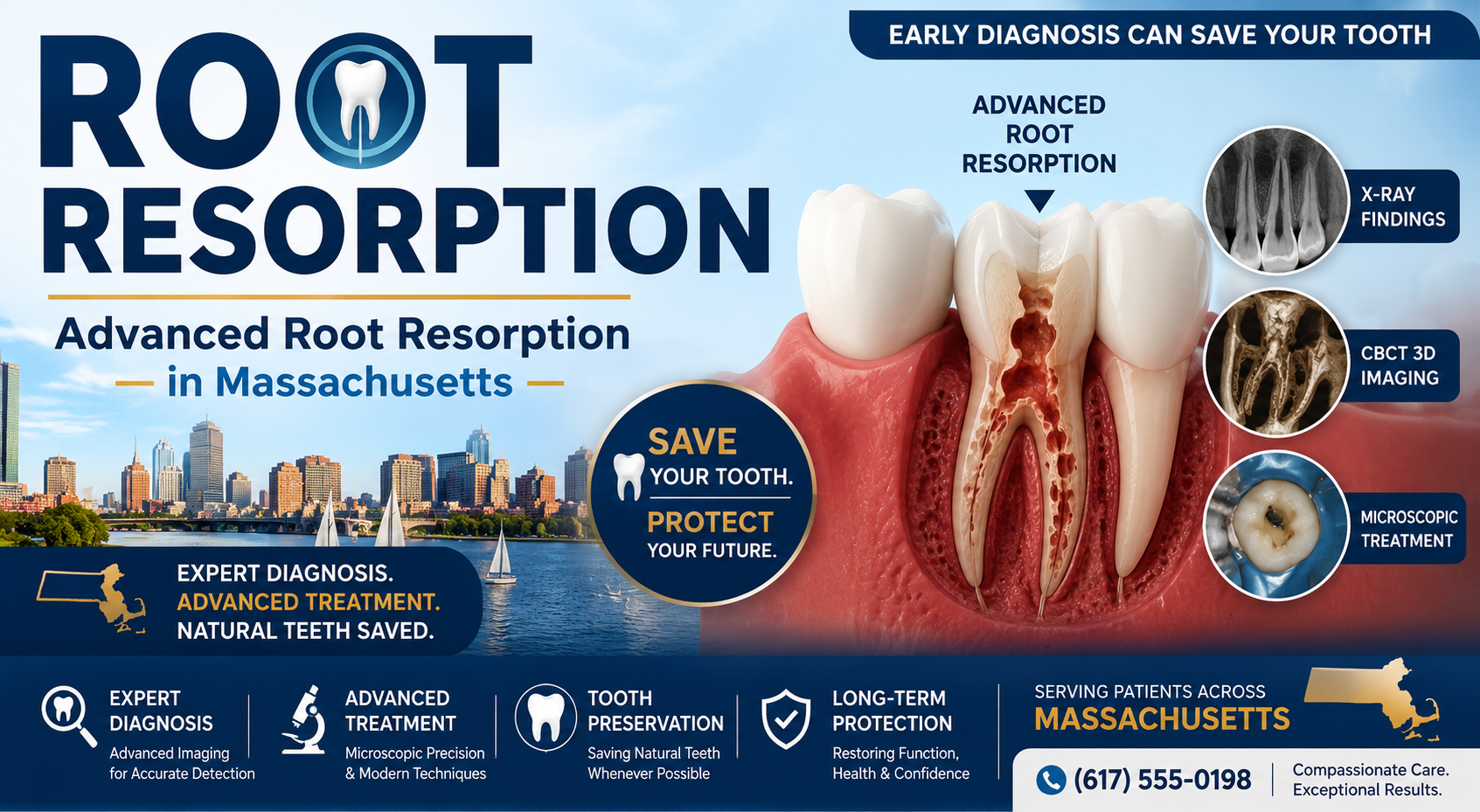
Advanced root resorption is one of the most challenging dental conditions seen in modern dentistry. Many patients in Massachusetts are shocked when they hear the diagnosis because the condition often progresses silently for months or even years before symptoms become obvious.
Root resorption occurs when the body begins breaking down and absorbing the tooth's root structure. In simple terms, the tooth starts losing the foundation that keeps it securely attached to the jawbone. Without prompt treatment, the damage can become irreversible and eventually lead to tooth loss.
Fortunately, advances in endodontics, microscopic dentistry, cone-beam imaging, and restorative procedures have dramatically improved the ability of highly skilled dentists and specialists to save teeth that once would have required extraction.
As dental professionals across the United States continue to emphasize, early diagnosis remains the most important factor in preserving a tooth affected by advanced root resorption.
This comprehensive guide explains:
- What advanced root resorption is
- Common causes
- Warning signs
- Diagnostic procedures
- Treatment options
- Recovery timelines
- Estimated costs in Massachusetts
- Risks of delaying treatment
- A real-world style success story showing how an experienced dentist saved a severely compromised tooth
Many patients facing treatment for advanced root resorption experience a deep constant fear that is difficult to describe. The fear is often not just about pain or cost—it is about uncertainty. Thoughts such as, "What if the dentist makes a mistake?", "What if the treatment fails?", or "What if I lose my tooth anyway?" can continuously run through a patient's mind. The head of the client spin like a roller coaster the FEAR IS REAL
This fear is completely understandable because patients are placing their trust in someone else to perform a complex procedure on a part of their body adjustments that cannot simply be replaced naturally. When a dentist explains that root structure has already been damaged, some patients immediately imagine the worst-case scenario the nerves always damage that is why social and emotional dentist day think about your best life in the past and future to come giving them positive imagination. They worry that one wrong move could lead to scale infection, additional bone loss, extraction, or expensive future treatments.
Another common concern is the fear of the unknown. Most patients are not dental professionals and may not fully understand what is happening inside the tooth. When they hear terms such as "advanced root resorption," "root canal therapy," or "surgical repair," the terminology itself can feel overwhelming and frightening making the physical and financial burned . The mind often fills in the gaps with negative assumptions.
However, it is important to remember that modern dentistry has advanced significantly. Highly trained dentists and endodontists use sophisticated tools such as CBCT 3D imaging, dental microscopes, and bioceramic repair materials to improve precision and reduce risks with AI advance science the percentage of success are higher. Before treatment begins, a skilled dentist carefully studies the condition, evaluates potential complications, and develops a treatment plan designed to maximize the chance of success.
Patients should not hesitate to ask questions, seek a second opinion if necessary to drain their negative emotions , and discuss every concern openly. Trust is built through communication, transparency, and experience. While no medical or dental procedure can guarantee a perfect outcome, delaying treatment because of fear often creates greater risks than proceeding with care. In many cases, early intervention provides the best opportunity to save the natural tooth and avoid more serious complications in the future.
Expert Advice from a USA Dental Group
Patients frequently focus on the fear of losing a tooth will lost due to tension nerves. However, the first goal should be obtaining an accurate diagnosis. Many teeth that appear hopeless on a standard X-ray can sometimes be preserved through advanced endodontic and restorative techniques.
The greatest mistake patients make is delaying treatment while waiting for pain to develop. The case becomes worse and curing will take time and money burned the pockets Root resorption can continue silently, reducing the amount of healthy tooth structure available for repair. Seeking evaluation early provides the highest chance of long-term success.
Patient Mindset: Trust the Process
A patient gains confidence when:
- The diagnosis is clearly explained
- Advanced imaging confirms the condition
- Treatment options are discussed openly
- The dentist demonstrates experience with similar cases
Trust is not built by guarantees. Trust is built by expertise, transparency, technology, and a well-defined treatment plan. When these elements come together, many advanced root resorption cases can be treated successfully, allowing patients to keep their natural teeth for many years.
Understanding Root Resorption
A healthy tooth root is protected by specialized tissues that separate it from surrounding bone.
Root resorption occurs when cells called odontoclasts begin destroying root surfaces. These cells normally help remove primary (baby) teeth but can mistakenly attack permanent teeth.
The condition may affect:
- The outer root surface
- The inner root canal walls
- Multiple areas simultaneously
Advanced root resorption means significant structural damage has already occurred.
When enough root structure disappears, the tooth may:
- Become loose
- Develop infection
- Fracture
- Shift position
- Eventually fall out
Types of Root Resorption
Internal Root Resorption
Internal resorption starts inside the pulp chamber or root canal.
It usually develops after:
- Trauma
- Chronic inflammation
- Untreated infection
The tooth may appear normal initially while destruction occurs internally.
External Root Resorption
External resorption begins on the outside root surface.
This is often associated with:
- Orthodontic treatment
- Dental trauma
- Impacted teeth
- Chronic infections
- Autoimmune reactions
External resorption is generally more difficult to manage because damage can spread extensively before detection.
Cervical Root Resorption
This aggressive form begins near the gumline.
It can rapidly destroy:
- Root structure
- Tooth crown support
- Adjacent tissues
Without treatment, tooth survival becomes increasingly difficult.
What Causes Advanced Root Resorption?
Several factors can trigger the condition.
Dental Trauma
A sports injury, automobile accident, or fall can damage the protective root structures.
Months or years later, resorption may begin.
Common examples include:
- Hockey injuries
- Basketball impacts
- Bicycle accidents
- Slips and falls
Orthodontic Treatment
Braces are generally safe.
However, prolonged orthodontic force may occasionally contribute to root shortening or resorption in susceptible patients.
Chronic Infection
Untreated cavities can allow bacteria to reach the pulp.
The resulting inflammation may stimulate resorptive processes.
Impacted Teeth
Wisdom teeth or impacted canines may place pressure on neighboring roots.
This pressure can trigger resorption.
Previous Dental Procedures
In rare cases:
- Repeated root canals
- Surgical procedures
- Tooth reimplantation
may increase risk.
Unknown Causes
Some patients develop root resorption despite having no identifiable risk factors.
These cases are called idiopathic root resorption.
Common Symptoms
Many patients experience no symptoms initially.
As damage progresses, signs may include:
- Tooth sensitivity
- Pain while chewing
- Gum swelling
- Tooth discoloration
- Persistent discomfort
- Loose tooth sensation
- Recurrent abscesses
- Bite changes
Unfortunately, symptoms often appear after substantial root loss has already occurred.
How Massachusetts Dentists Diagnose Root Resorption
Modern diagnosis involves several steps.
Clinical Examination
The dentist evaluates:
- Tooth mobility
- Gum condition
- Bite relationship
- Sensitivity levels
Digital X-Rays
Digital radiographs reveal:
- Root shortening
- Bone loss
- Internal defects
However, two-dimensional imaging may miss smaller lesions.
CBCT Scan
Cone Beam Computed Tomography (CBCT) has transformed diagnosis.
The scan provides:
- Three-dimensional views
- Precise defect location
- Extent of root damage
- Bone involvement
Many advanced cases cannot be fully evaluated without CBCT technology.
Vitality Testing
The dentist determines whether the pulp remains healthy.
Tests may include:
- Cold testing
- Electric pulp testing
- Percussion evaluation
Stages of Root Resorption
Mild
- Minimal root damage
- Often discovered accidentally
- High treatment success
Moderate
- Noticeable structural loss
- Early symptoms may appear
- Requires prompt intervention
Advanced
- Significant root destruction
- Potential infection
- Increased mobility
- Complex treatment planning
Severe
- Extensive loss of support
- Poor long-term prognosis
- Possible extraction consideration
Short Story: How a Massachusetts Dentist Saved a Tooth with Advanced Root Resorption
Michael, a 42-year-old software engineer from Massachusetts, noticed occasional discomfort when biting on his upper front tooth.
Because the pain came and went, he delayed seeking treatment.
Six months later, the tooth became slightly darker than neighboring teeth.
Concerned about the appearance, he scheduled an appointment.
Digital X-rays revealed suspicious findings.
His dentist immediately ordered a CBCT scan.
The scan showed advanced internal root resorption extending deep into the root structure.
The prognosis appeared uncertain.
Without treatment, extraction seemed likely.
Michael was referred to a highly skilled endodontist specializing in complex cases.
Using a dental microscope, the specialist carefully removed infected tissue from the canal system.
The resorptive defect was disinfected and repaired with advanced bioceramic materials.
Several weeks later, a custom crown restored the tooth.
One year after treatment:
- No infection remained
- Bone healing was evident
- Tooth stability improved
- Function returned to normal
Had Michael waited another six to twelve months, the remaining root structure might have become too weak to support restoration.
The tooth likely would have required extraction and replacement with an implant.
Instead, expert intervention preserved his natural tooth.
Treatment Options for Advanced Root Resorption
Treatment depends on:
- Location
- Severity
- Remaining root structure
- Presence of infection
Root Canal Therapy
When the pulp is involved, root canal treatment is frequently necessary.
The procedure removes:
- Infected tissue
- Inflamed pulp
- Bacterial contamination
The canals are then sealed.
Treatment time:
- 60–120 minutes per visit
- One to three appointments
Bioceramic Repair
Modern bioceramic materials have revolutionized treatment.
Advantages include:
- Excellent sealing ability
- High biocompatibility
- Bone healing support
- Long-term durability
Surgical Endodontics
Some advanced lesions require surgery.
The specialist may:
- Access the root externally
- Remove damaged tissue
- Repair defects directly
Healing often takes several months.
Crown Restoration
Many affected teeth become structurally weakened.
A crown may be recommended to:
- Reinforce the tooth
- Prevent fractures
- Improve aesthetics
Splinting Mobile Teeth
If mobility exists, temporary stabilization may help during healing.
Splinting distributes biting forces and improves comfort.
Tooth Extraction
Extraction becomes necessary when:
- Root destruction is extreme
- Vertical fractures develop
- Restoration is impossible
Replacement options include:
- Dental implants
- Bridges
- Partial dentures
How Long Does Treatment Take?
Every case differs.
Typical timelines include:
Diagnosis Phase
- Examination: 1 visit
- CBCT scan: same day or within days
Endodontic Treatment
- 1–3 visits
Healing Phase
- Several months
Final Restoration
- 2–4 weeks after healing evaluation
Overall timeline:
2 to 6 months for many advanced cases.
Estimated Massachusetts Treatment Costs
Fees vary depending on city, complexity, and specialist experience.
Comprehensive Examination
$100–$300
Digital Imaging
$50–$250
CBCT Scan
$200–$600
Root Canal Therapy
Front tooth:
$900–$1,800
Premolar:
$1,000–$2,000
Molar:
$1,200–$2,500
Surgical Repair
$1,000–$3,500+
Dental Crown
$1,000–$2,500
Extraction
$200–$800
Surgical extraction:
$500–$1,500
Dental Implant Replacement
$3,500–$7,500+
While treatment costs may seem significant, preserving a natural tooth is often less expensive than extraction followed by implant therapy.
What Happens If Treatment Is Delayed?
This is where many patients encounter serious complications.
Advanced root resorption rarely improves on its own.
The damage typically progresses.
Potential consequences include:
Increasing Root Destruction
The body's resorptive process may continue removing root structure.
Eventually, insufficient root remains to support the tooth.
Severe Infection
Bacteria can invade damaged tissues.
This may result in:
- Abscess formation
- Facial swelling
- Significant pain
Bone Loss
Infection and inflammation can destroy surrounding jawbone.
Bone loss complicates future treatment.
Tooth Mobility
As support decreases, the tooth may loosen.
Chewing becomes difficult.
Root Fracture
A weakened root becomes vulnerable to cracking.
Vertical root fractures often require extraction.
Tooth Loss
The ultimate consequence of untreated advanced root resorption is loss of the affected tooth.
Can the Tooth Always Be Saved?
Unfortunately, no.
Success depends on:
- Remaining root structure
- Location of damage
- Infection severity
- Treatment timing
However, many teeth once considered hopeless can now be preserved using modern techniques.
The earlier treatment begins, the better the prognosis.
Recovery After Treatment
Patients typically experience:
First Few Days
- Mild tenderness
- Minor chewing discomfort
- Temporary sensitivity
First Month
- Improved comfort
- Tissue healing begins
Three to Six Months
- Bone regeneration progresses
- Stability improves
One Year
- Long-term healing evaluation
- Radiographic confirmation of success
Regular follow-up visits remain essential.
Prevention Strategies
Although not every case is preventable, patients can reduce risk through:
Regular Dental Examinations
Routine evaluations often detect problems before symptoms appear.
Early Trauma Assessment
Any tooth injury should be professionally evaluated.
Even minor impacts may create future complications.
Prompt Treatment of Infections
Untreated decay can contribute to inflammatory root damage.
Orthodontic Monitoring
Patients wearing braces should attend all scheduled evaluations.
Protective Mouthguards
Athletes should wear custom sports mouthguards whenever possible.
Expert Advice from a USA Dental Group
From a clinical perspective, advanced root resorption represents a race against time.
The longer the condition progresses, the more difficult treatment becomes.
Many patients seek care only after pain develops, yet substantial damage may already be present by that stage.
Our recommendation is straightforward:
- Never ignore tooth discoloration
- Investigate unexplained sensitivity
- Seek evaluation after dental trauma
- Obtain advanced imaging when recommended
- Follow through with specialist referrals promptly
Modern dentistry has created remarkable opportunities to save natural teeth that would have been lost decades ago.
However, success depends heavily on early intervention.
Final Thoughts
Advanced root resorption is a serious dental condition that can threaten the survival of a permanent tooth. For patients throughout Massachusetts, early diagnosis and treatment provide the best opportunity to preserve natural tooth structure and avoid extraction.
Thanks to CBCT imaging, microscopic endodontics, bioceramic repair materials, and highly trained dental specialists, many teeth with advanced root damage can still be successfully treated.
The greatest mistake patients make is delaying care. What begins as a small area of resorption can eventually become extensive structural destruction, infection, bone loss, and ultimately tooth loss.
If you notice pain, discoloration, sensitivity, looseness, or have a history of dental trauma, schedule a professional dental evaluation immediately. Acting early may mean the difference between saving your natural tooth and requiring a much more complex replacement procedure in the future.
Can tooth extraction cause infection? Mild inflammation is normal, but increasing swelling, fever, or severe pain may indicate infection. Learn more about post-extraction infection warning signs in this detailed guide.
Book a consultation with our Cebu dental specialists for proper evaluation and care.
Ready to get expert guidance?
If you’re experiencing severe pain or delayed healing, book a consultation with our Cebu dental specialists to get proper evaluation and care.
Consultation or contact page .
Book a Consultation
For severe discomfort or delayed healing, book a consultation with our Cebu dental specialists today.
Looking for a dentist? Browse our Cebu dental directory to find trusted clinics near you.
Medical Review and Clinical Basis
This article is based on clinical dental guidelines and real patient recovery patterns observed after tooth extraction procedures. The information reflects common post-extraction healing stages, including normal clot formation, gum tissue repair, and signs of possible complications such as dry socket or infection.
While mild discomfort is expected after a dental extraction, worsening pain after Day 3, bad odor, exposed bone, or spreading pain may require professional evaluation. These symptoms are consistent with known post-extraction complications described in standard dental practice.
About Cebu Dental Implants
Cebu Dental Implants provides comprehensive tooth extraction, surgical procedures, and dental implant services in the Philippines. Our team evaluates post-extraction healing, manages complications such as dry socket, and advises patients on proper aftercare to prevent infection and delayed healing.
If you experience severe pain or unusual symptoms after extraction, early professional assessment is recommended to prevent further complications.
Important Medical Disclaimer
This content is for educational purposes only and does not replace professional dental diagnosis. Every patient heals differently. If symptoms worsen or do not improve within a few days, consult a licensed dentist for proper evaluation and treatment.
Author
This article was prepared by the Cebu Dental Implants content team in consultation with licensed dental professionals experienced in tooth extraction and implant procedures.
Related Clinical Cases
Patients with lower front gum inflammation may also experience tartar buildup, periodontal disease, gum abscesses, or tooth decay. Explore these related clinical case studies.