Your Smile, Perfected with Precision.

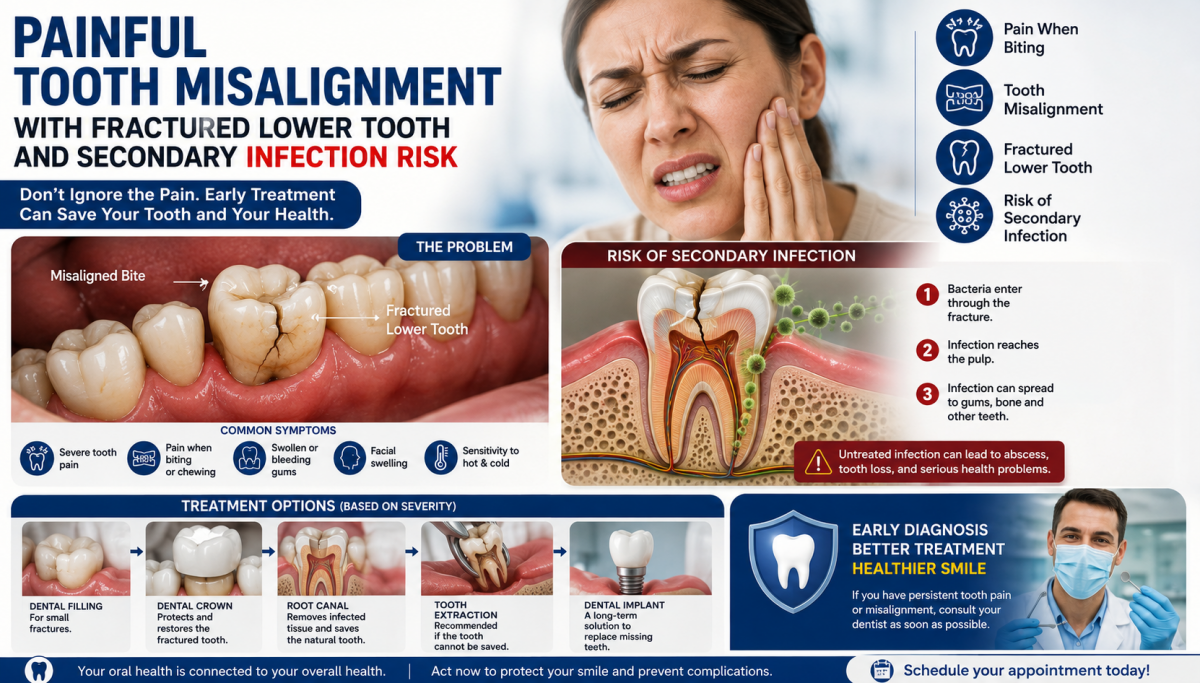
Painful Tooth Misalignment With Fractured Lower Tooth and Secondary Infection Risk
Image:
Severity:
Teeth Problems:
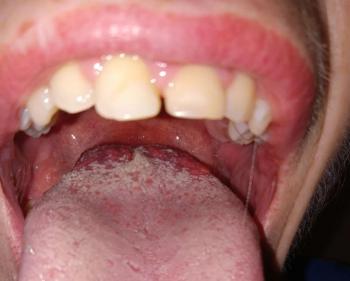
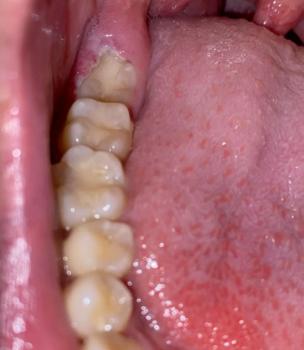
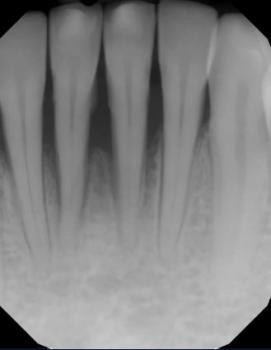
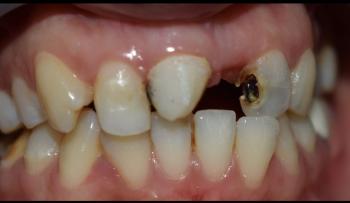
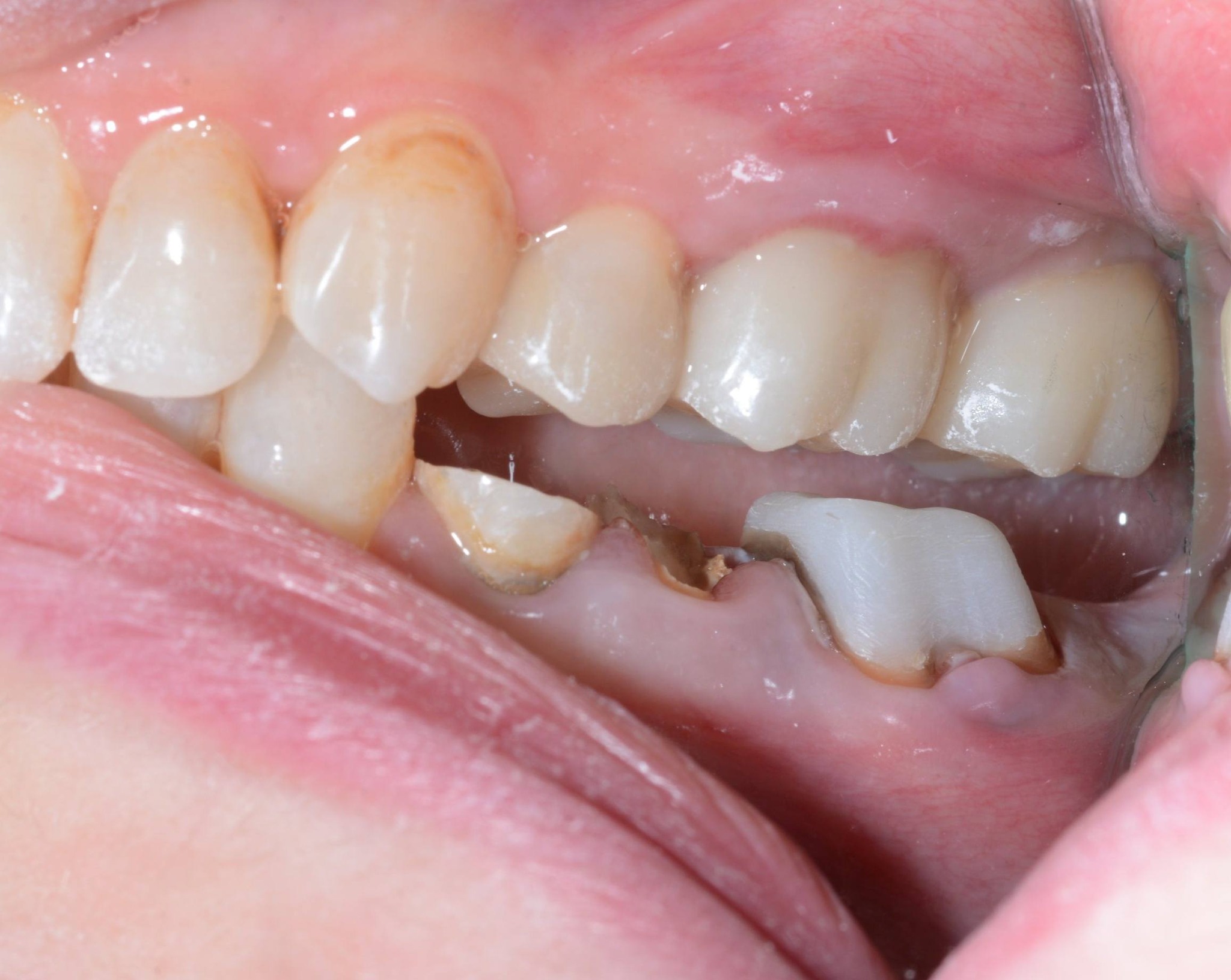
Zoom 100% Clinical Examination – Deep Findings
Overall Alignment
-
Visible malocclusion (misalignment) between upper and lower teeth
-
Improper bite contact causing uneven force distribution
-
Signs of traumatic occlusion
Lower Teeth Findings
-
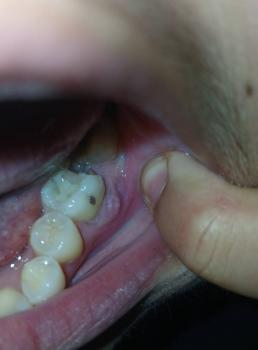
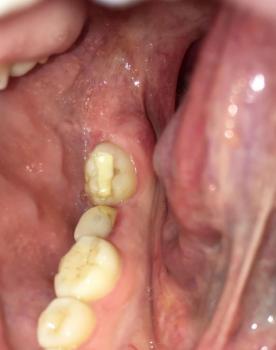
Fractured lower tooth (partial crown loss)
-
Exposed dentin with plaque accumulation
-
Brownish discoloration near fracture margins
-
Early decay at the broken edge
-
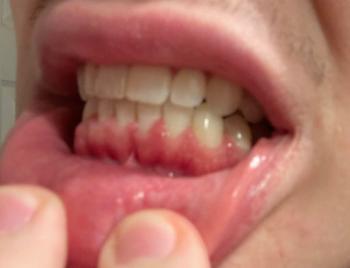
Gum irritation around damaged tooth
Upper Teeth Findings
-
Mild crowding
-
Uneven enamel wear patterns
-
Occlusal surfaces showing early stress wear
Primary Diagnosis
Malocclusion With Traumatic Bite
Complicated by:
-
Fractured lower tooth
-
Early secondary dental caries
-
Occlusal trauma
-
Inflammatory gum response
Expert Dental Case Analysis: Why a Painful, Misaligned and Fractured Lower Tooth Needs Prompt Treatment
Understanding the Connection Between Tooth Fracture, Bite Misalignment and Secondary Infection
A painful lower tooth that has fractured or lost part of its crown should never be evaluated solely as a cosmetic problem. The combination of structural damage, abnormal biting pressure and possible bacterial contamination can create a complex dental condition requiring timely diagnosis and treatment.
From a clinical perspective, three issues must be assessed separately: the extent of the tooth fracture, the health of the dental pulp (the nerve and blood-vessel tissue inside the tooth), and the way the upper and lower teeth meet during biting.
When these problems occur together, chewing may become painful, the tooth may become sensitive to temperature changes, and the surrounding gum tissue may become irritated. If bacteria reach the pulp through a deep fracture or existing decay, inflammation may progress to pulp necrosis (death of the pulp) and infection around the root.
Important clinical distinction: A misaligned bite does not automatically cause a dental infection. However, excessive or uneven biting forces may aggravate a weakened tooth, contribute to fracture progression, and make existing dental problems more symptomatic.
1. Why a Fractured Lower Tooth Can Become Painful
The outer enamel protects the underlying dentin, which contains microscopic channels that communicate with the sensitive inner tissues of the tooth. When a portion of the crown breaks away, the exposed dentin may respond painfully to cold drinks, hot foods, sweet substances or direct contact.
The severity of the symptoms depends on the depth and location of the fracture.
-
Enamel-only damage: A small chip may cause little or no pain.
-
Dentin exposure: The tooth may become sensitive to cold, air, sweets or chewing.
-
Pulp involvement: A deeper crack may cause lingering temperature sensitivity, spontaneous pain or nighttime discomfort.
-
Root involvement: A fracture extending into the root may compromise the tooth's long-term prognosis and may allow infection to develop in the surrounding tissues.
Pain when biting or when releasing biting pressure can be a warning sign of a cracked tooth. However, similar symptoms can occur with deep decay, inflammation around the root, a defective restoration or periodontal disease. A clinical examination is necessary to distinguish these conditions.
2. How Tooth Misalignment Can Aggravate a Fractured Tooth
Dental malocclusion occurs when the upper and lower teeth do not meet in an ideal or comfortable way. Some people have longstanding crowding or bite irregularities without pain. Others develop symptoms when a damaged tooth begins receiving excessive pressure during chewing.
If a fractured lower tooth contacts an opposing tooth prematurely, repeated loading may increase discomfort and potentially worsen an existing crack.
Possible contributing factors include:
-
Uneven distribution of chewing forces.
-
Teeth grinding or clenching, especially during sleep.
-
A weakened tooth caused by extensive decay or a large filling.
-
A fractured cusp or damaged chewing surface.
-
Food trapping around an irregular tooth surface.
-
Pre-existing bite discrepancies that place additional stress on the affected tooth.
A dentist should determine whether the bite is actually contributing to the symptoms rather than assuming that misalignment is the primary cause.
Clinical recommendation: Do not attempt to file down, reposition or adjust a painful tooth at home. Removing tooth structure without a diagnosis can permanently damage the tooth and worsen the problem.
3. Secondary Infection: What Happens if Bacteria Reach the Tooth Pulp?
A fractured tooth does not always become infected. The risk increases when the damage permits bacteria to reach the pulp or when significant decay is present beneath the broken surface.
The progression may follow this pattern:
Structural damage → dentin exposure or deep decay → pulp inflammation → possible pulp necrosis → infection around the root → possible dental abscess.
This sequence is not inevitable. Some fractures remain limited to the outer tooth structure, while others progress more deeply. The condition of the pulp and the extent of the fracture determine the treatment required.
Warning signs that warrant prompt dental assessment include:
-
Persistent or worsening toothache.
-
Pain during chewing or biting.
-
Prolonged sensitivity to hot or cold.
-
Swelling or tenderness around the affected tooth.
-
A bad taste or pus draining near the tooth.
-
A gum swelling that resembles a pimple.
-
Fever or facial swelling, which may indicate a more serious infection.
An abscess may occasionally cause little pain after the pulp dies, so the absence of severe toothache does not reliably exclude infection.
4. How a Dentist Diagnoses a Fractured, Painful Lower Tooth
A reliable diagnosis requires more than visual inspection alone.
The dentist may perform the following assessments:
Clinical examination: The tooth is examined for missing tooth structure, visible cracks, decay, damaged fillings, gum inflammation and signs of swelling.
Bite testing: Carefully controlled pressure on different parts of the tooth may help identify symptoms associated with a crack or excessive biting contact.
Pulp testing: Cold testing or other vitality tests help assess the response of the pulp. These tests are interpreted alongside other findings because no single test is definitive in every case.
Periodontal examination: The dentist checks gum attachment and probes around the tooth when indicated. An isolated deep periodontal pocket may raise concern about a fracture extending below the gum line.
Dental radiographs: X-rays can reveal decay, changes around the root and some forms of bone damage. However, a fine crack may not be visible on a conventional X-ray.
If the findings remain uncertain, referral to an endodontist may be appropriate. The goal is to establish whether the tooth is restorable, whether the pulp is healthy, and whether infection is present.
5. Treatment Options: Can the Lower Tooth Be Saved?
Treatment depends on the depth of the fracture, the amount of remaining healthy tooth structure, the condition of the pulp and the supporting tissues.
Option A: Minor chip or limited fracture
If the damage is confined to the outer tooth structure, the dentist may smooth a sharp edge, bond the broken area with composite resin or use another suitable restoration.
Option B: Fracture involving a weakened chewing surface
A larger fracture may require a restoration that protects the remaining tooth. Depending on the extent of the damage, this may involve a bonded restoration, an onlay or a dental crown.
Option C: Irreversible pulp inflammation or pulp infection
If the tooth is restorable but the pulp is irreversibly damaged or infected, root canal treatment may be recommended. The dentist removes the diseased pulp tissue, cleans and seals the root canal system, then restores the tooth to protect it against further damage.
Option D: Dental abscess
An abscess requires definitive treatment of its source. Depending on the diagnosis, treatment may involve root canal therapy, drainage, extraction or a combination of procedures. Antibiotics are sometimes indicated, particularly when there is spreading infection or systemic involvement, but they do not replace treatment of the infected tooth.
Option E: Severe fracture extending below the gum line
If the fracture extends deeply into the root or leaves insufficient healthy tooth structure for a predictable restoration, extraction may be necessary. The decision should be based on the clinical findings and the tooth's prognosis rather than the presence of pain alone.
6. When Should Bite Correction or Orthodontic Treatment Be Considered?
The immediate priority is to diagnose and stabilize the painful fractured tooth. If the bite is contributing to the damage, the dentist may evaluate the opposing tooth, premature contacts, clenching habits and the overall distribution of biting forces.
Orthodontic treatment may be considered when a broader alignment problem needs correction, but braces or clear aligners are not an emergency treatment for a fractured or infected tooth.
Bite adjustment should only be performed when a dentist identifies a specific, clinically justified contact problem. Irreversible tooth reduction should not be undertaken simply because the teeth appear uneven.
7. What to Do Before Your Dental Appointment
Until the tooth has been examined:
-
Avoid chewing hard, crunchy or sticky foods on the affected side.
-
Choose soft foods and avoid temperatures that trigger pain.
-
Brush gently with fluoride toothpaste and keep the area clean.
-
Rinse gently with warm salt water if comfortable, then spit it out.
-
If a piece of tooth has broken off, keep it in a clean container and bring it to the dentist.
-
Ask a pharmacist or dentist about an appropriate pain reliever, taking your medical history and other medications into account.
Do not place aspirin directly on the tooth or gum, use household adhesives, or attempt to seal a deep fracture yourself. Do not take leftover antibiotics without professional advice.
Emergency warning: Facial or neck swelling that is spreading, difficulty swallowing, difficulty breathing, or swelling around the eye requires immediate emergency medical assessment. Fever with increasing dental swelling also requires urgent evaluation.
8. Clinical Prognosis: Why Early Intervention Matters
The prognosis depends on the fracture's location and depth, the health of the pulp, the amount of remaining tooth structure and the condition of the supporting bone and gums.
A limited fracture may be successfully restored. A deeper crack may require root canal treatment and protective restoration, while a severe root fracture may make the tooth unsalvageable.
Early evaluation can help prevent further structural damage, identify infection before it spreads, and determine whether the natural tooth can be preserved. Nevertheless, no treatment can guarantee success when a crack is extensive or continues to progress.
Final clinical perspective: A painful, misaligned lower tooth with a visible fracture deserves prompt professional assessment. The correct approach is to identify the source of pain, evaluate the fracture and pulp, control any infection, protect the remaining tooth structure, and correct any confirmed bite problem when appropriate. The objective is not simply to relieve the pain but to preserve oral function and reduce the risk of further complications.
Frequently Asked Questions (FAQs)
1. Why does my lower tooth hurt after part of it breaks?
A broken tooth may expose dentin, irritate the pulp or allow a crack to extend deeper into the tooth. Pain may occur when chewing or when the tooth encounters hot or cold foods. A dentist must determine the depth of the fracture and whether the pulp is affected.
2. Can a fractured lower tooth cause a dental abscess?
Yes, if bacteria reach the pulp and the infection progresses into the tissues around the root. However, not every fractured tooth becomes infected. The risk depends on the fracture's depth, the presence of decay and the condition of the pulp.
3. Can tooth misalignment cause pain in a fractured tooth?
It can contribute to pain if the damaged tooth receives excessive or uneven biting pressure. However, misalignment is only one possible factor. Deep decay, pulp inflammation, a root infection or gum disease may produce similar symptoms.
4. How do I know if a cracked tooth has reached the nerve?
Possible warning signs include lingering sensitivity to hot or cold, spontaneous pain, nighttime pain and discomfort when biting. These symptoms are not diagnostic on their own. Dental examination and pulp testing are needed to determine whether the nerve tissue is irreversibly inflamed or infected.
5. Will a fractured tooth heal on its own?
No. A fractured tooth cannot biologically heal the way a broken bone can. A small chip may remain stable, but cracks can progress, and exposed tooth structure may require restoration. Prompt assessment is recommended even if the pain temporarily disappears.
6. Can a dentist save a fractured lower molar?
Often, yes, if enough healthy tooth structure remains and the fracture does not extend too deeply into the root. Treatment may involve a filling, an onlay, a crown or root canal treatment followed by a suitable restoration. Severe fractures may require extraction.
7. Do I need a root canal if my tooth hurts when I bite?
Not necessarily. Pain on biting can result from a crack, excessive bite contact, deep decay, inflammation around the root or other conditions. Root canal treatment is considered when the pulp diagnosis and clinical findings indicate that it is necessary.
8. Can antibiotics cure an infected fractured tooth?
Antibiotics alone generally cannot eliminate the source of a dental infection or repair the fracture. Definitive treatment may require drainage, root canal therapy or extraction. Antibiotics are reserved for appropriate clinical situations, especially when infection is spreading or systemic symptoms are present.
9. What if my tooth stops hurting but the fracture remains?
Pain relief does not necessarily mean the tooth has healed. The pulp may have become necrotic, or the symptoms may have temporarily subsided. Arrange a dental examination even if the pain improves, particularly if swelling, a bad taste or tenderness remains.
10. Can I wait a week before seeing a dentist?
A painful fractured tooth should be assessed as soon as possible rather than routinely waiting a week. Seek same-day urgent dental care if the pain is severe or worsening, or if swelling, pus or fever develops. Difficulty breathing or swallowing requires emergency medical care.
11. Should I get braces to correct the misalignment before repairing the tooth?
Usually, the immediate priority is to diagnose and treat the fractured tooth and any associated infection. Orthodontic treatment may be considered later if a broader bite or alignment problem needs correction. The treatment sequence depends on the clinical findings.
12. What is the difference between a cracked tooth and a split tooth?
A cracked tooth has a fracture line that may extend from the chewing surface toward the root without completely separating the tooth into distinct segments. A split tooth has developed separation into distinct portions. A split tooth is generally more difficult to save, and treatment depends on the fracture's location and extent.
13. When does a painful fractured tooth become a medical emergency?
Rapidly spreading facial or neck swelling, difficulty swallowing, difficulty breathing or swelling around the eye are emergency warning signs. Seek immediate emergency medical care. Fever accompanied by increasing swelling or severe dental pain also requires urgent assessment.
14. Can a dental X-ray detect every tooth fracture?
No. Conventional dental X-rays may reveal decay, root changes or damage to the surrounding bone, but fine cracks may not be visible. Dentists combine the clinical examination, bite testing, pulp testing and imaging to reach a diagnosis.
15. How can I prevent another tooth fracture?
Maintain regular dental examinations, treat decay promptly, avoid chewing ice or other very hard objects, and seek advice if you grind or clench your teeth. A dentist may recommend a protective night guard for suitable patients with bruxism.
Medical disclaimer: This article provides general dental education and does not establish a diagnosis for an individual patient. A qualified dentist must examine the tooth and review appropriate tests before recommending treatment.
Clinical reference: American Association of Endodontists — Cracked Teeth: https://www.aae.org/patients/dental-symptoms/cracked-teeth/
Clinical reference: American Association of Endodontists — Abscessed Teeth: https://www.aae.org/patients/dental-symptoms/abscessed-teeth/
Why the Teeth Are Painful
| Cause | Explanation |
|---|---|
| Misalignment | Teeth hitting incorrectly during chewing |
| Fracture | Exposed dentin causing sensitivity |
| Occlusal trauma | Excess pressure on select teeth |
| Food impaction | Leads to irritation and bacterial growth |
Time Frame to Heal (With Proper Treatment)
Initial Pain Relief
-
24–72 hours after stabilization
Short-Term Treatment (7–14 days)
-
Fractured tooth protection
-
Infection control
-
Bite adjustment
Long-Term Correction
-
Orthodontic correction: months
-
Final restorations: 2–4 weeks after alignment
Recommended Treatment Process
Step 1: Diagnostic Phase
-
Full-mouth X-rays
-
Bite analysis
-
Occlusal evaluation
Step 2: Immediate Stabilization
-
Smooth or restore fractured tooth
-
Temporary filling or crown
-
Pain and inflammation control
Step 3: Definitive Treatment
Bite Correction
-
Orthodontic treatment (braces or aligners)
-
Occlusal adjustment
Tooth Restoration
-
Composite build-up or crown
-
Root canal if pulp becomes involved
What Will Scale Up If Untreated
-
Progressive tooth fracture
-
Chronic jaw pain (TMJ disorders)
-
Tooth nerve damage
-
Increased decay risk
-
Gum disease progression
-
Tooth loss
When a Misaligned Tooth Starts to Hurt: One Problem Can Lead to Another
At first, the problem may seem simple.
A tooth feels slightly out of position. It may hit the opposing tooth differently when you bite, or food may repeatedly become trapped around it. Then one day, the tooth becomes painful.
The patient may wonder:
“Why is this tooth suddenly hurting? Did the misalignment cause the problem?”
Sometimes, the answer is more complicated.
A tooth that is already weakened by decay, a crack, heavy biting forces, or previous trauma can become increasingly vulnerable. If part of the tooth fractures, bacteria can gain access to deeper areas of the tooth. Depending on the location and depth of the fracture, this can increase the risk of inflammation or infection involving the dental pulp and surrounding tissues.
The Pain Should Not Be Ignored
Tooth pain is a warning sign rather than a diagnosis.
Pain when biting can occur with several conditions, including a cracked tooth, inflammation around the tooth's supporting tissues, decay, a high or uneven bite, or inflammation of the dental pulp.
If the pain becomes spontaneous, lingers after hot or cold foods, becomes progressively worse, or is accompanied by swelling, the situation deserves prompt dental assessment.
A dentist may need to examine the tooth, check the bite, test the pulp, inspect the surrounding gums, and take dental X-rays. In selected cases, additional imaging may be needed.
What Happens When a Tooth Is Fractured?
Imagine the tooth as a structure with several protective layers.
The outer enamel is hard, while the dentin underneath provides additional support. Inside the tooth is the pulp, which contains nerves and blood vessels.
A small surface crack does not necessarily mean the tooth is infected.
However, a deeper fracture can expose or threaten the pulp. Some cracks can also allow bacteria and debris to penetrate areas that are difficult to clean.
This is why a painful fractured tooth should be evaluated rather than simply treated with painkillers.
Misalignment Can Make the Situation More Complicated
Tooth misalignment does not automatically mean that a tooth will become infected.
However, an abnormal bite can sometimes place excessive or uneven forces on an already weakened tooth. Food trapping and difficulty cleaning around crowded or rotated teeth can also contribute to plaque accumulation and gum inflammation.
The important question is therefore not simply:
“Is the tooth crooked?”
It is:
“Why is the tooth painful, and is there structural damage or disease underneath the symptoms?”
That distinction is important because treatment depends on the actual cause.
Could the Tooth Still Be Saved?
Possibly—but it depends on the condition of the tooth.
A dentist may consider restorative treatment when enough healthy tooth structure remains. Depending on the findings, treatment might involve removing decay, restoring the damaged tooth, adjusting an excessive bite contact, or providing a crown or another appropriate restoration.
If the pulp has become irreversibly inflamed or infected, root canal treatment may be considered when the tooth is structurally restorable.
However, some fractures extend too deeply or in a direction that makes predictable restoration impossible. In those circumstances, extraction may be recommended.
The key point is that a fractured tooth should not automatically be assumed to require extraction, but it also should not be assumed to be salvageable without an examination.
What About Antibiotics?
This is an important part of the story.
A painful tooth does not automatically require antibiotics.
Many dental problems are treated primarily by addressing the source—for example, removing decay, restoring the tooth, performing root canal treatment, or extracting a tooth that cannot be saved.
Antibiotics may be appropriate when there is evidence of a spreading bacterial infection or systemic involvement, such as significant swelling with systemic symptoms. The decision should be made by a qualified dental or medical professional.
Taking leftover antibiotics or using antibiotics without professional guidance can delay appropriate treatment and contribute to antibiotic resistance.
Warning Signs That Need Urgent Attention
Seek prompt dental care if tooth pain is accompanied by:
-
Facial or jaw swelling
-
Increasing swelling around the gums
-
Fever or feeling generally unwell
-
Difficulty swallowing
-
Difficulty breathing
-
Significant difficulty opening the mouth
-
Pus or persistent drainage
-
Rapidly worsening pain or swelling
Difficulty breathing or swallowing, or rapidly spreading facial or neck swelling, can represent a serious dental infection and requires urgent medical evaluation.
The Lesson From This Case
The most important lesson is simple:
Pain is information.
A tooth that has become painful after misalignment, heavy biting, decay, trauma, or fracture deserves an explanation—not just temporary pain relief.
The earlier the underlying problem is identified, the more accurately a dentist can determine whether the tooth can be restored, requires endodontic treatment, needs bite correction, or has a fracture that makes extraction the safer option.
A dental examination and appropriate imaging are what turn a frightening story into a treatment plan.
A Patient's Perspective
“I thought the tooth was only slightly out of position.
Then it started hurting when I chewed.
I ignored it at first because the pain would sometimes disappear. But when the tooth fractured, I became worried that I had waited too long.
The dentist explained that the important issue wasn't simply that the tooth was misaligned. The tooth had to be evaluated for cracks, decay, pulp involvement, and the health of the surrounding tissues.
That changed the way I looked at dental pain.
I realized that a tooth doesn't have to hurt continuously for something important to be happening underneath.
The lesson I took away was simple: don't try to diagnose the tooth from the pain alone. Get it examined before a small problem becomes a bigger one.”
Clinical Comments
The pain is bite-related and structural, not just surface decay.
Ignoring misalignment will cause repeated tooth damage and worsening pain.
Early intervention prevents extensive orthodontic and restorative procedures later.
Find a Dental Clinic Near You (Cebu Area)
Use our verified dental directory to locate a clinic near you:
Search Dental Clinics:
https://cebudentalimplants.com/map-dental-clinic
Frequently Asked Questions (FAQ)
1. What causes a painful tooth to become misaligned?
A painful tooth may shift because of a fracture, deep tooth decay, infection around the root, or damage to the supporting bone. Swelling and inflammation can also affect how your teeth come together when you bite. A dental examination and X-ray are needed to identify the exact cause.
2. Can a fractured lower tooth become infected?
Yes. A crack or fracture allows bacteria to enter the inner part of the tooth (the pulp), where infection can develop. If left untreated, the infection may spread to the surrounding bone and gums, leading to an abscess or tooth loss.
3. What are the signs of a secondary tooth infection?
Common symptoms include:
- Severe or persistent tooth pain
- Pain when biting or chewing
- Swollen or red gums
- Facial swelling
- Bad taste or pus around the tooth
- Fever in more serious infections
These symptoms should be evaluated by a dentist as soon as possible.
4. Can a misaligned tooth fix itself?
No. Once a tooth has shifted because of a fracture, infection, or bite problem, it usually does not return to its normal position without professional dental treatment.
5. Is pain when biting a sign of a cracked tooth?
It can be. Pain during chewing or when releasing your bite is a common symptom of a cracked tooth. However, deep decay, a failing filling, or a root infection can produce similar symptoms. Your dentist may perform bite tests and X-rays to confirm the diagnosis.
6. How is a fractured lower tooth treated?
Treatment depends on the severity of the damage and may include:
- Composite filling
- Dental crown
- Root canal treatment
- Tooth extraction if the tooth cannot be saved
Your dentist will recommend the most appropriate option after a clinical examination and X-rays.
7. Will antibiotics alone cure the infection?
Usually not. Antibiotics may help control the spread of bacterial infection, but they do not repair a fractured tooth or remove infected tooth tissue. Most cases require dental treatment such as a root canal, drainage, or extraction.
8. How quickly can the condition worsen if I delay treatment?
A fractured tooth with bacterial contamination can worsen over days to weeks. The infection may spread into the jawbone, cause an abscess, increase pain, or eventually require extraction if treatment is delayed.
9. When should I seek emergency dental care?
Seek urgent dental or emergency medical care if you experience:
- Rapidly increasing facial swelling
- Difficulty swallowing or breathing
- Fever with severe tooth pain
- Pus draining from the gums
- Severe pain that cannot be controlled with medication
These symptoms may indicate a spreading dental infection requiring immediate treatment.
10. Can the tooth still be saved?
In many cases, yes. If the fracture is limited and the infection has not severely damaged the tooth, treatments such as root canal therapy and a dental crown can often preserve the tooth. Early diagnosis generally provides the best chance of saving it.
Related Clinical Cases
Patients with lower front gum inflammation may also experience tartar buildup, periodontal disease, gum abscesses, or tooth decay. Explore these related clinical case studies.