Missing Teeth? Find Your Smile Again.

How Many Root Canals Can a Tooth Have? Understanding 3, 4, 5, and 6-Canal Molars and Why Hidden Canals Cause Root Canal Failure
Language :
podcast audio:
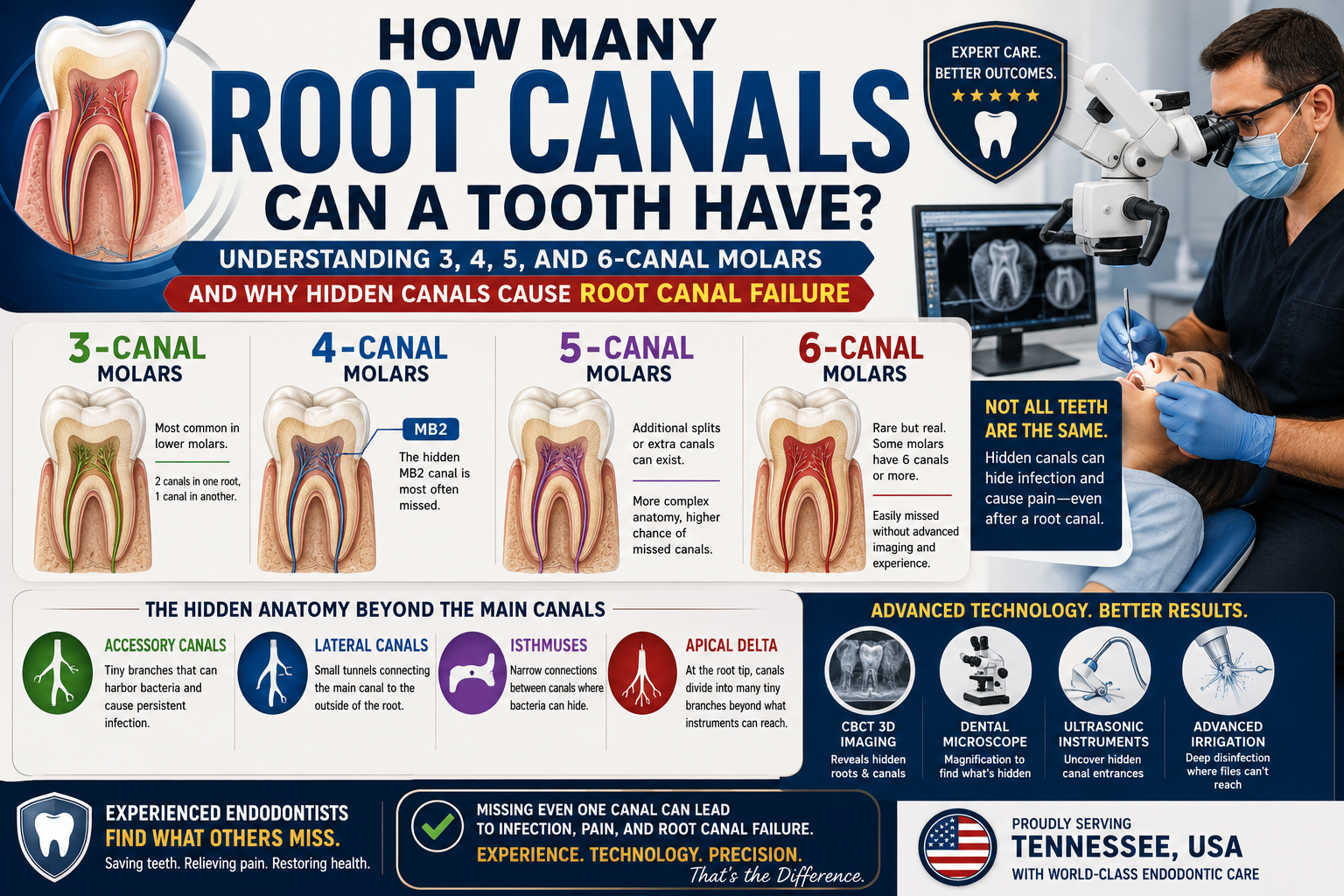
Understanding the Layers of Root Canal Complexity
Think of a tooth like a tree.
- The crown is the top of the tree.
- The roots are underground.
- The canals are like tunnels running through the roots on your teeth.
- Smaller accessory canals are like side branches just image vividly so it will be easy to understand.
A dentist must locate, clean, disinfect, and seal every significant canal. Missing even one infected canal can allow bacteria to survive and cause persistent infection.
Level 1: Three-Canal Molars
Typical Anatomy
Most commonly found in:
- Lower first molars
- Some upper molars
Structure:
- 2 canals in one root
- 1 canal in another root
Total:
- 3 canals
Difficulty
- Standard complexity
- Usually predictable
Common Problem
Sometimes one canal is narrow or curved, making it difficult to clean completely. This make many season until it is finally complete. Skilled dentist knows and hand skills are years of experience of successfully done. This take time until finally complete
Level 2: Four-Canal Molars
Typical Anatomy
Very common in upper first molars.
Structure:
- Mesiobuccal canal (MB1)
- Hidden second mesiobuccal canal (MB2)
- Distobuccal canal
- Palatal canal
Total:
- 4 canals
Why Problems Occur
The MB2 canal is the most commonly missed canal in dentistry.
Many failed root canals involve:
- A perfectly treated main canal system
- One hidden MB2 canal left untreated
Bacteria remain inside that canal and continue causing infection.
Expert Insight
Modern endodontists using:
- Dental microscopes
- CBCT 3D scans
- Ultrasonic instruments
find MB2 canals far more often than traditional methods.
Level 3: Five-Canal Molars
Typical Anatomy
Some molars develop:
- Additional canal splits
- Separate root systems
- Complex anatomy
Total:
- 5 canals
Common examples:
- Upper first molars
- Lower molars with extra distal canals
Clinical Challenge
The canals may:
- Curve sharply
- Join together
- Split apart multiple times
A dentist may locate four canals and still miss a fifth hidden pathway.
Level 4: Six-Canal Molars
Typical Anatomy
Rare but very real.
Examples include:
- Lower first molars
- Lower second molars
- Upper molars with duplicated canal systems
Total:
- 6 canals
Why They Are Dangerous
A standard X-ray may show only four canals.
However:
- Fifth canal hidden behind another root this needs advance technology so the fifth canal can be seen in x-ray so technology needed so it can bee seen?
- Sixth canal buried deep within dentin
Without advanced imaging, these canals may remain undiscovered.
Beyond Canal Numbers: The Hidden Layers Most Patients Never Hear About
The number of canals is only part of the challenge.
Accessory Canals
Tiny side branches extending from the main canal.
Some are too small to instrument directly.
Lateral Canals
Small tunnels connecting the main canal to the outside root surface.
Infection can travel through these pathways and create bone loss.
Isthmuses
An isthmus is a narrow connection between two canals.
Imagine:
- Canal A
- Canal B
- Tiny bridge connecting them
Bacteria often hide in these bridges.
Many root canal failures occur because these areas are difficult to disinfect.
Apical Delta
Near the root tip, one canal may divide into many microscopic branches.
It resembles a river delta.
A dentist may clean the main canal successfully but bacteria can survive within these tiny terminal branches.
Why Experienced Endodontists Have Higher Success Rates
Modern specialists use:
1. CBCT 3D Imaging
Allows viewing:
- Hidden roots
- Additional canals
- Curvatures
- Bone infections
2. Dental Operating Microscopes
Magnification often exceeds:
- 8x
- 16x
- 25x
This helps identify canals invisible to the naked eye.
3. Ultrasonic Instruments
Used to uncover:
- Calcified canals
- Hidden canal entrances
- MB2 canals
4. Advanced Irrigation Systems
Disinfect:
- Isthmuses
- Accessory canals
- Apical deltas
Areas files cannot physically reach.
A Real-World Example
A patient in Tennessee arrived with pain six months after a root canal.
The original dentist believed the tooth had:
- Four canals
A CBCT scan revealed:
- A missed fifth canal
- Infection around the root tip
Using microscope-guided retreatment, the endodontist:
- Located the hidden canal.
- Removed the old filling material.
- Disinfected the entire canal system.
- Sealed all five canals.
One year later:
- Bone regenerated.
- Infection resolved.
- The tooth was saved.
Short Story
How Many Root Canals Can a Tooth Have? The Mystery of Hidden Canals
Host:
Have you ever wondered how many root canals a single tooth can have?
Most people imagine a tooth as having just one root and one canal. But in reality, some teeth are far more complicated than they appear. In fact, certain molars can have three, four, five, or even six canals hidden deep within the roots.
Today, we're exploring one of the most fascinating mysteries in dentistry—and why hidden canals are one of the leading causes of root canal failure.
Imagine a patient named Sarah.
Sarah had a root canal performed on a lower molar several years ago. Everything seemed fine at first. The pain disappeared, and life returned to normal.
But then, several years later, the tooth began hurting again.
There was swelling.
Tenderness when chewing.
And eventually, a small infection developed near the root.
Sarah was confused.
"Didn't I already have a root canal?" she asked.
The answer was yes.
But the story wasn't over.
When Sarah visited an endodontist—a root canal specialist—the dentist used advanced 3D imaging called Cone Beam CT scanning.
The scan revealed something surprising.
A hidden canal had never been treated.
Inside the tooth, bacteria had survived for years in a tiny space that wasn't visible on traditional X-rays.
That hidden canal had become a safe hiding place for infection.
Most people don't realize that molars are incredibly complex.
A front tooth usually has one canal.
But molars are different.
Upper first molars commonly have three or four canals.
Lower molars often have three or four canals as well.
Yet some teeth contain five canals.
Others have six.
And in rare cases, dentists have discovered seven or even eight canals inside a single tooth.
Every tooth is unique.
Nature doesn't always follow a standard blueprint.
Think of a root canal system like a cave network hidden underground.
At the surface, everything may look simple.
But underneath, there are tunnels, branches, side passages, and hidden chambers.
A dentist performing a root canal must locate and clean every canal.
If even one is missed, bacteria can remain trapped inside.
Over time, those bacteria may multiply and cause reinfection.
This is one reason why modern root canal treatment has become much more successful than it was decades ago.
Today's specialists use:
Dental microscopes.
Digital imaging.
Cone Beam CT scans.
Ultrasonic instruments.
And advanced disinfection techniques.
These technologies help dentists find canals that would have been nearly impossible to locate in the past.
For patients, the lesson is simple.
A failed root canal does not always mean the original treatment was done poorly.
Sometimes anatomy itself is the challenge.
A hidden canal may be extremely difficult to find.
Even experienced dentists occasionally discover unexpected canal systems.
That's why persistent symptoms should never be ignored.
Pain.
Swelling.
Sensitivity when biting.
Or recurring infections.
These may all indicate that additional evaluation is needed.
The good news?
Many failed root canals can be successfully retreated.
By locating and cleaning hidden canals, specialists can often save teeth that might otherwise require extraction.
And preserving your natural tooth is almost always the preferred option.
So, how many root canals can a tooth have?
The answer might surprise you.
Three.
Four.
Five.
Six.
Or sometimes even more.
Beneath the surface of every tooth lies a complex world that dentists continue to explore and understand.
And sometimes, the smallest hidden canal can make the biggest difference.
Closing
Thank you for listening. If you found this episode helpful, be sure to follow for more fascinating insights into dental health, root canal treatment, dental implants, and the science behind saving natural teeth.
Remember: when it comes to your smile, what you can't see can matter the most.
Remember
A molar may contain:
- 3 canals (common)
- 4 canals (very common)
- 5 canals (complex)
- 6 canals (highly complex)
But the true challenge extends beyond the number of canals. Dentists must also manage:
- Accessory canals
- Lateral canals
- Isthmuses
- Apical deltas
- Hidden canal branches
Can tooth extraction cause infection? Mild inflammation is normal, but increasing swelling, fever, or severe pain may indicate infection. Learn more about post-extraction infection warning signs in this detailed guide.
Book a consultation with our Cebu dental specialists for proper evaluation and care.
Ready to get expert guidance?
If you’re experiencing severe pain or delayed healing, book a consultation with our Cebu dental specialists to get proper evaluation and care.
Consultation or contact page .
Book a Consultation
For severe discomfort or delayed healing, book a consultation with our Cebu dental specialists today.
Looking for a dentist? Browse our Cebu dental directory to find trusted clinics near you.
Medical Review and Clinical Basis
This article is based on clinical dental guidelines and real patient recovery patterns observed after tooth extraction procedures. The information reflects common post-extraction healing stages, including normal clot formation, gum tissue repair, and signs of possible complications such as dry socket or infection.
While mild discomfort is expected after a dental extraction, worsening pain after Day 3, bad odor, exposed bone, or spreading pain may require professional evaluation. These symptoms are consistent with known post-extraction complications described in standard dental practice.
About Cebu Dental Implants
Cebu Dental Implants provides comprehensive tooth extraction, surgical procedures, and dental implant services in the Philippines. Our team evaluates post-extraction healing, manages complications such as dry socket, and advises patients on proper aftercare to prevent infection and delayed healing.
If you experience severe pain or unusual symptoms after extraction, early professional assessment is recommended to prevent further complications.
Important Medical Disclaimer
This content is for educational purposes only and does not replace professional dental diagnosis. Every patient heals differently. If symptoms worsen or do not improve within a few days, consult a licensed dentist for proper evaluation and treatment.
Author
This article was prepared by the Cebu Dental Implants content team in consultation with licensed dental professionals experienced in tooth extraction and implant procedures.
Video:
Related Clinical Cases
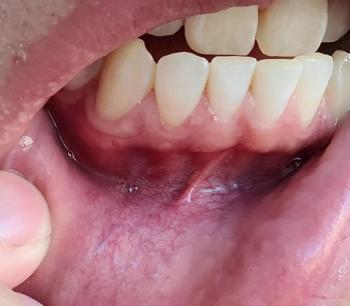
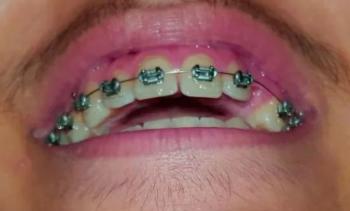
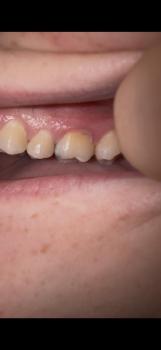
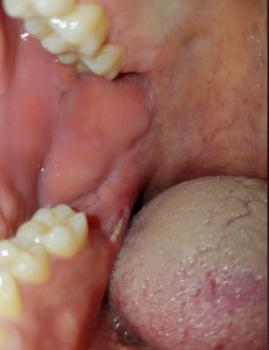
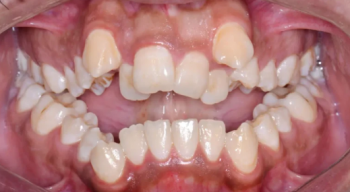
Patients with lower front gum inflammation may also experience tartar buildup, periodontal disease, gum abscesses, or tooth decay. Explore these related clinical case studies.


Other topics:
Other Dental Clinic