We Bring Back the Sparkle in Your Smile.

Multiple Decayed Lower Molars With Abscess Risk
Image:
Severity:
Teeth Problems:
Multiple Decayed Lower Molars: Dental Abscess Risks, Warning Signs, and Treatment
Quick Answer
Multiple decayed lower molars can increase the risk of deep tooth infection, dental abscesses, gum swelling, and tooth loss. When decay reaches the dental pulp, bacteria can spread through the root into surrounding tissues. Prompt dental examination, appropriate X-rays, and definitive treatment can help control infection and preserve teeth when possible.
Why Multiple Decayed Lower Molars Require Dental Attention
The lower molars are important for chewing and maintaining a stable bite. Because their chewing surfaces contain grooves and pits, plaque and food debris can accumulate in areas that are difficult to clean.
When tooth decay affects several lower molars, each tooth needs an individual assessment. One molar may have a cavity that can be restored with a filling, while another may have extensive structural damage or infection involving the dental pulp.
Untreated decay can progress into deeper layers of the tooth. If bacteria enter the pulp, the tissue containing nerves and blood vessels may become irreversibly inflamed or die. Infection can then develop around the root, potentially forming a dental abscess.
Multiple cavities do not automatically mean that several abscesses are present. A clinical examination is needed to determine which teeth are infected and how extensive the damage has become.
How Lower Molar Decay Can Progress to an Abscess
Stage 1: Early enamel decay
Decay begins when acids produced by plaque bacteria remove minerals from the enamel. Early lesions may appear as white, brown, or dark spots and may cause no pain.
At this stage, some early lesions can be arrested or reversed with appropriate fluoride treatment and improved plaque control, depending on the extent of surface breakdown.
Stage 2: Dentin involvement
When decay passes through the enamel into the dentin, the tooth becomes more vulnerable to further damage. Patients may experience sensitivity to cold drinks, sweets, or pressure while chewing.
A cavity that has formed usually requires restorative treatment rather than home care alone.
Stage 3: Pulp inflammation or infection
Deep decay can reach the pulp inside the tooth. Symptoms may include prolonged sensitivity to hot or cold, spontaneous toothache, pain that interferes with sleep, or tenderness when biting.
However, symptoms are not always reliable indicators of severity. A tooth with a dying or dead pulp may stop hurting temporarily even though infection remains.
Stage 4: Infection around the root
Bacteria may pass through the root canal system and trigger inflammation or an abscess in the surrounding tissues. Signs can include localized gum swelling, pus, a bad taste, tenderness when chewing, or swelling near the jaw.
A dental abscess requires professional treatment. It will not reliably resolve through brushing, mouthwash, or pain medication alone.
What Are the Risks of Leaving Multiple Lower Molars Untreated?
The main risks depend on how far the decay has progressed and whether infection has developed.
-
Dental abscess: A pocket of pus can form near an infected root or within the tissues surrounding a tooth.
-
Increasing pain and swelling: Infection and inflammation can make chewing difficult and disrupt sleep.
-
Damage to supporting bone: Persistent infection around a root may damage nearby bone and tissues.
-
Tooth fracture or tooth loss: Extensive decay can weaken a molar until it cannot be predictably restored.
-
Difficulty eating: Painful lower molars can make it harder to chew a balanced diet.
-
Spread of infection: In uncommon but serious cases, infection may spread into the face, floor of the mouth, jaw, or neck and require hospital treatment.
The presence of several cavities does not by itself establish that an infection has spread. The concern is greater when there is facial swelling, fever, worsening pain, or difficulty opening the mouth.
Warning Signs That Need Urgent Attention
Contact a dentist promptly if you notice any of the following:
-
Persistent or worsening pain in one or more lower molars.
-
Swollen, red, or tender gums around a decayed tooth.
-
Pus, a gum boil, or a persistent foul taste.
-
Pain when biting or chewing.
-
A broken molar with a deep cavity.
-
Swelling beneath the jaw or along the cheek.
-
Fever or feeling generally unwell together with dental symptoms.
Seek emergency medical care immediately if you have difficulty breathing or swallowing, rapidly increasing swelling of the face or neck, swelling beneath the tongue or in the floor of the mouth, or severe difficulty opening your mouth. These symptoms can indicate a spreading infection that may threaten the airway.
Do not wait for a routine dental appointment if these emergency warning signs develop.
How Dentists Diagnose Multiple Decayed Lower Molars
A dentist will assess each affected tooth separately instead of assuming that all the molars need the same treatment.
The examination may include:
-
Visual examination: Checking the size and location of cavities, fractured enamel, gum swelling, and visible drainage.
-
Pulp and tooth testing: Assessing the response to cold or other appropriate tests, along with tenderness to tapping or biting.
-
Gum examination: Looking for periodontal pockets, localized gum infection, and loss of supporting tissue.
-
Dental X-rays: Identifying the depth of decay, root anatomy, and possible changes in the bone around the roots.
-
Further imaging when indicated: Additional imaging may be considered if the suspected infection or anatomy cannot be adequately evaluated with routine radiographs.
A dental X-ray helps guide diagnosis, but the findings must be interpreted together with the clinical examination and symptoms.
Treatment Options for Decayed Lower Molars
The appropriate treatment depends on the remaining healthy tooth structure, pulp condition, presence of infection, and ability to restore the tooth.
1. Dental filling
A filling may be appropriate when decay has damaged the tooth but the remaining structure is sufficient and the pulp does not require root canal treatment.
2. Root canal treatment
If the pulp is irreversibly inflamed or infected and the tooth can be restored, root canal treatment may allow the dentist to retain the natural tooth. The infected or damaged pulp is removed, the canal system is cleaned and sealed, and the tooth is restored.
A severely weakened molar may need a crown or another suitable restoration to reduce the risk of fracture.
3. Abscess drainage
When an abscess contains pus, the dentist may need to drain it as part of infection control. Drainage alone does not necessarily eliminate the original source of infection; the affected tooth still needs definitive treatment.
4. Tooth extraction
Extraction may be necessary when decay has destroyed too much of the tooth to permit a predictable restoration, or when other clinical factors make saving it unsuitable.
If several lower molars require extraction, discuss the implications for chewing, the remaining teeth, and possible replacement options with your dentist after the infection has been controlled.
5. Antibiotics when indicated
Antibiotics are not a substitute for treating the infected tooth. For many localized dental infections, definitive dental treatment is the priority. A dentist may prescribe antibiotics when there are signs of systemic involvement, spreading infection, or other specific clinical indications.
Do not use leftover antibiotics or take someone else's medication. The appropriate drug and dose depend on the diagnosis, allergies, medical history, and other medicines.
What Can You Do Before Your Dental Appointment?
Home care can reduce discomfort temporarily, but it cannot remove deep decay or reliably cure an abscess.
-
Brush gently with fluoride toothpaste and keep the surrounding teeth clean.
-
Consider a gentle warm salt-water rinse if you can rinse and spit safely.
-
Eat soft foods and chew on the opposite side if that is comfortable.
-
Avoid foods and drinks that trigger sensitivity, especially very hot, cold, or sugary items.
-
Use an over-the-counter pain reliever only if it is safe for you and according to its label or a clinician's instructions.
-
Avoid placing aspirin directly on the tooth or gums, puncturing a gum swelling, or attempting to drain pus yourself.
Arrange a prompt dental assessment rather than waiting for the pain to disappear. If swelling or other symptoms worsen, seek urgent care.
Can Multiple Decayed Lower Molars Be Saved?
Sometimes. The number of affected teeth alone does not determine whether they can be saved. A molar with a deep cavity may still be restorable, while another with extensive structural destruction may require extraction.
The dentist must consider the remaining tooth structure, the condition of the pulp and roots, the amount of supporting bone, gum health, and the likelihood of a durable restoration.
When several teeth are affected, ask the dentist to explain which teeth need urgent treatment, which can be preserved, and whether treatment should be staged according to infection risk and functional needs.
Frequently Asked Questions
1. Can multiple decayed lower molars cause a dental abscess?
Yes. Deep decay can allow bacteria to reach the pulp and spread through the root into surrounding tissues, where an abscess may develop. However, not every decayed molar has an abscess, so each tooth needs assessment.
2. Can a dental abscess develop without severe tooth pain?
Yes. Pain can vary, and an infected tooth may become less painful if the pulp dies or an abscess drains. Reduced pain does not prove that the infection has resolved.
3. Is swelling beneath the jaw a sign of a lower molar infection?
It can be. Lower molar infections may cause swelling in nearby tissues, including beneath the jaw. Other conditions can cause similar swelling, so prompt assessment is important. Rapidly increasing swelling, difficulty swallowing, or breathing problems require emergency care.
4. Can a dental abscess go away without treatment?
A dental abscess should not be left untreated. Pain or swelling may temporarily decrease if the abscess drains, but the source of infection may remain. Professional treatment is needed to address the cause.
5. Will antibiotics cure an abscessed lower molar?
Antibiotics alone often do not eliminate the source of infection. Depending on the diagnosis, treatment may require drainage, root canal treatment, or extraction. Antibiotics are used when clinically indicated, particularly when infection is spreading or causing systemic symptoms.
6. Should an abscessed molar always be extracted?
No. A tooth may be saved with root canal treatment and an appropriate restoration if enough healthy structure remains and the prognosis is acceptable. Extraction is considered when the tooth cannot be predictably restored or when other clinical factors make it the better option.
7. Can several lower molars be treated during one appointment?
Sometimes. The number of teeth treated during one visit depends on the urgency of the infection, complexity of the procedures, patient comfort, medical history, and available appointment time. A dentist may recommend staged treatment.
8. Can I wait until the pain becomes severe before seeing a dentist?
No. Cavities can progress without noticeable pain, and an abscess can develop before symptoms become severe. Seek dental care when you discover deep decay, persistent sensitivity, gum swelling, or other concerning symptoms.
9. How can I prevent further decay in my remaining molars?
Brush twice daily with fluoride toothpaste, clean between teeth every day, limit frequent sugary snacks and drinks, and attend regular dental examinations. Your dentist may recommend additional fluoride or other preventive measures based on your cavity risk.
10. When should I go to the hospital instead of waiting for a dentist?
Go to an emergency department immediately for difficulty breathing or swallowing, rapidly spreading facial or neck swelling, swelling of the floor of the mouth, or severe difficulty opening your mouth. Fever with facial swelling also requires urgent assessment, especially if dental care is not immediately available.
Final Dental Guidance
Multiple decayed lower molars deserve timely attention because untreated cavities can progress to pulp infection, abscess formation, structural damage, and tooth loss. Early examination improves the opportunity to treat decay before more extensive procedures become necessary.
If an abscess is suspected, prioritize professional diagnosis and treatment rather than relying on antibiotics or home remedies alone. Seek emergency medical care for signs of spreading infection or airway involvement.
Medical disclaimer: This article provides general dental education and does not diagnose an individual patient. Examination by a licensed dentist, with imaging when appropriate, is necessary to determine the diagnosis and treatment plan.
Multiple Decayed Lower Molars With High Risk of Abscess Case Analysis
What Is Seen in This Case
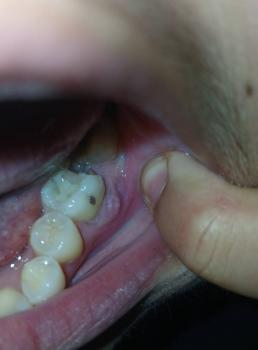
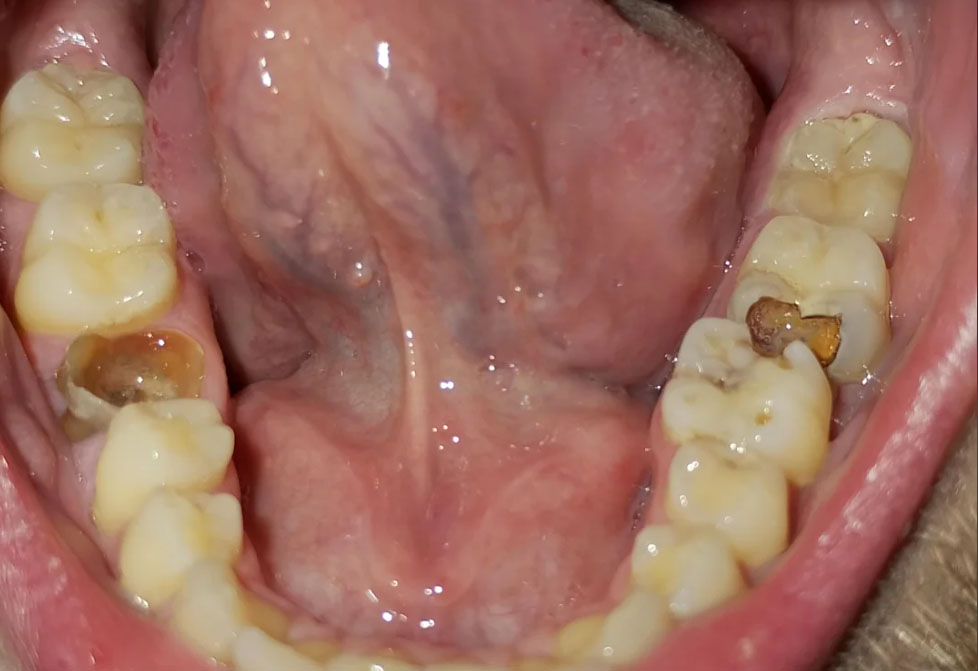
The image shows the lower jaw (mandible) with multiple back molars affected by visible decay. On both the left and right sides, at least one molar shows brown cavitated lesions, indicating advanced tooth decay. The surrounding gum tissue appears slightly irritated, and the floor of the mouth is clearly visible.
This pattern suggests bilateral molar decay, which increases the overall infection risk.
Most Likely Diagnosis
Based on visual examination, the most likely conditions include:
-
Multiple decayed lower molars
-
Deep dental caries reaching dentin
-
High risk of tooth abscess formation
-
Possible early pulp infection
-
Risk of periodontal involvement around molars
Dental X-rays are necessary to determine if the tooth nerves or bone are already affected.
What Causes Multiple Molar Decay
Common causes include:
-
Long-term plaque buildup
-
Frequent sugary or acidic food intake
-
Inadequate brushing and flossing
-
Old or broken fillings
-
Delayed dental checkups
Lower molars are especially prone to decay due to deep grooves and difficulty cleaning.
Is This a Serious Problem
Yes. When multiple molars are decayed, the risk multiplies. If untreated, this condition may scale up into:
-
Tooth abscess formation
-
Severe toothache
-
Jawbone infection
-
Multiple tooth loss
-
Difficulty chewing
-
Spread of infection to nearby tissues
Early intervention can prevent major dental damage.
Recommended Treatment Process
Initial Assessment (Days 1–3)
-
Full dental examination
-
Bitewing or panoramic X-rays
-
Evaluation of decay depth and nerve involvement
Active Treatment Phase (Days 4–10)
Treatment may include:
-
Dental fillings for restorable teeth
-
Root canal treatment for infected teeth
-
Tooth extraction if damage is severe
-
Deep cleaning around affected molars
-
Antibiotics if infection is present
Healing and Follow-Up Phase (Days 11–14)
-
Pain and sensitivity reduce
-
Gum tissues begin to stabilize
-
Planning for long-term restoration
Expected Healing Time
-
After fillings: 1–3 days
-
After root canal: 5–10 days
-
After extraction: 7–14 days
Healing depends on how many teeth are treated.
What Happens If Treatment Is Delayed
Delaying care may lead to:
-
Multiple abscesses
-
Bone loss in the lower jaw
-
Emergency dental visits
-
Higher treatment costs
-
Permanent tooth loss
This is a progressive condition that will not improve on its own.
Home Care While Waiting for Treatment
These steps may help reduce discomfort:
-
Brush gently twice daily
-
Floss carefully between molars
-
Rinse with warm salt water
-
Avoid sugary and sticky foods
-
Avoid chewing on painful areas
Home care does not stop decay progression.
Professional Comment
This case shows multiple lower molars with advanced decay, placing the patient at high risk for abscess and tooth loss. Early dental treatment can often save affected teeth and prevent jawbone infection.
Visit a Dental Clinic Near You
For professional evaluation and treatment, visit:
https://cebudentalimplants.com/map-dental-clinic
Related Clinical Cases
Patients with lower front gum inflammation may also experience tartar buildup, periodontal disease, gum abscesses, or tooth decay. Explore these related clinical case studies.