Transforming Smiles, Restoring Confidence.

Difficulty Swallowing After Root Canal Treatment in Buffalo, New York: How a Skilled Dentist Identified the Cause and Saved a Patient from a Serious Dental Emergency
Language :
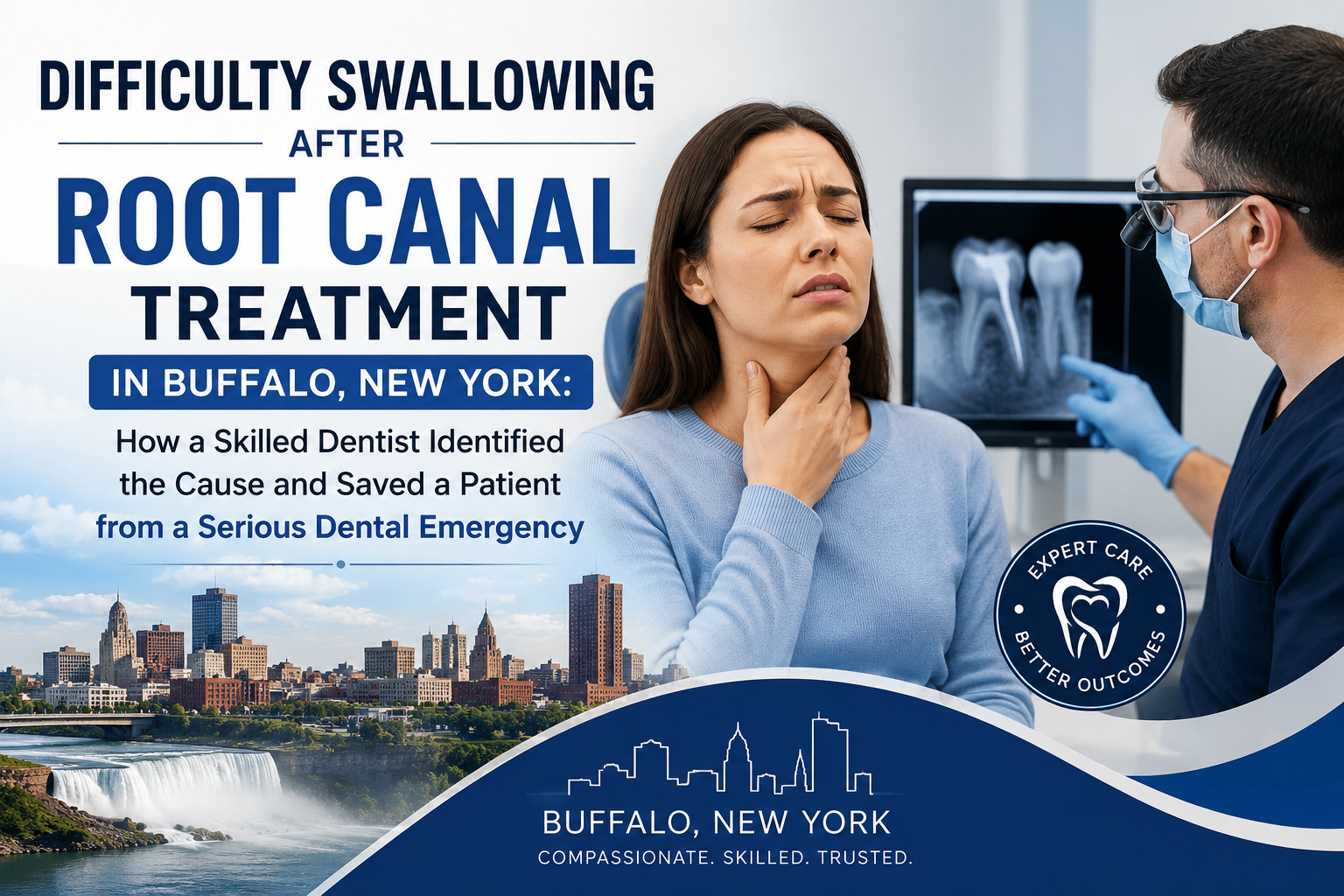
Root canal treatment is one of the most effective procedures in modern dentistry. Every year, millions of Americans undergo root canal therapy to eliminate infection, relieve pain, and preserve natural teeth. Most patients recover with only mild soreness and tenderness for a few days.
However, there are situations where unusual symptoms develop after treatment. One symptom that should never be ignored is difficulty swallowing. Not all are successful process some failed.
In Buffalo, New York, a patient named Michael experienced what he initially believed was ordinary post-treatment discomfort. Within days, swallowing became painful. His throat felt tight. Eating became difficult. Speaking became uncomfortable.
Fortunately, he sought immediate care from an experienced dentist who recognized that something more serious was developing beneath the surface.
This is the story of how prompt diagnosis, advanced dental expertise, and timely intervention prevented a potentially dangerous infection from causing life-threatening complications.
Michael's Root Canal Procedure
Michael, a 48-year-old warehouse supervisor from Buffalo, had been suffering from severe tooth pain for several weeks.
The source of his discomfort was a lower molar that had developed a deep cavity.
The infection had progressed into the pulp chamber, causing:
- Intense sensitivity to hot and cold never neglect this if you feel something change in your teeth this is a since the bacteria has started scaling deeper into your roots.
- Persistent throbbing pain the pain always continue again and again.
- Difficulty chewing . Eating discomfort will always been an issue
- Nighttime discomfort. Night and nights you never have a better sleep due to pain in the teeth that keeps you awaken.
- Swelling around the tooth. The gums feels swelling make it worse every day as it progress.
His general dentist recommended root canal therapy to save the tooth.
The procedure itself appeared successful.
The infected pulp tissue was removed.
The canals were disinfected.
The tooth was sealed.
Michael left the office feeling relieved.
For the first 24 hours, everything seemed normal.
The Unexpected Symptoms Begin
On the second day after treatment, Michael noticed discomfort beneath his jaw.
At first, he assumed it was ordinary post-treatment soreness.
By evening, however, new symptoms appeared.
These included:
- Tightness under the tongue
- Mild swelling in the lower jaw
- Tenderness in the neck
- Pain while swallowing
The next morning, swallowing became increasingly difficult.
Even drinking water caused discomfort.
His wife noticed subtle swelling beneath his chin.
Concerned, she urged him to contact his dentist immediately.
Why Difficulty Swallowing Is Concerning
Difficulty swallowing after dental treatment is not considered a normal recovery symptom.
Dentists refer to swallowing difficulties as dysphagia.
When dysphagia develops after root canal treatment, it may indicate:
Spread of Infection
Bacteria may move beyond the tooth and enter deeper tissues.
Facial Space Infection
Infections can spread into the anatomical spaces of the face and neck.
Swelling Near the Airway
Inflammation may begin compressing structures involved in swallowing.
Abscess Formation
Pus accumulation can create pressure and pain.
Deep Neck Infection
In severe cases, infections can descend into the neck and chest.
These conditions require immediate professional evaluation.
The Emergency Examination
Michael's dentist scheduled him for an emergency visit.
During examination, several concerning findings were identified.
These included:
- Elevated body temperature
- Swelling beneath the jaw
- Tender lymph nodes
- Pain on palpation
- Limited mouth opening
- Difficulty swallowing saliva
The dentist immediately recognized that the symptoms extended beyond routine post-operative healing.
Additional imaging was ordered.
Radiographs and advanced diagnostic evaluation revealed that infection had spread from the original tooth into surrounding tissues.
Understanding Facial Space Infections
Many patients assume a tooth infection remains confined to the tooth itself.
Unfortunately, bacteria often seek pathways through bone and soft tissues.
Once infection escapes the tooth, it can enter spaces located between muscles and connective tissues.
These are known as facial spaces.
Commonly affected areas include:
Submandibular Space
Located beneath the jaw.
Sublingual Space
Found beneath the tongue.
Buccal Space
Located in the cheek.
Masticator Space
Surrounding chewing muscles.
Parapharyngeal Space
Located beside the throat.
When infection reaches these spaces, swallowing may become painful or difficult.
The Hidden Danger
The greatest concern in Michael's case was that the swelling had begun affecting tissues near his throat.
The dentist explained that untreated infections in this area can become medical emergencies.
Potential complications include:
- Airway obstruction
- Hospitalization
- Difficulty breathing
- Spread of infection into the bloodstream
- Sepsis
- Chest infections
- Mediastinitis
Although these complications are uncommon, they are serious enough to require immediate treatment.
Why Did This Happen?
Patients often ask whether a root canal caused the infection.
In reality, root canal treatment is performed to eliminate infection.
However, several factors can contribute to complications.
Pre-Existing Severe Infection
Some infections are already extensive before treatment begins.
Delayed Treatment
Long-standing infections may spread before root canal therapy is performed.
Complex Root Anatomy
Hidden canals may harbor bacteria.
Weakened Immune Response
Some patients have greater difficulty controlling infection.
Aggressive Bacterial Strains
Certain bacteria spread rapidly through tissues.
Michael's infection had likely been present for weeks before treatment.
The root canal addressed the primary source, but residual infection continued spreading into nearby tissues.
The Dentist's Treatment Plan
Recognizing the urgency of the situation, the dentist developed a comprehensive treatment strategy.
The goals included:
- Eliminate remaining infection
- Reduce swelling
- Restore normal swallowing
- Prevent airway complications
- Save the tooth whenever possible
Advanced Infection Control
The dentist reopened the treated tooth for evaluation.
Additional disinfection procedures were performed.
Advanced irrigation solutions were used to eliminate bacteria hidden within the canal system.
The dentist carefully examined all root structures to ensure no infected tissue remained.
This step significantly reduced bacterial load.
Antibiotic Therapy
Because the infection had extended beyond the tooth, antibiotics became necessary.
The medication targeted bacteria responsible for:
- Soft tissue infection
- Facial swelling
- Abscess development
Michael was instructed to begin treatment immediately.
Within 48 hours, symptoms began stabilizing.
Managing the Swelling
Reducing inflammation was essential.
The dental team recommended:
- Adequate hydration
- Warm compresses
- Soft foods
- Rest
- Close monitoring
Daily communication ensured that symptoms were not worsening.
Fortunately, Michael responded positively.
Monitoring Airway Risk
One of the most important aspects of treatment involved monitoring for airway compromise.
The dentist educated Michael regarding warning signs including:
- Difficulty breathing
- Rapid swelling
- Inability to swallow saliva
- Voice changes
- High fever
Had any of these symptoms appeared, immediate hospital referral would have been required.
Fortunately, none developed.
The Turning Point
By the fourth day of treatment, significant improvement became noticeable.
Michael reported:
- Easier swallowing
- Reduced jaw pressure
- Less neck tenderness
- Improved appetite
- Better sleep
Swelling beneath the jaw had begun decreasing.
The dentist knew the infection was finally under control.
Saving the Tooth
One of Michael's biggest concerns involved losing the tooth.
Many patients assume severe infections automatically require extraction.
That is not always true.
When managed properly, root canal-treated teeth can often be preserved even after serious complications.
Because the infection was identified early enough, the dentist successfully maintained the tooth.
After healing was complete, a permanent crown was placed.
The tooth regained full function.
What Could Have Happened Without Treatment?
Had Michael ignored the symptoms, the outcome might have been dramatically different.
Potential consequences included:
Larger Abscess Formation
Pockets of infection could have expanded rapidly.
Hospital Admission
Intravenous antibiotics may have become necessary.
Surgical Drainage
Deep infections sometimes require surgery.
Airway Emergency
Severe swelling can interfere with breathing.
Tooth Loss
Extensive infection may eventually destroy supporting structures.
Systemic Infection
Bacteria can spread throughout the body.
Prompt dental intervention prevented these complications.
Warning Signs Patients Should Never Ignore
After root canal treatment, contact a dentist immediately if you experience:
- Difficulty swallowing
- Increasing swelling
- Fever
- Difficulty breathing
- Severe pain
- Persistent drainage
- Swelling beneath the jaw
- Limited mouth opening
- Neck pain
- Voice changes
These symptoms deserve professional evaluation.
Normal Recovery vs Dangerous Symptoms
Normal Recovery
Patients commonly experience:
- Mild soreness
- Temporary tenderness
- Slight chewing discomfort
- Mild gum irritation
These symptoms usually improve gradually.
Dangerous Symptoms
Seek immediate care for:
- Rapid swelling
- Difficulty swallowing
- Fever
- Difficulty breathing
- Progressive pain
- Facial asymmetry
These findings may indicate infection spread.
Buffalo Dentists and Modern Infection Management
Dentists throughout Buffalo utilize advanced technologies to identify infections before they become severe.
Modern diagnostic tools include:
- Digital radiographs
- Cone beam CT imaging
- Electronic apex locators
- Advanced irrigation systems
- Magnification technology
These innovations improve treatment outcomes and reduce complications.
Expert Perspective
As dental professionals, we emphasize that root canal therapy remains one of the safest and most predictable procedures in dentistry.
The vast majority of patients heal without significant issues.
Nevertheless, unusual symptoms should never be dismissed.
Difficulty swallowing after dental treatment deserves immediate evaluation because early intervention can mean the difference between a minor complication and a major medical emergency.
Michael's experience highlights an important lesson.
He did not ignore the warning signs.
His dentist acted quickly.
The infection was controlled.
The tooth was saved.
Most importantly, a potentially dangerous situation was prevented from becoming life-threatening.
Final Thoughts
Difficulty swallowing after root canal treatment in Buffalo, New York, is uncommon but should always be taken seriously.
While many cases involve manageable inflammation or localized infection, some represent deeper infections capable of spreading into critical structures of the face and neck.
The key to a successful outcome is prompt professional evaluation.
Michael's story demonstrates how an experienced dentist can identify the true cause of symptoms, implement targeted treatment, eliminate infection, preserve the natural tooth, and protect the patient's overall health.
If swallowing becomes painful or difficult after a root canal procedure, do not wait for symptoms to worsen. Contact a qualified dental professional immediately.
Early diagnosis remains the most powerful tool for preventing serious complications and ensuring a healthy recovery.
Can tooth extraction cause infection? Mild inflammation is normal, but increasing swelling, fever, or severe pain may indicate infection. Learn more about post-extraction infection warning signs in this detailed guide.
Book a consultation with our Cebu dental specialists for proper evaluation and care.
Ready to get expert guidance?
If you’re experiencing severe pain or delayed healing, book a consultation with our Cebu dental specialists to get proper evaluation and care.
Consultation or contact page .
Book a Consultation
For severe discomfort or delayed healing, book a consultation with our Cebu dental specialists today.
Looking for a dentist? Browse our Cebu dental directory to find trusted clinics near you.
Medical Review and Clinical Basis
This article is based on clinical dental guidelines and real patient recovery patterns observed after tooth extraction procedures. The information reflects common post-extraction healing stages, including normal clot formation, gum tissue repair, and signs of possible complications such as dry socket or infection.
While mild discomfort is expected after a dental extraction, worsening pain after Day 3, bad odor, exposed bone, or spreading pain may require professional evaluation. These symptoms are consistent with known post-extraction complications described in standard dental practice.
About Cebu Dental Implants
Cebu Dental Implants provides comprehensive tooth extraction, surgical procedures, and dental implant services in the Philippines. Our team evaluates post-extraction healing, manages complications such as dry socket, and advises patients on proper aftercare to prevent infection and delayed healing.
If you experience severe pain or unusual symptoms after extraction, early professional assessment is recommended to prevent further complications.
Important Medical Disclaimer
This content is for educational purposes only and does not replace professional dental diagnosis. Every patient heals differently. If symptoms worsen or do not improve within a few days, consult a licensed dentist for proper evaluation and treatment.
Author
This article was prepared by the Cebu Dental Implants content team in consultation with licensed dental professionals experienced in tooth extraction and implant procedures.
Related Clinical Cases
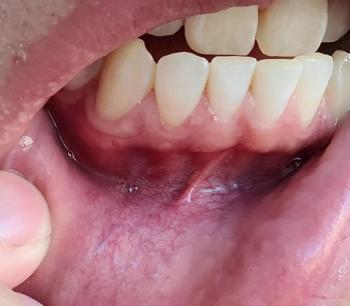
Patients with lower front gum inflammation may also experience tartar buildup, periodontal disease, gum abscesses, or tooth decay. Explore these related clinical case studies.


Other topics:
Other Dental Clinic