Modern Dentistry, Timeless Smiles.

Dental Implant Financing Options in the USA
Language :
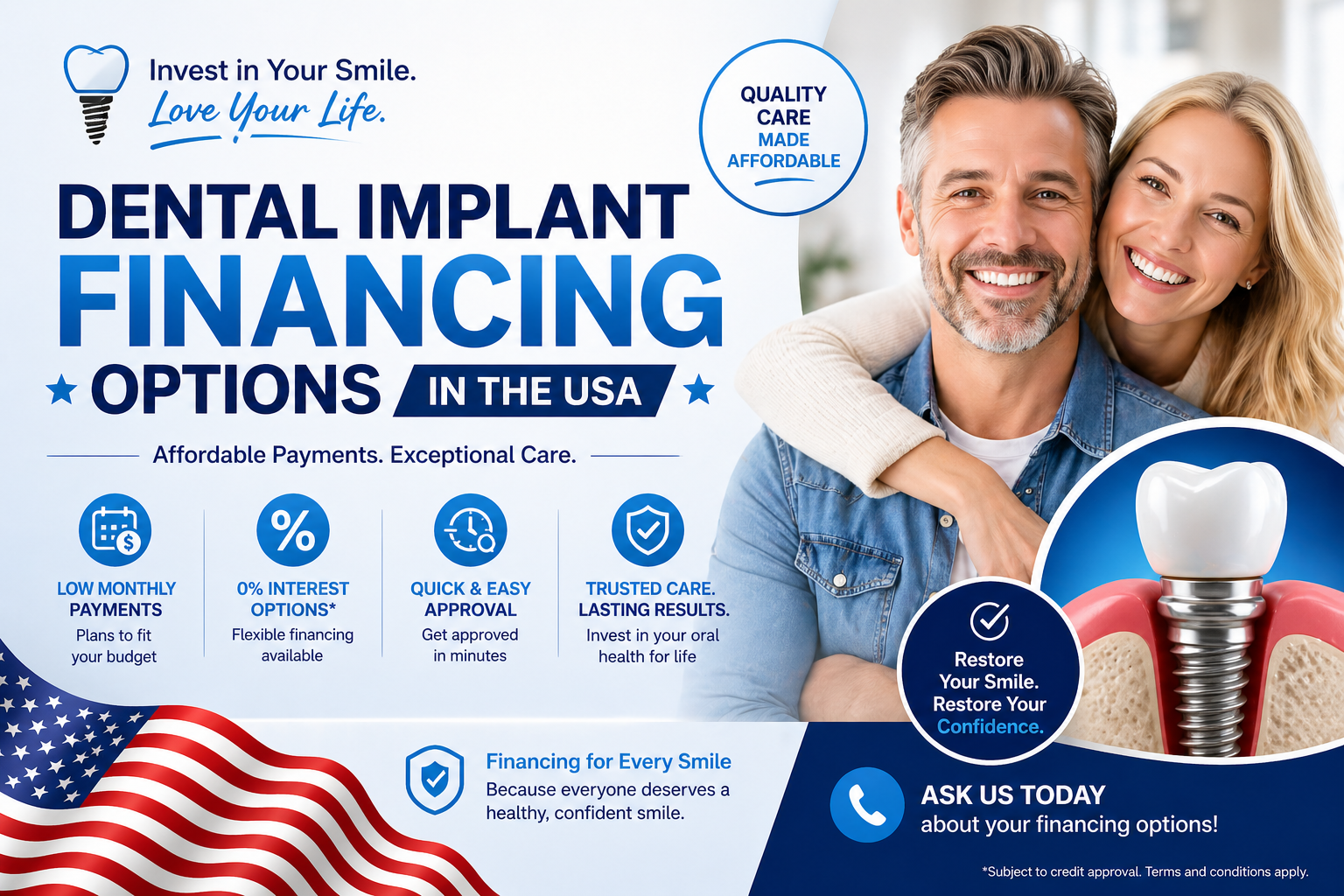
Dental implants are one of the most valuable long-term investments you can make in your oral health—but they also come with a price tag that can feel overwhelming at first. In the United States, a single implant can range from $3,000 to $6,000, while full-mouth restorations like All-on-4 can exceed $20,000–$50,000.
The good news? Most patients don’t pay everything upfront. With the right financing strategy, dental implants become far more accessible—and even manageable within a monthly budget.
This guide walks you through the most effective dental implant financing options in the U.S., how to choose the best one, and how real patients successfully made it work.
Why Financing Dental Implants Makes Sense
From a financial advisor’s perspective, dental implants are not just cosmetic—they’re a functional, long-term health asset.
Unlike dentures or bridges that may need frequent replacement, implants can last decades. Financing allows you to:
- Start treatment immediately (instead of delaying care)
- Spread costs into predictable monthly payments
- Preserve cash flow for other essential expenses
- Avoid worsening oral health (which leads to higher costs later)
In short: financing is often a smarter decision than postponing treatment.
1. Dental Insurance Coverage (Partial but Valuable)
Dental insurance in the U.S. has evolved. While implants were once excluded, many plans now offer partial coverage.
What to Expect:
- Coverage ranges: 10%–50% of implant cost
- Annual maximums: typically $1,000–$2,500
- Waiting periods: 6–12 months for major procedures
Major Providers:
- Delta Dental
- Cigna
- MetLife
Advisor Insight:
Insurance alone rarely covers the full cost—but it significantly reduces what you need to finance. Always maximize your annual benefits before using other payment methods.
2. Medical Credit Cards (Most Popular Option)
Medical credit cards are specifically designed for healthcare expenses, including dental implants.
Leading Options:
- CareCredit
- Alphaeon Credit
Key Features:
- 0% interest promotional periods (6–24 months)
- Fast approval process
- Widely accepted by dental clinics
Important Warning:
If you don’t pay off the balance within the promo period, interest can be retroactively applied.
Advisor Insight:
This is one of the best short-term strategies if you are disciplined with payments.
3. Personal Loans for Dental Implants
Personal loans provide fixed monthly payments and longer repayment terms, making them ideal for larger procedures.
Top Lenders:
- LendingClub
- SoFi
- Upstart
Benefits:
- Fixed interest rates
- Terms from 2 to 7 years
- No collateral required
Advisor Insight:
Best for patients undergoing full-mouth implants or All-on-4 procedures where costs are higher.
4. In-House Dental Payment Plans
Many U.S. dental clinics offer direct financing plans.
How It Works:
- Monthly payments directly to the clinic
- Often no credit check
- Flexible terms (6–24 months)
Pros:
- Easy approval
- Personalized payment schedules
Cons:
- Shorter repayment terms
- Limited availability
Advisor Insight:
Ideal if you don’t qualify for traditional financing or want a simpler setup.
5. Third-Party Healthcare Financing Companies
These companies specialize in large medical procedures, including dental implants.
Examples:
- Proceed Finance
- Sunbit
Features:
- Loans up to $75,000+
- Longer repayment periods (up to 10 years)
- Higher approval rates
Advisor Insight:
This is often the best solution for full-mouth restorations where traditional credit limits fall short.
6. Health Savings Accounts (HSA) and Flexible Spending Accounts (FSA)
If you have an HSA or FSA, you can use pre-tax dollars to pay for dental implants.
Benefits:
- Reduces taxable income
- Immediate savings of 20–30% depending on tax bracket
Advisor Insight:
Combine HSA/FSA funds with financing to minimize overall cost.
7. Combining Multiple Financing Options
Most successful patients don’t rely on just one method.
Example Strategy:
- Insurance covers $2,000
- HSA contributes $3,000
- Remaining balance financed via personal loan
Advisor Insight:
This layered approach reduces interest and makes payments more manageable.
Short Story: A Realistic Success Scenario
Meet David, a 52-year-old sales manager from Texas.
David had been struggling with missing teeth for years. He avoided smiling in photos and had difficulty eating certain foods. His dentist recommended All-on-4 implants—total cost: $28,000.
At first, David hesitated.
But instead of walking away, he explored financing.
Step-by-Step Strategy:
- His insurance covered: $1,500
- He used HSA savings: $4,000
- Remaining balance: financed through Proceed Finance
Monthly payment: about $320
The Result:
Within 6 months:
- He regained full chewing function
- His confidence skyrocketed
- He closed more sales at work (his words, not marketing hype)
Advisor Perspective:
David didn’t just finance a dental procedure—he invested in his quality of life and earning potential.
How to Choose the Best Financing Option
As an advisor, here’s the framework I recommend:
1. Evaluate Your Budget
- What monthly payment feels comfortable?
- Avoid stretching beyond 10–15% of disposable income
2. Check Your Credit Score
- Higher score = lower interest rates
- If low, consider in-house or Sunbit-type options
3. Prioritize Low or 0% Interest
- Use promotional financing if you can pay it off quickly
4. Think Long-Term
- Longer terms reduce monthly burden but increase total interest
5. Avoid Emotional Decisions
- Don’t rush into the first financing offer—compare at least 2–3 options
Common Mistakes to Avoid
- Ignoring insurance benefits
- Choosing the longest loan without calculating total interest
- Missing promotional payment deadlines
- Not asking clinics about in-house plans
- Overborrowing beyond actual treatment cost
FAQ: Dental Implant Financing in the USA
1. Can I get dental implants with bad credit?
Yes. Options like Sunbit and in-house plans have higher approval rates.
2. Is 0% financing really free?
Only if you pay within the promotional period. Otherwise, deferred interest applies.
3. What credit score is needed?
Typically:
- 700+ = best rates
- 600–699 = moderate rates
- Below 600 = alternative financing options
4. Can I combine insurance and financing?
Absolutely—and it’s often the smartest strategy.
5. Are dental implants tax deductible?
Generally no, unless classified as a medical necessity and exceeds IRS thresholds.
6. How long can I finance implants?
Anywhere from 6 months to 10 years depending on the provider.
Related Topics You Should Explore
1. All-on-4 vs All-on-6 Financing Differences
Understand how treatment type affects total cost and financing structure.
2. Dental Implant Cost Comparison: USA vs Philippines
Explore how international treatment impacts financing needs and savings potential.
3. Best Dental Insurance Plans for Implants in the USA
Compare plans that offer the highest implant coverage.
Final Advisor Insight
Dental implants may feel expensive—but delaying treatment often costs more in the long run, both financially and personally.
The key is not to ask:
“Can I afford implants?”
Instead ask:
“What’s the smartest way to pay for them?”
With the right combination of insurance, financing, and planning, dental implants move from “out of reach” to “completely achievable.”
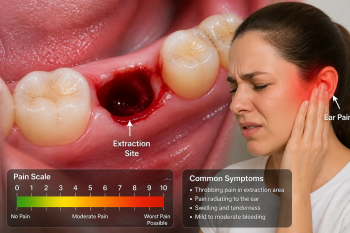
Can tooth extraction cause infection? Mild inflammation is normal, but increasing swelling, fever, or severe pain may indicate infection. Learn more about post-extraction infection warning signs in this detailed guide.
Book a consultation with our Cebu dental specialists for proper evaluation and care.
Ready to get expert guidance?
If you’re experiencing severe pain or delayed healing, book a consultation with our Cebu dental specialists to get proper evaluation and care.
Consultation or contact page .
Book a Consultation
For severe discomfort or delayed healing, book a consultation with our Cebu dental specialists today.
Looking for a dentist? Browse our Cebu dental directory to find trusted clinics near you.
Medical Review and Clinical Basis
This article is based on clinical dental guidelines and real patient recovery patterns observed after tooth extraction procedures. The information reflects common post-extraction healing stages, including normal clot formation, gum tissue repair, and signs of possible complications such as dry socket or infection.
While mild discomfort is expected after a dental extraction, worsening pain after Day 3, bad odor, exposed bone, or spreading pain may require professional evaluation. These symptoms are consistent with known post-extraction complications described in standard dental practice.
About Cebu Dental Implants
Cebu Dental Implants provides comprehensive tooth extraction, surgical procedures, and dental implant services in the Philippines. Our team evaluates post-extraction healing, manages complications such as dry socket, and advises patients on proper aftercare to prevent infection and delayed healing.
If you experience severe pain or unusual symptoms after extraction, early professional assessment is recommended to prevent further complications.
Important Medical Disclaimer
This content is for educational purposes only and does not replace professional dental diagnosis. Every patient heals differently. If symptoms worsen or do not improve within a few days, consult a licensed dentist for proper evaluation and treatment.
Author
This article was prepared by the Cebu Dental Implants content team in consultation with licensed dental professionals experienced in tooth extraction and implant procedures.
Related Clinical Cases
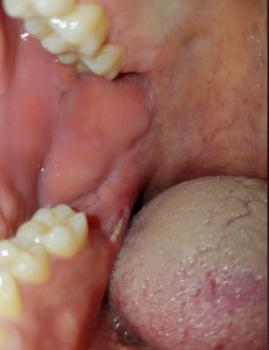
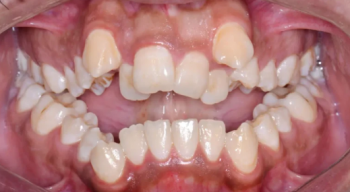
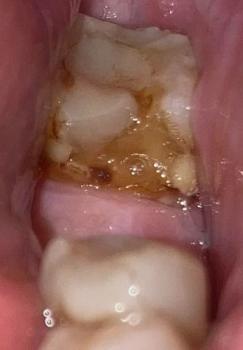
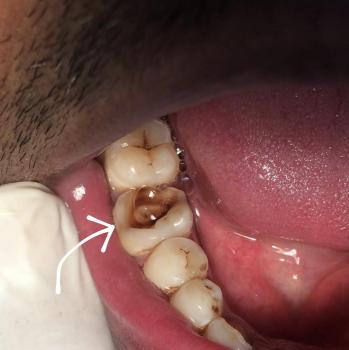
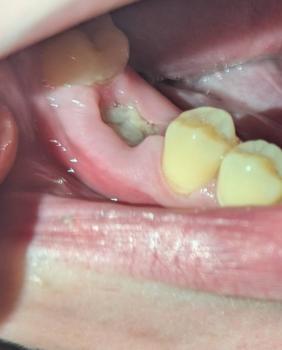
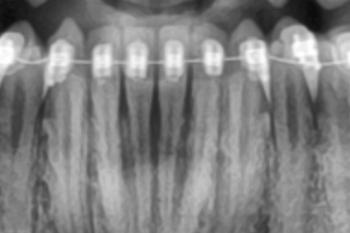
Patients with lower front gum inflammation may also experience tartar buildup, periodontal disease, gum abscesses, or tooth decay. Explore these related clinical case studies.

Other topics:
Other Dental Clinic