Dentures That Feel Natural, Look Beautiful.

The Hidden Threat: What Back Tooth Pain and Bleeding Gums Could Mean for Your Health
Image:
Severity:
Teeth Problems:
Deep Examination & Analysis
Based on the image provided, there are several significant dental health concerns that require immediate professional attention:
-
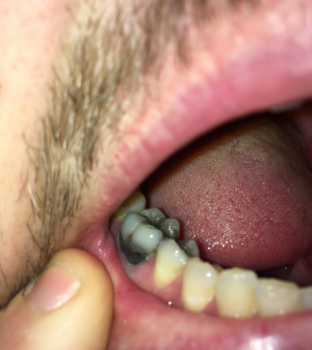
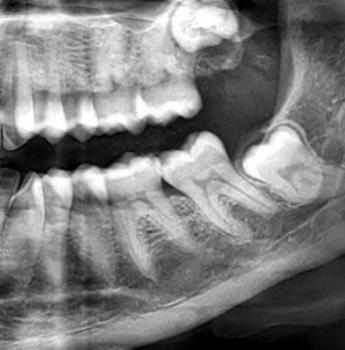
Gross Caries (Severe Decay): The lower molar (bottom right of the photo) shows a large, dark cavitation covering most of the occlusal (biting) surface. This indicates extensive tooth structure loss.
-
Likely Pulp Exposure: Given the depth of the dark area on the lower molar, the decay has likely reached the pulp (nerve) of the tooth.
-
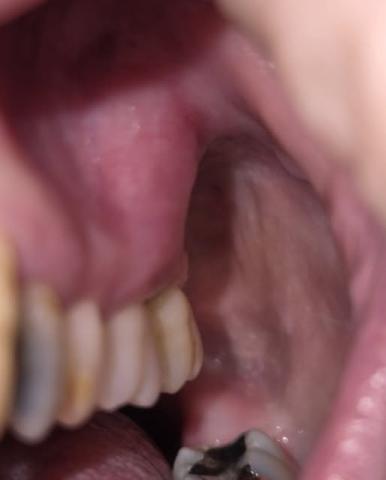
Gingival Recession & Inflammation: The gums surrounding the upper teeth appear retracted, and there is visible redness/inflammation, suggesting periodontal (gum) disease.
-
Heavy Calculus/Staining: There is significant buildup on the lingual (inside) surfaces of the upper teeth, which harbors bacteria and contributes to bone loss.
Urgency Categorization
| Level | Status | Reasoning |
| Emergency | HIGH RISK | If you are experiencing throbbing pain, swelling in the jaw/cheek, or fever, this is an Emergency. |
| Critical | ACTIVE | Without pain, the state of the lower molar is Critical. The tooth is structurally compromised and at risk of fracturing or developing an abscess. |
The 14-Day Outlook: Risks of Delay
If this is not addressed within the next 14 days, the following issues may "scale up":
-
Abscess Formation: Bacteria can reach the root tip, causing a painful, pus-filled infection that can spread to the jawbone.
-
Tooth Loss: The lower molar may deteriorate to the point where it can no longer be saved with a crown or root canal, requiring full extraction.
-
Acute Pain: Decay often reaches a "tipping point" where it goes from a dull ache to unbearable, constant nerve pain.
Proposed Execution Process
A dentist will likely follow this workflow:
-
Step 1: Diagnostics: Digital X-rays (Periapical and Bitewing) to determine the depth of the decay and the health of the roots.
-
Step 2: Stabilization: Removal of the decayed tissue.
-
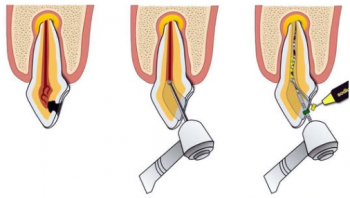
Step 3: Restoration: Depending on X-ray results, you will likely need a Root Canal Treatment (RCT) followed by a Crown, or an Extraction if the tooth is non-restorable.
-
Step 4: Periodontal Cleaning: A deep scaling (prophylaxis) to treat the gum inflammation.
Estimated Time Frame to Heal: * Simple Filling: 1 day.
-
Root Canal & Crown: 2–3 visits over 2 weeks.
-
Extraction: 7–10 days for soft tissue healing; 3–6 months for bone remodeling.
Comments: Please do not attempt to clean the cavity yourself or use "home kits," as this can push bacteria deeper into the nerve.
Action: You should visit a clinic immediately to prevent the infection from spreading. You can find a licensed professional near your area in Cebu using the directory below:
Search the Cebu Dental Directory Map
Would you like me to help you formulate a list of specific questions to ask the dentist during your appointment?
Teeth Case
 |
 |
 |
 |
 |
 |