Because Every Tooth Deserves Care.

Fast-Track Your Smile: Navigating Dry Socket Recovery and Choosing Your Quickest Replacement Option
Image:
Severity:
Teeth Problems:
Fast-Track Your Smile: Navigating Dry Socket Recovery and Choosing Your Quickest Replacement Option
If you're dealing with the intense pain of a dry socket and already thinking about replacing the missing tooth, you're focused on one thing: speed. The frustration of a delayed healing process is real, and you want the fastest path to a complete, functional smile. Let's break down your recovery and future options with that clear goal in mind.
First Priority: Accelerating Dry Socket Healing
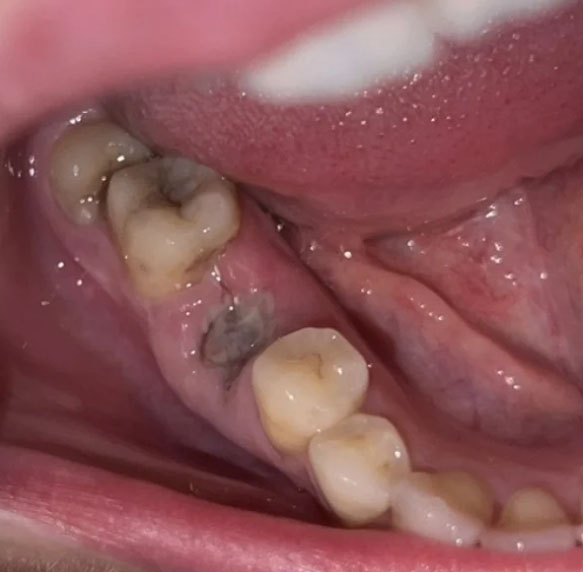
A dry socket (alveolar osteitis) occurs when the protective blood clot is dislodged from the extraction site, exposing bone and nerves. The standard healing timeline resets, but you can actively support a faster recovery.
What Your Dentist Can Do for Fast Relief (The Gold Standard)
-
Professional Socket Cleaning & Medicated Dressing: This is the single most effective step. Your dentist will gently clean the socket of food debris and bacteria, then place a special, sedative dressing (often containing eugenol). This dressing provides immediate pain relief within minutes, protects the exposed bone, and creates an environment for new tissue to form. Dressing changes every 1-3 days may be needed.
-
Pain Management Prescription: While over-the-counter pain relievers help, your dentist can prescribe stronger medications to control pain more effectively during the initial days, allowing you to rest and heal.
-
Possible Therapies: Some clinics offer advanced options like Low-Level Laser Therapy (LLLT) or Platelet-Rich Fibrin (PRF) applications to reduce inflammation and significantly stimulate tissue regeneration at the cellular level.
Your At-Home Action Plan to Support Healing
While the dentist jump-starts healing, your daily care is crucial:
-
Rinse Gently & Strategically: Use the prescribed antimicrobial rinse (e.g., chlorhexidine) or warm salt water as directed. Do not swish vigorously. Let the liquid roll gently in your mouth and tilt your head to let it flow over the site.
-
Nutrient-Dense Liquid & Soft Diet: Fuel recovery with protein shakes, broths, yogurt, and mashed vegetables. Critical nutrients: Vitamin C (collagen production), Zinc (immune function), and Protein (tissue building).
-
Meticulous Avoidance: Strictly avoid smoking, vaping, spitting, straws, and poking the site. These are the top causes of delayed healing.
-
Targeted Cold (Then Warm) Compress: Use a cold pack on the outside of your cheek for the first 48 hours after treatment to reduce swelling. After 48 hours, switch to a warm compress to increase blood flow and promote healing.
Expected Fast-Track Timeline with Professional Care:
-
Pain Relief: Within 1-2 hours of medicated dressing placement.
-
Significant Improvement: Noticeable healing and pain reduction in 3-5 days.
-
Soft Tissue Closure: The socket should begin to close with new tissue in 2-3 weeks.
The Next Step: Choosing Your Fastest Tooth Replacement
Once the socket is fully healed (bone and gum), you can plan the replacement. The choice between an implant and a bridge significantly impacts your timeline.
Here is a direct comparison focused on recovery speed and procedural timeline:
| Feature | Dental Implant | Dental Bridge |
|---|---|---|
| Key Concept | A titanium screw placed in the jawbone acts as a new artificial tooth root. | A false tooth is cemented to the two healthy teeth adjacent to the gap. |
| Total Treatment Time | 3 to 9+ months (Often longer). | 2 to 4 weeks (Dramatically faster). |
| Why It Takes Time | Requires osseointegration—a 3-6 month biological process where the bone fuses to the implant. Multiple surgical stages are common. | No surgery on the bone. It is a purely prosthetic (crown) procedure once the gums are healed. |
| Healing & Recovery Period | Long Recovery. Post-surgery healing of 1-2 weeks, followed by the long wait for bone fusion. | Minimal Recovery. Only involves gum healing from tooth preparation (if needed for crowns). |
| Best for Speed? | ❌ No. It is the slower, albeit long-term, solution. | ✅ Yes. It is the fastest way to get a permanent, fixed tooth replacement. |
The Verdict: Which is Best for a Fast Recovery?
If your primary goal is speed to get a final, permanent tooth as quickly as possible, then a dental bridge is the clear choice.
-
Bridge: You can have a complete, cemented, permanent restoration in a matter of weeks after your gums are fully healed from the extraction and dry socket.
-
Implant: You are looking at several months of healing, potentially with a temporary tooth, before the final crown is placed.
Important Consideration: A bridge requires preparing (filing down) the two adjacent healthy teeth, which is irreversible. An implant, while slower, stands alone and protects your natural teeth. For the longest-lasting, most bone-preserving solution, the implant is superior.
Your Fast-Track Roadmap: A Summary
-
Week 1-3: Address the Dry Socket Immediately. See your dentist for a medicated dressing to stop the pain and restart healing. Follow the at-home protocol rigorously.
-
Week 3-8: Ensure Complete Healing. Allow the extraction site to fill in completely with gum tissue. Your dentist will confirm it's ready for the next step.
-
Week 8+ (Decision Point):
-
For the Fastest Permanent Solution: Proceed with a dental bridge. Impressions are taken, and you'll have your new tooth in 2-4 weeks.
-
For the Most Durable & Natural Solution: Begin the dental implant process, understanding it requires a surgical procedure and 3-6 months of integration time before the final tooth is attached.
-
Next Step: Schedule an appointment with your dentist to treat the dry socket. At that same visit, discuss your desire for a quick replacement and get a detailed, personalized timeline and quote for both a bridge and an implant. This allows you to make an informed decision that balances your need for speed with your long-term oral health goals.
Related Clinical Cases
Patients with lower front gum inflammation may also experience tartar buildup, periodontal disease, gum abscesses, or tooth decay. Explore these related clinical case studies.



Other topics:
Other Dental Clinic