Your Smile, Perfected with Precision.

Cracked by Convenience: The Hidden Danger of Opening Beer Bottles with Your Teeth in London
Language :
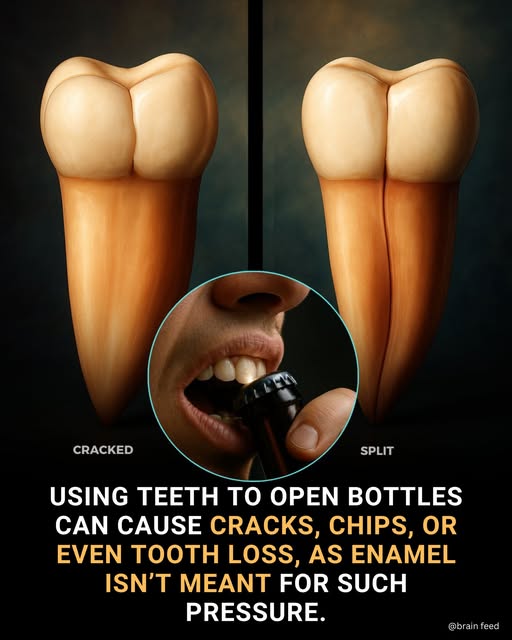
Cracked by Convenience: The Hidden Danger of Opening Beer Bottles with Your Teeth
For Miguel, Christmas in London was meant to be a joyful time with family and friends, a moment to relax and celebrate. As the night went on, his front teeth became a party trick—the quick tool to pop open one beer cap after another. It seemed convenient, a bit of a laugh. That is, until he felt the sharp twinge and discovered a thin, painful crack running through his front tooth. The festive cheer was replaced by a dull ache and the dread of an emergency dental visit.
Miguel’s story is not unique. Every year, especially around the holidays, dentists in London—from Harley Street clinics to local NHS practices—see a surge in patients with chipped, cracked, or broken incisors, often from using teeth as improvised tools. It’s a reminder that what seems like a harmless shortcut can come at a very high cost.
The Anatomy of a Crack: More Than a Cosmetic Flaw
Our teeth are remarkably strong, but they are engineered for a specific purpose: chewing and tearing food. They are not designed to withstand the focused, vertical pressure of prying against an unyielding metal bottle cap.
Here’s what happens during that split-second of force:
-
The First Line of Defence Breaks: Enamel—the hardest substance in the human body—is not indestructible. A sudden, concentrated force can exceed its limit, creating microfractures, small chips, or a full crack.
-
Damage Travels Inward: If the crack propagates beyond the enamel into the softer dentin layer beneath, pain and sensitivity become immediate. The inner tooth structure is now exposed and vulnerable.
-
The Worst-Case Scenario: A severe crack can extend down to the root or pulp (the tooth's nerve centre). At this stage, the structural integrity of the tooth is often compromised beyond repair, making extraction the only viable option. What started as a party trick ends in tooth loss.
The Long-Term Consequences of a "Small" Crack
Miguel might have hoped his crack was just a superficial line. However, even the smallest crack is a critical failure in the tooth's integrity. Think of it like a crack in a car's windshield—it may seem stable, but pressure and temperature changes can cause it to spread unpredictably.
Left untreated, a cracked tooth can lead to:
-
Chronic Pain & Sensitivity, especially to hot, cold, or sweet stimuli.
-
Infection: Bacteria can infiltrate the crack, leading to a painful abscess in the tooth root or jawbone.
-
Further Fracture: A weakened tooth is more likely to break further during normal chewing, potentially resulting in an emergency.
-
Costly and Complex Treatment: What might have been a simple cosmetic fix can evolve into the need for a root canal, a crown, or even an extraction followed by an implant or bridge.
The Dentist's Perspective: Treatment Options for a Cracked Tooth
If Miguel visits a dentist in London, the treatment plan will depend entirely on the severity, depth, and location of the crack. There is no one-size-fits-all solution.
| Type of Crack | What It Means | Likely Treatment in London |
|---|---|---|
| Craze Lines | Superficial cracks in the enamel only. Often cosmetic. | Usually no treatment required, but monitoring is advised. Dental bonding may be used for aesthetics. |
| Fractured Cusp | A piece of the chewing surface breaks off. | Dental Crown or Onlay to restore the tooth's shape and strength. |
| Cracked Tooth | A crack extends from the chewing surface toward the root. | Root Canal Treatment (if the nerve is affected) followed by a Crown to bind the tooth together and prevent further cracking. |
| Split Tooth | The tooth is split vertically into distinct segments. | Often non-restorable. The tooth will likely need to be extracted. Replacement options like a dental implant or bridge will then be discussed. |
A Londoner's Guide to Protecting Your Smile
Miguel’s experience is a stark lesson. The true "convenience" is maintaining your natural, healthy teeth for a lifetime. Here’s how to protect them:
-
Use the Right Tool for the Job: This is non-negotiable. Keep a bottle opener in your kitchen drawer, on your keychain, and in your party supplies. It’s a small investment that protects a much larger one—your smile.
-
Resist All Temptations: Do not use your teeth to open packaging, tear tape, crack nuts, or hold objects. Their value is immeasurably higher than the few seconds you might save.
-
If an Accident Happens, Act Fast: If you crack or chip a tooth, even without pain:
-
Rinse gently with warm water.
-
Save any pieces if possible.
-
Call your dentist immediately to schedule an emergency appointment. Quick action can often mean the difference between saving and losing the tooth.
-
-
Attend Regular Check-ups: Your dentist can spot early signs of wear, tear, and micro-cracks that you might miss, preventing a small issue from becoming a major problem.
The Takeaway
For Miguel, the road to recovery will involve a dental visit, a treatment plan, and a lesson learned the hard way. His story serves as a powerful reminder: your teeth are irreplaceable treasures, not tools. In a city like London, where a confident smile is part of your personal and professional presentation, protecting it is one of the smartest things you can do.
This Christmas, and every day, celebrate responsibly. Let the bottle opener do the work, so you can keep your smile intact for all the smiles to come.
Your teeth are for smiling, chewing, and talking—not for opening bottles. Protect your natural assets.
Looking for dentist : Visit directory list
Related Clinical Cases
Patients with lower front gum inflammation may also experience tartar buildup, periodontal disease, gum abscesses, or tooth decay. Explore these related clinical case studies.



Other topics:
Other Dental Clinic