Healthy Teeth, Happy Life.

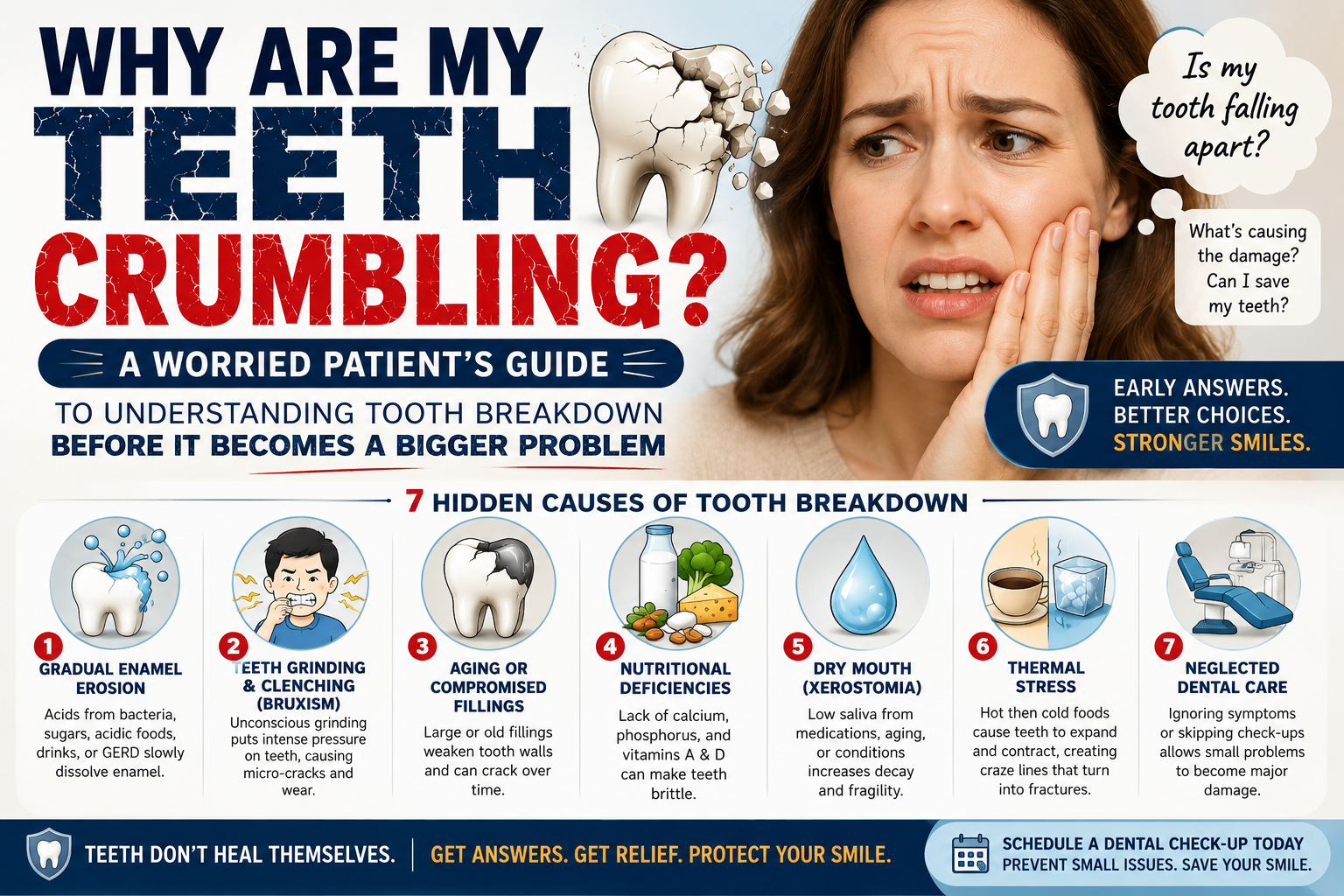
Why Are My Teeth Crumbling? A Worried Patient’s Guide to Understanding Tooth Breakdown Before It Becomes a Bigger Problem
Language :
Topics:
"I was eating something soft and suddenly part of my tooth chipped off. It feels like my teeth are falling apart. Is something seriously wrong?"
This is one of the most common concerns dentists hear from patients. Many people become frightened when they notice a tooth cracking, chipping, or appearing to crumble unexpectedly. It often feels as though the damage happened overnight. One day everything seems normal, and the next day a piece of a tooth is missing.
The reality, however, is usually very different.
Teeth rarely begin breaking apart without warning. In most cases, what appears to be a sudden problem is actually the result of months—or even years—of gradual weakening occurring beneath the surface. The visible fracture is often the final stage of a long process that has silently compromised the tooth structure.
For conservative patients who value preserving their natural teeth and avoiding extensive dental treatment, understanding why teeth crumble is extremely important. Early intervention can often mean the difference between a simple repair and the loss of a tooth.
If you are worried that your teeth seem weaker than before, this guide will help explain the hidden causes behind tooth breakdown, the warning signs you should never ignore, and what steps you can take to protect your smile.
Understanding Why Teeth Break Down
Your teeth are remarkably strong.
In fact, tooth enamel is the hardest substance in the human body. It is even harder than bone. Enamel is specifically designed to withstand thousands of chewing cycles every day while protecting the sensitive inner layers of the tooth.
However, strength does not mean indestructibility.
Unlike skin, muscles, or bone, enamel cannot regenerate. Once it is damaged, worn away, or fractured, the body cannot rebuild it naturally.
Because of this limitation, small amounts of damage tend to accumulate over time.
Think of enamel like the protective paint on a car. A tiny scratch may not seem important today, but if left untreated, moisture and corrosion eventually penetrate deeper layers. The same principle applies to your teeth.
The following seven hidden causes are among the most common reasons teeth eventually begin to crumble.
1. Gradual Enamel Erosion: The Silent Destroyer
One of the most common reasons teeth weaken is enamel erosion.
This process happens slowly and often without pain during its early stages.
Every time you consume foods containing sugars or starches, bacteria naturally present in your mouth produce acids. These acids attack the minerals that make enamel strong.
Normally, saliva helps repair minor damage through a process called remineralization.
However, when acid attacks occur too frequently, the enamel loses minerals faster than it can replace them.
Eventually, the protective layer becomes thinner and weaker.
Common Sources of Acid Exposure
Many patients immediately think of candy and soda.
While these certainly contribute, numerous other sources may be involved:
- Soft drinks
- Energy drinks
- Sports drinks
- Citrus fruits
- Lemons and limes
- Vinegar-based foods
- Wine
- Frequent snacking
- Sugary coffee drinks
Some patients maintain excellent brushing habits yet still experience severe enamel erosion because of dietary acids.
Hidden Medical Causes
A particularly concerning cause is acid reflux.
Conditions such as:
- GERD
- Chronic acid reflux
- Bulimia
- Frequent vomiting
allow stomach acid to repeatedly contact the teeth.
Stomach acid is significantly stronger than most dietary acids and can rapidly dissolve enamel.
Many dentists discover signs of reflux damage before patients even realize they have digestive problems.
Warning Signs of Enamel Erosion
Patients frequently report:
- Increased tooth sensitivity
- Teeth appearing more yellow
- Rounded tooth edges
- Small chips
- Rough tooth surfaces
- Transparent-looking front teeth
If left untreated, weakened enamel becomes increasingly vulnerable to cracking and crumbling.
2. Teeth Grinding and Clenching (Bruxism)
Many patients are surprised when their dentist tells them they grind their teeth.
The reason is simple.
Most grinding occurs during sleep.
A patient may have no awareness that it is happening.
Unfortunately, the forces generated during nighttime grinding can be enormous.
Some studies suggest that grinding forces may exceed normal chewing forces several times over.
Why Grinding Causes Damage
Imagine repeatedly bending a metal paper clip.
At first nothing happens.
Eventually microscopic stress fractures develop.
After enough repetition, the metal suddenly snaps.
A similar process occurs in teeth.
Grinding creates:
- Tiny enamel cracks
- Worn chewing surfaces
- Fractured fillings
- Chipped teeth
- Structural fatigue
The damage accumulates gradually until a tooth eventually breaks.
Patients often believe the break occurred suddenly when, in reality, the weakening process may have been occurring for years.
Symptoms of Bruxism
Many patients experience:
- Morning headaches
- Jaw soreness
- Ear discomfort
- Neck pain
- Tooth sensitivity
- Flattened teeth
- Facial muscle fatigue
Some patients also hear clicking or popping sounds from the jaw joints.
Why Conservative Patients Should Take Bruxism Seriously
Grinding is one of the leading causes of cracked teeth.
A custom night guard is often a simple preventive measure that can protect thousands of dollars' worth of dental work.
Ignoring grinding can eventually lead to extensive restorative treatment.
3. Aging or Compromised Fillings
Dental fillings play an important role in preserving damaged teeth.
However, they do not last forever.
Even high-quality restorations eventually experience wear and tear.
What Happens Over Time
Each day your teeth experience:
- Chewing forces
- Temperature changes
- Moisture exposure
- Bacterial activity
These factors gradually affect both the tooth and the filling.
Over the years:
- Filling margins may leak
- Small gaps may develop
- Secondary decay may form
- Cracks may appear
The larger the filling, the less natural tooth structure remains to support the tooth.
The Problem with Large Fillings
Natural tooth enamel is stronger than most restorative materials.
When a significant portion of a tooth has been replaced with a filling, the remaining walls become more vulnerable.
Eventually, these weakened walls may fracture under normal chewing forces.
Patients frequently report:
"I was only eating bread when my tooth broke."
The bread was not the cause.
The tooth had already been weakened for years.
The bread simply happened to be present when the final fracture occurred.
Signs of a Failing Filling
Watch for:
- Pain when chewing
- Food trapping
- Temperature sensitivity
- Visible cracks
- Dark staining around fillings
Regular examinations help identify these issues before catastrophic failure occurs.
4. Nutritional Deficiencies and Tooth Strength
Most people understand that nutrition affects bones.
Fewer realize it also affects teeth.
Strong teeth depend upon proper mineralization.
Without essential nutrients, teeth may become more vulnerable to wear and fracture.
Calcium
Calcium forms a major component of tooth structure.
Insufficient calcium intake may compromise mineral density over time.
Sources include:
- Milk
- Cheese
- Yogurt
- Sardines
- Leafy vegetables
Phosphorus
Phosphorus works alongside calcium to strengthen teeth.
Sources include:
- Fish
- Eggs
- Poultry
- Nuts
Vitamin D
Vitamin D allows the body to absorb calcium effectively.
Without sufficient vitamin D, calcium utilization becomes less efficient.
Vitamin A
Vitamin A supports healthy saliva production and oral tissue maintenance.
Deficiencies may contribute to oral health complications.
The Long-Term Impact
Nutritional deficiencies typically do not cause teeth to crumble overnight.
Instead, they create an environment where teeth become less resilient and more susceptible to damage from other factors.
For conservative patients focused on prevention, proper nutrition remains one of the most valuable investments in long-term dental health.
5. Dry Mouth (Xerostomia): A Hidden Risk Factor
Saliva often receives little attention until it becomes insufficient.
Yet saliva is one of the mouth's most important defense mechanisms.
What Saliva Does
Saliva helps:
- Neutralize acids
- Wash away food debris
- Reduce bacterial growth
- Deliver minerals to enamel
- Lubricate oral tissues
Without adequate saliva, the risk of tooth decay increases dramatically.
Causes of Dry Mouth
Many factors can reduce saliva production.
Medications
Common medications linked to dry mouth include:
- Antidepressants
- Allergy medications
- Blood pressure medications
- Anxiety medications
Medical Conditions
Certain conditions may contribute:
- Diabetes
- Sjögren's syndrome
- Autoimmune disorders
Aging
While aging itself does not directly cause dry mouth, older adults often take medications that affect saliva production.
Why Dry Mouth Matters
Patients with dry mouth often develop:
- Rapid cavities
- Increased sensitivity
- Bad breath
- Gum irritation
- Tooth fractures
Because saliva plays such an important protective role, chronic dryness should never be ignored.
6. Thermal Stress: The Impact of Temperature Extremes
Many patients enjoy hot coffee followed immediately by ice water.
Although occasional temperature changes are generally harmless, repeated extreme temperature cycling may contribute to tooth stress over time.
How Thermal Stress Occurs
When heated, materials expand.
When cooled, they contract.
Teeth respond similarly.
Repeated expansion and contraction can gradually create microscopic defects within enamel.
These tiny defects are known as craze lines.
What Are Craze Lines?
Craze lines are very small surface cracks that commonly develop over time.
Most are harmless.
However, under continued stress they may deepen.
As cracks extend further into the tooth, the risk of structural failure increases.
Additional Risk Factors
Thermal stress becomes more problematic when combined with:
- Grinding
- Large fillings
- Existing cracks
- Thin enamel
The combination of multiple risk factors often explains why some teeth eventually fracture.
7. Neglected Dental Care: The Chain Reaction Effect
Perhaps the most preventable cause of crumbling teeth is delayed treatment.
Many serious dental problems begin as small, manageable issues.
Unfortunately, patients often postpone care because:
- The tooth is not hurting
- The crack seems minor
- Life becomes busy
- Treatment is delayed for financial reasons
The problem is that dental disease rarely stops progressing on its own.
The Silent Progression of Damage
A small cavity can become:
- A larger cavity
- Deep decay
- Structural weakness
- Tooth fracture
- Nerve infection
- Tooth loss
Likewise, a tiny crack may eventually become a split tooth requiring extraction.
Why Pain Is Not Always Present
Many patients assume that pain will warn them when something is wrong.
Unfortunately, significant damage may occur before symptoms appear.
This is why routine examinations remain so important.
Dentists can identify:
- Hidden decay
- Early cracks
- Failing fillings
- Bite problems
- Gum disease
before irreversible damage develops.
A Worried Patient's Biggest Fear: Will I Lose My Tooth?
This is often the first question patients ask.
The answer depends largely on timing.
When damage is discovered early, treatment may involve:
- Fluoride therapy
- Dental bonding
- Small fillings
- Protective crowns
- Night guards
These treatments often preserve the natural tooth successfully.
However, once extensive fractures reach deeper layers, more complex treatment may become necessary.
This may include:
- Root canal therapy
- Crown placement
- Tooth extraction
- Dental implants
The sooner a problem is addressed, the more treatment options are typically available.
When Should You See a Dentist Immediately?
Schedule an evaluation promptly if you notice:
- A tooth breaking unexpectedly
- Chipped enamel
- Visible cracks
- Sharp edges
- Increased sensitivity
- Pain when chewing
- Swelling
- Bleeding gums
- Loose teeth
Even if discomfort is mild, these symptoms may indicate ongoing structural damage.
Conservative Recommendations for Protecting Your Teeth
If you are concerned about tooth breakdown, consider these preventive steps:
Maintain Excellent Oral Hygiene
Brush twice daily using fluoride toothpaste and floss regularly.
Reduce Acid Exposure
Limit acidic beverages and rinse with water afterward.
Address Grinding
Ask your dentist about a professionally fitted night guard.
Stay Hydrated
Adequate hydration supports healthy saliva production.
Improve Nutrition
Ensure sufficient intake of calcium, phosphorus, vitamin A, and vitamin D.
Attend Regular Check-Ups
Routine examinations remain one of the most effective tools for preventing serious dental problems.
Do Not Ignore Minor Symptoms
Small issues are often easier and less expensive to treat than advanced damage.
Final Thoughts
If your teeth appear to be crumbling, it is understandable to feel worried. Many patients fear that their teeth are suddenly failing or that they may lose them entirely. In reality, tooth breakdown is usually the result of a gradual process involving enamel erosion, grinding, aging fillings, nutritional deficiencies, dry mouth, thermal stress, or delayed dental care.
The good news is that identifying the underlying cause early often allows dentists to intervene before extensive damage occurs.
Because enamel cannot heal itself, waiting rarely improves the situation. A conservative approach—one focused on early diagnosis, preventive care, and preserving natural tooth structure whenever possible—offers the best chance of maintaining a healthy smile for years to come.
If you notice chipping, cracking, unusual sensitivity, or signs that your teeth are becoming fragile, scheduling a professional dental evaluation sooner rather than later may be one of the most important steps you can take to protect your oral health and avoid more complicated treatment in the future.
Can tooth extraction cause infection? Mild inflammation is normal, but increasing swelling, fever, or severe pain may indicate infection. Learn more about post-extraction infection warning signs in this detailed guide.
Book a consultation with our Cebu dental specialists for proper evaluation and care.
Ready to get expert guidance?
If you’re experiencing severe pain or delayed healing, book a consultation with our Cebu dental specialists to get proper evaluation and care.
Consultation or contact page .
Book a Consultation
For severe discomfort or delayed healing, book a consultation with our Cebu dental specialists today.
Looking for a dentist? Browse our Cebu dental directory to find trusted clinics near you.
Medical Review and Clinical Basis
This article is based on clinical dental guidelines and real patient recovery patterns observed after tooth extraction procedures. The information reflects common post-extraction healing stages, including normal clot formation, gum tissue repair, and signs of possible complications such as dry socket or infection.
While mild discomfort is expected after a dental extraction, worsening pain after Day 3, bad odor, exposed bone, or spreading pain may require professional evaluation. These symptoms are consistent with known post-extraction complications described in standard dental practice.
About Cebu Dental Implants
Cebu Dental Implants provides comprehensive tooth extraction, surgical procedures, and dental implant services in the Philippines. Our team evaluates post-extraction healing, manages complications such as dry socket, and advises patients on proper aftercare to prevent infection and delayed healing.
If you experience severe pain or unusual symptoms after extraction, early professional assessment is recommended to prevent further complications.
Important Medical Disclaimer
This content is for educational purposes only and does not replace professional dental diagnosis. Every patient heals differently. If symptoms worsen or do not improve within a few days, consult a licensed dentist for proper evaluation and treatment.
Author
This article was prepared by the Cebu Dental Implants content team in consultation with licensed dental professionals experienced in tooth extraction and implant procedures.
Related Clinical Cases
Patients with lower front gum inflammation may also experience tartar buildup, periodontal disease, gum abscesses, or tooth decay. Explore these related clinical case studies.