Transforming Smiles, Restoring Confidence.

Tooth Extraction Healing Stages Day-by-Day
Language :
Topics:
A Complete Recovery Timeline from a Seattle-Based Dental Bone Graft Expert
If you’ve just had a tooth removed—or you’re planning one before a dental implant—you’re probably wondering:
“What should healing look like day by day?”
That’s a smart question. Because in my practice here in Seattle, I’ve seen both smooth recoveries and preventable complications—and the difference almost always comes down to understanding the healing timeline.
This guide walks you through exactly what happens after a tooth extraction, what’s normal, what’s not, and how to heal properly—especially if you’re preparing for implants or bone grafting.
Why Understanding Healing Matters
Tooth extraction is not just about removing a tooth—it’s about preparing your mouth for:
- Future implants
- Bone preservation
- Long-term oral health
Healing properly ensures:
- Reduced complications
- Strong bone formation
- Better implant success later
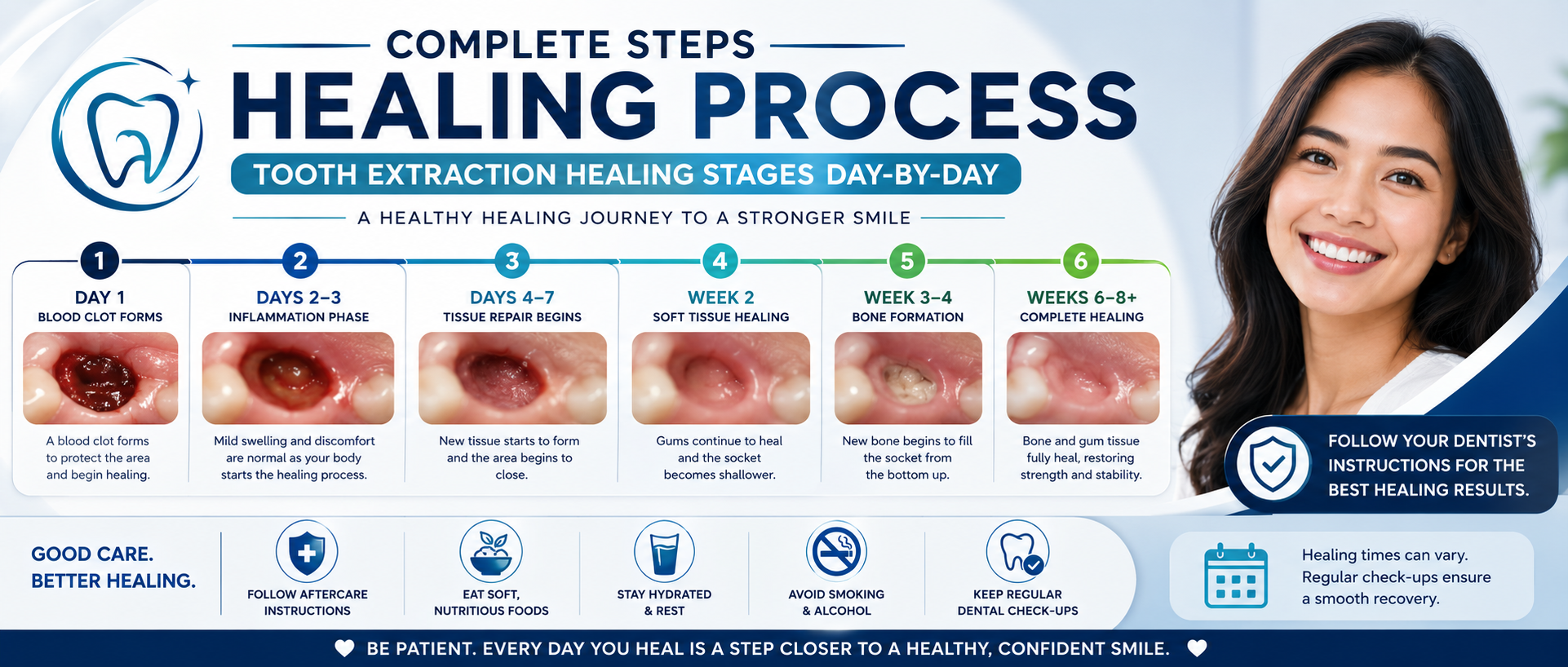
Day-by-Day Healing Timeline
Day 1 (First 24 Hours): Blood Clot Formation
What Happens
- A blood clot forms in the socket
- This clot protects bone and nerves
- Bleeding gradually slows
What You’ll Feel
- Mild to moderate pain
- Swelling begins
- Slight oozing of blood
What to Do
- Bite on gauze (30–60 minutes)
- Keep head elevated
- Avoid rinsing or spitting
What NOT to Do
- No straws
- No smoking
- No vigorous rinsing
Day 2: Inflammation Phase
What Happens
- Swelling peaks
- Healing process intensifies
What You’ll Feel
- Increased swelling
- Tenderness
- Mild jaw stiffness
What to Do
- Use ice packs (first 24–48 hours)
- Take prescribed medicationse
- Stick to soft foods
Day 3: Turning Point
What Happens
- Inflammation begins to decrease
- Tissue starts repairing
What You’ll Feel
- Pain should begin to improve
- Swelling starts to reduce
Warning Signo
If pain gets worse instead of better, this could indicate dry socket.
Day 4–5: Early Healing Progress
What Happens
- Gum tissue begins closing
- Clot stabilizes
What You’ll Feel
- Noticeable improvement
- Reduced discomfort
What You Can Do
- Begin gentle rinsing (salt water)
- Continue soft diet
Day 6–7: Stabilization Phase
What Happens
- Soft tissue continues healinge
- Inflammation significantly reduced
What You’ll Feel
- Minimal pain
- Improved function
Diet
You can begin:
- Soft solids
- Gradual return to normal eating
Week 2: Tissue Healing
What Happens
- Gum tissue largely closes
- Socket shrinks
What You’ll Feel
- Little to no discomfort
- Normal daily function
Weeks 3–4: Bone Healing Begins
What Happens
- New bone starts forminge
- Socket fills in gradually
Important for Implant Patients
This stage determines:
- Bone strength
- Implant readiness
1–3 Months: Bone Remodeling
What Happens
- Bone becomes denser
- Structure stabilizes
Implant Planning Stage
Dentists evaluate:
- Bone volume
- Need for grafting
3–6 Months: Full Healing
What Happens
- Bone fully matures
- Site ready for implants
My Seattle Patient Case
Meet Brian, a 49-year-old patient.
Brian needed a molar extraction before implants.
Day 1–3:
- Mild pain
- Normal swelling
Day 4–7:
- Significant improvement
- No complications
Month 3:
- Bone ready for implant placement
Outcome:
- Successful implant
- Smooth recovery
Expert Insight
Brian followed instructions carefully—that made all the difference.
Normal vs Abnormal Healing
Normal Signs
- Gradual pain reduction
- Mild swellinge
- Stable blood clot
Warning Signs
- Severe pain after Day 3
- Bad taste or odor
- Persistent bleeding
- Visible bone
If you notice these—contact your dentist immediately.
Common Mistakes That Delay Healing
- Smoking too soon
- Using straws
- Eating hard foods early
- Poor oral hygiene
- Skipping medications
How to Speed Up Healing Safely
1. Follow Instructions Strictly
2. Maintain Oral Hygiene
3. Eat Soft, Nutritious Foods
4. Stay Hydrated
5. Get Enough Rest
Diet Guide by Stage
Days 1–3
- Yogurt
- Soup
- Smoothies (no straw)
Days 4–7
- Eggs
- Mashed potatoes
- Soft pasta
Week 2+
- Gradual return to normal diete
Pain Management Tips
- Take medications as prescribed
- Use cold compress early
- Switch to warm compress after 48 hours
When Bone Grafting Is Needed
In some cases, your dentist may recommend:
- Immediate graft after extraction
- Delayed graft
Why It Matters
Bone preservation:
- Prevents shrinkage
- Improves implant success
FAQ: Tooth Extraction Healing Stages
1. How long does healing take?
1–2 weeks for gums, 3–6 months for bone.
2. When can I eat normally?
Soft foods for 1 week, gradual return after.
3. Is pain normal after 3 days?
It should decrease—worsening pain is not normal.
4. When can I brush my teeth?
Immediately—but avoid the extraction site initially.
5. Can I exercise?
Light activity after a few days; avoid heavy exercise early.
6. When can I get implants?
Typically after 3–6 months.
Related Topics
1. Dry Socket vs Normal Healing
Learn to identify complications early.
2. Dental Implant Recovery Guide
Understand healing after implant placement.
3. Bone Grafting After Extraction
Prepare your jaw for implants.
Final Thoughts from a Seattle Bone Graft Experto
Healing after a tooth extraction is a predictable biological process—when managed correctly.
The key is simple:
- Protect the blood clot
- Follow instructions
- Monitor your symptoms
Remember:
Healing should improve day by day—not get worse.
If you respect the process, your recovery will be smooth—and you’ll create the best possible foundation for future dental implants.
Can tooth extraction cause infection? Mild inflammation is normal, but increasing swelling, fever, or severe pain may indicate infection. Learn more about post-extraction infection warning signs in this detailed guide.
Book a consultation with our Cebu dental specialists for proper evaluation and care.
Ready to get expert guidance?
If you’re experiencing severe pain or delayed healing, book a consultation with our Cebu dental specialists to get proper evaluation and care.
Consultation or contact page .
Book a Consultation
For severe discomfort or delayed healing, book a consultation with our Cebu dental specialists today.
Looking for a dentist? Browse our Cebu dental directory to find trusted clinics near you.
Medical Review and Clinical Basis
This article is based on clinical dental guidelines and real patient recovery patterns observed after tooth extraction procedures. The information reflects common post-extraction healing stages, including normal clot formation, gum tissue repair, and signs of possible complications such as dry socket or infection.
While mild discomfort is expected after a dental extraction, worsening pain after Day 3, bad odor, exposed bone, or spreading pain may require professional evaluation. These symptoms are consistent with known post-extraction complications described in standard dental practice.
About Cebu Dental Implants
Cebu Dental Implants provides comprehensive tooth extraction, surgical procedures, and dental implant services in the Philippines. Our team evaluates post-extraction healing, manages complications such as dry socket, and advises patients on proper aftercare to prevent infection and delayed healing.
If you experience severe pain or unusual symptoms after extraction, early professional assessment is recommended to prevent further complications.
Important Medical Disclaimer
This content is for educational purposes only and does not replace professional dental diagnosis. Every patient heals differently. If symptoms worsen or do not improve within a few days, consult a licensed dentist for proper evaluation and treatment.
Author
This article was prepared by the Cebu Dental Implants content team in consultation with licensed dental professionals experienced in tooth extraction and implant procedures.
Related Clinical Cases
Patients with lower front gum inflammation may also experience tartar buildup, periodontal disease, gum abscesses, or tooth decay. Explore these related clinical case studies.