Modern Dentistry, Timeless Smiles.

Tonsil Stone or Something More Serious? How to Identify It, Treat It & Know When to Act
Image:
Severity:
Teeth Problems:
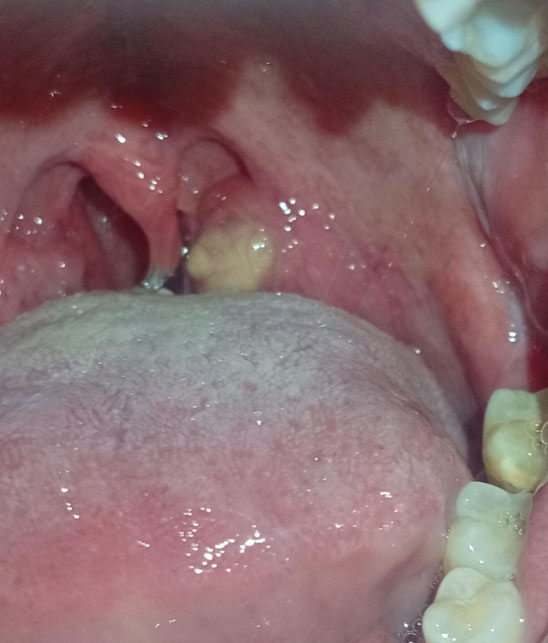
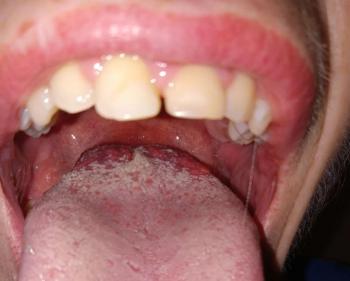
I enlarged the uploaded image to 200% for visual inspection and focused on the tonsillar area, back teeth, tongue, and surrounding soft tissue.
Main finding: Could this be a tonsil stone?
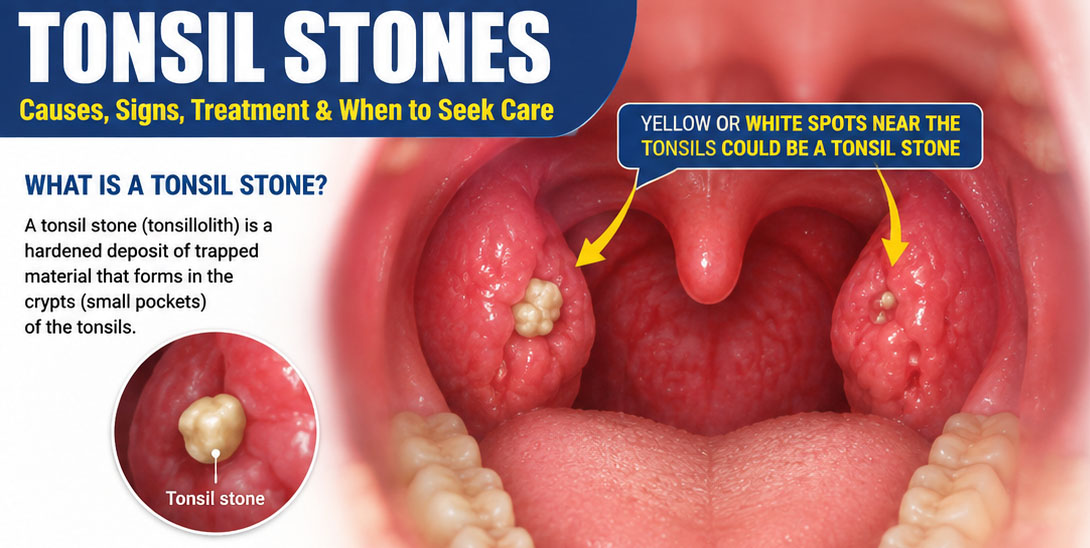
Tonsil stones commonly appear as white or yellow deposits lodged in tonsillar crypts and can be associated with bad breath, bad taste, throat irritation, cough, or the sensation that something is stuck in the throat.
100% visual assessment
- The visible yellowish/cream mass is the most important finding.
- Its location appears consistent with the region where a tonsil stone could become trapped.
- There is surrounding pink/red tissue that may indicate local irritation or inflammation.
- I don't see enough evidence in this photograph to call it a peritonsillar abscess.
Area 2 — Teeth
- The visible posterior teeth show some yellowish discoloration/deposits.
- This photograph does not provide enough coverage to diagnose the full condition of all teeth.
- A clinical dental examination is needed for cavities, calculus, periodontal pockets and bone support.
Area 3 — Tongue
- The tongue has a noticeable coating toward the posterior portion.
- Tongue coating can contribute to oral odor and bacterial accumulation.
- It can also coexist with tonsil stones.
What else could the yellow area be?
The differential includes:
- Tonsil stone — possible/likely
- Food debris trapped in a tonsillar crypt
- Tonsillar inflammation with exudate
- Less commonly, another lesion or abnormal tissue
A clinician can inspect the tonsil directly and determine whether the material is actually embedded in a tonsillar crypt. Tonsil stones can sometimes be diagnosed simply by oral/throat examination.
Additional Expert Guidance: Tonsil Stones vs. Tonsillitis, Oral Infections, and Other Warning Signs
What a Dental and Oral-Health Assessment Can Reveal
A white or yellow spot at the back of the throat can be concerning, particularly when it is accompanied by bad breath, discomfort, or a persistent feeling that something is stuck. However, not every white spot is a tonsil stone, and not every case of bad breath originates from the teeth or gums.
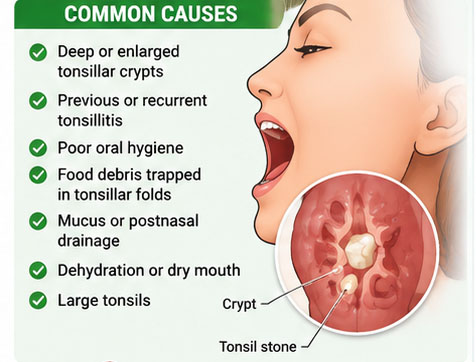
Tonsil stones, medically known as tonsilloliths, develop when food particles, shed cells, mucus, and microorganisms collect in small pockets called tonsillar crypts. Over time, this material can harden into small white or yellow deposits.
Most tonsil stones are harmless. Nevertheless, a careful assessment is important when symptoms suggest inflammation, infection, or another underlying condition.
From a dental and oral-health perspective, the first step is to determine whether the suspected source of the problem is the teeth, gums, tongue, tonsils, or another part of the throat. A dentist can evaluate oral causes of bad breath, while a physician or ear, nose, and throat (ENT) specialist can assess suspected tonsil disease.
1. How to Recognize a Typical Tonsil Stone
Common features of tonsil stones include:
-
Small white or yellow deposits sitting within the natural folds of the tonsils.
-
Persistent bad breath or an unpleasant taste.
-
A mild sensation of a foreign object in the throat.
-
Occasional throat irritation, coughing, or discomfort when swallowing.
-
Stones that appear, disappear, or loosen without treatment.
Some people have tonsil stones without experiencing any symptoms. Others develop recurring stones because their tonsils have deeper crypts or a history of inflammation.
Importantly, tonsil stones are not necessarily evidence of poor oral hygiene. Good oral care can reduce bacterial buildup, but it cannot eliminate every factor that contributes to their formation.
2. When White Spots May Indicate Something More Serious
The appearance of a deposit alone cannot reliably establish the diagnosis. Other symptoms help determine whether further evaluation is necessary.
Tonsillitis: Inflamed tonsils may appear red and swollen, sometimes with white patches or pus. A sore throat, fever, and painful swallowing may accompany the condition. Tonsillitis can be caused by viruses or bacteria, and treatment depends on the cause.
Strep throat: This bacterial infection can cause a sudden sore throat, fever, swollen lymph nodes in the front of the neck, and sometimes white patches on the tonsils. Clinical assessment and appropriate testing may be needed; appearance alone cannot confirm strep throat.
Oral candidiasis (thrush): This fungal infection can cause creamy white patches inside the mouth or on the tongue. Some patches may wipe away, leaving an irritated or red surface. A clinician can determine whether antifungal treatment is needed.
Peritonsillar abscess: This is a potentially serious collection of pus near a tonsil, often following tonsillitis. Severe pain on one side of the throat, difficulty opening the mouth, a muffled voice, or swelling around one tonsil are warning signs requiring urgent medical assessment.
Persistent tonsil or throat abnormalities: A persistent ulcer, unexplained bleeding, a neck lump, or one tonsil that remains enlarged warrants professional evaluation. These findings do not automatically mean cancer, but they should not be dismissed as ordinary tonsil stones.
3. Safe Home Care for Suspected Tonsil Stones
For small, uncomplicated tonsil stones without significant pain, fever, or other warning signs, conservative care is usually appropriate.
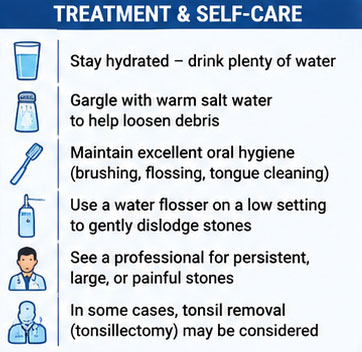
Maintain a consistent oral hygiene routine. Brush twice daily with fluoride toothpaste, clean between the teeth daily, and gently clean the tongue. This helps reduce oral bacteria and may improve bad breath.
Gargle with warm salt water. Dissolve approximately half a teaspoon of salt in a glass of warm water, gargle, and spit it out. Do not swallow the solution. Avoid gargling if you cannot do so safely.
Drink enough water. Adequate hydration supports saliva production and helps keep the mouth comfortable.
Avoid aggressive removal attempts. Do not use sharp instruments, fingernails, or forceful scraping to dislodge a stone. The tonsils are delicate tissue that can bleed or become injured. If removal is difficult, professional assessment is safer than repeated attempts.
Do not self-prescribe antibiotics. Antibiotics do not dissolve ordinary tonsil stones and should only be used when a clinician determines that a bacterial infection warrants them.
If stones recur frequently, cause persistent discomfort, or are associated with continuing bad breath despite good oral hygiene, arrange an assessment with a dentist, physician, or ENT specialist as appropriate.
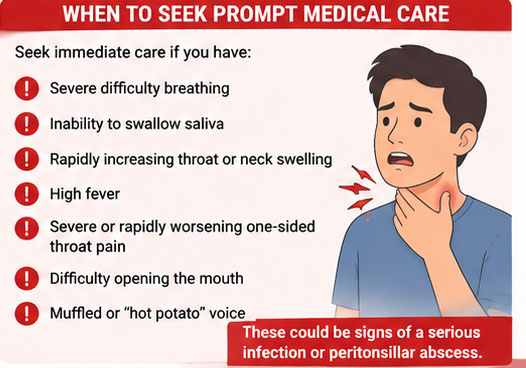
4. When Should You Seek Urgent Medical Attention?
Seek emergency care immediately if you experience:
-
Difficulty breathing.
-
Inability to swallow saliva or significant drooling because swallowing is impossible.
-
Rapidly increasing swelling of the throat or neck.
Seek urgent same-day medical assessment for severe or worsening one-sided throat pain, difficulty opening the mouth, a muffled voice, significant fever with throat swelling, or difficulty swallowing liquids. These symptoms can indicate a deeper infection, including a peritonsillar abscess.
Arrange a non-emergency medical or ENT appointment if a throat lesion persists, one tonsil remains noticeably larger than the other, unexplained bleeding occurs, or a neck lump develops. Persistent symptoms deserve evaluation even when pain is mild.
5. Why Dental Evaluation May Help
Bad breath is not exclusively a tonsil problem. Plaque accumulation, gum disease, tooth decay, food trapped between teeth, dry mouth, and tongue coating can also contribute to unpleasant breath.
A dental examination can help identify these oral causes and determine whether dental treatment or improved hygiene is needed. If the findings suggest that the problem originates in the tonsils or deeper throat, the patient should be referred to an appropriate medical professional.
The goal is not simply to remove a visible white deposit. It is to identify the correct source of symptoms and avoid overlooking an infection or another condition that requires treatment.
Expert Takeaway
Tonsil stones are usually benign and can often be managed with gentle hygiene measures. However, white or yellow spots should never be diagnosed by appearance alone. Fever, severe one-sided pain, progressive swelling, difficulty swallowing, or breathing problems change the level of concern and may require urgent care.
The safest approach is to manage uncomplicated tonsil stones conservatively, avoid traumatic removal attempts, and seek professional evaluation whenever symptoms are persistent, severe, or unusual.
Medical information notice: This content is for general education and does not replace an individual examination by a qualified dentist, physician, or ENT specialist.
Frequently Asked Questions About Tonsil Stones
1. Are tonsil stones dangerous?
Most tonsil stones are harmless and do not require treatment if they cause no symptoms. However, persistent pain, bleeding, fever, marked swelling, or difficulty swallowing should prompt medical assessment because another condition may be present.
2. Can tonsil stones cause bad breath even if I brush my teeth?
Yes. Bacteria and trapped debris within tonsillar crypts can produce unpleasant-smelling compounds. Good brushing, flossing, and tongue cleaning can reduce other sources of bad breath, but they may not completely eliminate odor originating from tonsil stones.
3. How can I tell the difference between a tonsil stone and tonsillitis?
Tonsil stones often appear as small, discrete white or yellow lumps within tonsil crevices and may occur without fever or significant pain. Tonsillitis more commonly causes red, swollen tonsils, a sore throat, and painful swallowing, sometimes accompanied by fever or white patches. These features overlap, so an examination may be necessary.
4. Can I remove tonsil stones at home?
Some small stones loosen naturally or after gentle saltwater gargling. Avoid sharp objects, forceful scraping, or high-pressure water devices. If a stone is deeply embedded, painful, bleeding, or difficult to remove, seek professional advice rather than continuing to manipulate the tonsil.
5. Do tonsil stones require antibiotics?
No. Ordinary tonsil stones do not routinely require antibiotics. Antibiotics are appropriate only for certain bacterial infections after clinical assessment. Taking them unnecessarily can cause side effects and contribute to antimicrobial resistance.
6. Can a dentist diagnose tonsil stones?
A dentist may notice visible tonsil stones during an oral examination and can assess other causes of bad breath, including gum disease and tooth decay. Persistent throat symptoms, suspected tonsillitis, or deeper tonsil abnormalities may require evaluation by a physician or ENT specialist.
7. Why do my tonsil stones keep coming back?
Recurring stones may be related to deeper tonsillar crypts, previous tonsil inflammation, or the repeated accumulation of debris. Regular oral hygiene and hydration may help reduce buildup, but recurrence can still occur. An ENT specialist can discuss additional options when symptoms are troublesome.
8. Can tonsil stones cause ear pain?
They can sometimes be associated with referred ear discomfort. However, persistent, severe, or one-sided ear pain should not automatically be attributed to tonsil stones. A clinician can evaluate possible throat, dental, or ear-related causes.
9. Should I be worried if only one tonsil has a white spot?
Not necessarily, but a one-sided white spot cannot be diagnosed reliably from appearance alone. Seek prompt assessment if it accompanies severe pain, fever, increasing swelling, or difficulty opening the mouth. A persistent lesion, bleeding, or continuing enlargement of one tonsil also warrants medical evaluation.
10. When should I see an ENT specialist for tonsil stones?
Consider an ENT consultation if stones recur frequently, cause ongoing discomfort or bad breath despite appropriate oral care, or interfere with swallowing. An ENT specialist can confirm the diagnosis and discuss professional removal or, in selected cases, surgery. Tonsillectomy is not usually necessary for occasional uncomplicated stones.
11. Can tonsil stones be prevented completely?
Not always. Brushing twice daily, cleaning between the teeth, gently cleaning the tongue, drinking adequate water, and using a saltwater gargle may help reduce buildup. People with naturally deep tonsillar crypts may continue to develop stones despite good hygiene.
12. Can tonsil stones turn into cancer?
Tonsil stones themselves are not considered a cause of tonsil cancer. However, a persistent tonsil lesion, unexplained bleeding, a neck lump, or ongoing one-sided throat symptoms should be assessed rather than repeatedly assumed to be a stone.
13. What should I do if a white spot is accompanied by fever and severe throat pain?
Arrange urgent medical evaluation, particularly if pain is worsening or concentrated on one side. Do not attempt to scrape off the spot or take leftover antibiotics. Difficulty breathing or inability to swallow saliva requires emergency care.
14. Is bad breath always caused by tonsil stones?
No. Dental plaque, gum disease, cavities, tongue coating, dry mouth, and certain medical conditions can cause bad breath. A dental examination is a useful starting point when the cause is unclear, followed by medical or ENT assessment when indicated.
15. When is surgery considered for recurring tonsil stones?
An ENT specialist may discuss tonsillectomy in selected patients with persistent, troublesome symptoms when conservative management has not helped. Surgery has risks, including significant postoperative pain and bleeding, so the decision requires individualized assessment and a discussion of alternatives.
What should happen next?
Step 1 — Dental/oral examination
- Examine posterior teeth and gums.
- Check plaque/calculus.
- Check for cavities and periodontal disease.
- Clean the teeth professionally if indicated.
Step 2 — Tonsil examination
A dentist, physician or ENT specialist should inspect the suspected area.
Step 3 — Determine whether it is actually a stone
If confirmed as a tonsil stone, treatment may range from observation and oral hygiene to professional removal when symptomatic or recurrent.
Step 4 — Look for the underlying cause
Repeated tonsil stones can be associated with deeper tonsillar crypts and previous tonsil inflammation/infections.
If you give it 14 days
If this is a small uncomplicated tonsil stone, it may loosen or fall out by itself. Warm salt-water gargling and good oral hygiene can help; some stones require professional removal.
But 14 days should not be treated as a guaranteed healing period.
If the underlying problem is tonsillitis, a persistent lesion, or another infection, simply waiting 14 days could allow the problem to continue.
What could "scale up" if ignored?
Watch for:
Tonsil stone → persistent irritation → recurrent tonsil inflammation/infection → increasing discomfort, bad breath or swallowing problems.
More importantly, if the area is actually an infection rather than a stone, progression can be more serious. A peritonsillar abscess can cause severe one-sided throat pain, difficulty swallowing, difficulty opening the mouth, fever, swelling and a muffled voice.
Emergency warning: difficulty breathing, inability to swallow saliva, rapidly increasing throat/neck swelling, or severe worsening symptoms should be evaluated urgently rather than waiting 14 days.
My visual conclusion
Suspected tonsil stone: YES — plausible from the image.
Confirmed tonsil stone: NO — requires direct clinical examination.
Visible local irritation: POSSIBLE.
Definite tonsillitis: Cannot determine from this photograph.
Definite abscess: Not established from this image.
I would recommend having the suspected tonsil stone and the posterior teeth examined during the same visit, because both oral hygiene and tonsillar crypts can contribute to persistent bad breath.
For a suspected tonsil stone that keeps returning, an ENT (ear, nose and throat) evaluation may also be appropriate in addition to the dental examination.
Frequently Asked Questions About Tonsil Stones
1. Are tonsil stones dangerous?
Most tonsil stones are harmless and do not require medical treatment. They form when food particles, bacteria, mucus, and dead cells become trapped in small pockets in the tonsils and gradually harden. However, persistent pain, bleeding, swelling, or difficulty swallowing should not automatically be attributed to tonsil stones. Consult a healthcare professional if these symptoms occur.
2. How can I tell if I have tonsil stones or a more serious condition?
Tonsil stones often appear as small white or yellow lumps on the tonsils. They may cause bad breath, an unpleasant taste, or a sensation that something is stuck in the throat.
Other conditions, including tonsillitis, throat infections, and occasionally more serious diseases, can cause similar symptoms. A high fever, severe or worsening throat pain, significant swelling, or persistent one-sided symptoms deserve medical assessment. You cannot reliably diagnose every throat condition by appearance alone.
3. Can tonsil stones be a sign of cancer?
Tonsil stones themselves are not cancer. However, a persistent lump, an unexplained enlarged tonsil on one side, a neck lump, blood in saliva, or ongoing difficulty swallowing should be evaluated by a doctor. These symptoms can have several causes and do not automatically mean cancer, but they should not be ignored.
4. Why do my tonsil stones smell so bad?
Tonsil stones can develop an unpleasant smell because bacteria and trapped debris accumulate in the tonsil pockets. These bacteria can produce sulfur-containing compounds that contribute to bad breath. Brushing your teeth, flossing, cleaning your tongue, drinking enough water, and gargling with warm salt water may help reduce the problem.
5. How can I remove tonsil stones safely at home?
Start with gentle measures, such as gargling with warm salt water, maintaining good oral hygiene, and drinking sufficient water. Some stones come out naturally when swallowing or coughing.
Avoid sharp objects, fingernails, forceful squeezing, and high-pressure water jets directed at the tonsils. These can injure delicate tissue and cause bleeding or infection. If a stone is deeply lodged, painful, or difficult to remove, ask a healthcare professional for assistance.
6. Can tonsil stones go away on their own?
Yes. Many tonsil stones loosen and fall out naturally without treatment. Small stones that do not cause discomfort can often be left alone. Seek medical advice if they persist, repeatedly return, or cause pain, swelling, or swallowing problems.
7. Why do I keep getting tonsil stones even when I brush my teeth?
Tonsil stones can recur because some people naturally have deeper pockets or folds in their tonsils. Previous tonsil infections may also contribute to irregularities where debris becomes trapped. Good oral hygiene helps reduce debris and bacteria, but it cannot always prevent recurrence.
8. Can tonsil stones cause bad breath even if I brush and floss daily?
Yes. Tonsil stones can contribute to bad breath even when your teeth and gums are clean. However, bad breath can also come from gum disease, tooth decay, dry mouth, sinus problems, or other conditions. If the odor continues despite good oral hygiene, consider a dental examination and, when appropriate, a medical assessment.
9. Do I need antibiotics to treat tonsil stones?
Usually, no. Tonsil stones alone do not normally require antibiotics. Antibiotics treat certain bacterial infections, not the hardened debris that forms the stones. Do not take leftover antibiotics or start them without medical advice. If you develop fever, worsening throat pain, or other signs of infection, seek medical assessment.
10. When should I see a doctor or an ENT specialist?
Arrange a medical appointment if you have recurring or troublesome tonsil stones, persistent sore throat, unexplained one-sided tonsil enlargement, bleeding, ongoing ear pain, a neck lump, or difficulty swallowing.
Seek emergency care immediately if you have difficulty breathing, cannot swallow your saliva, or develop rapidly increasing throat or neck swelling. Severe difficulty swallowing or breathing should never be treated as an ordinary tonsil stone problem.
11. Can tonsil stones cause ear pain or the feeling that something is stuck in my throat?
Yes. Tonsil stones may cause referred ear discomfort or a sensation of something lodged in the throat. However, ear pain and persistent throat discomfort can have other causes. If symptoms are severe, last more than a few days, worsen, or occur with fever or difficulty swallowing, seek medical advice rather than assuming a tonsil stone is responsible.
12. Should I have my tonsils removed if tonsil stones keep coming back?
Not necessarily. Most people with tonsil stones do not need surgery. If stones repeatedly cause significant discomfort, persistent bad breath, or other problems despite appropriate care, an ENT specialist can discuss available options. Tonsillectomy, which removes the tonsils, may be considered in selected cases after discussing the benefits, risks, and recovery time.
13. Are tonsil stones contagious?
No. Tonsil stones themselves are not contagious. However, some infections that affect the tonsils or throat can spread between people. If you have fever, a significant sore throat, or other symptoms of an infection, seek appropriate medical advice.
14. Can drinking water and gargling with salt water prevent tonsil stones?
Useful information
1. Gum Swelling Near Back Teeth
Best for readers with swelling near a molar or back tooth.
Read the related case study
2. Severe Tartar Buildup and Gum Inflammation
For readers concerned about bleeding, plaque, tartar, or red gums.
Explore gum inflammation case studies
3. Dental Abscess and Oral Infection
For readers who notice pus, a bad taste, tooth pain, or increasing swelling.
Explore oral infection guides
These measures may help reduce debris and ease mild irritation, but they cannot guarantee that stones will not return. Brush and floss regularly, gently clean your tongue, stay hydrated, and gargle with warm salt water if appropriate. Avoid aggressive attempts to clean inside the tonsils.
Important Health Advice
Tonsil stones are usually harmless, but not every white spot, lump, or sore area at the back of the throat is a tonsil stone. If you are unsure what you are seeing, have persistent symptoms, or notice unusual swelling or bleeding, arrange an examination with a qualified healthcare professional.
This article provides general educational information and does not replace an individual medical examination or diagnosis.
Related Clinical Cases
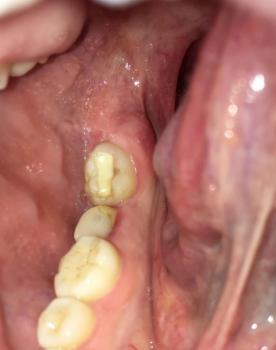
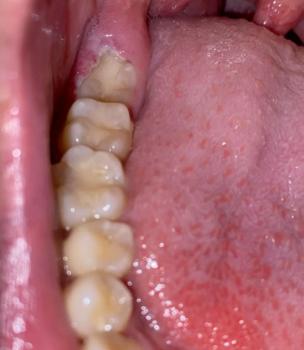
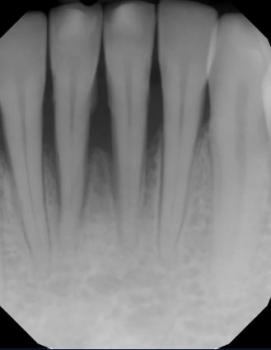
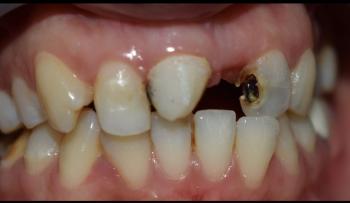
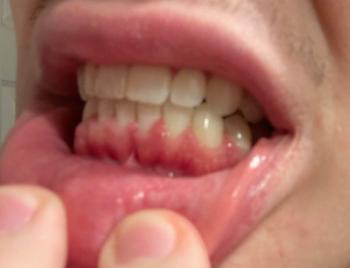
Patients with lower front gum inflammation may also experience tartar buildup, periodontal disease, gum abscesses, or tooth decay. Explore these related clinical case studies.
Other topics:
Other Dental Clinic
 |
 |
 |
 |