Your Smile, Our Passion.

Signs of Dry Socket vs Infection: How to Tell the Difference (From an Alabama Bone Graft Expert)
Language :
By a U.S.-based dental implant and bone graft specialist practicing in Alabama
Introduction: Two Conditions Patients Often Confuse
After a tooth extraction, most patients expect some discomfort—but not all pain is the same. In my practice across Alabama, one of the most common emergency calls I receive starts like this:
“Doc, I think I have an infection… or maybe it’s something else?”
In many of these cases, the issue isn’t an infection—it’s Dry Socket, a painful condition that occurs when the protective blood clot is lost too early.
Understanding the difference between dry socket vs infection is critical, because:
- They require different treatments
- They present different risks
- Misdiagnosis can delay proper care
This guide gives you a clear, clinical breakdown—so you can recognize symptoms early and take the right action.
What Is Dry Socket?
Dry socket occurs when the blood clot that forms after a tooth extraction is:
- Dislodged
- Dissolved
- Never formed properly
Without this clot, the underlying bone and nerves are exposed, leading to intense pain.
What Is a Post-Extraction Infection?
An infection happens when bacteria invade the extraction site, leading to:
- Inflammation
- Pus formation
- Tissue breakdown
Unlike dry socket, infection is a bacterial condition that may spread if untreated.
Key Differences: Dry Socket vs Infection
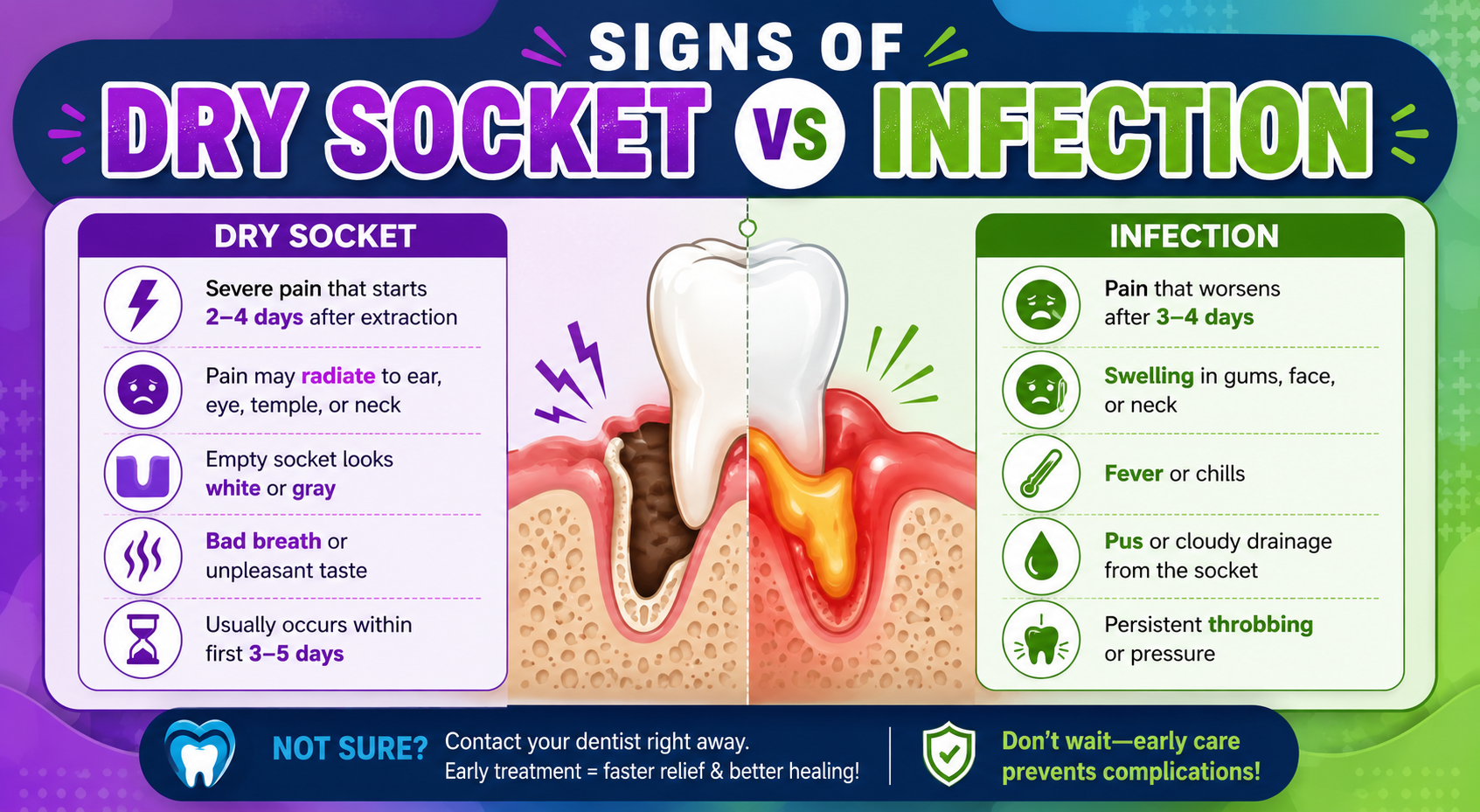
| Feature | Dry Socket | Infection |
|---|---|---|
| Cause | Lost blood clot | Bacterial invasion |
| Pain Type | Sharp, radiating | Throbbing, persistent |
| Onset | 2–5 days after extraction | Can occur anytime |
| Swelling | Mild | Moderate to severe |
| Bad Taste | Common | Very common |
| Fever | Rare | Possible |
| Visible Socket | Empty or exposed bone | Pus or swelling |
Signs of Dry Socket
Dry socket has a very distinct presentation.
1. Severe Pain 2–5 Days After Extraction
Pain suddenly worsens after initial improvement.
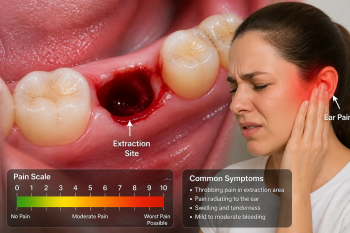
2. Radiating Pain
Pain spreads to:
- Ear
- Jaw
- Head
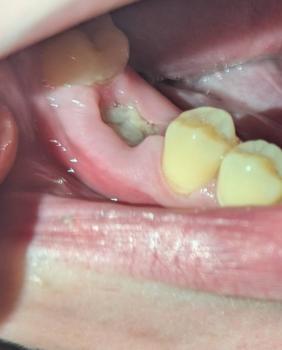
3. Empty Socket Appearance
You may see:
- White bone
- No visible blood clot
4. Bad Breath or Taste
Due to exposed tissue and debris.
5. Minimal Swelling
Unlike infection, swelling is usually not severe.
Signs of Infectiona
Infections develop differently and can escalate quickly.
1. Persistent Throbbing Pain
Pain does not improve and may worsen steadily.
2. Swelling and Redness
- Gum swelling
- Facial swelling in severe cases
3. Pus or Discharge
A clear sign of bacterial infection.
4. Fever
Systemic involvement may cause fever.
5. Foul Taste and Odor
Often stronger than dry socket.
Why Misdiagnosis Happens
Patients often confuse the two because both involve:
- Pain
- Bad taste
- Discomfort
However, the timing and type of pain are key differences.
What Causes Dry Socket?
From a clinical standpoint, dry socket is usually caused by:
- Smoking
- Using straws
- Spitting forcefully
- Poor clot formation
- Trauma during extraction
What Causes Infection?
Infections are typically due to:
- Bacterial contamination
- Poor oral hygiene
- Food trapped in socket
- Compromised immune system
Risk Factors You Should Know
Higher Risk for Dry Socket
- Smokers
- Wisdom tooth extractions
- Difficult surgical extractions
Higher Risk for Infection
- Diabetes
- Weak immune system
- Poor oral hygiene
Treatment: Dry Socket vs Infection
Dry Socket Treatment
In my Alabama clinic, treatment usually includes:
- Cleaning the socket
- Medicated dressing
- Pain relief management
Healing improves quickly once treated.
Infection Treatment
Infections require:
- Antibiotics
- Drainage (if needed)
- Cleaning of the area
In severe cases, further intervention may be required.
Pain Timeline: What’s Normal vs Not
Normal Healing
- Pain decreases after 2–3 days
Dry Socket
- Pain worsens after day 3
Infection
- Pain persists and intensifies over time
Can You Have Both?
Yes—but it’s rare.
A dry socket can sometimes become infected if left untreated. This is why early diagnosis is essential.
Prevention Tips (From a Bone Graft Perspective)
Preventing complications is always better than treating them.
After Extraction
- Avoid smokinge for at least 72 hours
- Do not use straws
- Follow all post-op instructions
- Keep the area clean
Oral Hygiene
- Gentle brushing
- Saltwater rinses after 24 hours
Real Case Insight (Alabama Practice)
A patient came in with severe pain 4 days after extraction.
Symptoms:
- Sharp, radiating pain
- No swelling
- Visible bone
Diagnosis: Dry socket
Treatment:
- Medicated dressing
- Pain relief
Result: Immediate improvement within 24 hours.
Another patient:
Symptomis:
- Swelling
- Fever
- Pus
Diagnosis: Infection
Treatment:
- Antibiotics
- Drainage
Result: Controlled within a few days.
When to Call Your Dentist Immediately
Do not wait if you experience:
- Severe pain after day 3
- Fever
- Swelling
- Pus discharge
- Bad taste that won’t go away
Early treatment prevents complications.
Why This Matters for Dental Implants
From an implant specialist perspective:
- Dry socket can delay healing
- Infection can damage bone
- Both can affect implant eligibility
Proper healing ensures better long-term outcomes.
FAQ: Dry Socket vs Infection
How do I know if I have dry socket or infection?
Dry socket causes sharp, radiating pain with little swelling. Infection involves swelling, pus, and possibly fever.
When does dry socket usually occur?
Typically 2–5 days after extraction.
Can dry socket heal on its owrn?
It may, but treatment significantly reduces pain and speeds recovery.
Do infections always require antibiotics?
Most require antibiotics, especially if symptoms are severe.
Is bad breath always a sign of infection?
Not always—it can occur in both conditions.
Can smoking cause dry socket?
Yes, it is one of the leading causes.
How long do these conditions last?
With treatment, both improve within a few days.
Related Topics You Should Explore
1. Tooth Extraction Healing Timeline
Understand normal recovery stages and what to expect.
2. Bone Graft After Extraction
Learn how grafting preserves bone for implants.
3. Dental Implant Healing Time Guide
A complete overview of implant recovery and success factors.
Final Thoughts from an Alabama Expert
In my experience across Alabama, the biggest issue is not the condition itself—it’s delayed recognition.
Patients often wait too long, thinking pain is normal.
Here’s my advice:
- If pain worsens after day 3 → suspect dry socketr
- If swelling and fever appear → suspect infection
Don’t guess—get evaluated.
Early treatment makes recovery faster, safer, and far less painful.
Can tooth extraction cause infection? Mild inflammation is normal, but increasing swelling, fever, or severe pain may indicate infection. Learn more about post-extraction infection warning signs in this detailed guide.
Book a consultation with our Cebu dental specialists for proper evaluation and care.
Ready to get expert guidance?
If you’re experiencing severe pain or delayed healing, book a consultation with our Cebu dental specialists to get proper evaluation and care.
Consultation or contact page .
Book a Consultation
For severe discomfort or delayed healing, book a consultation with our Cebu dental specialists today.
Looking for a dentist? Browse our Cebu dental directory to find trusted clinics near you.
Medical Review and Clinical Basis
This article is based on clinical dental guidelines and real patient recovery patterns observed after tooth extraction procedures. The information reflects common post-extraction healing stages, including normal clot formation, gum tissue repair, and signs of possible complications such as dry socket or infection.
While mild discomfort is expected after a dental extraction, worsening pain after Day 3, bad odor, exposed bone, or spreading pain may require professional evaluation. These symptoms are consistent with known post-extraction complications described in standard dental practice.
About Cebu Dental Implants
Cebu Dental Implants provides comprehensive tooth extraction, surgical procedures, and dental implant services in the Philippines. Our team evaluates post-extraction healing, manages complications such as dry socket, and advises patients on proper aftercare to prevent infection and delayed healing.
If you experience severe pain or unusual symptoms after extraction, early professional assessment is recommended to prevent further complications.
Important Medical Disclaimer
This content is for educational purposes only and does not replace professional dental diagnosis. Every patient heals differently. If symptoms worsen or do not improve within a few days, consult a licensed dentist for proper evaluation and treatment.
Author
This article was prepared by the Cebu Dental Implants content team in consultation with licensed dental professionals experienced in tooth extraction and implant procedures.
Related Clinical Cases
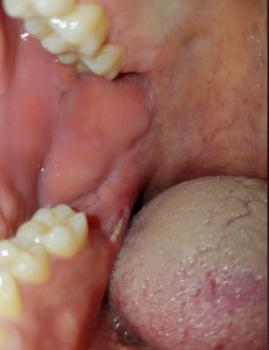
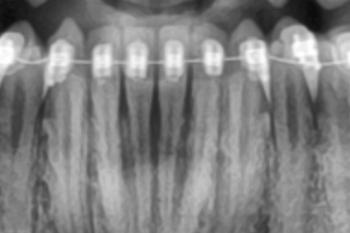
Patients with lower front gum inflammation may also experience tartar buildup, periodontal disease, gum abscesses, or tooth decay. Explore these related clinical case studies.
Other topics:
Other Dental Clinic