From Pain to Perfect — We Care for Your Smile.

Full Mouth Dental Infection Seen on Panoramic X-Ray - Case Analysis
Image:
Severity:
Teeth Problems:
When a Panoramic X-Ray Reveals Multiple Dental Infection Sites: Expert Gum Infection Guidance
Understanding Full-Mouth Dental Infection and Bone Loss
A panoramic dental X-ray provides a broad view of the upper and lower jaws, teeth, and surrounding bone. When several areas show suspicious changes, the findings may indicate multiple dental problems that require a comprehensive examination rather than treatment of only the tooth that hurts.
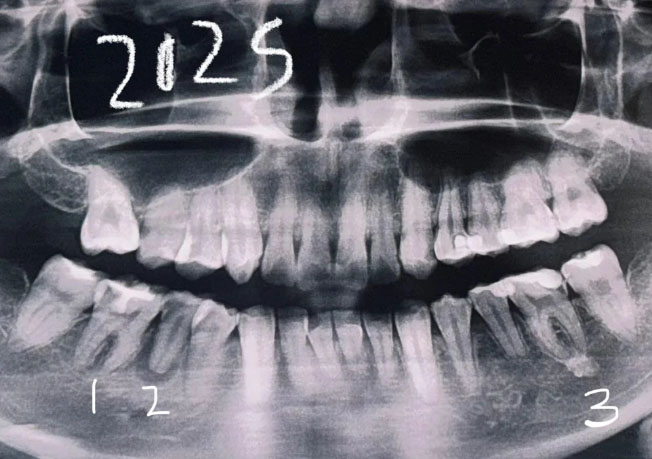
In the case featured in this article, the panoramic image is described as showing possible changes around several tooth roots, irregular bone levels, and areas of reduced bone density. These findings can be associated with inflammation, infection around tooth roots, or periodontal disease. However, the precise diagnosis for each tooth must be confirmed through clinical examination and, when appropriate, additional dental imaging.
How Can Infection Affect the Gums and Jawbone?
Dental infections can originate from different sources. Deep tooth decay, a damaged tooth, or a dying dental pulp can allow bacteria to reach the tissues around a tooth root. This may lead to apical periodontitis or a dental abscess.
Periodontal disease follows a different pathway. Bacterial plaque triggers inflammation in the gums, and advanced disease can damage the tissues and bone that support the teeth.
Both conditions can occur in the same patient, but they require different assessments and treatment approaches.
Common warning signs include:
-
Gums that bleed during brushing or flossing.
-
Persistent bad breath or an unpleasant taste.
-
Swollen, tender, or reddened gums.
-
Tooth pain when chewing or biting.
-
Gum swelling, pus, or a recurring pimple-like bump.
-
Teeth that become loose or shift position.
-
Facial swelling or fever associated with a dental infection.
An important warning: Chronic dental disease may produce few noticeable symptoms. The absence of severe pain does not reliably exclude infection or progressive bone loss.
What Should a Dentist Evaluate First?
A dentist experienced in gum disease and dental infections should assess the entire mouth, not just the area that appears most abnormal on the X-ray.
A comprehensive evaluation may include:
-
Medical and dental history: Previous root canal treatments, tooth injuries, smoking, diabetes, immune conditions, and medications can affect diagnosis and treatment planning.
-
Gum examination: Periodontal probing, bleeding assessment, gum recession, tooth mobility, and plaque levels help identify periodontal disease.
-
Tooth vitality and root assessment: Pulp testing, percussion, palpation, and other clinical tests help determine whether a tooth may have pulpal or periapical disease.
-
Targeted dental imaging: Periapical X-rays may provide greater detail around individual roots. A cone-beam CT scan may be appropriate when a specific three-dimensional question needs clarification.
-
Prioritization of urgent problems: Active abscesses, spreading swelling, systemic symptoms, and teeth with a poor prognosis require timely assessment.
A panoramic X-ray is a useful screening and planning tool, but it can miss subtle lesions and cannot reliably establish the vitality of a tooth or confirm every suspected infection.
Treatment Options for Multiple Dental Infection Sites
There is no single treatment for every full-mouth infection case. The correct approach depends on the source of infection, the condition of each tooth, the extent of bone loss, and the patient's overall health.
1. Root Canal Treatment
A tooth with infected or irreversibly damaged pulp may be suitable for root canal treatment if enough healthy tooth structure remains and the tooth can be restored successfully.
2. Drainage or Extraction
A localized abscess may require drainage and treatment of its source. If a tooth is too damaged or has an unfavorable prognosis, extraction may be recommended. The decision should be based on the individual tooth's condition rather than the panoramic image alone.
3. Periodontal Treatment
Gum disease may require professional scaling, root surface debridement, improved home care, and periodontal maintenance. Advanced cases may need additional periodontal procedures.
4. Antibiotics When Clinically Indicated
Antibiotics are not a substitute for treating the source of most dental infections. Dentists may prescribe them when systemic involvement, spreading infection, or other specific clinical indications justify their use. Patients should not take leftover antibiotics or self-prescribe medication.
5. Reassessment and Long-Term Maintenance
After active disease has been treated, the dentist should reassess healing, gum health, tooth stability, and any remaining lesions. Some teeth can be preserved, while others may need further treatment.
Healing varies according to the diagnosis and procedure. Symptoms may improve before the underlying bone changes become visible on follow-up imaging, and radiographic healing can take months. There is no guaranteed 14-day timeline for resolving every full-mouth infection.
Can Dental Infection Affect Future Dental Implants?
Yes. Active infection and uncontrolled periodontal disease can complicate treatment planning and increase the risk of problems with future dental implants.
Before implant placement, the dentist should treat active disease, assess the remaining bone and soft tissues, evaluate the prognosis of the remaining teeth, and develop a suitable restoration plan. Some patients may require bone grafting or other preparatory procedures, while others may not.
The goal is not simply to remove every tooth that looks abnormal on an X-ray. It is to control disease, preserve restorable teeth where appropriate, and establish a stable foundation for long-term oral health.
Short Patient Story: The X-Ray That Changed the Treatment Plan
Illustrative educational story — not a verified patient testimonial.
A patient named Daniel visited a dental clinic because one of his back teeth had started hurting when he chewed. He expected the dentist to examine that tooth and provide a simple filling.
During the consultation, the dentist reviewed a panoramic X-ray and noticed several areas that needed closer investigation. Some teeth showed suspicious changes near their roots, while other areas had reduced bone support.
Daniel was surprised because he had not experienced severe pain throughout his mouth.
Instead of recommending immediate extraction of multiple teeth, the dentist explained that each suspicious area needed to be evaluated separately. Gum measurements, tooth vitality tests, and more detailed X-rays helped distinguish possible root-related disease from periodontal problems.
The treatment plan prioritized the urgent findings, addressed the sources of infection, and included professional gum treatment and follow-up examinations.
Daniel learned an important lesson: an X-ray can reveal concerns that symptoms alone may not identify, but the best treatment comes from combining imaging with a thorough clinical examination.
The lesson: Early assessment can help patients understand their options, reduce the risk of disease progression, and make informed decisions about preserving their natural teeth.
When Is a Dental Infection an Emergency?
Seek emergency medical care immediately if you develop difficulty breathing or swallowing, rapidly increasing swelling of the face or neck, swelling around the eye with visual symptoms, or other signs that the infection may be affecting deeper tissues.
Facial swelling, fever, feeling generally unwell, or worsening dental pain with swelling requires urgent dental or medical assessment. Do not wait for a routine appointment if symptoms are progressing.
Frequently Asked Questions
1. Can a panoramic X-ray detect a full-mouth dental infection?
It can reveal suspicious changes around tooth roots and supporting bone, as well as other dental abnormalities. However, not every dark area represents an infection, and some infections may not be clearly visible. A dentist must correlate the image with clinical findings.
2. Can multiple dental infections exist without severe pain?
Yes. Some chronic dental and periodontal conditions cause limited discomfort or no noticeable pain. A lack of symptoms does not guarantee that the teeth and supporting bone are healthy.
3. Does bone loss around a tooth always mean infection?
No. Bone loss may be associated with periodontal disease, a root-related inflammatory lesion, previous trauma, or other conditions. The location and pattern of bone changes, along with clinical testing, help determine the likely cause.
4. Can gum disease cause loose teeth?
Advanced periodontal disease can damage the supporting tissues and bone around teeth, causing mobility. Other conditions can also make teeth loose, so a dental examination is needed to identify the cause and determine whether the teeth can be preserved.
5. Will antibiotics cure multiple dental infections?
Antibiotics alone usually do not eliminate the source of a dental infection. Treatment may require root canal therapy, drainage, extraction, or periodontal care. Antibiotics are reserved for situations in which a dentist determines they are indicated.
6. Does every infected tooth need extraction?
No. Some infected teeth can be preserved through appropriate root canal treatment and restoration. Extraction may be recommended when a tooth cannot be predictably restored or has a poor prognosis. Each tooth should be evaluated individually.
7. How long does jawbone healing take after infection treatment?
The timeline depends on the cause, severity, treatment, and individual healing response. Symptoms may improve over days, while bone remodeling and visible radiographic improvement may take several months or longer. Follow-up should be guided by the treating dentist.
8. Can I get dental implants if I have gum disease?
Implants may still be an option for many patients, but active periodontal disease should be controlled first. The dentist must assess bone volume, gum health, remaining teeth, and other risk factors before deciding when and how implants can be placed.
9. What should I do if my gums bleed and I have bad breath?
Arrange a dental examination, especially if the symptoms are persistent. Plaque-related gingivitis and periodontal disease are common causes, but other oral conditions may contribute. Brush gently twice daily with fluoride toothpaste, clean between your teeth daily as tolerated, and seek professional cleaning and treatment when needed.
10. Should I wait until my tooth hurts before seeing a dentist?
No. Regular dental examinations can identify gum disease, decay, and other problems before symptoms become severe. Seek prompt care if you notice persistent bleeding, swelling, pus, tooth mobility, or changes in your bite.
Final Clinical Perspective
Multiple suspicious findings on a panoramic X-ray deserve careful attention, but they should not automatically be labeled as confirmed infections. A dentist must determine which teeth have active disease, which teeth can be saved, whether periodontal treatment is needed, and whether additional imaging is justified.
The most effective strategy combines accurate diagnosis, treatment of the underlying cause, appropriate oral hygiene, and scheduled follow-up. Early professional assessment can help preserve healthy teeth and reduce the risk of preventable complications.
Medical disclaimer: This article is for educational purposes and does not replace an in-person dental examination, a formal radiology interpretation, or individualized treatment advice.
Dental Case Analysis – Full Mouth Panoramic X-Ray With Multiple Infection Sites
Case Overview
This panoramic dental X-ray shows a full-mouth view of the maxilla and mandible. Several teeth demonstrate radiographic signs of infection, bone loss, and previous dental treatment. The findings suggest chronic, multi-site dental pathology rather than a single isolated issue.
Full Analysis and Diagnosis
General Radiographic Findings
-
Multiple teeth with widened periodontal ligament spaces
-
Areas of reduced bone density around root apices
-
Irregular alveolar bone levels
-
Signs consistent with chronic inflammation
-
Mixed dental history including untreated, treated, and compromised teeth
Upper Jaw Findings
-
Possible apical radiolucencies on posterior teeth
-
Early to moderate bone loss
-
Sinus floor appears intact but close to root apices
-
Risk of sinus involvement if infections progress
Lower Jaw Findings
-
Noticeable bone loss around posterior molars
-
Possible chronic apical infections
-
Increased risk to mandibular nerve if lesions enlarge
-
Structural bone thinning in affected areas
Diagnosis
-
Chronic apical periodontitis affecting multiple teeth
-
Generalized dental infection with localized bone loss
-
Long-standing inflammatory dental condition
Deep Clinical Examination
Infection Pattern
-
Chronic rather than acute presentation
-
Multiple low-grade infection sources
-
Likely developed over years
-
May exist with minimal pain symptoms
Structural Impact
-
Progressive alveolar bone loss
-
Compromised tooth support
-
Increased risk of tooth mobility
-
Reduced success rate for future implants if untreated
Time Frame to Heal
With Proper Treatment
-
Initial infection control: 7–14 days
-
Inflammation reduction: 2–3 weeks
-
Bone healing begins: 4–8 weeks
-
Radiographic improvement: 3–6 months
-
Full-mouth stabilization: 6–12 months (staged care)
Without Treatment
-
Continued bone destruction
-
Spread of infection
-
Tooth loss
-
Jawbone weakening
-
Increased need for surgical intervention
Process to Execute (14-Day Focus)
Days 1–3
-
Comprehensive clinical examination
-
Full-mouth treatment planning
-
Identify priority infection sites
-
CBCT scans for high-risk areas if needed
Days 4–7
-
Begin infection control (root canal therapy, retreatment, or extraction)
-
Periodontal debridement
-
Antibiotics only if clinically indicated
Days 8–14
-
Re-evaluation of treated areas
-
Pain and inflammation assessment
-
Plan staged continuation of care
Issues That Will Scale Up If Untreated
-
Worsening bone loss
-
Multiple tooth failures
-
Chronic abscess formation
-
Facial swelling
-
Sinus or nerve involvement
-
Reduced eligibility for implants
-
Long-term oral health decline
Clinical Comments
Panoramic X-rays often reveal hidden, silent infections that are not yet symptomatic. Early intervention and staged treatment planning are critical to preserve remaining bone and teeth. Full-mouth cases require coordinated, long-term care.
Find a Dental Clinic Near You
Search for a qualified dental clinic using our directory:
https://cebudentalimplants.com/map-dental-clinic
Related Clinical Cases
Patients with lower front gum inflammation may also experience tartar buildup, periodontal disease, gum abscesses, or tooth decay. Explore these related clinical case studies.