Smile Again with Comfort and Confidence.

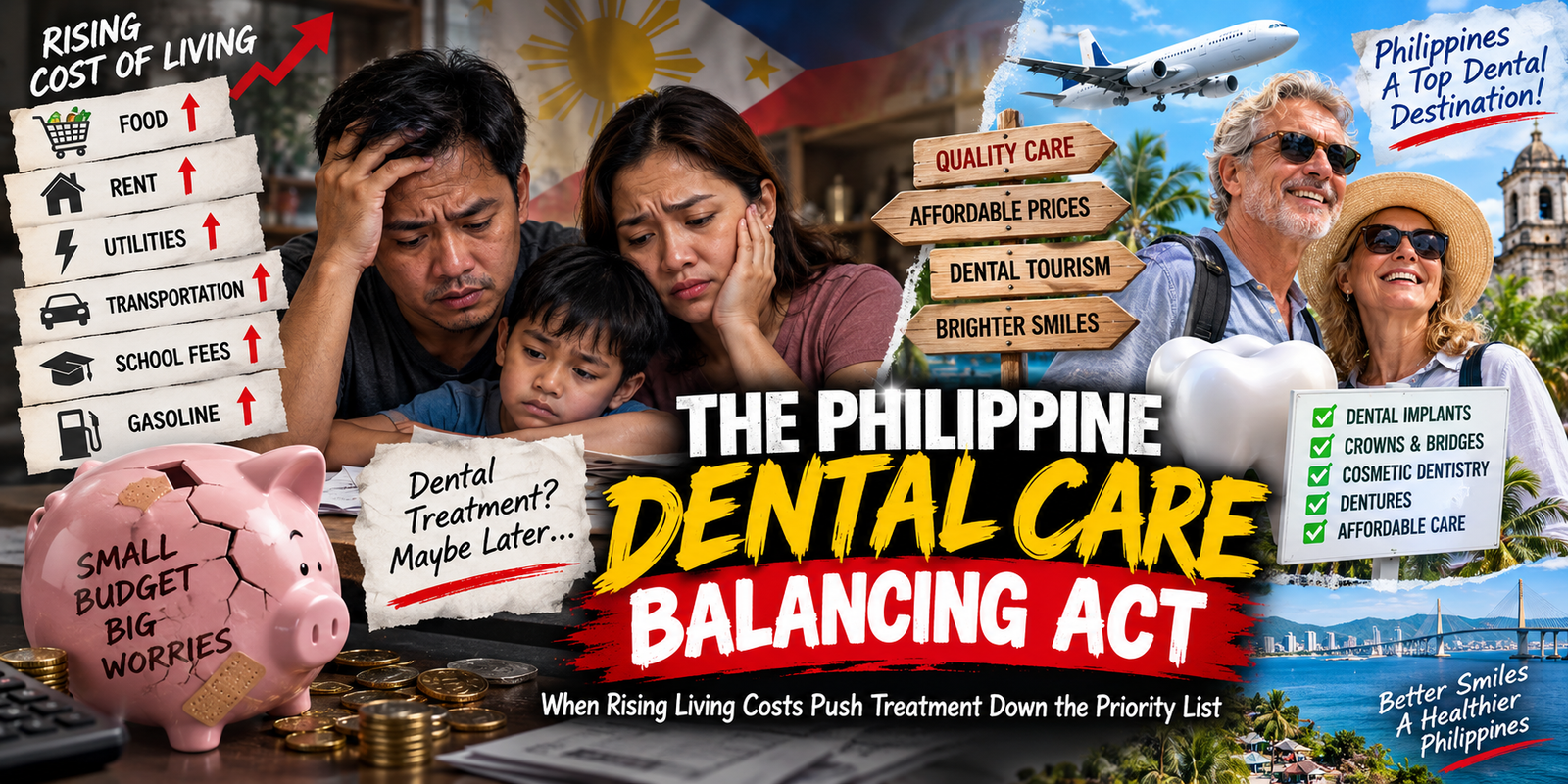
The Philippine Dental Care Balancing Act: When Rising Living Costs Push Treatment Down the Priority List
Language :
Topics:
For many Filipino households, the challenge today is no longer simply deciding whether they need dental treatment.
The bigger question is:
"Can we afford it right now?"
That question reflects a broader economic reality. When household budgets become tighter, families are forced to prioritize essential expenses. Food, rent, electricity, transportation, school expenses, and other necessities can take priority over healthcare that does not appear immediately urgent.
Dental care can be particularly vulnerable to this shift.
A person may know that they need a crown, bridge, denture, dental implant, or periodontal treatment, but knowing that treatment is necessary does not automatically mean having enough money available to pay for it.
When the Household Budget Gets Squeezed
Imagine a family with a limited monthly income.
First comes food.
Then rent or a housing payment.
Then electricity and water.
Transportation and gasoline follow.
There may also be school expenses, communication bills, household necessities, and financial obligations to relatives.
After all of those expenses are paid, there may be very little money remaining.
This creates a difficult situation for dental patients.
A procedure costing ₱30,000 may be medically important, but if the family has only a small amount of disposable income, the treatment can feel financially impossible.
The patient may tell the dentist:
"I know I need it, Doctor, but I don't have the money right now."
Dental Treatment Can Become a Delayed Expense
Dental problems do not always produce an immediate financial crisis.
A person may have a missing tooth for years.
Someone may live with a broken tooth.
Another patient may postpone replacing an old denture.
Someone with gum disease may avoid treatment because there is little or no pain.
Because the problem doesn't always feel like an emergency, treatment can be pushed further into the future.
This creates a cycle:
Dental problem → treatment estimate → financial pressure → postponement → worsening condition → potentially more expensive treatment
The longer treatment is delayed, the more complicated the situation can potentially become.
A damaged tooth that might have been restored could eventually require extraction.
A missing tooth left untreated for a long period may involve additional considerations when replacement is eventually planned.
And untreated gum disease can continue affecting the supporting tissues around the teeth.
The "Cheapest Option" Conversation
One noticeable consequence of financial pressure is the growing importance of price.
Patients may compare several clinics before making a decision.
They may ask about cheaper materials.
They may ask whether treatment can be divided into stages.
They may ask whether a less expensive alternative exists.
And increasingly, the first question during an inquiry can be:
"How much?"
Price has always mattered in dentistry, of course. But when household finances become tighter, affordability can become the deciding factor.
This creates a challenge for dentists.
A dentist must balance the patient's financial limitations with the clinical requirements of the treatment.
The cheapest option is not automatically the most appropriate option.
At the same time, recommending treatment that a patient simply cannot afford does not solve the patient's immediate problem.
The Difficult Position of Dental Clinics
The financial pressure does not affect patients alone.
Dental practices have operating expenses.
Clinics have to pay rent, electricity, staff, laboratory fees, equipment costs, supplies, sterilization expenses, maintenance, technology, taxes, and other business expenses.
Dental materials and equipment can also be affected by transportation costs, exchange rates, import costs, and broader price increases.
This creates a difficult equation:
Patients want lower prices.
Clinics face rising operating costs.
Somewhere between those two realities, dentists have to operate a sustainable practice.
A Divided Dental Market
This economic environment can create a significant divide within the Philippine dental market.
On one side are domestic patients who are highly price-sensitive.
They may need dental treatment but have limited disposable income.
They may prioritize emergency procedures and postpone restorative or elective treatment.
On the other side is a higher-value segment of the market.
This includes patients seeking specialized restorative procedures, cosmetic dentistry, dental implants, complex rehabilitation, and other treatments where the total value of care can be considerably higher.
There is also the potential market created by international patients and dental tourism.
The Philippines has long attracted attention as a destination for various healthcare and dental services because treatment costs can be lower than in some higher-income countries.
For dental clinics, this creates an interesting business challenge.
The same clinic may potentially serve two very different economic markets:
The local patient looking for an affordable solution.
And:
The patient willing and able to spend significantly more for specialized treatment.
Medical and Dental Tourism Changes the Equation
Dental tourism can provide opportunities for clinics with the appropriate facilities, expertise, reputation, and international marketing capabilities.
An overseas patient may travel specifically for treatment such as:
-
Dental implants
-
Full-mouth rehabilitation
-
Crowns and bridges
-
Cosmetic dentistry
-
Dentures
-
Complex restorative treatment
For an international patient, a treatment package that appears expensive locally may still be comparatively attractive when measured against prices in their home country.
This creates an unusual contrast.
A Filipino patient may be postponing a ₱50,000 dental procedure because it represents a substantial portion of household income.
Meanwhile, an international patient may view the same treatment as financially attractive compared with what they would pay at home.
The Challenge for Philippine Dentistry
This doesn't necessarily mean that dental clinics should abandon the local market.
Instead, it highlights the complexity of running a dental practice in an economy where different groups have dramatically different levels of purchasing power.
The industry has to answer difficult questions:
How can quality dental care remain accessible to ordinary Filipino families?
How can dental practices survive while their operating expenses increase?
How can patients receive appropriate treatment without being pushed into financially impossible decisions?
Can treatment be phased so that urgent needs are addressed first?
Can preventive care reduce the need for expensive restorative treatment later?
These are not simple questions.
Prevention Becomes More Important When Money Is Tight
One of the most important lessons from this situation is that prevention can have economic value.
Regular examinations, professional cleaning when clinically appropriate, good oral hygiene, fluoride use where appropriate, and early treatment can potentially prevent small problems from becoming larger ones.
A small cavity can be considerably easier to manage than a severely damaged tooth.
Early gum disease management may be simpler than treating advanced periodontal disease.
And preserving a natural tooth, when it can be safely restored, may avoid more complicated replacement procedures.
For patients facing financial pressure, early dental attention can therefore be particularly important.
The Future Patient May Be More Price-Conscious
The modern Filipino dental consumer is increasingly likely to research before spending.
Patients can search online for:
"Dental implant price Philippines"
"How much is a crown in the Philippines?"
"Affordable dentist near me"
"Dental implant cost Cebu"
"Dentures price Philippines"
They can compare clinics, read reviews, examine treatment options, and ask questions before ever entering a dental office.
This means transparency is becoming increasingly important.
Patients want to understand:
-
What treatment do I actually need?
-
How much will it cost?
-
What are my alternatives?
-
Can the treatment be performed in stages?
-
What happens if I delay it?
-
Are there additional costs?
The clinics that communicate clearly may be better positioned to build trust with financially cautious patients.
A Market of Two Realities
The Philippine dental industry may increasingly reflect two different economic realities.
Reality #1: The budget-conscious local patient
This patient may have genuine dental needs but limited disposable income. Treatment decisions are strongly influenced by affordability, timing, and household priorities.
Reality #2: The higher-value patient
This patient may have greater purchasing power or may be traveling specifically for dental treatment. Specialized procedures and comprehensive restorative care may therefore represent a significant opportunity for appropriately positioned clinics.
Neither group should be ignored.
Both are part of the modern Philippine dental market.
The Bigger Question: Can Dental Care Remain Accessible?
The economic pressure facing Filipino households raises a much larger issue.
Dental health should not become something that people address only when they can finally afford it.
Yet dentists also cannot operate without covering the real cost of providing professional care.
That is the balancing act.
Patients need affordable and appropriate treatment.
Dentists need sustainable businesses.
Dental laboratories and suppliers need to cover their costs.
And the healthcare system needs to encourage prevention rather than waiting until problems become emergencies.
The solution will likely require a combination of patient education, preventive dentistry, transparent pricing, appropriate treatment planning, flexible payment structures where feasible, and greater awareness of the long-term cost of delaying dental care.
Conclusion
For many Filipino families, today's economic environment has changed the way they think about healthcare spending.
When money is tight, dental treatment can move from the category of "important" to "maybe later."
But teeth don't necessarily wait for the household budget to improve.
That creates one of the most difficult challenges facing modern dentistry in the Philippines:
How do we make appropriate dental care accessible to patients while keeping dental practices financially sustainable?
The answer will not be found simply by making everything cheaper.
It will require finding a balance between affordability, quality, prevention, and long-term oral health.
Because behind every dental bill is more than a price.
There is a family budget, a patient's health, and a decision about what can realistically be afforded today.
Related Clinical Cases
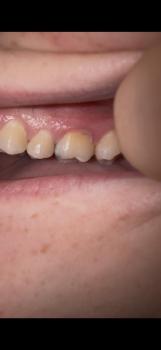
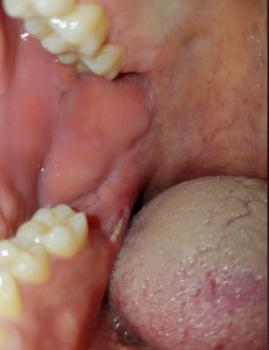
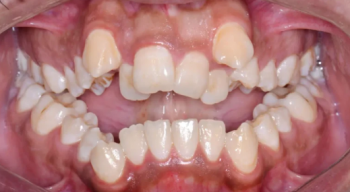
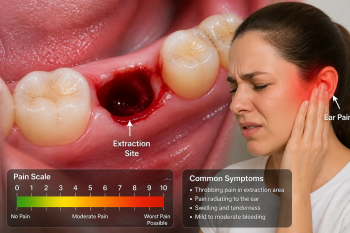
Patients with lower front gum inflammation may also experience tartar buildup, periodontal disease, gum abscesses, or tooth decay. Explore these related clinical case studies.

Other topics:
Other Dental Clinic