Your Smile, Perfected with Precision.

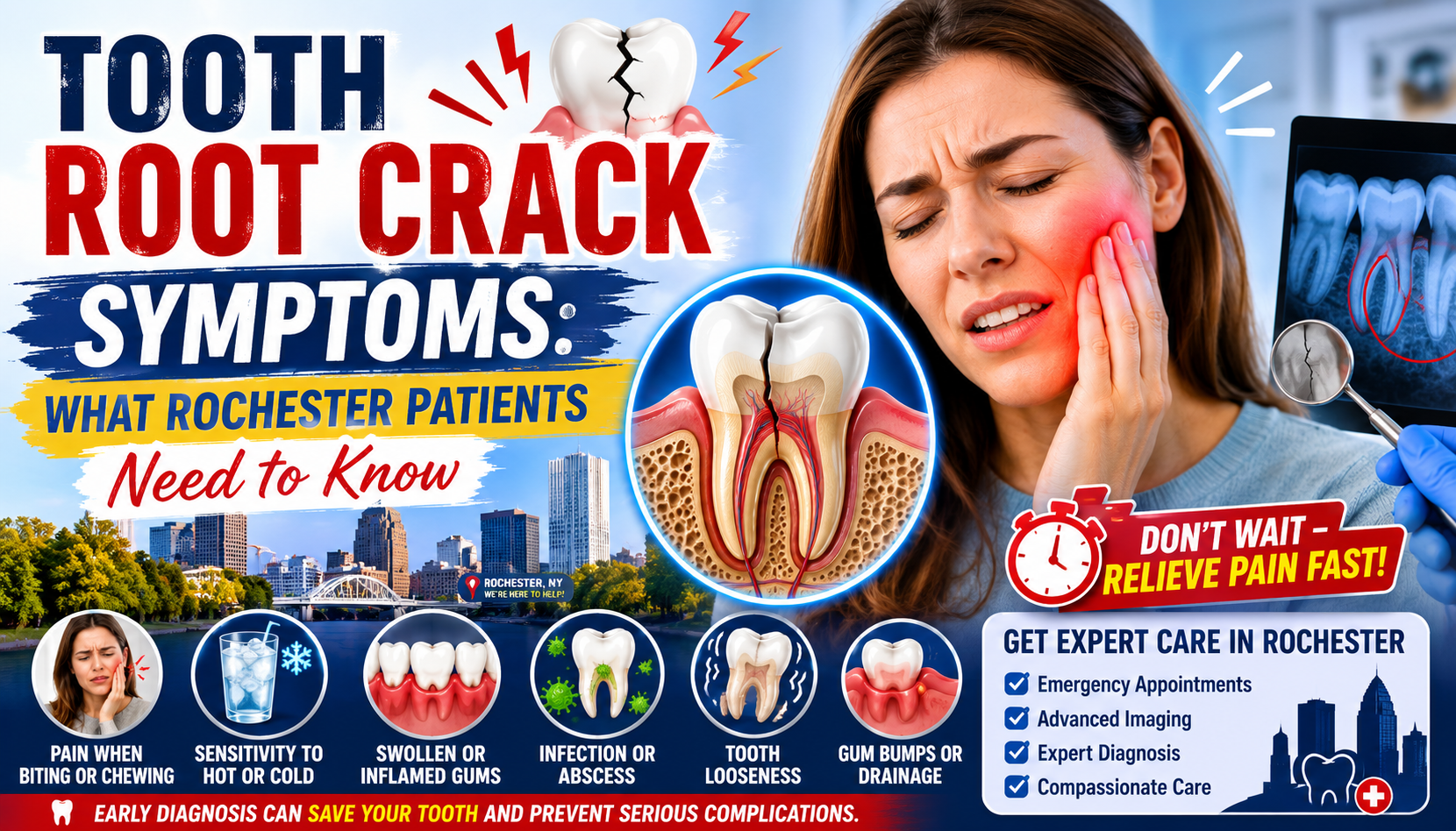
Tooth Root Crack Symptoms: What Rochester Patients Need to Know
Language :
Topics:
"I Need Help Right Now" — When Dental Pain Feels Like an Emergency
"I've been calling dental offices all morning. The pain is getting worse. My tooth hurts every time I bite down. My gum is swollen, and nobody seems to be answering quickly enough."
If this sounds familiar, you are not alone.
Many patients experiencing a fractured tooth root feel frustrated, anxious, and even frightened when they cannot immediately reach a dentist. Dental pain can become overwhelming, especially when it interferes with eating, sleeping, working, or simply getting through the day.
A fractured tooth root is not something that should be ignored. Unlike a chipped tooth that is visible above the gumline, a root fracture often occurs beneath the gums where you cannot see it. The damage may be hidden, but the symptoms can become severe and sometimes lead to infection, abscess formation, bone loss, or eventual tooth loss.
If you are experiencing persistent tooth pain, swelling, sensitivity, or signs of infection in Rochester, New York, this guide will help you understand what may be happening and why seeking professional care as soon as possible is important.
What Is a Fractured Tooth Root?
A tooth consists of two major parts:
- The crown (the visible portion above the gumline)
- The root (the portion anchored inside the jawbone)
While many people think of tooth fractures occurring on the visible portion of the tooth, fractures can also occur below the gumline.
A root fracture involves a crack or break within the root structure itself.
These fractures may develop due to:
- Accidents
- Sports injuries
- Falls
- Biting hard objects
- Previous dental work
- Long-term grinding or clenching
- Severe decay weakening the tooth structure
The challenge is that root fractures are often invisible without professional imaging.
Why Root Fractures Are Difficult to Diagnose
One reason patients become frustrated is because symptoms may come and go.
A root fracture can create intermittent pain that seems to disappear temporarily before returning unexpectedly.
Many patients initially assume:
- They have a cavity
- They need a filling
- They have gum disease
- The pain will resolve on its own
Unfortunately, root fractures frequently worsen over time.
Because the fracture is hidden below the gums, dentists often rely on:
- Clinical examinations
- Digital X-rays
- Specialized imaging
- Cone Beam CT (CBCT) scans
These tools help reveal fractures that cannot be seen during a standard visual examination.
Common Symptoms of a Fractured Tooth Root
While every case is different, several symptoms commonly appear.
Persistent Tooth Pain
Pain is usually the first warning sign.
Patients often describe:
- Sharp pain
- Throbbing discomfort
- Pain when chewing
- Pain when biting down
- Pain that comes and goes
The pain may feel localized to one tooth.
In some cases, it may spread toward:
- The jaw
- The ear
- The temple
- The neck
Pain that repeatedly returns deserves immediate attention.
Pain When Biting
One classic sign of a fractured root is pain during biting pressure.
Patients frequently report:
"I can chew on one side but not the other."
The fracture may separate slightly under pressure and irritate surrounding tissues.
Even simple activities such as eating bread or chewing soft foods may trigger discomfort.
Sensitivity to Hot and Cold
Many fractured teeth become extremely sensitive.
Common triggers include:
- Hot coffee
- Tea
- Soup
- Ice cream
- Cold water
- Cold air
The discomfort may linger for several seconds or even minutes.
When temperature sensitivity suddenly develops without explanation, a fractured root should be considered.
Gum Swelling Around One Tooth
Swollen gums often indicate inflammation.
You may notice:
- Puffiness
- Tenderness
- Redness
- Pain when touching the area
The swelling may remain localized near the affected tooth.
In more serious cases, the swelling may spread into surrounding facial tissues.
A Small Bump on the Gum
Some patients notice what appears to be a small pimple near the gumline.
This bump may:
- Appear and disappear
- Drain fluid
- Produce a bad taste
This can indicate an active infection associated with the fractured root.
The body attempts to release pressure by creating a drainage pathway.
This symptom should never be ignored.
Bad Taste or Bad Odor
An infected root fracture can release bacteria and pus.
Patients may notice:
- Persistent bad breath
- A foul taste
- Drainage from the gums
Even frequent brushing may not eliminate the odor.
These symptoms often suggest an infection is developing.
Tooth Mobility
The affected tooth may begin to feel loose.
Patients often describe:
- Movement when touching the tooth
- Changes while chewing
- A feeling that the tooth is shifting
Tooth mobility can indicate significant structural damage.
Immediate dental evaluation is recommended.
Tooth Feels Different
Many patients cannot initially identify the exact problem.
Instead, they say:
"Something just feels wrong."
You may notice:
- Changes in bite alignment
- Pressure sensations
- A feeling that the tooth is taller
- Discomfort when closing your mouth
These subtle changes may be early signs of a fracture.
Can a Fractured Root Cause an Infection?
Yes.
A root fracture creates a pathway for bacteria.
Once bacteria enter the damaged area, infection can spread into:
- The root canal system
- Surrounding gum tissue
- The jawbone
- Facial spaces
This is why prompt treatment is so important.
Warning Signs of Dental Infection
Seek urgent dental care if you experience:
Facial Swelling
Swelling extending into the cheek or jaw may indicate spreading infection.
Fever
Fever combined with dental pain should never be ignored.
Difficulty Swallowing
This can indicate significant swelling.
Difficulty Breathing
Breathing difficulties require immediate emergency medical attention.
Swollen Lymph Nodes
Tender lymph nodes beneath the jaw may suggest infection.
Pus Drainage
Visible drainage often indicates an abscess.
Why Waiting Can Make Things Worse
Many patients delay treatment because:
- They hope the pain will disappear
- They are busy
- They are worried about costs
- They cannot reach a dental office immediately
Unfortunately, waiting often allows the condition to worsen.
Potential complications include:
- Severe infection
- Bone loss
- Increased pain
- Tooth loss
- More extensive treatment
- Higher costs
Early intervention generally provides the best outcomes.
How Dentists Diagnose a Fractured Root
Diagnosis usually involves multiple steps.
Dental Examination
The dentist evaluates:
- Pain location
- Gum health
- Tooth stability
- Bite function
Digital X-Rays
X-rays help identify:
- Bone loss
- Infection
- Root abnormalities
However, not every fracture appears clearly on traditional X-rays.
Cone Beam CT Imaging
CBCT scans provide three-dimensional imaging.
This technology can reveal:
- Hidden fractures
- Bone damage
- Infection spread
CBCT imaging often provides critical information when root fractures are suspected.
Treatment Options for Fractured Tooth Roots
Treatment depends on the location and severity of the fracture.
Dental Crown
If the fracture is limited and the tooth remains stable, a crown may help protect the remaining structure.
Root Canal Treatment
Some fractures may require root canal therapy if the pulp becomes damaged.
This treatment removes infected tissue and seals the canal.
Surgical Procedures
Certain fractures require surgical intervention to address damaged portions of the root.
Tooth Extraction
Unfortunately, many root fractures cannot be repaired.
Extraction may become the safest option.
Removing the tooth helps:
- Eliminate infection
- Stop pain
- Prevent further complications
What Happens If Extraction Is Necessary?
Many patients worry when they hear the word "extraction."
However, modern dentistry has made the procedure significantly more comfortable than many people expect.
The process generally includes:
- Examination
- Imaging
- Local anesthesia
- Tooth removal
- Healing instructions
Most patients report immediate relief from pressure and infection-related pain.
Replacing a Lost Tooth
After extraction, replacement options may include:
Dental Implants
Dental implants provide a long-term replacement solution.
Benefits include:
- Natural appearance
- Strong chewing ability
- Bone preservation
Dental Bridges
Bridges use neighboring teeth for support.
They can restore appearance and function.
Partial Dentures
Removable appliances may replace one or several missing teeth.
Emergency Dental Care in Rochester, New York
If you suspect a fractured tooth root, seek evaluation promptly.
Several providers throughout Rochester offer emergency and urgent dental care.
These include:
- Emergency dental clinics
- Oral surgery practices
- Family dental offices
- Hospital-affiliated dental centers
The Eastman Institute for Oral Health and numerous private practices throughout Brighton, Pittsford, Henrietta, Greece, and surrounding Rochester communities provide emergency evaluations and treatment options.
What to Say When You Call
Because offices often prioritize emergencies, clearly describe your symptoms.
Tell them if you have:
- Severe pain
- Facial swelling
- Fever
- A broken tooth
- Difficulty chewing
- Signs of infection
- Gum drainage
Providing detailed information helps staff determine the urgency of your situation.
Questions to Ask During Your Call
Ask:
- Do you offer same-day emergency appointments?
- Can you evaluate a possible root fracture?
- Is imaging available on-site?
- What are the estimated costs?
- Do you accept my insurance?
- Do you offer financing options?
These questions can help you receive treatment faster.
Managing Symptoms While Waiting for Care
Although professional treatment is necessary, temporary measures may provide relief.
You may:
- Rinse gently with warm salt water
- Avoid chewing on the affected side
- Maintain oral hygiene
- Stay hydrated
- Use medications as directed by your healthcare provider
Avoid placing aspirin directly on the gums.
Avoid attempting to repair the tooth yourself.
Final Thoughts: Don't Ignore the Signs
If you are experiencing persistent tooth pain, swelling, sensitivity, gum drainage, or signs of infection, a fractured tooth root may be the cause.
Many patients wait too long because symptoms seem manageable at first. Unfortunately, root fractures rarely heal on their own. Without professional treatment, the condition can worsen and lead to infection, bone loss, and eventual tooth loss.
If you are in Rochester, New York, and are struggling to get answers while dealing with severe dental pain, continue calling emergency dental providers and clearly explain your symptoms. Mention any swelling, fever, drainage, or severe pain when speaking with office staff.
The sooner a fractured root is diagnosed, the greater the opportunity to control pain, prevent complications, and preserve your oral health. When it comes to dental emergencies, acting quickly is often the difference between saving a tooth and losing it.
Can tooth extraction cause infection? Mild inflammation is normal, but increasing swelling, fever, or severe pain may indicate infection. Learn more about post-extraction infection warning signs in this detailed guide.
Book a consultation with our Cebu dental specialists for proper evaluation and care.
Ready to get expert guidance?
If you’re experiencing severe pain or delayed healing, book a consultation with our Cebu dental specialists to get proper evaluation and care.
Consultation or contact page .
Book a Consultation
For severe discomfort or delayed healing, book a consultation with our Cebu dental specialists today.
Looking for a dentist? Browse our Cebu dental directory to find trusted clinics near you.
Medical Review and Clinical Basis
This article is based on clinical dental guidelines and real patient recovery patterns observed after tooth extraction procedures. The information reflects common post-extraction healing stages, including normal clot formation, gum tissue repair, and signs of possible complications such as dry socket or infection.
While mild discomfort is expected after a dental extraction, worsening pain after Day 3, bad odor, exposed bone, or spreading pain may require professional evaluation. These symptoms are consistent with known post-extraction complications described in standard dental practice.
About Cebu Dental Implants
Cebu Dental Implants provides comprehensive tooth extraction, surgical procedures, and dental implant services in the Philippines. Our team evaluates post-extraction healing, manages complications such as dry socket, and advises patients on proper aftercare to prevent infection and delayed healing.
If you experience severe pain or unusual symptoms after extraction, early professional assessment is recommended to prevent further complications.
Important Medical Disclaimer
This content is for educational purposes only and does not replace professional dental diagnosis. Every patient heals differently. If symptoms worsen or do not improve within a few days, consult a licensed dentist for proper evaluation and treatment.
Author
This article was prepared by the Cebu Dental Implants content team in consultation with licensed dental professionals experienced in tooth extraction and implant procedures.
Related Clinical Cases
Patients with lower front gum inflammation may also experience tartar buildup, periodontal disease, gum abscesses, or tooth decay. Explore these related clinical case studies.