Because Every Tooth Deserves Care.

Robotic Dentistry: The Rise of Automated Dental Procedures
Language :
Topics:
The AI Dentist is Already Here: Only a Few Are Prepared for the Next 25 Years
The dental chair of the future won't necessarily have a dentist holding a drill—it might have a robotic arm supervised by one.
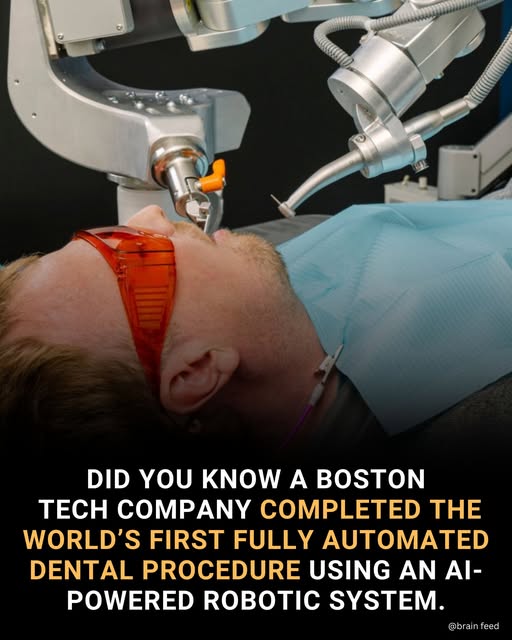
Not long ago, history was made. A Boston-based company performed the first fully automated dental procedure on a human patient without direct human intervention during the surgery. Using a sophisticated AI-powered robotic arm guided by high-resolution 3D optical coherence tomography (OCT), the system completed a full tooth restoration—from scanning to crown preparation—in a remarkably short time. What typically takes a human dentist multiple sessions was finished in a single sitting with remarkable precision and efficiency.
This wasn't just another tech demo. It was a signal that the future of dentistry is arriving faster than most professionals realize.
The Current State: What Just Happened?
This breakthrough is significant for several reasons. The imaging technology generates detailed 3D models below the gum line without ionizing radiation, detecting cavities with significantly higher accuracy compared to traditional X-rays. The robotic system prepared the tooth in a fraction of the usual time. Most importantly, the AI mapped the procedure in real-time and executed it without the dentist touching the handpiece.
While the system still requires regulatory approval for widespread use, it has already received approval for testing and has successfully demonstrated its capability. The question is no longer if autonomous dentistry will arrive, but how fast it will scale.
Imagining the Next 25 Years: The Evolution of AI in Dentistry
According to expert analysis, the integration of AI into dentistry will likely unfold in distinct stages over the next two decades.
Stage 1: Competing in Diagnostics
AI is already matching or exceeding human diagnostic capability. AI-powered imaging tools can now identify caries, periodontal disease, and oral cancers with accuracy rates that compete with conventional methods. In the coming years, AI will likely become the primary diagnostician in most practices, flagging issues invisible to the naked eye and predicting disease progression before symptoms appear.
Stage 2: Competing in Virtual Planning
We are already seeing AI design crowns, bridges, and implants. AI-driven design software reduces countless mouse clicks to just a few, allowing even beginners to complete complex prosthesis designs in minutes. Soon, expect AI to handle the majority of treatment planning, optimizing for aesthetics, function, and longevity.
Stage 3: Competing in Real Work Execution
This is where the recent breakthrough fits. In the near future, we will likely see AI-assisted robots performing routine restorative work, implant placements, and even endodontic procedures with micron-level precision—accuracy humans simply cannot match.
Stage 4: AGI Takes the Lead
Artificial General Intelligence (AGI)—AI that can think, reason, and adapt like a human—is projected by researchers to become a reality in the coming decades. In dentistry, this could mean systems capable of managing entire clinical workflows, from diagnosis to execution, with the dentist shifting to a supervisory and ethical oversight role.
The Ultimate Goal: Affordable, Worldwide Access
The promise of this technological revolution isn't just about precision and speed—it's about access.
Oral diseases affect billions of people worldwide, and countless individuals lack dental insurance. In various countries, reports show that patients attempted DIY dentistry during recent global events—pulling their own teeth or gluing fillings at home because they couldn't access or afford care.
AI and robotics can address this crisis in meaningful ways:
Cost Reduction: AI can reduce operational costs through automation and predictive maintenance. Automated design tools eliminate expensive software licenses by offering cloud-based subscription models, lowering the barrier to entry for clinics in underserved areas.
Scalability: Robots don't tire. They can perform procedures in high-volume settings, bringing quality care to "dental deserts" where no human dentist practices.
Democratizing Expertise: AI effectively democratizes the gap between the top clinicians and everyone else. A dentist in a rural community with AI assistance can plan and execute treatments with the same data-driven confidence as a specialist in a major city.
The company behind the breakthrough has explicitly stated the goal is to deploy this technology to underserved communities, offering more accurate health assessments while reducing chair time. In the coming decades, the combination of AI-driven robotics, biological regeneration (including emerging methods to regrow teeth), and personalized prevention could make severe tooth loss a rarity rather than a norm.
Analysis: Are You Ready?
Here is the uncomfortable truth: the technology is evolving faster than the workforce.
A significant portion of dentists globally are already implementing AI in their practices. The AI dental market is projected to grow substantially in the coming decade. Numerous AI-powered dental products have already received regulatory approval and are on the market.
Yet, many dental professionals remain unaware of these changes or actively resist them. The traditional mentality that has long dominated dentistry is being disrupted by startups, insurers, and tech companies who see the efficiency gains.
New Skills for the New Era
To remain irreplaceable, dental professionals must evolve. Here are the skills you need to develop now:
1. Become a Digital Supervisor
The dentist of the future won't be judged solely by their manual dexterity with a handpiece, but by their ability to design treatment plans, supervise robotic execution, and handle complications. You need to understand digital workflows, AI diagnostics, and robotic system capabilities.
2. Master Human-Centered Care
AI cannot replicate empathy, trust, or the nuanced conversation about a patient's fears, finances, and goals. As one expert notes, the most important factor is to be a human being. You treat people. You are not a robot. So the technology is supposed to empower you, not to replace you.
3. Understand Data and Ethics
AI tools are only as good as their data. Dentists must understand the limitations of algorithms, recognize potential biases, and ensure patient privacy. Experts emphasize that clinicians need to play an active role in how these applications are developed and how they are used in practices.
4. Continuous Learning and Adaptation
The half-life of dental knowledge is shrinking. The techniques you learned years ago may be obsolete in the near future. Engage with peer networks, attend technology-focused continuing education courses, and be willing to unlearn old habits.
Conclusion: The Dream or the Threat?
Is full automation a dream or a threat? It's both—depending on your mindset.
If you view AI as a tool to eliminate the mundane, reduce your error rate, and free you to focus on the art and empathy of patient care, it is the most exciting opportunity in the history of dentistry.
If you ignore it, you risk being left behind.
The first fully automated procedure is behind us. The next years will determine whether you are driving the change or being changed by it.
Looking for dentist : Visit directory list
Related Clinical Cases
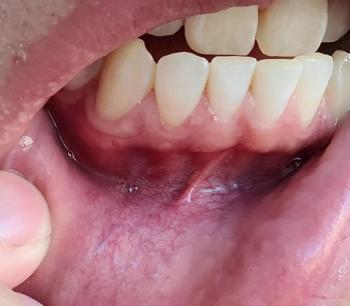
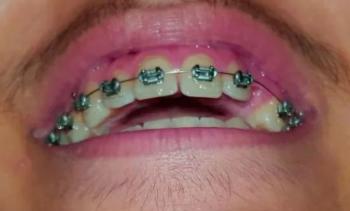
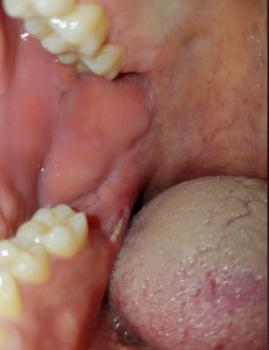
Patients with lower front gum inflammation may also experience tartar buildup, periodontal disease, gum abscesses, or tooth decay. Explore these related clinical case studies.



Other topics:
Other Dental Clinic