Your Smile, Our Passion.

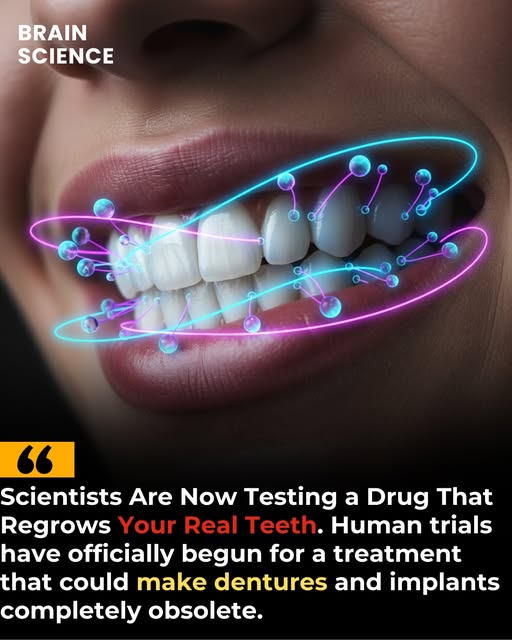
From Science Fiction to Clinical Trial: The Drug That Could Regrow Your Teeth
Language :
Topics:
Practical Advice for Now . While waiting for these future innovations, here is how you can think about your dental health today:
-
Manage Expectations: Understand that a mass-market "tooth regrowth drug" is not available today. Traditional implants, bridges, and dentures remain the standard of care for tooth replacement and are highly effective.
-
Preserve What You Have: The best "innovation" is prevention. Good oral hygiene and regular dental check-ups are the most reliable ways to keep your natural teeth for life.
-
Follow Credible Sources: Be cautious of headlines that sound too good to be true. You can follow progress through reputable scientific institutions and dental research journals.
To better understand whether any of these specific research paths might be relevant for you or someone you know, you could consider:
-
What is the primary reason for tooth loss you're interested in (e.g., decay, injury, congenital condition)?
-
Are you more interested in repairing a damaged tooth or completely replacing a missing one?
This information would help in discussing more targeted future options with a dental professional.
The following table summarizes the key approaches being explored, their progress, and their potential as "innovations" as described in your query.
| Innovation / Approach | How It Works (The Science) | Current Stage of Development | Potential to "Regrow Teeth" |
|---|---|---|---|
| Antibody Drug |
| Targets a protein that inhibits tooth growth, aiming to "wake up" dormant tooth buds. | Human clinical trials beginning in late 2025 for patients with congenital tooth agenesis (a rare genetic condition) |
| . | High potential, but initial target is a specific medical condition. Not yet a general solution for tooth loss. |
| Whole Tooth Regeneration |
Uses stem cells (e.g., from gums or wisdom teeth) placed on a 3D scaffold or "hydrogel" to grow a bioengineered tooth in a lab
| . | Advanced preclinical research. Scientists have grown functional, rooted teeth in animal models (mice, pigs) |
| . Human trials are still a future goal. | Very high potential for a fully biological replacement. The most direct path to a "lab-grown" tooth. |
| Stem Cell Pulp/Dentin Regeneration |
| Uses dental stem cells to repair or regenerate the inner structures of a damaged tooth, such as dentin and pulp. | Some techniques in human trials. For example, a drug (Tideglusib) to stimulate dentin repair in small cavities has entered human trials |
| . | Medium potential. It regenerates tooth structure, not a whole new tooth. Could prevent the need for root canals or fillings |
| . |
| Gene Therapy |
| Aims to activate or introduce specific genes to restart the natural tooth development process that is inactive in adults. | Early-stage, theoretical research. Recognized as a promising future path but not yet in active clinical development for tooth regeneration. | Theoretical high potential, but this is a longer-term prospect and faces significant scientific and regulatory hurdles. |
Interpreting the "Human Trials" News
The most direct link to your query is the Japanese-led research on an antibody drug
-
The Scope: The upcoming trials are very targeted. They are for patients with congenital tooth agenesis, a condition where people are born without some teeth
-
The Goal: To prove safety and see if the drug can stimulate the growth of the teeth that never formed. Success here would be a monumental breakthrough, but it would not immediately mean anyone who lost a tooth could regrow one.
-
The Timeline: Researchers estimate that if these trials are successful, such a treatment could be available to the public by around 2030
-
. This is a best-case scenario and depends on trial outcomes.
Would I Try It? A Personal and Professional Consideration
From a dental health perspective, the promise of a biological tooth that integrates perfectly with the jawbone and functions like a natural tooth is the ultimate goal
. If I were missing a tooth and a safe, clinically proven, and regulatory-approved biological regeneration option was available, I would absolutely consider it over a traditional implant.
However, based on the current evidence, I would not seek out or try an experimental tooth-regrowth treatment outside of a formal, regulated clinical trial. The field of stem cells, in particular, has many unregulated clinics offering unproven and potentially unsafe treatments
Looking for dentist : Visit directory list
Related Clinical Cases
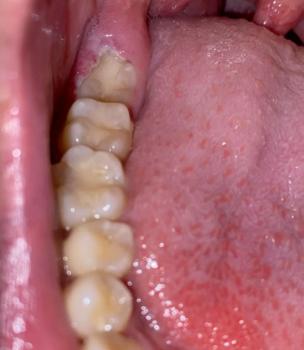
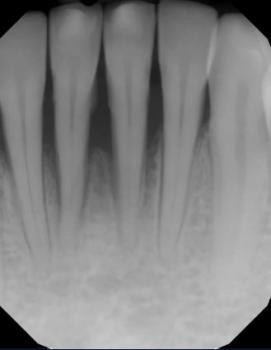
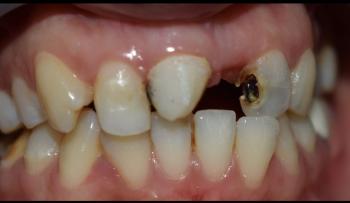
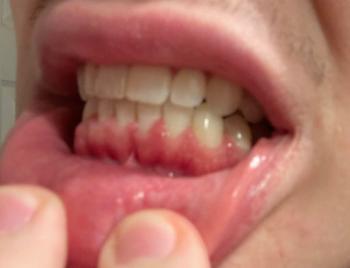
Patients with lower front gum inflammation may also experience tartar buildup, periodontal disease, gum abscesses, or tooth decay. Explore these related clinical case studies.