We Bring Back the Sparkle in Your Smile.

Private vs Public Dental Care in Austria – Cost Comparison
Language :
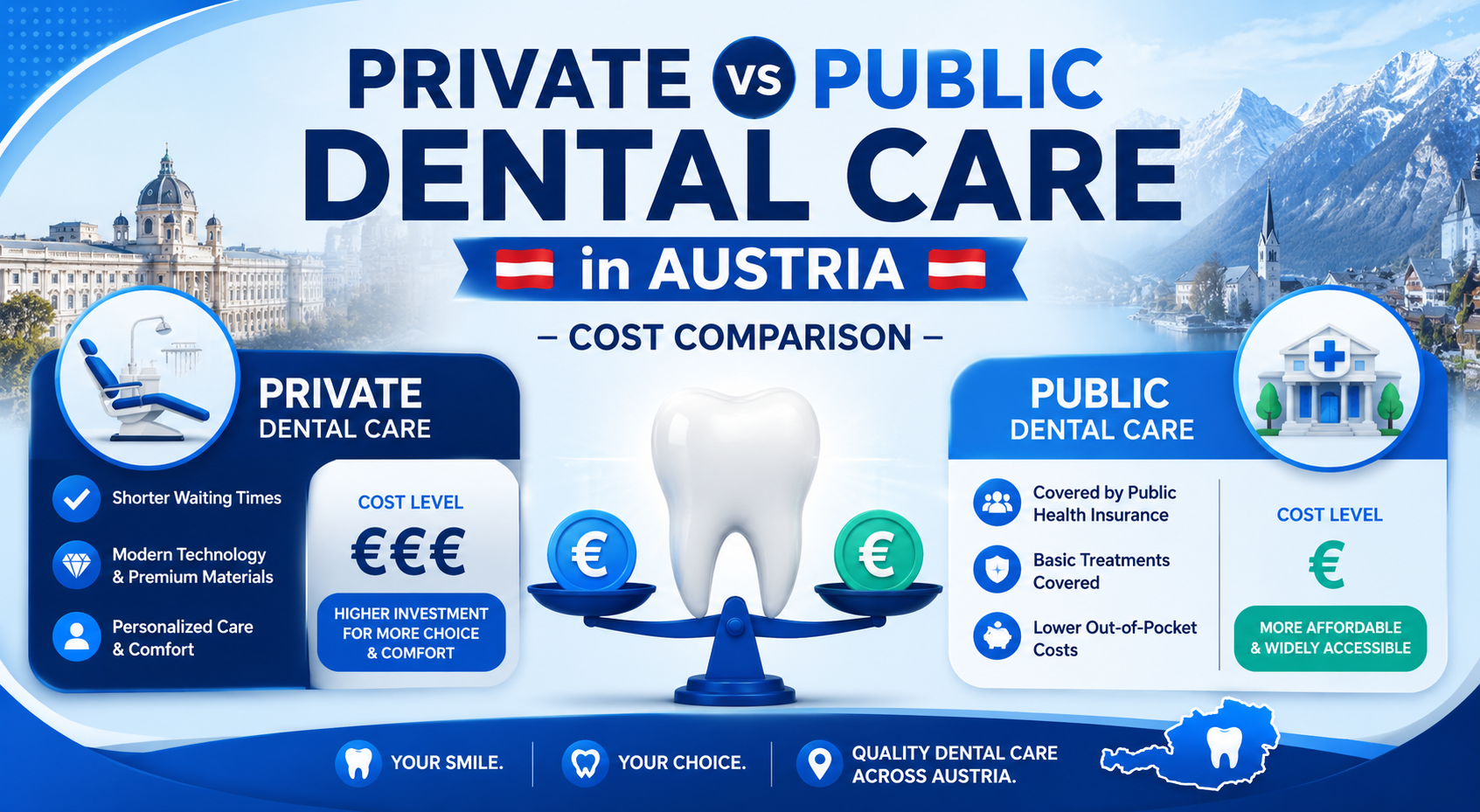
A Dental Expert’s Perspective After 25 Years in Austrian Dentistry
After more than 25 years working in Austrian dentistry, one thing has remained consistent: patients are often confused about the difference between public and private dental care in Austria.
Many people assume that Austria’s excellent healthcare system automatically means all dental treatment is fully covered. Others believe private dental clinics are only for wealthy patients seeking cosmetic procedurese.
The truth is far more nuanced.
Austria has one of Europe’s strongest healthcare systems, but dental coverage still involves important limitations, especially for:
- Dental implants
- Cosmetic dentistry
- Advanced restorative treatment
- Full-mouth rehabilitation
- Premium materials
Over the past two decades, I have seen Austrian patients become increasingly concerned about:
- Rising treatment costs
- Insurance limitations
- Waiting timez
- Differences between public and private providers
- Overseas dental tourism
Today, patients want clear answers before committing to treatment.
They ask:
- What does public insurance actually cover?
- Why are private dental clinics more expensive?
- Are private dentists really better?
- Is implant treatment covered?
- Why do patients still travel abroad despite Austria’s healthcare system?
This guide explains the real differences between public and private dental care in Austria, compares treatment costs, and helps patients understand what to expect in 2026.
Understanding Austria’s Dental Healthcare System
Austria uses a mixed healthcare system combining:
- Public health insurance
- Private supplemental insurance
- Out-of-pocket patient payments
Most Austrian residents are enrolled in public health insurance through employment or social programs.
Public dental care is available through contracted dentists who work with Austrian health insurance funds.
Private dentistry operates separately and usually involves higher patient fees.
What Is Public Dental Care in Austria?
Public dental care is generally provided through dentists contracted with Austrian health insurance providers.
These dentists offer treatment covered partially or fully under Austria’s public healthcare system.
Covered services usually focus on:
- Preventive care
- Basic restorative treatment
- Necessary extractions
- Functional dentistry
The primary goal is essential oral healthcare rather than premium cosmetic treatment.
What Does Public Dental Insurance Cover?
Coverage varies slightly depending on the insurance provider, but public dental care commonly includes:
Common Publicly Covered Services
| Treatment | Typical Coverage |
|---|---|
| Dental examinations | Covered |
| Basic fillings | Covered partially or fully |
| Tooth extractions | Covered |
| Basic dentures | Partial coverage |
| X-rays | Limited coverage |
| Emergency treatment | Covered |
However, coverage often applies only to standard treatment options.
What Is Usually NOT Fully Covered?
Many advanced procedures involve significant patient co-payments.
Common Limited-Coverage Treatments
- Dental implants
- Ceramic crowns
- Cosmetic veneers
- Invisalign or clear aligners
- Premium dentures
- Full-mouth reconstruction
- Advanced periodontal treatment
This surprises many patients who expect broader coverage.
Why Dental Implants Are Expensive in Austria
Dental implants remain one of the least publicly supported treatments.
Typical implant prices in Austria include:
| Treatment | Average Price |
|---|---|
| Single implant | €2,500 to €4,500 |
| Implant crown | €900 to €1,500 |
| Bone grafting | €500 to €2,000 |
| Sinus lift | €1,000 to €2,500 |
| Full-mouth implants | €18,000 to €40,000 |
Public insurance generally provides little reimbursement for implant surgery itself.
Why Public Insurance Does Not Fully Cover Implants
From a healthcare policy perspective, implants are often considered:
- Advanced restorative treatment
- Higher-cost elective treatment
- Non-essential compared to dentures
Public systems prioritize basic oral function rather than premium rehabilitation solutions.
What Is Private Dental Care in Austria?
Private dentistry refers to clinics operating outside standard public insurance reimbursement structures.
Private clinics often provide:
- Advanced cosmetic dentistry
- Implantology
- Digital dentistry
- Shorter waiting times
- Premium materials
- More flexible treatment planning
Patients usually pay privately or use supplemental insurance.
Why Patients Choose Private Dental Clinics
After 25 years in Austrian dentistry, I can say patients usually choose private clinics because of:
- Advanced technology
- Personalized treatment
- Cosmetic focus
- More modern materials
- Experienced specialists
- Faster scheduling
Many patients are willing to pay extra for these advantages.
Technology Differences Between Public and Private Clinics
Private clinics often invest more heavily in:
- 3D CBCT imaging
- Digital smile design
- Guided implant surgery
- CAD/CAM crowns
- Intraoral scanners
- Laser dentistry
Public clinics may still provide excellent care, but technology investment is sometimes more limited.
Waiting Times: Public vs Private
Public Dental Care
Waiting periods may exist for:
- Specialist appointments
- Complex treatment
- Public clinics in busy urban areas
Private Dental Care
Private clinics usually offer:
- Faster appointments
- More flexible scheduling
- Shorter consultation delays
This is a major reason some patients prefer private treatment.
Material Quality Differences
Public systems often reimburse only standard materials.
Examples include:
- Metal crowns
- Basic dentures
- Conventional fillings
Private dentistry allows access to:
- Zirconia crowns
- Premium ceramics
- Cosmetic restorations
- High-end implant systems
Aesthetic expectations strongly influence treatment choice.
Are Private Dentists Better?
Not necessarily.
Austria has many highly skilled dentists in both systems.
However, private dentistry often allows:
- More treatment time
- More advanced equipment
- Greater material flexibility
- Specialized cosmetic focus
The dentist’s experience matters more than whether the clinic is public or private.
The Real Cost of Cosmetic Dentistry
Cosmetic dentistry is one of the largest areas of private dental spending.
Typical Private Cosmetic Prices
| Treatment | Average Price |
|---|---|
| Porcelain veneer | €700 to €1,500 |
| Teeth whitening | €300 to €800 |
| Invisalign treatment | €3,000 to €7,000 |
| Smile makeover | €5,000 to €20,000 |
These procedures are generally not covered publicly.
Orthodontics in Austria
Orthodontic coverage depends heavily on age and medical necessity.
Children
Certain severe cases may qualify for partial public support.
Adults
Adult orthodontics usually requires private payment.
This includes:
- Clear aligners
- Cosmetic braces
- Invisalign systems
Why Austrian Patients Still Travel Abroad
Even with Austria’s strong healthcare system, some patients seek treatment abroad because of cost differences.
Popular destinations include:
- Hungary
- Turkey
- Poland
- Croatia
- Thailand
- Philippines
Implant and cosmetic dentistry are the biggest drivers of dental tourism.
Hungary’s Influence on Austrian Dental Tourism
Austria shares close geographic proximity with Hungary.
For years, Hungarian clinics have attracted Austrian patients with:
- Lower prices
- German-speaking staff
- Implant packages
- Short travel distance
Many Austrian patients compare treatment costs before committing locally.
Risks of Choosing Treatment Abroad
While many international clinics are excellent, risks exist.
Common Risks
- Follow-up difficulties
- Communication problems
- Implant compatibility issues
- Sterilization concerns
- Limited legal protection
- Poor-quality materials
Patients should never choose treatment based only on price.
Why Follow-Up Care Matters
Dental treatment is not finished after surgery.
Long-term maintenance may involve:
- Bite adjustments
- Crown replacement
- Gum treatment
- Implant cleaning
- Repair work
Local follow-up is often easier with Austrian clinics.
Supplemental Private Dental Insurance
Some Austrians purchase private dental insurance to help reduce costs.
These plans may partially cover:
- Crowns
- Orthodontics
- Implants
- Preventive care
- Cosmetic procedures
However, annual limits and exclusions usually apply.
The Psychological Difference Between Public and Private Dentistry
Patients often report private clinics feel more:
- Relaxed
- Personalized
- Comfortable
- Cosmetic-focused
Public systems may prioritize efficiency because of patient volume.
Both systems serve important healthcare roles.
Emergency Dental Care in Austria
Emergency dental services are available through both public and private systems.
Coverage may apply for:
- Severe infections
- Acute pain
- Trauma
- Swelling
Private emergency clinics may involve higher immediate fees.
Why Preventive Dentistry Is Still the Smartest Investment
After 25 years in dentistry, I can confidently say prevention remains the best financial strategy.
Regular care helps prevent:
- Tooth loss
- Gum disease
- Expensive implants
- Complex surgery
Patients who delay treatment often face much higher costs later.
Common Misunderstandings About Austrian Dental Care
“Everything is free.”
False.
Many advanced treatments require major private payment.
“Public dentists are lower quality.”
False.
Austria has excellent professionals in both systems.
“Implants are fully covered.”
False.
Implants usually involve large out-of-pocket costs.
“Private clinics are only cosmetic.”
False.
Many private clinics provide highly advanced reconstructive dentistry.
Questions Patients Should Ask Before Treatment
Before committing to treatment, patients should ask:
- What is covered publicly?
- What are the private costs?
- Are alternative materials available?
- Is supplemental insurance accepted?
- What long-term maintenance is required?
Clear treatment planning avoids misunderstandings later.
Why Experience Matters More Than Clinic Type
The most successful dental outcomes usually depend on:
- Accurate diagnosis
- Proper planning
- Clinical skill
- Long-term maintenance
- Patient communication
not simply whether treatment occurs in a public or private clinic.
Final Thoughts on Public vs Private Dental Care in Austria
Austria offers one of Europe’s strongest healthcare environments, but dental treatment still involves important financial realities.
Public dental care provides valuable support for:
- Preventive care
- Basic treatment
- Essential oral health services
However, private dentistry becomes increasingly important for patients seeking:
- Dental implants
- Cosmetic treatment
- Advanced rehabilitation
- Premium materials
- Faster access
After 25 years in Austrian dentistry, my professional advice is simple:
Patients should not focus only on price.
The most important factors remain:
- Dentist experience
- Treatment quality
- Long-term stability
- Proper communication
- Preventive maintenance
A well-executed dental treatment can last decades. Poorly planned dentistry can create long-term health and financial problems.
The smartest approach balances affordability with quality and long-term care.
FAQ – Private vs Public Dental Care in Austria
Is dental treatment free in Austria?
Basic public dental care is partially or fully covered, but many advanced procedures require private payment.
Are dental implants covered by Austrian public insurance?
Usually only minimally. Most implant costs remain the patient’s responsibility.
Why are private dental clinics more expensive?
Private clinics often invest more heavily in technology, cosmetic materials, and personalized treatment.
Do Austrians travel abroad for dental treatment?
Yes. Many patients compare prices in countries such as Hungary and Turkey for implants and cosmetic dentistry.
Is private dentistry better than public dentistry?
Not necessarily. Austria has highly skilled dentists in both systems, but private clinics may offer more advanced technology and cosmetic options.
Related Topics
1. Dental Implant Prices in Austria vs Hungary
Many Austrian patients compare implant costs across neighboring countries before starting treatment.
2. Supplemental Dental Insurance in Austria
Private dental insurance may help reduce costs for implants, orthodontics, and cosmetic treatment.
3. Dental Tourism in Europe – Benefits and Risks
Patients considering overseas treatment should understand follow-up care, implant quality, and long-term maintenance before travelinge.
Can tooth extraction cause infection? Mild inflammation is normal, but increasing swelling, fever, or severe pain may indicate infection. Learn more about post-extraction infection warning signs in this detailed guide.
Book a consultation with our Cebu dental specialists for proper evaluation and care.
Ready to get expert guidance?
If you’re experiencing severe pain or delayed healing, book a consultation with our Cebu dental specialists to get proper evaluation and care.
Consultation or contact page .
Book a Consultation
For severe discomfort or delayed healing, book a consultation with our Cebu dental specialists today.
Looking for a dentist? Browse our Cebu dental directory to find trusted clinics near you.
Medical Review and Clinical Basis
This article is based on clinical dental guidelines and real patient recovery patterns observed after tooth extraction procedures. The information reflects common post-extraction healing stages, including normal clot formation, gum tissue repair, and signs of possible complications such as dry socket or infection.
While mild discomfort is expected after a dental extraction, worsening pain after Day 3, bad odor, exposed bone, or spreading pain may require professional evaluation. These symptoms are consistent with known post-extraction complications described in standard dental practice.
About Cebu Dental Implants
Cebu Dental Implants provides comprehensive tooth extraction, surgical procedures, and dental implant services in the Philippines. Our team evaluates post-extraction healing, manages complications such as dry socket, and advises patients on proper aftercare to prevent infection and delayed healing.
If you experience severe pain or unusual symptoms after extraction, early professional assessment is recommended to prevent further complications.
Important Medical Disclaimer
This content is for educational purposes only and does not replace professional dental diagnosis. Every patient heals differently. If symptoms worsen or do not improve within a few days, consult a licensed dentist for proper evaluation and treatment.
Author
This article was prepared by the Cebu Dental Implants content team in consultation with licensed dental professionals experienced in tooth extraction and implant procedures.
Related Clinical Cases
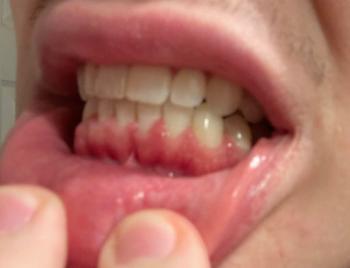
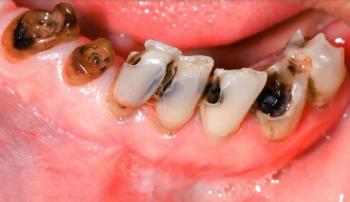
Patients with lower front gum inflammation may also experience tartar buildup, periodontal disease, gum abscesses, or tooth decay. Explore these related clinical case studies.