Missing Teeth? Find Your Smile Again.

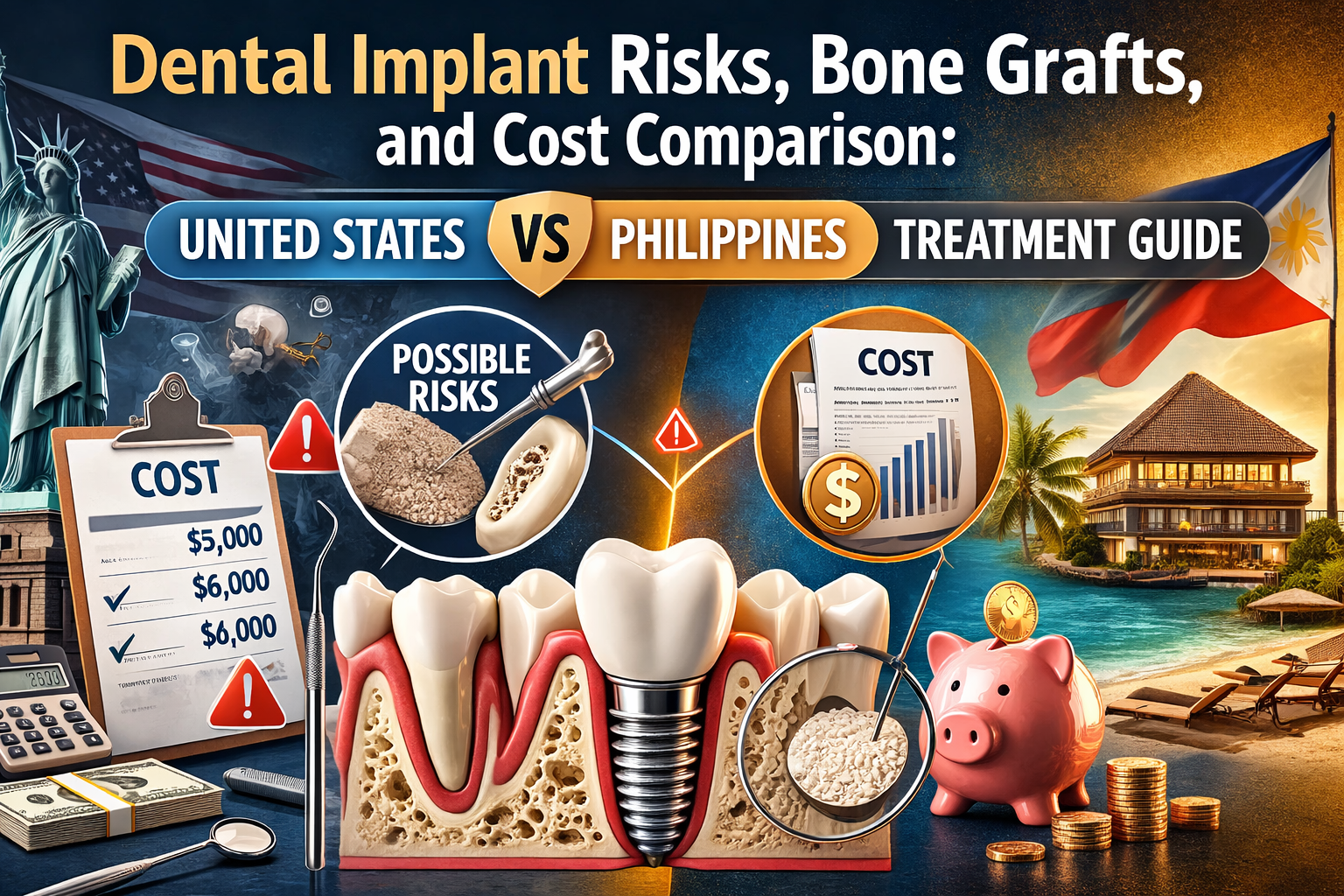
Dental Implant Risks, Bone Grafts, and Cost Comparison: United States vs Philippines Treatment Guide
Language :
Dental Implant Failure Causes in the United States
Dental implants have a high success rate, often above 95%, but failures still occur in some cases across the United States. Implant failure can happen early during healing or years after placement. Early failure is often caused by infection, poor bone integration, or surgical errors.
One of the most common causes is peri-implantitis, an infection that affects the tissue surrounding the implant. This condition leads to bone loss around the implant and can eventually cause it to loosen. Smoking is another major risk factor because it reduces blood flow and slows bone healing.
Poor treatment planning also contributes to implant failure. Some clinics may not perform proper 3D imaging before surgery, which increases the risk of placing implants in areas with insufficient bone density. Patients with uncontrolled diabetes or severe gum disease are also at higher risk.
Choosing experienced implant specialists, maintaining good oral hygiene, and following post-surgery instructions can significantly reduce the risk of implant failure.
Sinus Lift vs Bone Graft: Which Procedure is Needed?
A sinus lift and a bone graft are both procedures used to rebuild jawbone before dental implants are placed, but they serve different purposes.
A bone graft is used when the jawbone has lost volume due to tooth loss, infection, or periodontal disease. The procedure adds bone material to the jaw to restore thickness and strength.
A sinus lift is a specialized bone graft performed in the upper jaw near molars and premolars. In this procedure the sinus membrane is lifted to create space where bone material can be added.
Patients who have lost upper back teeth often experience bone shrinkage and sinus expansion. In such cases a sinus lift is required to provide enough bone height for implants. Healing typically takes four to six months.
Dental Implants Cost New York vs Philippines
Dental implant treatment in the United States can be extremely expensive, especially in large cities like New York City. The high cost of living and clinic overhead significantly increase treatment prices.
In New York the average cost of a single dental implant ranges between $3,500 and $6,500. If additional procedures such as bone grafts or sinus lifts are required the total cost may reach $8,000 or more per tooth.
In contrast the same procedure in the Philippines often costs between $800 and $1,500 per implant. Many clinics offer modern equipment and internationally trained implant specialists.
Because of the large price difference many patients travel abroad to receive implant treatment while saving thousands of dollars.
Dental Implants California vs Philippines Cost Comparison
Dental implant costs in California are among the highest in the United States. Cities such as Los Angeles and San Francisco have some of the most expensive dental services due to high operational costs.
The average cost of a single implant in California ranges from $4,000 to $7,000. Full mouth restoration treatments like All-on-4 implants can exceed $30,000 to $50,000.
In the Philippines similar treatments may cost 60–70% less. Many clinics specialize in dental tourism and offer complete implant packages including consultation surgery and follow-up care.
Bone Graft Healing Timeline Before Implants
Bone graft healing is an essential step before placing dental implants. The healing process allows new bone cells to grow and integrate with the graft material.
The first stage occurs during the initial healing period usually lasting two to four weeks. Swelling decreases and soft tissue begins to recover.
The second stage involves bone regeneration where the graft gradually fuses with the natural jawbone. This stage typically takes three to six months depending on the graft size.
Once the bone has matured dental implants can be placed safely.
Why Some Dental Implants Fail After Surgery
Even after successful surgery dental implants may fail due to several factors. One of the most common causes is infection around the implant site.
Another major factor is insufficient bone support. If the jawbone does not fully integrate with the implant the implant may become loose over time.
Excessive pressure during the healing phase can also cause complications especially for patients who grind their teeth or chew hard foods too soon.
Regular dental checkups and proper oral hygiene greatly increase the lifespan of dental implants.
Affordable Dental Implants Abroad: Is It Safe?
Dental tourism has become increasingly popular as patients look for affordable implant treatments outside the United States. Countries in Asia and Europe offer modern dental clinics with advanced technology and experienced dentists.
Traveling abroad for implants can reduce treatment costs by 50% to 70%. However patients should research clinics carefully including dentist qualifications clinic accreditation sterilization standards and patient reviews.
When performed by experienced professionals dental implant treatment abroad can be both safe and cost effective.
Related Clinical Cases
Patients with lower front gum inflammation may also experience tartar buildup, periodontal disease, gum abscesses, or tooth decay. Explore these related clinical case studies.