Building Confidence One Smile at a Time.

Inner Cheek Irritation From Braces – Dental Case Analysis
Image:
Severity:
Teeth Problems:
Dental Case Analysis – Bilateral Inner Cheek Irritation From Orthodontic Braces
Case Overview
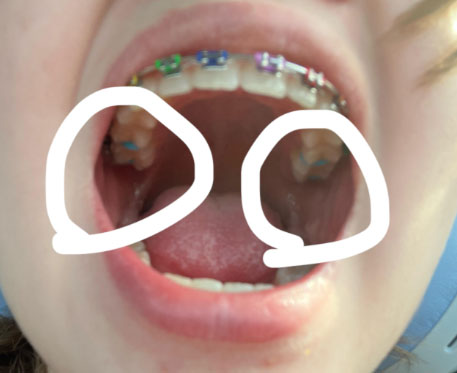
This image shows a patient wearing orthodontic braces with bilateral soft-tissue irritation on the inner cheeks, clearly marked on both sides. The redness and swelling correspond to areas where the cheeks repeatedly contact brackets and wires, indicating mechanical irritation from orthodontic appliances.
Scale All Teeth
-
Upper teeth with orthodontic brackets present
-
Brackets and archwire visible across the upper arch
-
No obvious tooth fractures or decay visible in this image
-
Primary concern involves soft tissue, not tooth structure
Full Analysis and Diagnosis
Clinical Findings
-
Red and inflamed inner cheek tissue on both sides
-
Mild swelling near bracket contact points
-
No visible pus or active bleeding
-
Symmetrical irritation pattern
Interpretation
-
Findings are consistent with brace-induced cheek irritation
-
Repetitive friction from brackets and wires
-
Soft tissue compressed during chewing and speaking
-
Common during early stages of orthodontic treatment or after adjustments
Probable Diagnosis
-
Orthodontic appliance–related mucosal irritation
-
Early traumatic cheek lesions
-
Localized inflammatory response
(Clinical confirmation recommended.)
Deep Examination
Soft Tissue Assessment
-
Superficial mucosal inflammation
-
Tissue integrity mildly compromised
-
No signs of deep infection at this stage
-
Risk of ulcer formation if friction continues
Appliance Assessment
-
Brackets positioned close to cheek tissue
-
Possible sharp edges or wire ends
-
Protective measures likely needed
Time Frame to Heal
With Proper Care
-
Pain reduction: 2–5 days
-
Visible healing: 7–14 days
-
Full mucosal recovery: 2–3 weeks
Without Intervention
-
Development of painful mouth ulcers
-
Increased swelling and discomfort
-
Secondary infection risk
-
Difficulty eating and speaking
-
Orthodontic treatment discomfort increases
Process to Execute (14-Day Window)
Days 1–3
-
Orthodontic evaluation
-
Identify brackets causing friction
-
Apply orthodontic wax
-
Advise gentle oral hygiene
Days 4–7
-
Adjust or smooth offending brackets or wires
-
Continue protective wax use
-
Monitor tissue response
Days 8–14
-
Confirm tissue healing
-
Reinforce preventive measures
-
Continue orthodontic treatment safely
Issues That Will Scale Up If Untreated
-
Chronic cheek ulcers
-
Increased oral pain
-
Risk of infection
-
Eating and speech difficulties
-
Reduced patient compliance with braces
Clinical Comments
Inner cheek irritation is a common and manageable side effect of braces, especially in younger patients. Early protection and appliance adjustment usually resolve symptoms quickly. Persistent redness or pain should always be evaluated.
Find a Dental Clinic Near You
Search for a dental clinic using our directory:
https://cebudentalimplants.com/map-dental-clinic
Related Clinical Cases
Patients with lower front gum inflammation may also experience tartar buildup, periodontal disease, gum abscesses, or tooth decay. Explore these related clinical case studies.



Other topics:
Other Dental Clinic
 |
 |
 |
 |