Dentures That Feel Natural, Look Beautiful.

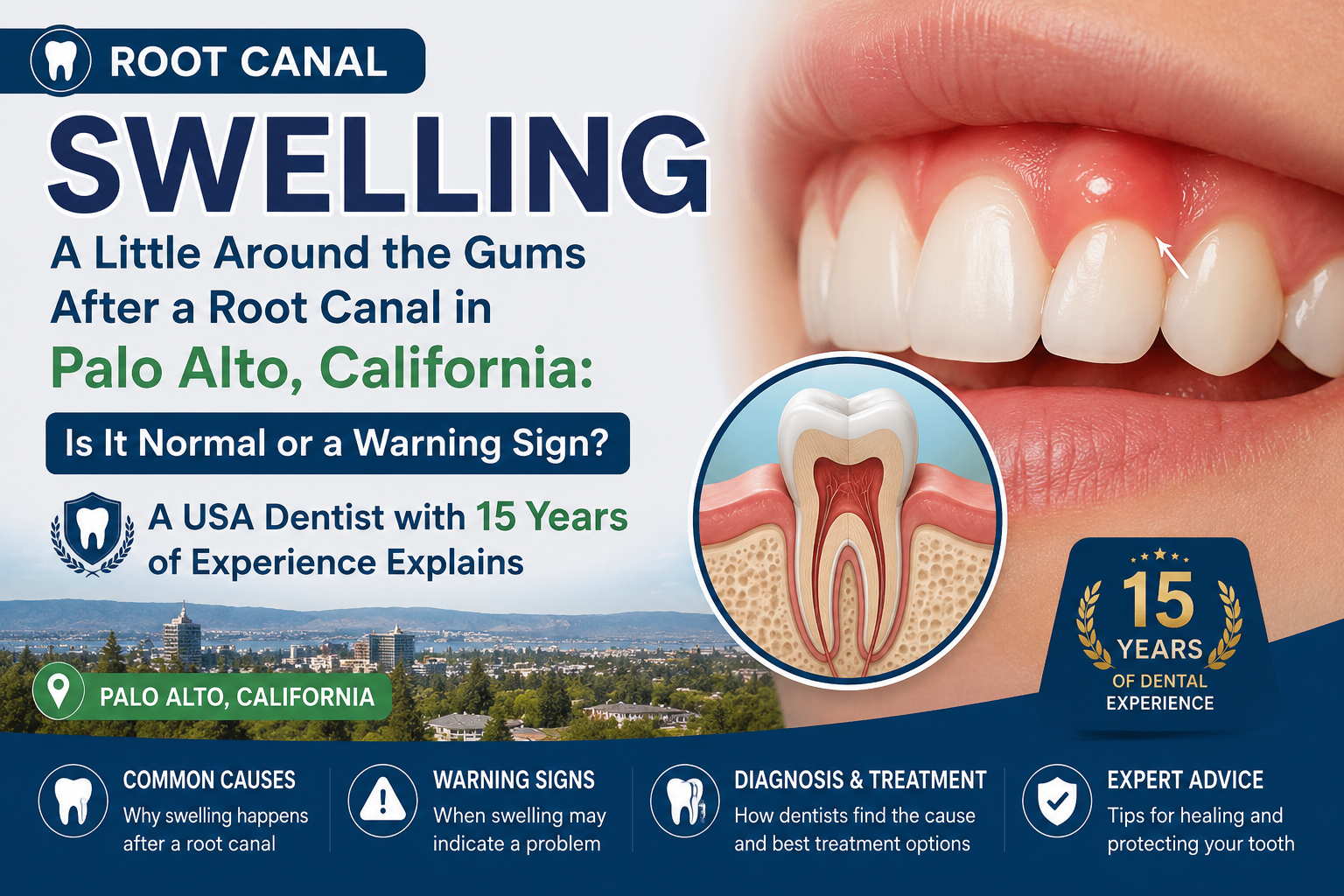
Swelling a Little Around the Gums After a Root Canal in Palo Alto, California: Is It Normal or a Warning Sign? A USA Dentist with 15 Years of Experience Explains
Language :
One of the most common questions patients ask after a root canal treatment is:
“Doctor, I have a little swelling around my gums. Is this normal, or should I be worried?”
As a dentist practicing in the United States for more than 15 years, I hear this concern frequently from patients in Palo Alto and throughout California. The answer depends on several factors, including when the swelling appeared, how severe it is, whether pain is present, and what the underlying condition of the tooth was before treatment.
A small amount of gum swelling after a root canal can be completely normal during the healing process. However, in some cases, swelling may indicate an infection, a missed canal, a root fracture, or another complication that requires immediate attention.
Understanding the difference between normal healing and a developing problem can help save your tooth and prevent more serious complications.
In this guide, I will explain:
- Why gum swelling happens after a root canal
- What normal healing looks like
- Warning signs that require urgent dental care
- Worst-case scenarios that can occur
- How dentists diagnose the cause
- Treatment options available in Palo Alto, California
- Expert advice for protecting your tooth long-term
Understanding What Happens During a Root Canal
A root canal is performed when the nerve and blood supply inside a tooth become infected or severely inflamed.
Common causes include:
- Deep tooth decay
- Cracked teeth
- Large fillings
- Dental trauma
- Repeated dental procedures
During treatment, the dentist:
- Removes infected tissue
- Cleans the root canals
- Disinfects the inside of the tooth
- Fills the canals with a special material
- Seals the tooth against future infection
Although the infection inside the tooth is removed, the tissues surrounding the root need time to heal.
This healing response can sometimes produce mild swelling.
Is a Little Gum Swelling Normal After a Root Canal?
In many cases, yes.
A small amount of localized swelling around the gums may occur because:
- The surrounding tissues were already inflamed before treatment
- Instruments used during treatment can irritate tissues near the root tip
- The body's immune system is actively healing the area
Patients often describe:
- Slight puffiness
- Mild tenderness
- Sensitivity when touching the gums
- Minor discomfort when chewing
These symptoms often improve gradually within several days.
If swelling is small and continues improving daily, it is usually part of normal healing.
Typical Healing Timeline
First 24 Hours
Patients may experience:
- Mild soreness
- Tender gums
- Slight swelling
- Pressure sensation
This is generally normal.
Days 2–3
Inflammation may temporarily peak.
Patients may notice:
- Slight gum puffiness
- Mild sensitivity when biting
- Tenderness around the treated tooth
This period often worries patients, but healing is still occurring.
Days 4–7
Most symptoms should begin decreasing.
Signs of improvement include:
- Reduced swelling
- Less tenderness
- Better chewing comfort
Two Weeks
Most healthy patients experience significant improvement.
The tooth should feel increasingly normal.
Any swelling that persists or worsens beyond this period deserves professional evaluation.
Why Swelling Can Occur Even After a Successful Root Canal
Many patients assume that once the root canal is completed, all infection immediately disappears.
Unfortunately, healing does not happen instantly.
Imagine removing a splinter from your finger.
Even after the splinter is gone, the tissue remains inflamed and needs time to recover.
The same principle applies to root canal treatment.
The body's immune system continues repairing:
- Bone damage
- Gum inflammation
- Ligament injuries around the tooth
This healing process can produce temporary swelling.
Signs That Swelling May Not Be Normal
Certain symptoms suggest a complication rather than routine healing.
Contact your dentist immediately if you experience:
- Increasing swelling
- Severe throbbing pain
- Fever
- Facial swelling
- Difficulty swallowing
- Difficulty breathing
- Bad taste in your mouth
- Drainage of pus
- Swelling extending into the cheek
These symptoms often indicate active infection.
Diagnosing the Cause of Swelling
A thorough dental examination is essential.
As dentists, we do not simply look at the swelling.
We investigate the entire tooth and surrounding structures.
Clinical Examination
Your dentist may check:
- Gum condition
- Bite pressure
- Tooth mobility
- Presence of cracks
- Sinus tracts
- Tenderness around the root
These findings help narrow the diagnosis.
Dental X-Rays
X-rays help reveal:
- Hidden infection
- Bone loss
- Missed canals
- Root fractures
- Failed root canal fillings
Many serious problems can only be detected through imaging.
3D CBCT Scan
For complex cases, a Cone Beam CT scan may be recommended.
A CBCT provides detailed three-dimensional images of:
- Root anatomy
- Hidden canals
- Bone destruction
- Fractures
- Abscesses
This technology has dramatically improved diagnosis in modern endodontics.
Common Causes of Persistent Swelling After a Root Canal
1. Residual Infection
The tooth may have had a severe infection before treatment.
Even when the root canal is properly performed, bacteria can remain in surrounding tissues for some time.
The immune system gradually clears these bacteria.
Sometimes healing takes several weeks or months.
2. Missed Canal
One of the most common causes of root canal failure is a missed canal.
Some teeth contain:
- Extra canals
- Curved canals
- Hidden anatomy
If bacteria remain inside an untreated canal, infection can continue.
Patients may develop:
- Persistent swelling
- Gum bumps
- Recurrent pain
Retreatment is often necessary.
3. Root Fracture
A cracked root is one of the most challenging situations in dentistry.
Symptoms may include:
- Swelling that comes and goes
- Pain while chewing
- Localized gum inflammation
Unfortunately, root fractures often have poor long-term outcomes.
4. Reinfection
A root canal can become reinfected if:
- A crown becomes loose
- A filling leaks
- Tooth structure breaks
Bacteria can re-enter the tooth and restart the infection process.
5. Overloaded Bite
Sometimes the root canal itself is successful.
However, the tooth may be hitting too hard when chewing.
Excessive bite pressure can create:
- Gum tenderness
- Swelling
- Sensitivity
A simple bite adjustment may solve the problem.
The Gum Pimple: A Major Warning Sign
Many patients notice a small bump on the gums.
This is often called:
- Gum boil
- Dental abscess
- Fistula
- Drainage tract
The bump may:
- Appear and disappear
- Release fluid
- Cause a bad taste
This is not normal healing.
It usually indicates an ongoing infection requiring treatment.
Worst-Case Scenario #1: Spreading Dental Infection
Although uncommon, untreated infection can spread beyond the tooth.
The infection may extend into:
- Facial spaces
- Jawbone
- Sinuses
- Neck tissues
Patients may develop:
- Significant swelling
- Fever
- Facial asymmetry
This situation requires immediate care.
Worst-Case Scenario #2: Bone Loss Around the Tooth
Chronic infection can slowly destroy supporting bone.
Over time:
- The tooth becomes weaker
- Mobility develops
- Long-term prognosis worsens
Early diagnosis significantly improves treatment success.
Worst-Case Scenario #3: Root Fracture Requiring Extraction
A vertical root fracture often cannot be repaired.
The tooth may ultimately require:
- Extraction
- Bone grafting
- Implant placement
This is one reason prompt evaluation is important whenever swelling persists.
Worst-Case Scenario #4: Deep Facial Cellulitis
Severe infections can spread through soft tissues.
Symptoms include:
- Severe facial swelling
- Fever
- Difficulty opening the mouth
- Difficulty swallowing
This condition may require:
- Emergency treatment
- IV antibiotics
- Hospital care
Fortunately, early dental intervention usually prevents such outcomes.
Could the Crown Be Causing the Problem?
Yes.
A crown placed after root canal treatment is essential for many teeth.
However, problems may occur if:
- The crown does not fit properly
- Margins leak
- The crown becomes loose
Bacteria can enter beneath the restoration and cause recurrent infection.
Regular dental examinations help identify these issues early.
How Dentists Treat Swelling After a Root Canal
Treatment depends on the diagnosis.
Observation
For mild healing-related swelling, monitoring may be appropriate.
Patients are advised to:
- Follow oral hygiene instructions
- Avoid chewing hard foods
- Attend follow-up appointments
Bite Adjustment
If chewing forces are contributing to inflammation, adjusting the bite can provide rapid relief.
Many patients improve within days.
Antibiotics
Antibiotics are not routinely required after root canal treatment.
However, they may be prescribed when:
- Active infection exists
- Facial swelling develops
- Fever is present
Antibiotics alone do not fix the source of infection.
The tooth itself must still be treated.
Root Canal Retreatment
When infection remains inside the canals, retreatment may be recommended.
The dentist removes:
- Existing filling material
- Remaining bacteria
- Debris
The canals are then disinfected and sealed again.
Apicoectomy
Sometimes infection persists near the root tip despite a good root canal.
An apicoectomy may be performed.
This microsurgical procedure involves:
- Removing the infected root tip
- Cleaning surrounding tissue
- Sealing the root end
Many teeth can be saved using this approach.
Extraction
If the tooth cannot be predictably saved, extraction may be the best solution.
Reasons include:
- Vertical root fracture
- Severe bone loss
- Non-restorable tooth structure
Replacement options may include:
- Dental implants
- Bridges
- Partial dentures
What Patients Should Do at Home
If you have mild swelling after a root canal:
Maintain Excellent Oral Hygiene
Keep the area clean.
Brush gently around the affected tooth.
Avoid Hard Foods
Avoid:
- Ice
- Nuts
- Hard candy
- Popcorn kernels
These foods can stress the healing tooth.
Use Warm Saltwater Rinses
Warm saltwater rinses may help soothe inflamed tissues.
Many dentists recommend:
- One teaspoon salt
- One glass warm water
Rinse several times daily.
Take Medications as Directed
Follow your dentist's instructions carefully.
Never stop prescribed medications without professional guidance.
Monitor Changes
Ask yourself:
- Is swelling improving?
- Is pain decreasing?
- Is chewing becoming easier?
Improvement generally indicates healing.
Worsening symptoms require evaluation.
When Should You Call Your Dentist Immediately?
Contact your dental office if:
- Swelling suddenly increases
- You develop fever
- Pain becomes severe
- Pus appears
- A gum bump forms
- Facial swelling develops
- You have difficulty swallowing
These symptoms should never be ignored.
Long-Term Success After Root Canal Treatment
Modern root canal therapy has a very high success rate.
Many treated teeth last:
- 10 years
- 20 years
- Even a lifetime
Success depends on:
- Proper diagnosis
- Thorough cleaning of canals
- Quality restoration
- Good oral hygiene
- Regular dental checkups
Patients who address swelling early often achieve excellent long-term outcomes.
Expert USA Dentist Advice: Don't Panic, But Don't Ignore It
After treating root canal patients for more than 15 years, my advice is straightforward:
A little swelling around the gums after a root canal is often part of normal healing, especially during the first few days. The body is repairing tissue that may have been infected or inflamed for months before treatment.
However, swelling should gradually improve—not worsen.
If swelling persists, increases, repeatedly returns, or is accompanied by pain, drainage, fever, or facial swelling, professional evaluation is essential. The sooner the cause is identified, the greater the chance of saving the tooth and avoiding more extensive treatment.
For patients in Palo Alto and throughout California, the key is understanding that root canal therapy removes infection from inside the tooth, but healing of the surrounding bone and gums takes time. Careful monitoring, good communication with your dentist, and timely follow-up appointments provide the best path toward complete recovery.
In most cases, a successfully treated root canal tooth can continue functioning comfortably for many years. The goal is not simply eliminating pain—it is preserving your natural tooth, maintaining your bite, and protecting your long-term oral health.
Can tooth extraction cause infection? Mild inflammation is normal, but increasing swelling, fever, or severe pain may indicate infection. Learn more about post-extraction infection warning signs in this detailed guide.
Book a consultation with our Cebu dental specialists for proper evaluation and care.
Ready to get expert guidance?
If you’re experiencing severe pain or delayed healing, book a consultation with our Cebu dental specialists to get proper evaluation and care.
Consultation or contact page .
Book a Consultation
For severe discomfort or delayed healing, book a consultation with our Cebu dental specialists today.
Looking for a dentist? Browse our Cebu dental directory to find trusted clinics near you.
Medical Review and Clinical Basis
This article is based on clinical dental guidelines and real patient recovery patterns observed after tooth extraction procedures. The information reflects common post-extraction healing stages, including normal clot formation, gum tissue repair, and signs of possible complications such as dry socket or infection.
While mild discomfort is expected after a dental extraction, worsening pain after Day 3, bad odor, exposed bone, or spreading pain may require professional evaluation. These symptoms are consistent with known post-extraction complications described in standard dental practice.
About Cebu Dental Implants
Cebu Dental Implants provides comprehensive tooth extraction, surgical procedures, and dental implant services in the Philippines. Our team evaluates post-extraction healing, manages complications such as dry socket, and advises patients on proper aftercare to prevent infection and delayed healing.
If you experience severe pain or unusual symptoms after extraction, early professional assessment is recommended to prevent further complications.
Important Medical Disclaimer
This content is for educational purposes only and does not replace professional dental diagnosis. Every patient heals differently. If symptoms worsen or do not improve within a few days, consult a licensed dentist for proper evaluation and treatment.
Author
This article was prepared by the Cebu Dental Implants content team in consultation with licensed dental professionals experienced in tooth extraction and implant procedures.
Related Clinical Cases
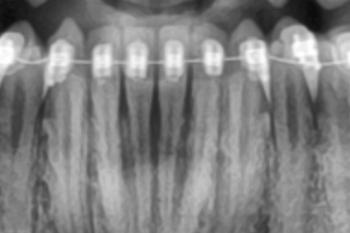
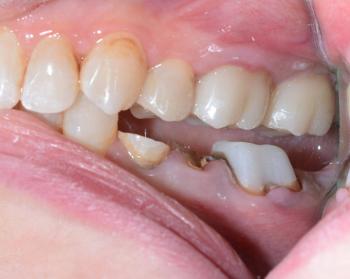
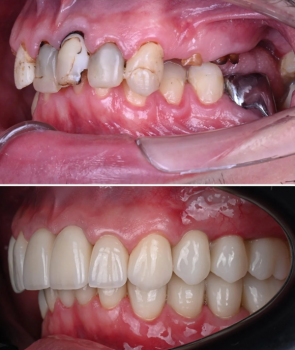
Patients with lower front gum inflammation may also experience tartar buildup, periodontal disease, gum abscesses, or tooth decay. Explore these related clinical case studies.
Other topics:
Other Dental Clinic