Modern Dentistry, Timeless Smiles.

I Have a Fever After Root Canal Treatment in Maryland, USA: A USA Dentist Explains What It Means, the Risks, and How a Skilled Dentist Can Save Your Tooth
Language :
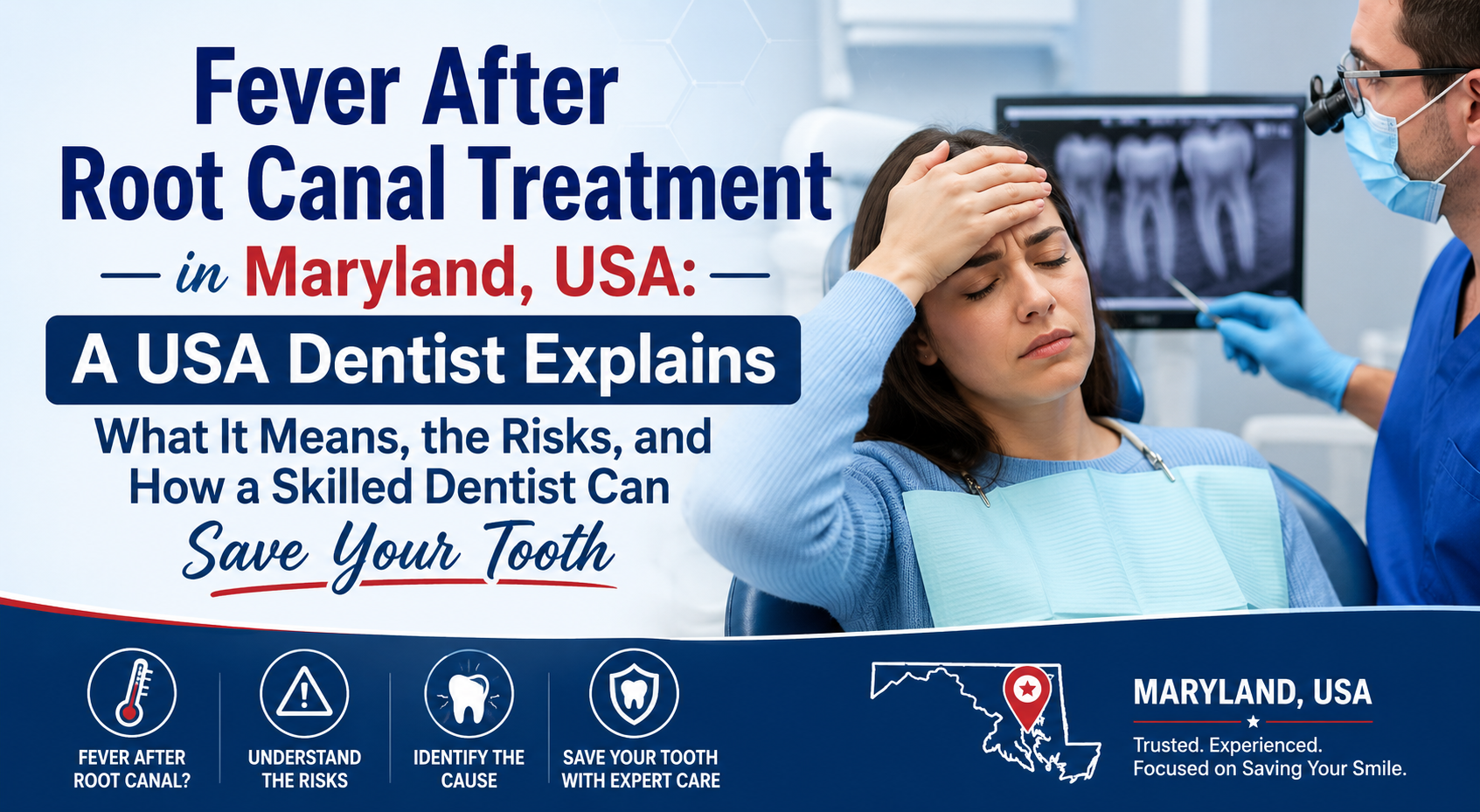
A root canal treatment is designed to eliminate infection, relieve pain, and save a natural tooth. Most patients in Maryland recover without major complications and begin feeling better within a few days. However, some patients become alarmed when they develop a fever after a root canal procedure.
A fever after root canal treatment can range from a normal temporary inflammatory response to a warning sign of a serious infection requiring immediate attention.
As an American dental professional, I often hear patients ask:
"Doctor, I had a root canal yesterday, and now I have a fever. Is this normal?"
The answer depends on several factors, including the severity of the original infection, the body's immune response, and whether bacteria remain trapped inside or around the tooth.
Understanding why fever occurs after root canal treatment can help patients seek timely care and avoid potentially dangerous complications.
What Is a Root Canal Treatment?
A root canal is a procedure performed to remove infected or inflamed tissue from inside a tooth.
Inside every tooth is a soft tissue called the pulp, which contains:
- Blood vessels
- Nerves
- Connective tissue
When bacteria invade the pulp due to:
- Deep decay cannot bee seen unless they are x-ray
- Cracked teeth easily enter bacteria causing unseen decay
- Trauma
- Large fillings
- Repeated dental procedures
the pulp can become infected and die.
The purpose of root canal treatment is to:
- Remove infected tissue help you keep better teeth
- Clean the root canals takes time and need schedule until finally complate
- Disinfect the tooth damage other teeth beside
- Seal the canals protect from any bacteria to enter the opening canals
- Preserve the natural tooth
In many cases, root canal treatment successfully eliminates infection and allows patients to keep their teeth for decades.
Is Fever Normal After a Root Canal?
A mild temperature elevation during the first 24 to 48 hours can occasionally occur.
This may happen because:
- The body is responding to inflammation
- The immune system is clearing bacteria
- Existing infection was severe before treatment
However, a true fever is not considered a routine symptom after root canal treatment.
If your temperature rises above:
- 100.4°F (38°C)
- Continues increasing
- Lasts more than 24 hours
you should contact your dentist immediately.
Common Causes of Fever After Root Canal Treatment
1. Pre-Existing Infection
Many patients already have a significant infection before treatment.
Examples include:
- Dental abscesses
- Facial swelling
- Severe tooth pain
- Bone infections
Even after treatment begins, the body may continue fighting infection for several days.
Symptoms may include:
- Fever
- Fatigue
- Tender lymph nodes
- Mild swelling
2. Acute Apical Abscess
An abscess develops when bacteria accumulate around the root tip.
Symptoms often include:
- Severe throbbing pain
- Swelling
- Fever
- Difficulty chewing
In some situations, pressure builds rapidly inside the jawbone.
Without treatment, the infection may spread beyond the tooth.
3. Residual Bacteria
Root canals are extremely small and complex.
Some teeth contain:
- Hidden canals
- Curved canals
- Accessory canals
Bacteria may remain despite careful cleaning.
These lingering bacteria can trigger continued infection and fever.
4. Missed Canal
One of the leading causes of post-treatment infection is a missed canal.
Certain teeth may have:
- Four canals
- Five canals
- Six canals
- Even more anatomical variations
If one canal is not identified and disinfected, bacteria can continue multiplying.
The result may be:
- Persistent pain
- Swelling
- Fever
- Failure of treatment
5. Reinfection
Sometimes bacteria re-enter a treated tooth.
This can occur due to:
- Cracked fillings
- Delayed crowns
- Broken restorations
- New decay
Once bacteria gain access, reinfection can develop rapidly.
6. Systemic Spread of Infection
In rare cases, infection escapes the tooth and enters surrounding tissues.
Potential spread may involve:
- Facial spaces
- Jawbone
- Sinuses
- Neck tissues
This is a dental emergency.
Symptoms may include:
- Fever
- Chills
- Facial swelling
- Difficulty swallowing
- Difficulty breathing
Immediate treatment is required.
Signs That Your Fever Requires Urgent Dental Attention
Contact your Maryland dentist immediately if you experience:
- Fever above 100.4°F
- Increasing facial swelling
- Severe throbbing pain
- Difficulty opening your mouth
- Difficulty swallowing
- Difficulty breathing
- Pus drainage
- Enlarged lymph nodes
These symptoms may indicate an active infection that requires professional intervention.
How Dentists Diagnose the Problem
A comprehensive examination usually includes:
Clinical Evaluation
The dentist checks:
- Swelling
- Gum condition
- Bite pressure
- Drainage
Digital X-Rays
Radiographs reveal:
- Bone destruction
- Missed infection
- Root abnormalities
Cone Beam CT Scan
Modern CBCT imaging provides a three-dimensional view of:
- Hidden canals
- Fractures
- Abscesses
- Bone loss
This technology often identifies problems that traditional X-rays cannot detect.
Potential Worst-Case Scenarios
While uncommon, untreated dental infections can become serious.
Facial Cellulitis
Bacteria spread into facial tissues.
Symptoms include:
- Fever
- Significant swelling
- Pain
- Redness
Hospital treatment may be necessary.
Osteomyelitis
Infection can enter the jawbone itself.
Symptoms include:
- Persistent fever
- Bone pain
- Swelling
- Delayed healing
Osteomyelitis may require extensive treatment.
Deep Space Infection
Infections may spread into deeper facial spaces.
These infections can threaten:
- Airways
- Vital structures
- Overall health
Emergency care becomes critical.
Tooth Loss
When infection destroys too much supporting bone, saving the tooth becomes increasingly difficult.
Delaying treatment greatly increases this risk.
How Dentists Treat Fever After Root Canal Therapy
Treatment depends on the underlying cause.
Antibiotics
When active infection exists, antibiotics may be prescribed.
Common goals include:
- Reducing bacterial load
- Preventing spread
- Supporting healing
Drainage of Infection
Abscesses sometimes require drainage.
Removing accumulated pus often provides rapid relief.
Root Canal Retreatment
If bacteria remain inside the tooth, retreatment may be recommended.
The dentist will:
- Remove previous filling material
- Re-clean canals
- Disinfect thoroughly
- Seal canals again
Many previously failing root canals can be saved this way.
Apicoectomy
When infection persists near the root tip, surgical treatment may be needed.
This procedure removes:
- The infected root tip
- Surrounding diseased tissue
The root is then sealed surgically.
Crown Replacement
If leakage is responsible, a defective crown or filling may need replacement.
A proper seal is essential for long-term success.
A Maryland Success Story: How a Skilled Dentist Saved a Tooth That Seemed Hopeless
Michael, a 47-year-old software engineer from Maryland, believed he was about to lose a molar that had undergone root canal treatment six months earlier.
Initially, the tooth felt better after treatment.
Then symptoms returned.
First came mild sensitivity.
Then swelling.
Then a fever of 101.5°F.
Within days, Michael developed significant discomfort while chewing.
His original dentist suspected extraction might be necessary.
Concerned about losing the tooth, Michael sought a second opinion from an experienced endodontic specialist.
Using advanced CBCT imaging, the specialist discovered a hidden canal that had been missed during the original procedure.
The untreated canal remained infected.
The infection had slowly expanded into surrounding bone.
The specialist recommended immediate retreatment.
During the procedure:
- Previous root filling material was removed.
- Hidden anatomy was identified.
- Advanced ultrasonic instruments located the missed canal.
- Powerful disinfecting solutions eliminated bacteria.
- The canals were carefully sealed.
Michael was also prescribed antibiotics.
Within several days:
- Fever disappeared.
- Swelling subsided.
- Pain decreased dramatically.
Six months later, follow-up imaging showed healthy bone regeneration around the tooth.
One year later, the tooth remained fully functional.
Today, Michael continues to enjoy normal chewing function without discomfort.
His case demonstrates that even severe infections can often be treated successfully when diagnosed early by a highly skilled dental professional.
How Maryland Patients Can Reduce the Risk of Infection
Follow these recommendations:
Take Medications as Directed
Complete prescribed antibiotics exactly as instructed.
Never stop early unless directed by your dentist.
Maintain Excellent Oral Hygiene
Brush twice daily.
Floss every day.
Use recommended antimicrobial rinses.
Attend Follow-Up Appointments
Regular monitoring allows early detection of complications.
Get Your Permanent Crown Promptly
A delayed crown increases the risk of bacterial leakage and reinfection.
Avoid Smoking
Smoking significantly impairs healing.
It also increases the risk of root canal failure.
Research consistently shows smokers experience higher rates of dental infection and tooth loss than non-smokers.
Why Saving the Natural Tooth Is Usually the Best Option
Modern dentistry emphasizes preservation whenever possible.
A successfully treated natural tooth offers:
- Natural chewing efficiency
- Better jawbone preservation
- Improved comfort
- Lower long-term costs
Even complicated cases can often be managed successfully with advanced endodontic techniques.
Frequently Asked Questions
Can fever occur after a root canal?
Yes. Mild temperature elevation may occur temporarily, but persistent fever requires evaluation.
How long should fever last?
Most patients should not experience prolonged fever. Symptoms lasting more than 24 to 48 hours should be assessed by a dentist.
Does fever mean the root canal failed?
Not always. However, it may indicate continuing infection that needs professional attention.
Should I go to the emergency room?
Seek emergency care immediately if fever is accompanied by:
- Difficulty breathing
- Difficulty swallowing
- Rapidly increasing swelling
Can a root canal tooth be saved after infection returns?
In many cases, yes. Retreatment, surgery, or other advanced procedures can successfully preserve the tooth.
Final Thoughts From a USA Dental Expert
If you develop a fever after root canal treatment in Maryland, do not ignore it. While some post-treatment discomfort is expected, fever may signal ongoing infection, a missed canal, reinfection, or another complication requiring prompt care.
The good news is that many seemingly hopeless teeth can still be rescued through modern diagnostic imaging, advanced endodontic techniques, and timely intervention. The earlier the problem is identified, the better the chance of preserving your natural tooth.
When treated by an experienced dentist or endodontic specialist, even severe infections that once would have required extraction can often be resolved successfully, allowing patients to keep their smiles healthy for many years to come.
Can tooth extraction cause infection? Mild inflammation is normal, but increasing swelling, fever, or severe pain may indicate infection. Learn more about post-extraction infection warning signs in this detailed guide.
Book a consultation with our Cebu dental specialists for proper evaluation and care.
Ready to get expert guidance?
If you’re experiencing severe pain or delayed healing, book a consultation with our Cebu dental specialists to get proper evaluation and care.
Consultation or contact page .
Book a Consultation
For severe discomfort or delayed healing, book a consultation with our Cebu dental specialists today.
Looking for a dentist? Browse our Cebu dental directory to find trusted clinics near you.
Medical Review and Clinical Basis
This article is based on clinical dental guidelines and real patient recovery patterns observed after tooth extraction procedures. The information reflects common post-extraction healing stages, including normal clot formation, gum tissue repair, and signs of possible complications such as dry socket or infection.
While mild discomfort is expected after a dental extraction, worsening pain after Day 3, bad odor, exposed bone, or spreading pain may require professional evaluation. These symptoms are consistent with known post-extraction complications described in standard dental practice.
About Cebu Dental Implants
Cebu Dental Implants provides comprehensive tooth extraction, surgical procedures, and dental implant services in the Philippines. Our team evaluates post-extraction healing, manages complications such as dry socket, and advises patients on proper aftercare to prevent infection and delayed healing.
If you experience severe pain or unusual symptoms after extraction, early professional assessment is recommended to prevent further complications.
Important Medical Disclaimer
This content is for educational purposes only and does not replace professional dental diagnosis. Every patient heals differently. If symptoms worsen or do not improve within a few days, consult a licensed dentist for proper evaluation and treatment.
Author
This article was prepared by the Cebu Dental Implants content team in consultation with licensed dental professionals experienced in tooth extraction and implant procedures.
Related Clinical Cases
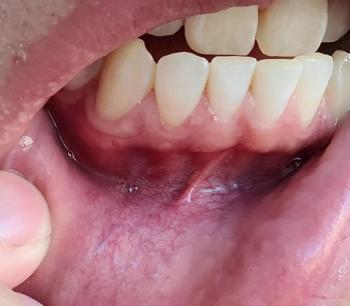
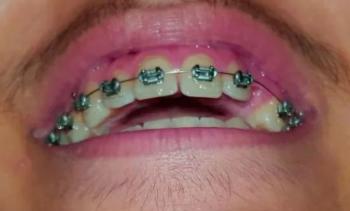
Patients with lower front gum inflammation may also experience tartar buildup, periodontal disease, gum abscesses, or tooth decay. Explore these related clinical case studies.


Other topics:
Other Dental Clinic