Healthy Teeth, Happy Life.

Dental Implants for Missing Front Teeth in California: Restoring Your Smile, Confidence, and Quality of Life
Language :
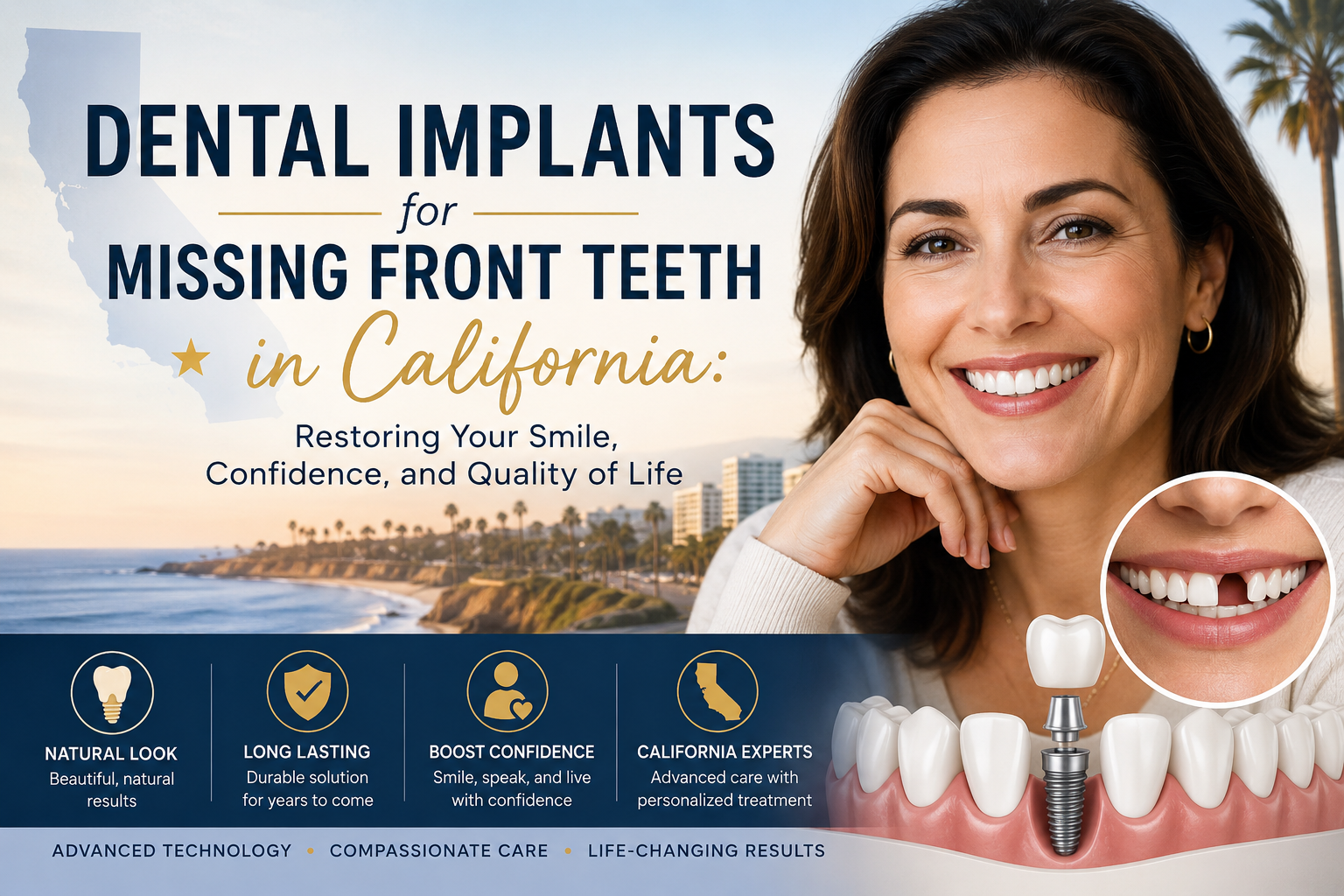
A California Patient's Story: The Day One Missing Tooth Changed Everything
For many people, losing a front tooth is more than a dental problem—it becomes an emotional crisis.
A patient from Santa Monica, California, learned this firsthand after a bicycle accident changed her life in a matter of seconds.
She was riding along the beachfront bike path on a sunny California afternoon when an unexpected collision caused her to fall forward. The impact fractured her upper front tooth beyond repair.
At first, she believed it was simply a cosmetic issue that could be fixed quickly.
She soon discovered otherwise.
The loss of a single front tooth affected nearly every aspect of her daily life.
"I stopped smiling in photographs," she explained during her consultation. "I covered my mouth whenever I laughed. At work, I became self-conscious speaking to clients face-to-face. It sounds dramatic, but I felt like I lost part of my identity."
What followed was a journey familiar to many Californians who experience front tooth loss due to accidents, sports injuries, failed dental treatments, or advanced gum disease.
After researching treatment options, she visited a California implant specialist who used advanced 3D imaging and digital treatment planning to evaluate her case.
The consultation revealed that she was an excellent candidate for a dental implant.
Several months later, she returned for her final appointment.
The result was remarkable.
Her replacement tooth blended seamlessly with her natural smile.
Friends, coworkers, and even family members could not identify which tooth had been replaced.
More importantly, her confidence returned.
Today she smiles naturally, laughs openly, and rarely thinks about the accident that once seemed devastating.
Her experience illustrates why dental implants have become the gold standard for replacing missing front teeth throughout California.
Why Missing a Front Tooth Has Such a Significant Impact
Not all missing teeth affect patients equally.
A missing molar in the back of the mouth may remain hidden from view, but a missing front tooth becomes immediately visible every time a person:
-
Smiles
-
Speaks
-
Eats
-
Laughs
-
Participates in social situations
-
Appears in photographs
-
Attends business meetings
The psychological effects can be substantial.
Speaking with Confidence
For many Californians, communication is a critical part of daily life.
Teachers stand in front of classrooms.
Sales professionals meet with clients.
Business owners negotiate contracts.
Healthcare providers educate patients.
Front teeth play an important role in pronunciation and speech clarity. Certain sounds, including "F," "V," "S," and "TH," rely on proper contact between the tongue, lips, and front teeth.
When a front tooth is missing, patients often become highly aware of how they speak. Some notice slight changes in pronunciation, while others become self-conscious about the visible gap whenever they open their mouths.
One patient from San Jose described it this way:
"I found myself speaking less during meetings because I was worried people were staring at the missing tooth instead of listening to what I was saying."
Over time, this hesitation can affect confidence both personally and professionally.
Enjoying Meals Without Embarrassment
Front teeth are designed to bite and tear food efficiently.
Simple activities such as eating an apple, biting into a sandwich, or enjoying a meal at a restaurant can become unexpectedly challenging after losing a front tooth.
Many patients report modifying their eating habits to avoid drawing attention to the gap in their smile.
In California's vibrant food culture, where dining experiences are often shared with family, friends, coworkers, and clients, this can become emotionally frustrating.
A patient from Orange County explained:
"I stopped ordering certain foods when eating with friends because I didn't want anyone noticing the missing tooth while I was taking a bite."
Dental implants restore normal biting function while helping patients feel comfortable eating in public again.
Laughing Without Covering Your Mouth
Laughter is one of the most natural expressions of happiness.
Unfortunately, many individuals who lose a front tooth develop the habit of covering their mouths whenever they laugh.
What starts as a temporary reaction often becomes an unconscious behavior.
Patients may:
- Smile less often
- Laugh less openly
- Avoid social gatherings
- Feel anxious in group settings
One California patient recalled:
"After losing my front tooth in a biking accident, I noticed I was constantly putting my hand in front of my mouth. I didn't even realize I was doing it until my wife pointed it out."
Restoring the missing tooth often allows patients to laugh naturally again without worrying about how they look.
Participating in Social Situations
California is known for its active and social lifestyle.
From beach gatherings and outdoor festivals to weddings, networking events, and community activities, social interactions are part of everyday life.
When a front tooth is missing, many patients begin withdrawing from these experiences.
Some avoid:
- Social events
- Dating opportunities
- Family celebrations
- Community gatherings
- Public speaking engagements
The emotional impact can be significant.
Research consistently shows that smile appearance influences self-esteem and social confidence.
A complete smile often helps patients feel more comfortable interacting with others and fully participating in life.
Appearing in Photographs Again
In today's digital world, photographs have become a permanent part of personal and professional life.
People regularly appear in:
- Family photos
- Social media posts
- Vacation pictures
- Professional headshots
- Company websites
- Marketing materials
When a front tooth is missing, many patients become reluctant to be photographed.
Some intentionally smile with their lips closed.
Others avoid pictures entirely.
A patient from Los Angeles shared:
"I started volunteering to take the pictures instead of being in them. Looking back, I realized I was missing important memories because I was embarrassed about my smile."
After receiving a dental implant, many patients report feeling comfortable in front of the camera once again.
Making Strong First Impressions During Business Meetings
California is home to some of the world's most competitive business environments.
From Silicon Valley technology companies to Los Angeles entertainment firms and San Diego healthcare organizations, professional interactions often begin with face-to-face communication.
A smile frequently forms part of a person's first impression.
Although people rarely judge intentionally, appearance can influence perceptions of confidence, professionalism, and credibility.
Many professionals who lose a front tooth report feeling less confident during:
- Job interviews
- Sales presentations
- Client consultations
- Networking events
- Executive meetings
One Silicon Valley executive explained:
"I was more concerned about people noticing the missing tooth than focusing on my presentation. Once the implant was completed, I felt like myself again."
For professionals whose careers depend on communication and personal interaction, restoring a missing front tooth can have a profound impact on confidence and performance.
More Than Replacing a Tooth
Dental implants for missing front teeth do much more than fill a gap in the smile.
They help restore:
- Confidence when speaking
- Comfort while eating
- Freedom to laugh naturally
- Participation in social activities
- Pride in photographs
- Professional self-assurance
For many California patients, the greatest benefit is not simply having a new tooth—it is regaining the confidence to fully engage with life without constantly thinking about their smile.
Many patients report:
-
Reduced self-confidence
-
Social anxiety
-
Reluctance to smile
-
Embarrassment in professional settings
-
Concerns about appearance
Beyond aesthetics, front teeth perform important functional roles.
They assist with:
-
Speech articulation
-
Biting food
-
Supporting the lips
-
Maintaining facial appearance
-
Preserving jawbone health
When a front tooth is lost, the consequences extend far beyond the visible gap.
The Clinical Reality of Front Tooth Loss
As implant dentists, we understand that replacing a front tooth is among the most technically demanding procedures in dentistry.
Unlike posterior teeth, front teeth occupy the most visible area of the smile.
Every millimeter matters.
The implant position, gum contour, bone support, crown shape, and smile symmetry must work together perfectly.
Even a minor deviation can affect the final esthetic outcome.
Research published by Singh and colleagues highlights the importance of preserving both hard and soft tissue structures when replacing anterior teeth.
Without intervention, tooth loss initiates a cascade of biological changes.
What Happens After a Front Tooth Is Lost?
Many patients assume the primary problem is simply the missing tooth.
The reality is far more complex.
Once a tooth is extracted or lost, the jawbone begins shrinking almost immediately.
This process is known as alveolar bone resorption.
The body recognizes that the tooth root is no longer present and begins removing bone that is no longer needed.
Over time, patients may experience:
-
Loss of bone width
-
Loss of bone height
-
Gum recession
-
Collapse of soft tissue contours
-
Changes in facial appearance
These changes are especially noticeable in the front of the mouth.
The longer a tooth remains missing, the greater the risk of esthetic complications.
This is one reason why implant specialists often recommend prompt evaluation following tooth loss.
Why California Dentists Prefer Dental Implants Over Bridges
Historically, fixed dental bridges represented the most common treatment for replacing a single missing tooth.
While bridges can still be effective in selected situations, dental implants provide significant advantages.
Traditional Dental Bridge Limitations
To support a bridge, dentists must reshape healthy neighboring teeth.
This process involves removing natural enamel and tooth structure from adjacent teeth.
Although effective, this approach permanently alters otherwise healthy teeth.
Potential long-term concerns include:
-
Increased decay risk
-
Future root canal treatment
-
Structural weakening
-
Additional maintenance requirements
Implant Advantages
Dental implants replace the missing tooth without affecting neighboring teeth.
Benefits include:
Bone Preservation
Implants stimulate the jawbone similarly to natural roots.
This helps maintain bone volume.
Independent Support
No adjacent teeth require modification.
Exceptional Longevity
Modern implants can last decades with proper maintenance.
Natural Appearance
Advanced materials allow restorations to closely replicate natural teeth.
Improved Function
Patients can bite, chew, and speak confidently.
For these reasons, implants are widely considered the preferred treatment for single front tooth replacement.
The Role of CBCT Technology in California Implant Dentistry
One of the most important advances in modern implant dentistry is Cone Beam Computed Tomography (CBCT).
Traditional dental X-rays provide only two-dimensional information.
CBCT technology produces highly detailed three-dimensional images of the patient's anatomy.
This allows dentists to evaluate:
-
Bone volume
-
Bone density
-
Root positions
-
Soft tissue relationships
-
Anatomical limitations
-
Implant placement possibilities
Today, CBCT imaging is considered an essential component of comprehensive implant planning.
What Sarah's CBCT Scan Revealed
The Santa Monica patient's CBCT scan provided critical information that could not be obtained through traditional X-rays alone.
Several important findings emerged.
Facial Bone Loss
The scan revealed early resorption of the facial bone plate.
This finding is common after traumatic tooth loss.
Without treatment, further collapse would likely occur.
Adequate Bone Height
Fortunately, vertical bone dimensions remained favorable.
This improved treatment predictability.
Healthy Adjacent Teeth
The neighboring teeth demonstrated excellent periodontal support and healthy root structures.
Favorable Implant Position
Digital planning software confirmed that an implant could be placed in an ideal restorative position.
These findings allowed the treatment team to proceed confidently.
Immediate Implant Placement: A Modern California Approach
One of the most exciting developments in implant dentistry is immediate implant placement.
Research by Esposito and colleagues demonstrates that carefully selected patients may benefit from implant placement immediately following extraction.
What Is Immediate Placement?
Rather than waiting several months after extraction, the implant is placed during the same surgical appointment.
Advantages may include:
-
Reduced treatment time
-
Fewer surgeries
-
Better tissue preservation
-
Improved patient convenience
Not every patient qualifies.
Successful immediate placement depends upon:
-
Adequate bone support
-
Absence of severe infection
-
Favorable anatomy
-
Excellent implant stability
When these conditions are present, treatment timelines can be significantly shortened.
Digital Guided Implant Surgery
The patient was particularly impressed by the technology used during her procedure.
Rather than relying solely on freehand placement, the implant specialist utilized digitally guided surgery.
This process combines:
-
CBCT imaging
-
Digital intraoral scanning
-
Virtual treatment planning
-
Computer-generated surgical guides
The implant is virtually placed on a computer before surgery ever begins.
A custom surgical guide then transfers that exact plan into the patient's mouth.
Benefits include:
-
Improved accuracy
-
Greater precision
-
Reduced surgical trauma
-
Enhanced esthetic outcomes
-
Increased patient confidence
For front tooth replacement, this level of precision is invaluable.
The Day of Surgery: What Patients Typically Experience
Many patients feel anxious before implant surgery.
In reality, most are surprised by how comfortable the procedure is.
The Santa Monica patient later remarked:
"I barely felt anything. I expected pain and discomfort, but the entire procedure was much easier than having my wisdom teeth removed."
Modern techniques often involve:
-
Local anesthesia
-
Minimally invasive surgery
-
Precise guided placement
-
Limited tissue disruption
Many patients require only over-the-counter pain medication following treatment.
The Importance of Temporary Teeth
One concern many patients share is whether they will leave the office with a visible gap.
In carefully selected cases, a temporary restoration can often be provided immediately.
Benefits include:
-
Immediate smile restoration
-
Improved confidence
-
Soft tissue support
-
Enhanced esthetic outcomes
The temporary tooth remains in place while healing occurs beneath the surface.
Understanding Osseointegration
The true success of dental implants depends upon a biological process called osseointegration.
During healing, the jawbone gradually bonds directly to the titanium implant surface.
This creates an exceptionally stable foundation.
Most patients require several months for complete integration.
During this period:
-
Bone matures around the implant
-
Stability increases
-
Long-term support develops
Once osseointegration is complete, the implant essentially functions as an artificial tooth root.
Creating the Final Front Tooth Crown
Replacing a front tooth is both a science and an art.
According to many California implant dentists, the crown phase often determines whether a result appears merely acceptable or truly exceptional.
Why Zirconia Crowns Are Popular
Modern zirconia restorations offer:
-
Outstanding strength
-
Excellent esthetics
-
Natural translucency
-
Long-term durability
Custom shading allows technicians to match surrounding teeth with remarkable precision.
Every characteristic is carefully considered:
-
Color
-
Shape
-
Texture
-
Surface anatomy
-
Light reflection
The goal is simple.
No one should be able to tell which tooth was replaced.
The Psychological Transformation After Front Tooth Implant Treatment
The most rewarding aspect of implant dentistry is often the emotional transformation that follows treatment.
Patients frequently describe:
-
Increased confidence
-
Improved self-esteem
-
Better social interactions
-
Greater comfort in professional settings
-
Renewed willingness to smile
As the treating California dentist explained:
"Replacing a front tooth is a balance of science and art. We spend countless hours planning every detail. When patients finally see their completed smile and smile without hesitation, that's when we know we've changed more than their teeth—we've improved their quality of life."
Are You a Candidate for Dental Implants for Missing Front Teeth in California?
Most healthy adults can be considered for implant treatment.
Ideal candidates generally have:
-
Good overall health
-
Healthy gums
-
Sufficient bone support
-
Commitment to oral hygiene
Even patients with bone loss may qualify through advanced bone grafting procedures.
The first step is a comprehensive evaluation utilizing modern diagnostic technology.
Final Thoughts: Restoring More Than a Tooth
Dental implants for missing front teeth represent one of the most life-changing treatments available in modern dentistry.
While the procedure replaces a missing tooth, the true impact often extends much further.
Patients regain:
-
Confidence
-
Function
-
Oral health
-
Facial support
-
Quality of life
Thanks to CBCT imaging, guided surgery, immediate placement techniques, and highly esthetic zirconia restorations, California patients now have access to treatment options that were unimaginable just a generation ago.
For many individuals, restoring a front tooth is not simply about filling a space in the smile.
It is about restoring the confidence to laugh, speak, smile, and engage fully with the world again.
Related Clinical Cases
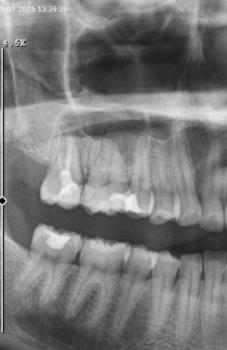
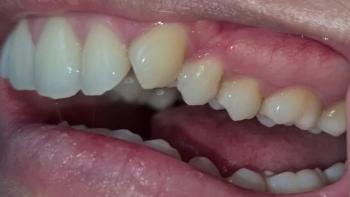
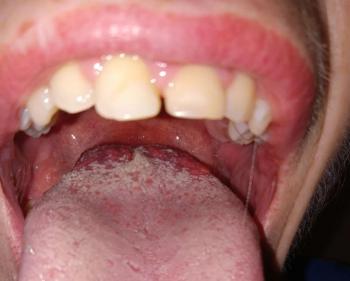
Patients with lower front gum inflammation may also experience tartar buildup, periodontal disease, gum abscesses, or tooth decay. Explore these related clinical case studies.




Other topics:
Other Dental Clinic