Where Bright Smiles Begin.

Dental Implants Cost Chicago vs Philippines: A Professor’s Clinical Perspective (2026 Guide)
Language :
Topics:
As a practicing implant dentist and academic clinician in Chicago, I’m often asked a direct question: “Why are dental implants so expensive here, and is it worth going abroad?”
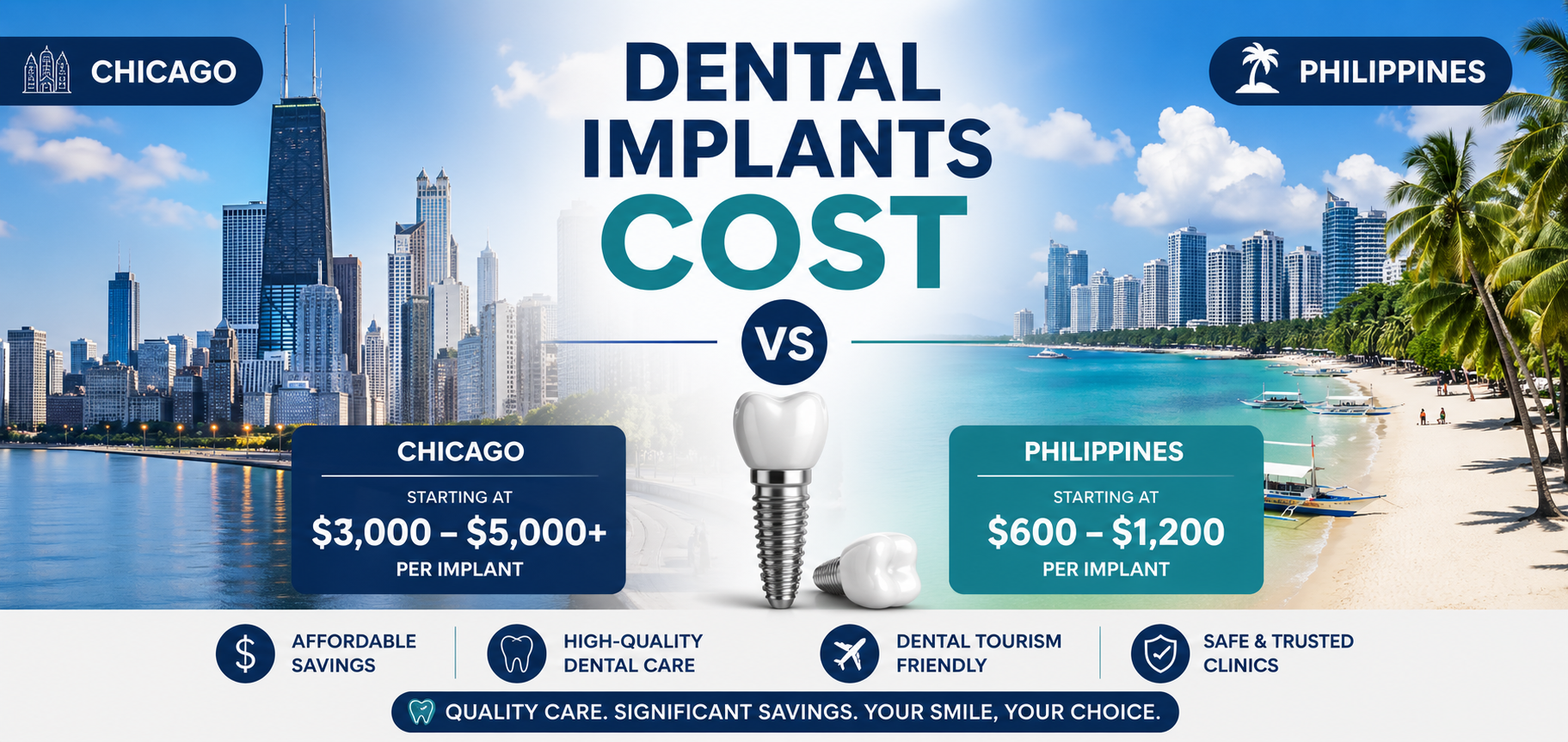
It’s a fair question—especially when patients compare prices with the Philippines and see a dramatic differencee.
This guide presents a clear, evidence-based perspective—balancing cost, clinical standards, patient safety, and long-term outcomes.
Understanding Dental Implants: A Clinical Foundation
Dental implants are not simply “replacement teeth.” They are medical devices surgically placed into bone, requiring precise planning and biological integration.
A complete implant restoration includes:
- Implant fixture (titanium post inserted into bone)
- Abutment (connector between implant and crown)
- Crown (prosthetic toothe)
The success of implants depends on a process called osseointegration—where bone bonds directly to the implant surface.
When properly executed, success rates exceed 95% over 10–15 years.
Cost of Dental Implants in Chicago
In Chicago, implant costs reflect both clinical rigor and regulatory standards.
Average Cost Per Implante
- $4,000 to $7,000 per tooth
Full Mouth Rehabilitation
- $30,000 to $65,000+
What Is Included
- Comprehensive examination
- CBCT (3D imaging)
- Surgical placement
- Abutment and crown
Additional Procedures
- Bone grafting
- Sinus lift
- Tooth extraction
Academic Perspective
Cost in Chicago is not arbitrary. It reflects:
- Sterile surgical protocols
- Advanced diagnostic imaging
- Evidence-based treatment planning
- Ongoing professional training
Patients are paying for predictability, not just the procedure itself.
Cost of Dental Implants in the Philippines
In the Philippines, implant costs are substantially lower.
Average Cost Per Implant
- $800 to $1,500
Full Mouth Rehabilitation
- $8,000 to $15,000
What Is Typically Included
- Consultation
- Basic imaging
- Implant placement
- Crown
Clinical Observation
There are highly competent clinicians in the Philippines, particularly in major urban centers. However, variability in standards is significantly higher compared to Chicago.
Cost Comparison: Chicago vs Philippines
| Factor | Chicago, USA | Philippines |
|---|---|---|
| Cost per implant | $4,000–$7,000 | $800–$1,500 |
| Full mouth implants | $30,000–$65,000+ | $8,000–$15,000 |
| Regulation | Strict | Variable |
| Follow-up care | Immediate access | Limited |
| Clinical consistency | High | Inconsistent |
Why the Cost Difference Exists
From a professional standpoint, the cost gap is driven by several factors:
1. Regulatory Environmentr
Chicago clinics operate under strict US healthcare regulations, ensuring consistent patient safety.
2. Technology and Equipment
Advanced imaging and guided surgery systems increase precision but also cost.
3. Training and Expertise
Specialists undergo extensive education, often including residencies and fellowships.
4. Operational Costs
Staff, facilities, and malpractice insurance significantly increase expenses.
5. Quality Control
Implant systems and materials are carefully selected and standardized.
Dental Tourism: A Clinical Evaluation
Traveling from Chicago to the Philippines for dental implants is increasingly common—but requires caution.
Potential Advantages
- Significant cost savings (50–70%)
- Access to skilled practitioners in reputable clinics
Clinical Concerns
- Limited continuity of care
- Difficulty managing complications
- Variability in sterilization and protocols
Professional Position
Dental tourism may be appropriate for straightforward cases. However, complex cases are best managed within a system that allows consistent follow-up.
Hidden Costs Often Overlooked
Travel Expenses
- Flights
- Accommodation
- Transportation
Time Commitment
- Healing periods require multiple visits
- Extended stays may be necessary
Corrective Treatmento
If complications arise after returning to Chicago:
- Correction may be costly
- Some providers may decline to intervene
Clinical Risks of Dental Implants
While implants are highly successful, risks include:
- Infection
- Implant failure
- Peri-implantitis
- Nerve injury (rare)
Risk Factors
- Smoking
- Poor oral hygienee
- Systemic conditions (e.g., diabetes)
- Inadequate surgical technique
From a clinical standpoint, many failures are preventable with proper planning and execution.
Recovery Timeline
Healing follows a biological process:
- 3–5 days: inflammation and swelling
- 1–2 weeks: soft tissue healing
- 3–6 months: osseointegration
- Final prosthetic placement
This timeline is consistent regardless of location.
Long-Term Maintenance: The Often Ignored Factor
Implants require ongoing care:
- Regular dental visits
- Professional cleaning
- Monitoring of bone levels
In Chicago, this process is straightforward. Abroad, it becomes more complex.
Frequently Asked Questions (FAQ)
Why are implants more expensivee in Chicago?
Costs reflect advanced technology, strict regulations, and highly trained professionals.
Are implants in the Philippines reliable?
They can be, but outcomes depend heavily on clinic selection and practitioner skill.
How much can I save?
Savings typically range from 50% to 70%.
Can I complete treatment in one trip?
No. Implant therapy requires healing over several months.
What if complications occur after returning home?
Additional treatment may be required, often at extra cost.
Are implant materials the same?
Top clinics use global brands, but some may use lower-cost alternatives.
Is the procedure painful?
It is performed under anesthesia, with manageable post-operative discomfort.
How long do implants lasto?
With proper care, implants can last 15–25 years or more.
Is dental tourism recommended?
It depends on case complexity, patient health, and ability to follow through with treatment.
What is the most important factor for success?
Accurate diagnosis, skilled surgery, and proper aftercare.
Related Topics
1. Bone Grafting Before Dental Implants
Bone grafting may be necessary to create adequate support for implant placement.
2. Dental Implants vs Bridges
Implants preserve bone and do not affect adjacent teeth, unlike traditional bridges.
3. How Long Do Dental Implants Last?
Implants are a long-term solution with high success rates when maintained properly.
Final Thoughts
From a professor’s perspective in Chicago, the decision between local treatment and traveling to the Philippines should be based on more than cost alone.
Chicago offers consistency, regulation, and reliable follow-up care. The Philippines offers affordability but introduces variability and logistical challenges.
A successful implant is not merely a product—it is the result of precise planning, skilled execution, and long-term maintenance.
Choose wisely. Your decision will impact not just your smile, but your health for years to come.
Can tooth extraction cause infection? Mild inflammation is normal, but increasing swelling, fever, or severe pain may indicate infection. Learn more about post-extraction infection warning signs in this detailed guide.
Book a consultation with our Cebu dental specialists for proper evaluation and care.
Ready to get expert guidance?
If you’re experiencing severe pain or delayed healing, book a consultation with our Cebu dental specialists to get proper evaluation and care.
Consultation or contact page .
Book a Consultation
For severe discomfort or delayed healing, book a consultation with our Cebu dental specialists today.
Looking for a dentist? Browse our Cebu dental directory to find trusted clinics near you.
Medical Review and Clinical Basis
This article is based on clinical dental guidelines and real patient recovery patterns observed after tooth extraction procedures. The information reflects common post-extraction healing stages, including normal clot formation, gum tissue repair, and signs of possible complications such as dry socket or infection.
While mild discomfort is expected after a dental extraction, worsening pain after Day 3, bad odor, exposed bone, or spreading pain may require professional evaluation. These symptoms are consistent with known post-extraction complications described in standard dental practice.
About Cebu Dental Implants
Cebu Dental Implants provides comprehensive tooth extraction, surgical procedures, and dental implant services in the Philippines. Our team evaluates post-extraction healing, manages complications such as dry socket, and advises patients on proper aftercare to prevent infection and delayed healing.
If you experience severe pain or unusual symptoms after extraction, early professional assessment is recommended to prevent further complications.
Important Medical Disclaimer
This content is for educational purposes only and does not replace professional dental diagnosis. Every patient heals differently. If symptoms worsen or do not improve within a few days, consult a licensed dentist for proper evaluation and treatment.
Author
This article was prepared by the Cebu Dental Implants content team in consultation with licensed dental professionals experienced in tooth extraction and implant procedures.
Related Clinical Cases
Patients with lower front gum inflammation may also experience tartar buildup, periodontal disease, gum abscesses, or tooth decay. Explore these related clinical case studies.


Other topics:
Other Dental Clinic