Building Confidence One Smile at a Time.

Is Your Anger Hurting Your Teeth? The Science of Stress and Dental Pain
Language :

The Man Who Bit Down on Anger: A NYC Tale of Stress and Toothache
In the heart of Manhattan, where the city’s pulse beats in honks and hurried footsteps, lived Leo. A project manager in a high-stakes tech firm, Leo was known for his sharp mind—and his short fuse. Deadlines, traffic, a delayed subway car—each sparked a low burn that he carried clenched in his jaw. His anger wasn’t explosive shouting; it was a silent, seething pressure cooker, and his teeth were bearing the brunt of the steam.
It started subtly. A dull ache in his molars after a tense budget meeting. A sensitivity to cold when he replayed an argument in his head on the commute home. Leo did what many New Yorkers do: he powered through. He chewed gum aggressively, ground his teeth over sleepless nights, and ignored the warning signs, attributing the pain to "probably just a cavity."
But the pain escalated from a whisper to a scream—a severe, throbbing toothache that shot through his jaw like a lightning bolt, making it impossible to focus or even eat. In his dentist’s modern, quiet office on the Upper East Side, the diagnosis was clear, but the root cause was more than just bacterial.
"Leo," Dr. Chen said gently, pointing to the digital X-ray, "You have significant wear and multiple cracks in your enamel, and advanced gum recession. But the decay I see isn't just from sugar. Do you grind or clench your teeth?"
Leo admitted he did, especially at night. "It’s the stress," he sighed. "The constant pressure."
Dr. Chen nodded. "What you're describing is more than an oral habit—it's a physical manifestation of mismanaged anger and chronic stress. Your body is literally attacking your teeth."
The Invisible Attack: How Anger Erodes Your Smile
Leo’s story is a stark example of the powerful, often overlooked, mind-mouth connection. Research reveals a disturbing chain reaction:
-
The Clench & Grind (Bruxism): Anger and stress often manifest as jaw clenching during the day and unconscious teeth grinding (bruxism) at night. This exerts enormous, unnatural force on teeth, leading to micro-cracks, worn enamel, and even fractured teeth.
-
The Immune System Shutdown: Dr. Chen shared a crucial insight: "Studies show that recalling an angry memory for just five minutes can weaken your immune defenses for hours." When Leo was stewing, his body flooded with cortisol. This "stress hormone" temporarily suppresses the immune system, including in the mouth.
-
The Saliva Sabotage: This cortisol surge can cause a significant drop in Immunoglobulin A (IgA), a key antibody in saliva that acts as the mouth’s first line of defense against cavity-causing bacteria and gum disease. This protective drop can last up to five hours, leaving teeth and gums vulnerable to attack every time anger takes hold.
For Leo, his chronic anger wasn't just an emotion—it was creating a perfect storm: a weakened oral immune system unable to fight bacteria, combined with physical damage from grinding. The result was rapid decay and severe inflammation that no amount of brushing could fix.
The Prescription: Healing the Mind to Heal the Mouth
Leo’s treatment required two phases:
Phase 1: Dental Repair.
This involved fixing the damage: a root canal for the severely infected tooth, a custom night guard to protect his teeth from grinding, and periodontal treatment for his inflamed gums.
Phase 2: The Emotional Prescription.
This was the true turning point. Dr. Chen’s advice was clear:
-
Awareness: Use the toothache as a biofeedback signal. Jaw tension = emotional tension.
-
The Release Valve: Integrate daily, non-negotiable stress outlets: 20-minute walks in Central Park (without his phone), beginner’s breathwork classes, and mandating a 10-minute buffer between a stressful event and his reaction.
-
Professional Support: Leo began seeing a therapist to develop healthier anger management strategies, learning to process frustration instead of bottling it in his jaw.
The New York Smile, Reclaimed
Weeks later, the change was profound. The pain was gone, but more importantly, the constant tension in Leo’s face had eased. He still worked in the high-pressure city, but he no longer let the pressure work on him from the inside out.
His story is a powerful reminder that oral health is a mirror to emotional health. A toothache can sometimes be the loudest signal your body sends to say that your mind needs care. In the relentless pace of modern life, especially in cities that never sleep, protecting your smile isn't just about flossing—it's about finding your peace.
Looking for dentist : Visit directory list
Related Clinical Cases
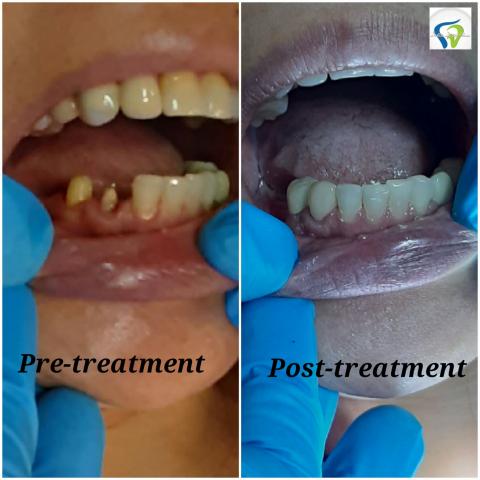
Patients with lower front gum inflammation may also experience tartar buildup, periodontal disease, gum abscesses, or tooth decay. Explore these related clinical case studies.