We Bring Back the Sparkle in Your Smile.

Not a Very Merry Crown-mas: Your Holiday Guide to a Lost Dental Crown in Chicago
Image:
Severity:
Teeth Problems:
Not a Very Merry Crown-mas: A Chicago Holiday Dental Dilemma
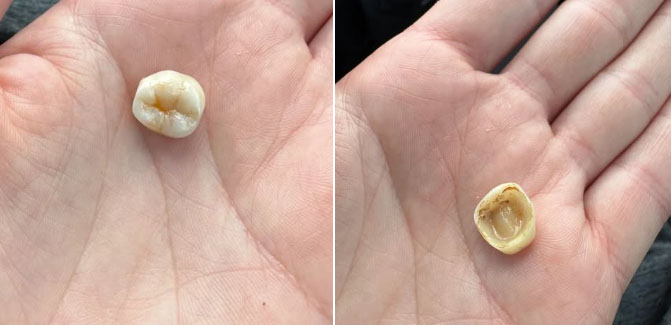
The wind whipped off Lake Michigan, carrying the festive scent of pine and roasting chestnuts down Michigan Avenue. Inside a cozy Lincoln Park apartment, the scene was decidedly less cheerful. Sarah, a normally meticulous graphic designer, stared in disbelief at the small porcelain cap resting in her palm. Her 11-year-old crown on tooth #19—a molar she had babied, flossed around religiously, and questioned for over a decade—had just come loose during a bite of her mother’s famous gingerbread.
“Of course,” she muttered to the twinkling lights of her Christmas tree. “Of course it’s Christmas Eve.”
A frantic search online confirmed her fears: every dental office she called was closed, with many not reopening until Friday or even Monday. Panic, that old familiar friend that came with this crown, began to creep in. She snapped a photo of the dislodged crown, its underside revealing a landscape she’d never seen—and the ghostly outlines of what looked like her trail mix from hours ago. She was mortified. She flossed every single day. She didn’t smoke. She drank nothing but coffee and water. How could this happen?
Her mind raced with the conflicting advice from online forums. Should I get temporary cement? Or Fixodent? If I can’t be seen tomorrow, is Monday too late? What if my teeth shift? The crown, meant to protect, had become her biggest stressor. Seeing the troubling shadows near the neighboring teeth in her selfie only deepened her dread. This wasn’t just a minor inconvenience; it felt like a personal failure.
If you, like Sarah, are facing a lost crown during the holidays, take a deep breath. You are not alone, and this is a manageable dental emergency. Here is your clear, step-by-step guide to navigate the next few days.
Your Immediate Action Plan: The First 24 Hours
1. Stay Calm and Retrieve the Crown.
First, find the crown if it’s come all the way out. Handle it by the chewing surface, not the hollow inside. This is crucial to keep the interior clean for potential re-cementation.
2. Do NOT Use Super Glue or Household Adhesives.
This is the most critical rule. These products are toxic, can ruin the crown fit, and create a severe mess for your dentist to fix. They can also cause tissue damage and allergic reactions.
3. Assess and Clean—Carefully.
Look inside the crown. If you see a soft, grayish material, that’s likely the old cement. If you see what looks like a small post or screw, stop immediately. You may have a dental implant crown, and forcing it back on can damage the internal implant. Set it aside safely.
If it’s a standard crown, you can gently rinse it with warm water to remove debris. Do not scrub it.
4. The Temporary Holding Question: Denture Adhesive vs. Temporary Cement.
-
Denture Adhesive (like Fixodent or Poligrip): This is a short-term, emergency-only solution if you absolutely cannot see a dentist for 24-48 hours. Use a tiny dab inside the crown, place it, and bite down gently on a clean cloth to seat it. It will hold weakly, just enough to protect the tooth. Do not chew on it. The adhesive is messy and makes proper re-cementation later more difficult, but it’s safer than super glue.
-
Temporary Dental Cement (from a pharmacy): This is the better over-the-counter option. Brands like Recapit or Dentemp are designed for this. Follow the kit instructions precisely to form a small amount of cement, place it in the crown, and seat it. It provides a stronger, cleaner temporary hold.
-
The Best Option: Leave It Out. If you can see the dentist within 24 hours, the simplest and often best advice is to keep the crown out, clean, and safe. Simply avoid chewing on that side and rinse with warm salt water after eating.
5. Protect the Exposed Tooth.
Your prepared tooth underneath is now sensitive and vulnerable. Keep the area clean with gentle rinsing. You can purchase temporary filling material (also at pharmacies) to gently cover the exposed tooth surface if it’s very sensitive, but avoid packing it down into the tooth.
Navigating the Timeline: Is Monday Too Late?
No, Monday is not too late, but action is required. The primary short-term risks are:
-
Tooth Sensitivity: To temperature and pressure.
-
Food Impaction: Debris getting stuck around and inside the tooth.
-
Minor Tooth Shifting: The adjacent and opposing teeth can begin to move subtly over several days to weeks, which may affect the perfect fit of your crown.
Your Goal: Get the crown professionally re-cemented (or a new temporary crown made) within the next several days to a week to avoid complications and ensure a proper, long-term fit.
Addressing the Underlying "Why": Your Valid Concerns
Seeing the underside of your crown and the state of the neighboring teeth is alarming, but it provides valuable clues. Here’s what might have happened:
-
Normal Wear and Failure: Dental cement can degrade over 10+ years. It’s a common lifespan.
-
Recurrent Decay: This is the most common reason crowns fail. Bacteria can sneak into the microscopic space between the crown and the tooth, causing new decay underneath that undermines the cement seal. Your diligent hygiene is commendable, but decay can still occur beneath a margin that isn’t perfectly sealed.
-
A Flaw in the Crown’s Fit: Your long-held feeling that it “didn’t sit quite right” is significant. If the crown’s margins (edges) weren’t perfectly contoured, it created a perpetual trap for plaque, leading to the decay you now suspect.
This is not a reflection of your hygiene failure. Often, it’s a mechanical failure of the restoration or a pre-existing issue with the fit.
Your Game Plan for the Business Week
1. Call First Thing Tomorrow (or Monday): Explain it’s a crown recementation emergency. Many offices leave slots for such urgent cases.
2. Schedule a Proper Evaluation: Don’t just ask for it to be glued back on. Request:
* A thorough examination of the tooth stump and the crown’s interior.
* New X-rays of the tooth and the neighboring teeth to check for hidden decay.
* A discussion about the long-term prognosis. The crown may need to be remade if the fit is poor or if there is significant new decay.
3. Ask the Right Questions:
* “What do you see on the X-ray around this tooth and the neighbors?”
* “Is the crown itself still sound, or does it need to be replaced?”
* “What is the best long-term solution for this tooth?”
This stressful event may be a blessing in disguise. It has revealed a problem that, left unchecked, could have led to a root canal or even tooth loss. Your vigilance with hygiene and your instinct that something was off were correct. Now, you have the opportunity to have it addressed properly, potentially with a new, better-fitting crown that will give you peace of mind for the next decade.
For now, enjoy what you can of the holiday. Stick to soft foods on the other side of your mouth, keep the area clean, and know that this is a very common, very fixable problem. Your smile will be back to normal soon.
Related Clinical Cases
Patients with lower front gum inflammation may also experience tartar buildup, periodontal disease, gum abscesses, or tooth decay. Explore these related clinical case studies.

Other topics:
Other Dental Clinic