Modern Dentistry, Timeless Smiles.

The Bio-Regeneration Patch: A New Era of Cavity Treatment Begins in Asia
Language :
Topics:
Advance Study Research: The Bio-Patch – Regenerating Teeth, One Cavity at a Time
The Science Behind the Patch:
The future of restorative dentistry is not in a drill, but in a delivery system. The most promising advancement in regenerative dentistry is the development of a targeted bioactive patch. This isn't a mere covering; it's a sophisticated biomedical device engineered at the nanoscale to act as a scaffold and signaling center.
The procedure is deceptively simple:
-
Micro-Preparation: The cavity is gently cleaned of debris and bacteria using minimally invasive techniques, preserving as much healthy tooth structure as possible. No drilling is required.
-
The Patch is Applied: The dentist applies the ultra-thin, biodegradable patch directly onto the cavity. Conforming perfectly to the irregular shape of the lesion.
-
Activation and Integration: Upon contact with the moist environment of the mouth, the patch begins its work. It releases a precisely calibrated cocktail of biomolecules, such as Melatonin, TGF-β1 (Transforming Growth Factor Beta 1), or specific small molecules that have been shown to stimulate stem cells within the tooth's pulp.
-
Regeneration: These stimulated cells, known as odontoblasts, migrate to the site and begin secreting new dentin matrix. Over a period of weeks, the patch itself safely dissolves as the newly formed, living dentin fills the cavity from the inside out, restoring the tooth's natural integrity.
This approach moves beyond mere restoration to true biological regeneration, creating a seamless, mineralized barrier that is your own living tissue.
The Story of a Breakthrough: A Tale of Two Laboratories
The road to this bio-patch is a story of parallel innovation and cross-pollination of ideas between two of the world's leading scientific hubs: South Korea and Japan.
Chapter 1: The Japanese Precision – Mastering the Matrix
At the University of Tokyo's Institute of Medical Science, Dr. Kenji Tanaka's team was focused on the "scaffold." Their breakthrough came from a material inspired by nature: a polymer infused with bioactive glass nanoparticles. This matrix was engineered to be:
-
Osteoconductive: Guiding the growth of new dentin.
-
Antimicrobial: Releasing ions to prevent bacterial re-invasion during the healing process.
-
Perfectly Timed in Biodegradation: It would maintain its structure just long enough for new dentin to form before harmlessly dissolving.
They had the perfect delivery vehicle, but they needed a more potent and stable signaling trigger to activate the stem cells.
Chapter 2: The Korean Innovation – The Signaling Trigger
Meanwhile, at the Seoul National University's College of Dentistry, Dr. Soo-jin Park's lab was tackling the "signal." While many teams used complex proteins, her team made a serendipitous discovery. They found that a specific, low-dose formulation of melatonin, combined with a calcium phosphate compound, could profoundly enhance the natural wound-healing response of dental pulp stem cells.
Their "K-BioSignal Cocktail" was stable, effective at very low concentrations, and could be easily integrated into a solid matrix. They had the engine, but they needed a better chassis to deliver it precisely and protect it from the harsh oral environment.
Chapter 3: The Fusion – A Synergistic Discovery
The collaboration began informally at an international dental conference in Singapore. Dr. Tanaka and Dr. Park, realizing the complementary nature of their work, initiated a joint Research and Development project.
The challenge was integration. The Japanese polymer was too dense for the Korean signal to diffuse effectively. The Korean signal, in early tests, slightly destabilized the Japanese matrix.
For months, the teams shared data virtually. The breakthrough came when a young post-doc in Dr. Tanaka's lab proposed a layered approach: a thin, protective outer layer made from the durable Japanese polymer, sandwiching a core layer saturated with the potent K-BioSignal Cocktail.
The Experiment That Changed Everything:
The experiment was conducted simultaneously in Tokyo and Seoul on lab-grown dentin models and then on animal subjects.
Procedure:
-
A standardized cavity was created in a test subject's tooth.
-
The new "bi-layered" patch was applied.
-
The subjects were monitored over 4, 8, and 12 weeks.
Results:
-
Week 4: Micro-CT scans showed a thin, new layer of dentin-like tissue forming at the dentin-patch interface. The patch was intact but beginning to show signs of biodegradation at the edges.
-
Week 8: The patch had significantly dissolved. A substantial, continuous bridge of reparative dentin had formed, seamlessly integrating with the old dentin. The cavity was over 70% filled with natural material.
-
Week 12: The patch was completely gone. The cavity was fully occluded with healthy, newly mineralized dentin. Histological analysis confirmed it was living, tubular dentin, indistinguishable in function from the original tissue.
The synergy was undeniable. The Japanese matrix provided the protected space, and the Korean signal provided the powerful instruction. Together, they achieved what neither could alone: predictable, robust, and natural tooth regeneration.
Conclusion: The Global Adoption
The success of this joint R&D project, now published in leading journals like Nature Materials and The Journal of Dental Research, has sent ripples through the global dental community. It stands as a testament to how international collaboration can solve complex biological puzzles. As human clinical trials begin, the world watches, knowing that the era of the regenerative dental patch is no longer a question of "if," but "when." This is the new change that will redefine dental care for Filipinos and the entire world.
Looking for dentist : Visit directory list
Related Clinical Cases
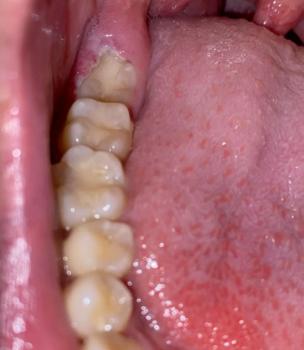
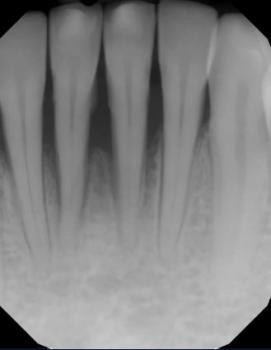
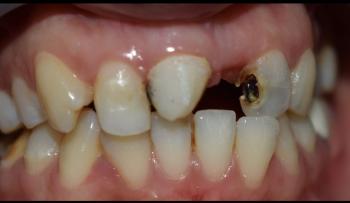
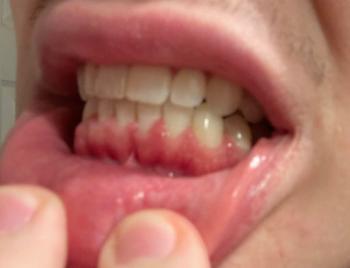
Patients with lower front gum inflammation may also experience tartar buildup, periodontal disease, gum abscesses, or tooth decay. Explore these related clinical case studies.