Building Confidence One Smile at a Time.

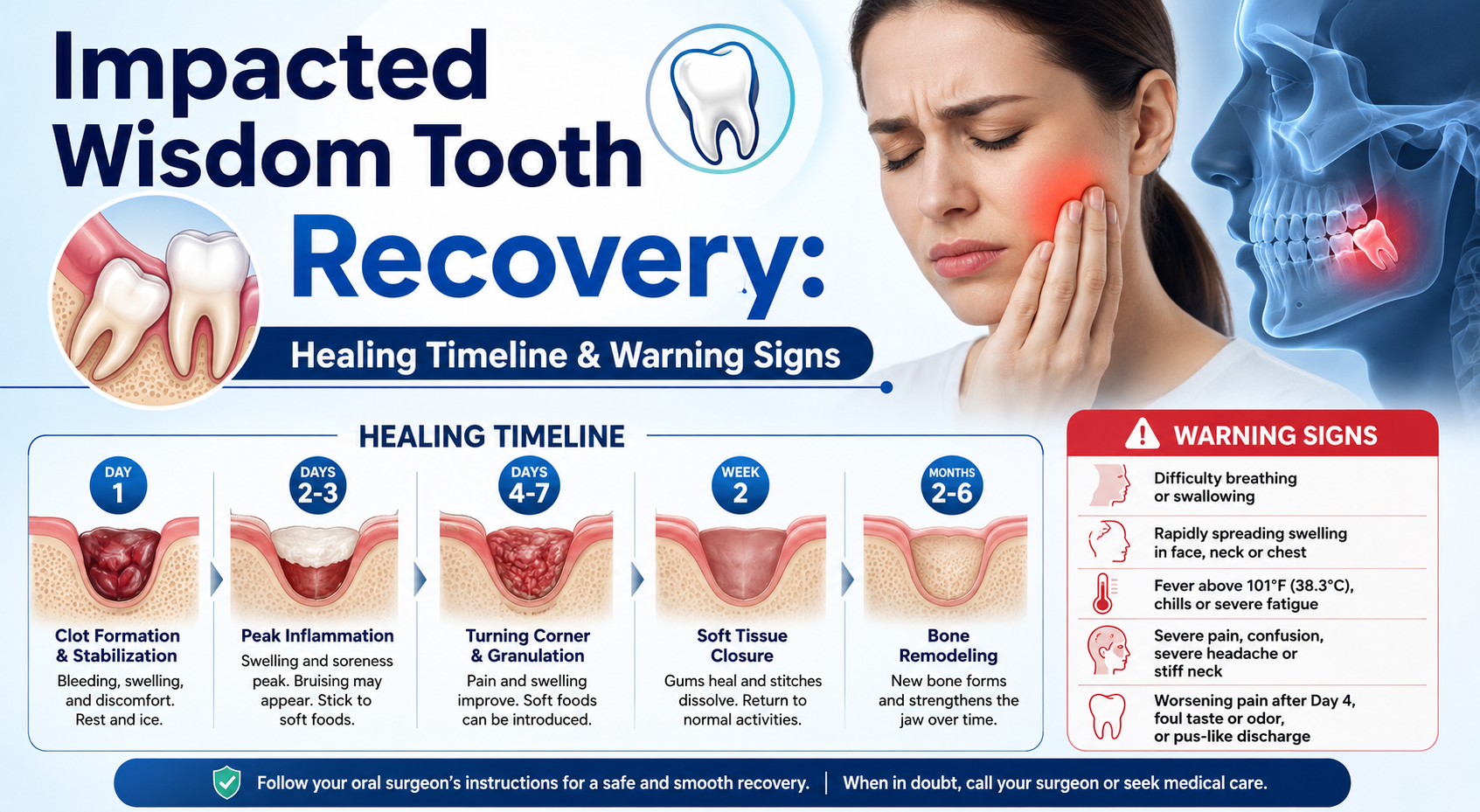
Impacted Wisdom Tooth Recovery: Healing Timeline & Warning Signs
Language :
Topics:
very year, millions of Americans undergo wisdom tooth removal, making it one of the most common outpatient oral surgeries in the United States. While many wisdom teeth erupt normally, others become impacted, meaning they remain partially or completely trapped beneath the gums or jawbone. These cases often require a surgical extraction involving gum incisions, bone removal, and occasionally sectioning the tooth into smaller pieces.
Although most patients recover without major complications, understanding what is considered normal healing versus warning signs of infection or other complications can significantly improve recovery and help patients know when to seek professional care.
This clinical guide reviews the typical healing process following impacted wisdom tooth surgery, presents a real-world recovery case, and explains when post-operative symptoms may indicate a medical emergency.
Understanding Impacted Wisdom Teeth
An impacted wisdom tooth is a third molar that fails to erupt into its normal position due to insufficient space or an abnormal angle.
Common types include:
- Horizontal impaction
- Mesioangular impaction
- Vertical impaction
- Distoangular impaction
Lower wisdom teeth are generally more difficult to remove because they are surrounded by dense jawbone and located near important nerves.
During surgery, an oral surgeon may:
- Create a small incision in the gum tissue
- Remove a portion of surrounding bone
- Divide the tooth into sections
- Carefully extract each section
- Irrigate the surgical site
- Place dissolvable or removable sutures
Because of the additional surgical manipulation, recovery usually takes longer than a routine tooth extraction.
Clinical Case Review
Amanda's Recovery Story (Chicago, Illinois)
Amanda, a 26-year-old marketing coordinator, underwent surgical removal of all four wisdom teeth.
Her two lower wisdom teeth were deeply impacted horizontally within the jawbone.
Day 1
Immediately after surgery she experienced:
- Moderate bleeding
- Blood-tinged saliva
- Facial numbness
- Progressive swelling
- Jaw soreness
Her oral surgeon instructed her to:
- Keep her head elevated
- Bite firmly on gauze
- Use ice packs
- Begin prescribed anti-inflammatory medication before anesthesia completely wore off
- Rest for the remainder of the day
These recommendations helped minimize swelling during the most inflammatory stage.
Day 2
The anesthesia had fully disappeared.
Amanda noticed:
- Increased throbbing discomfort
- Difficulty opening her mouth
- Puffy cheeks
- Mild bruising beginning near the lower jaw
Despite feeling concerned, these symptoms represented normal inflammatory healing after surgical bone removal.
Day 3
This marked the peak of swelling.
Her cheeks became:
- Firm
- Tender
- Yellow-green from bruising
Jaw stiffness made eating difficult.
She remained on:
- Soft foods
- Hydration
- Scheduled pain medication
- Gentle walking indoors
Day 5
Recovery began improving noticeably.
Changes included:
- Swelling decreased
- Pain became a dull ache
- Appetite improved
- Jaw movement increased
She successfully ate:
- Scrambled eggs
- Mashed potatoes
- Yogurt
- Soft pasta
Day 10
By Day 10:
- Dissolvable sutures loosened naturally
- Most discomfort disappeared
- Mouth opening nearly normalized
Week 2
Two weeks later:
- Gum tissue covered most extraction sockets
- Facial appearance returned to normal
- Only mild tightness remained when yawning widely
Amanda resumed work and regular exercise after receiving clearance from her surgeon.
The Normal Healing Timeline
Phase 1: First 24 Hours
What Happens
Immediately after surgery, your body forms a protective blood clot inside each socket.
This clot is essential because it:
- Protects exposed bone
- Covers sensitive nerves
- Prevents bacteria from entering
- Serves as the framework for future tissue growth
Without this clot, healing cannot proceed normally.
Expected Symptoms
Normal findings include:
- Mild bleeding
- Pink saliva
- Numbness
- Facial swelling
- Jaw stiffness
- Fatigue from anesthesia
- Mild to moderate pain
Pain often becomes strongest about 6–8 hours after local anesthesia wears off.
Recommended Care
- Bite on gauze for 30–60 minutes.
- Apply ice packs for 20 minutes on and 20 minutes off.
- Rest with your head elevated.
- Take prescribed medications as directed.
- Drink plenty of fluids without using a straw.
Phase 2: Days 2–3
This represents the inflammatory peak.
What Happens
The immune system floods the area with healing cells.
A thin white or yellow fibrin layer forms over the clot.
This is normal healing tissue, not pus.
Expected Symptoms
Patients commonly notice:
- Maximum facial swelling
- Jaw stiffness
- Bruising
- Limited mouth opening
- Moderate soreness
These symptoms usually begin improving after Day 3.
Recommended Care
Continue:
- Pain medication
- Hydration
- Soft diet
After 48 hours:
- Switch from ice to warm moist compresses.
- Begin gentle jaw stretching if advised.
Phase 3: Days 4–7
Granulation Tissue Formation
The blood clot gradually transforms into granulation tissue.
This specialized tissue contains:
- New blood vessels
- Collagen fibers
- Healing connective tissue
It becomes the biological foundation for new gum tissue.
Symptoms
Most patients notice:
- Reduced swelling
- Less pain
- Improved chewing
- Better speech
- Increased energy
Diet
Patients may gradually introduce:
- Pasta
- Rice (carefully)
- Soft vegetables
- Eggs
- Fish
- Oatmeal
Avoid chewing directly over the surgical sites.
Phase 4: Week Two
During the second week:
- Gum tissue contracts
- Sockets become smaller
- Tenderness nearly disappears
Patients usually return to:
- Work
- School
- Exercise
- Normal oral hygiene
Brush gently around the extraction sites.
Warm saltwater rinses remain beneficial after meals.
Phase 5: Months 2–6
Although the gums appear healed within two weeks, deep healing continues for several months.
Bone-forming cells gradually replace the empty sockets with new jawbone.
This hidden remodeling restores:
- Bone strength
- Structural support
- Normal jaw anatomy
Complete bone maturation commonly requires 2–6 months depending on:
- Age
- Overall health
- Smoking status
- Surgical complexity
Dry Socket: The Most Common Early Complication
A dry socket (alveolar osteitis) occurs when the protective blood clot becomes dislodged or dissolves too early.
Common causes include:
- Smoking
- Vaping
- Drinking through a straw
- Vigorous spitting
- Aggressive mouth rinsing
- Poor clot stability
Symptoms usually begin 2–5 days after surgery and include:
- Sudden severe pain
- Pain radiating toward the ear
- Visible exposed bone
- Bad taste
- Persistent bad breath
Dry socket is painful but is not usually an infection. Prompt treatment by your dental provider can provide significant relief.
When Recovery Becomes an Emergency
Most discomfort after wisdom tooth surgery is expected.
However, rapidly worsening symptoms may indicate a serious deep-space infection known as dental-origin facial cellulitis, which can spread through the tissues of the face and neck.
Seek emergency medical care immediately if you develop:
- Difficulty breathing
- Difficulty swallowing
- Excessive drooling
- Rapidly spreading swelling involving the face, eyes, neck, or chest
- Fever above 101°F (38.3°C)
- Chills
- Severe weakness
- Confusion
- Severe headache
- Neck stiffness
These symptoms require immediate evaluation because untreated infections can compromise the airway and spread beyond the oral cavity.
Contact Your Oral Surgeon Promptly If You Notice
Call your surgeon if you experience:
- Pain that becomes worse after Day 4
- Persistent bleeding that does not improve with pressure
- Thick yellow or green drainage
- A foul taste or odor from the extraction site
- Swelling that begins increasing again after initially improving
- Medication that provides little or no pain relief
Early evaluation often prevents more serious complications.
Foods That Promote Healing
During recovery, choose foods that require minimal chewing.
Good options include:
- Yogurt
- Applesauce
- Smoothies (without a straw)
- Mashed potatoes
- Scrambled eggs
- Oatmeal
- Cottage cheese
- Soup (lukewarm)
- Avocado
- Soft pasta
Stay well hydrated throughout recovery.
Foods to Avoid
Avoid:
- Chips
- Nuts
- Popcorn
- Seeds
- Hard bread
- Steak
- Sticky candy
- Spicy foods
- Extremely hot beverages
- Carbonated drinks during the first day if they cause discomfort
Smoking and vaping should also be avoided because they significantly increase the risk of dry socket and delayed healing.
Recovery Checklist
| Recovery Phase | Expected Milestones | Avoid |
|---|---|---|
| Days 1–2 | Blood clot formation, mild bleeding, swelling | Straws, smoking, vaping, spitting |
| Days 3–5 | Swelling peaks then improves, granulation tissue develops | Crunchy, spicy, sharp foods |
| Days 6–14 | Gum tissue closes, stitches dissolve, pain decreases | Picking the surgical site, aggressive rinsing |
| Months 2–6 | Bone remodels beneath the gums | Smoking and poor oral hygiene |
Expert Clinical Takeaway
Recovery from an impacted wisdom tooth extraction follows a predictable biological sequence. While temporary swelling, bruising, stiffness, and soreness are normal—especially during the first three days—patients should see gradual improvement after the initial inflammatory phase.
Following your oral surgeon's post-operative instructions, protecting the blood clot, maintaining excellent oral hygiene, staying hydrated, and attending follow-up appointments are the most important steps toward a smooth recovery.
Equally important is recognizing when symptoms deviate from the expected healing pattern. Persistent severe pain, rapidly spreading swelling, difficulty breathing or swallowing, and high fever require immediate medical evaluation. Prompt treatment of complications helps prevent serious infections and supports a safe, successful recovery.
Medical Disclaimer: This article is intended for educational purposes only and does not replace professional medical or dental advice. If you experience severe symptoms or have concerns about your recovery, contact your oral surgeon, dentist, or seek emergency medical care immediately.
Can tooth extraction cause infection? Mild inflammation is normal, but increasing swelling, fever, or severe pain may indicate infection. Learn more about post-extraction infection warning signs in this detailed guide.
Book a consultation with our Cebu dental specialists for proper evaluation and care.
Ready to get expert guidance?
If you’re experiencing severe pain or delayed healing, book a consultation with our Cebu dental specialists to get proper evaluation and care.
Consultation or contact page .
Book a Consultation
For severe discomfort or delayed healing, book a consultation with our Cebu dental specialists today.
Looking for a dentist? Browse our Cebu dental directory to find trusted clinics near you.
Medical Review and Clinical Basis
This article is based on clinical dental guidelines and real patient recovery patterns observed after tooth extraction procedures. The information reflects common post-extraction healing stages, including normal clot formation, gum tissue repair, and signs of possible complications such as dry socket or infection.
While mild discomfort is expected after a dental extraction, worsening pain after Day 3, bad odor, exposed bone, or spreading pain may require professional evaluation. These symptoms are consistent with known post-extraction complications described in standard dental practice.
About Cebu Dental Implants
Cebu Dental Implants provides comprehensive tooth extraction, surgical procedures, and dental implant services in the Philippines. Our team evaluates post-extraction healing, manages complications such as dry socket, and advises patients on proper aftercare to prevent infection and delayed healing.
If you experience severe pain or unusual symptoms after extraction, early professional assessment is recommended to prevent further complications.
Important Medical Disclaimer
This content is for educational purposes only and does not replace professional dental diagnosis. Every patient heals differently. If symptoms worsen or do not improve within a few days, consult a licensed dentist for proper evaluation and treatment.
Author
This article was prepared by the Cebu Dental Implants content team in consultation with licensed dental professionals experienced in tooth extraction and implant procedures.
Related Clinical Cases
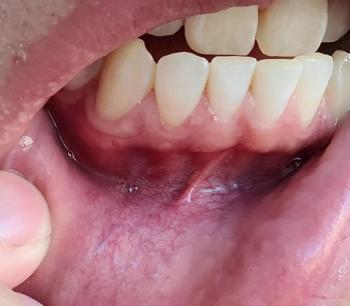
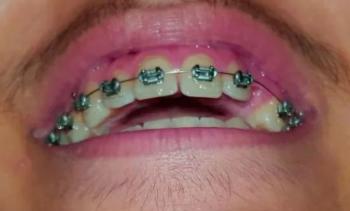
Patients with lower front gum inflammation may also experience tartar buildup, periodontal disease, gum abscesses, or tooth decay. Explore these related clinical case studies.


Other topics:
Other Dental Clinic