Transforming Smiles, Restoring Confidence.

Persistent Gum Bubble After Tooth Extraction: Causes, Diagnosis, and Proper Treatment Explained
Image:
Severity:
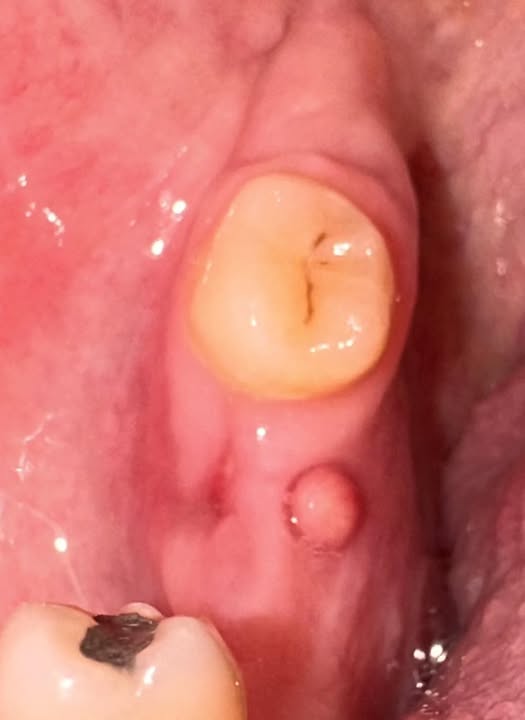
Persistent Gum Bubble After Tooth Extraction – Full Dental Case Analysis (Zoom 100%)
Clinical Overview (Based on the Image & History)
Patient concern:
“Why is this bubble next to my tooth extraction not going away? I’ve been on 5 days of antibiotics and it’s made no difference. It’s been 4 weeks since extraction.”
Key visual findings (Zoomed assessment):
-
A localized, round, pinkish gum bubble adjacent to the extraction site
-
Surrounding gum tissue appears inflamed but not ulcerated
-
No visible blood clot loss, but delayed soft tissue healing
-
Adjacent tooth shows occlusal fissure staining/caries risk
-
No obvious dry socket appearance, but chronic low-grade infection is likely
Most Likely Diagnosis (Differential Analysis)
1. Gum Boil / Parulis (MOST LIKELY)
✔ A parulis is a drainage point of an underlying infection, often from:
-
Residual infected bone
-
Retained root fragment
-
Infected extraction socket
-
Adjacent tooth with deep decay
⚠ Important:
Antibiotics alone will not resolve this, because the source of infection is still present.
2. Chronic Localized Dental Abscess
-
Infection trapped inside bone or soft tissue
-
Forms a sinus tract → appears as a “bubble”
-
Explains why antibiotics did not help after 5 days
3. Foreign Body Reaction
-
Bone spicule, suture material, or debris left behind
-
Triggers persistent inflammation and swelling
4. Delayed Healing / Granulation Tissue (Less Likely)
-
Usually shrinks within 2–3 weeks
-
At 4 weeks, persistence suggests pathology
Why Antibiotics Didn’t Work
-
Antibiotics reduce bacteria temporarily
-
They do NOT remove:
-
Infected tissue
-
Dead bone
-
Trapped pus
-
-
Once antibiotics stop → swelling persists or returns
Expected Healing Timeline (Normal vs Your Case)
| Time After Extraction | Normal Healing | Your Case |
|---|---|---|
| 7–10 days | Gum closes | Bubble still present |
| 14 days | Inflammation gone | No improvement |
| 3–4 weeks | Full soft tissue healing | Persistent swelling ❌ |
➡ This is NOT normal healing
If Proper Treatment Is Done – Healing Time
After correct intervention:
-
Drainage + cleaning: 48–72 hours improvement
-
Complete gum healing: 7–14 days
-
Bone recovery: 4–6 weeks
Recommended Clinical Process to Execute (Step-by-Step)
1. Immediate Clinical Examination
-
Palpation of the bubble (check for pus)
-
Percussion test on adjacent teeth
2. Dental X-Ray (Periapical / CBCT if needed)
To check for:
-
Retained root fragment
-
Bone infection (osteitis)
-
Infection from adjacent tooth
3. Definitive Treatment (NOT Antibiotics Alone)
Depending on cause:
-
Incision & drainage
-
Socket debridement & irrigation
-
Removal of foreign body or bone spicule
-
Root canal treatment (if adjacent tooth is source)
4. Supportive Care
-
Antimicrobial mouth rinse
-
Targeted antibiotics only after drainage
-
Pain & inflammation control
If Left Untreated – What Can Scale Up (Serious Risks)
⚠ Infection may spread to:
-
Jaw bone (osteomyelitis)
-
Face and neck spaces
-
Sinus (upper teeth cases)
-
Bloodstream (rare but dangerous)
⚠ May cause:
-
Bone loss
-
Implant failure (if planning implant)
-
Recurrent abscesses
-
Chronic bad taste / foul odor
Professional Comment
A gum bubble that lasts 4 weeks after extraction and does not respond to antibiotics is almost always a sign of an unresolved infection, not normal healing. This requires mechanical treatment, not more medication.
Related Clinical Cases
Patients with lower front gum inflammation may also experience tartar buildup, periodontal disease, gum abscesses, or tooth decay. Explore these related clinical case studies.



Other topics:
Other Dental Clinic