From Pain to Perfect — We Care for Your Smile.

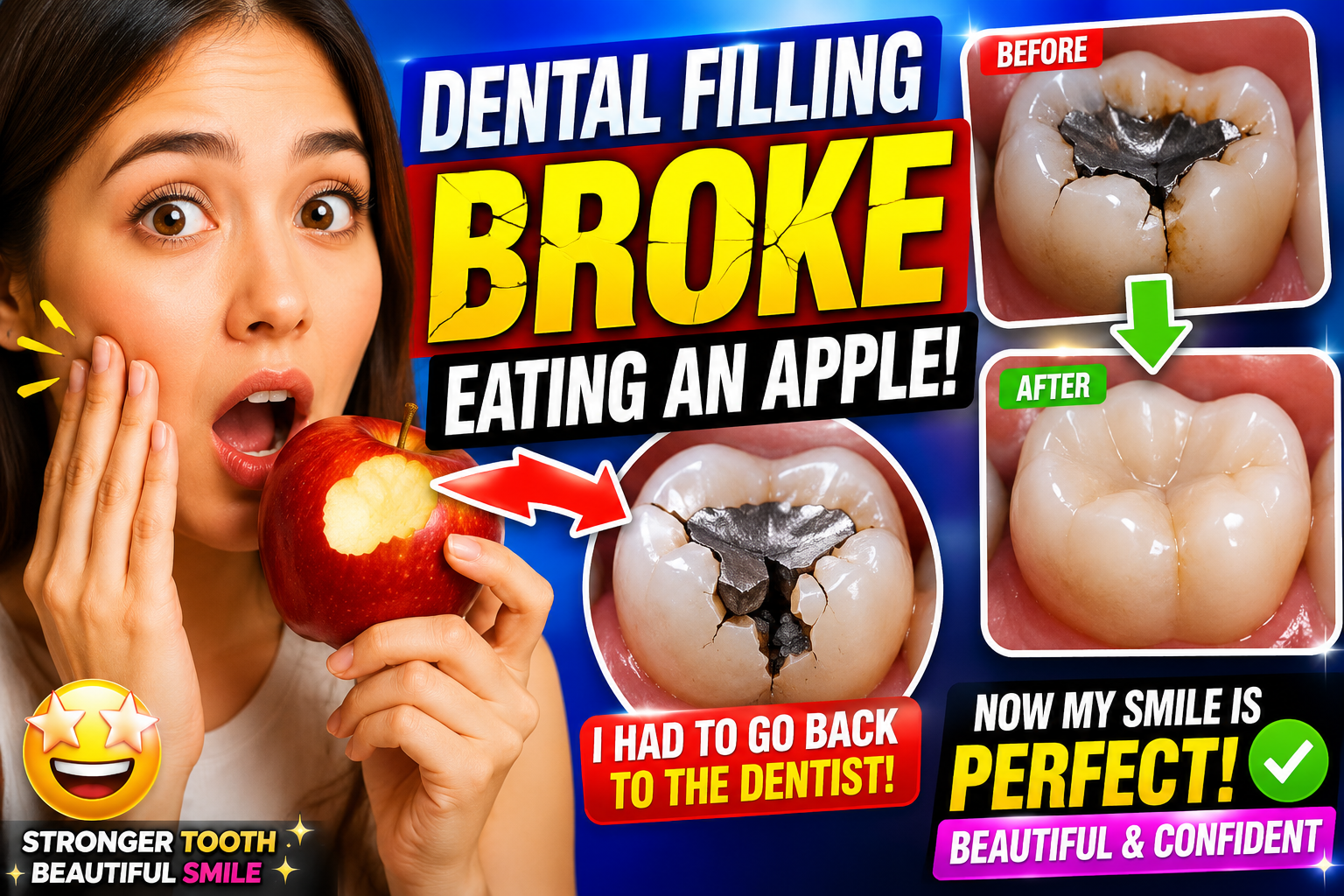
My Dental Filling Broke While Eating an Apple - My Dentist Saved My Smile
Language :
Topics:
Can tooth extraction cause infection? Mild inflammation is normal, but increasing swelling, fever, or severe pain may indicate infection. Learn more about post-extraction infection warning signs in this detailed guide.
A Sudden Crack: How a Broken Dental Filling Almost Ruined an Important Day—And How Modern Dentistry Restored a Beautiful Smile
Sometimes the smallest moments create the biggest surprises.
For Sarah, it was supposed to be an ordinary evening.
Her presentation slides were polished. Her notes were complete. Months of preparation had led to one of the most important meetings of her professional career. The following morning, she would stand before executives, colleagues, and clients to deliver a presentation that could influence her future.
Relaxing at home before the big day, she reached for a crisp autumn apple.
It seemed like the perfect healthy snack.
She smiled, took a confident bite—
Pop.
Not the familiar sound of biting through fresh fruit.
Something was wrong.
Immediately she felt a rough edge against her tongue.
Looking into a nearby mirror, her heart sank.
The composite filling on one of her front teeth had fractured, leaving a noticeable gap in her smile.
For many people, this might seem like a minor inconvenience.
But when your smile is part of your confidence, speaking, and first impression, a broken filling can suddenly feel overwhelming.
With an important presentation only hours away, Sarah knew she needed immediate professional dental care.
Why Dental Fillings Sometimes Break
Although modern tooth-colored composite fillings are remarkably durable, they are not indestructible.
Every day, our teeth experience hundreds of pounds of biting pressure.
Foods such as apples, nuts, hard bread, ice, popcorn kernels, and hard candies can generate concentrated forces that stress an existing restoration.
Several factors increase the likelihood of a filling breaking:
-
Large or aging fillings
-
Previous tooth fractures
-
Teeth weakened by extensive decay
-
Grinding or clenching (bruxism)
-
Biting directly into hard foods
-
Normal wear after years of chewing
-
Tiny cracks that gradually enlarge over time
Often, patients are surprised because the filling appeared perfectly normal only moments before it fractured.
In reality, microscopic fatigue may have been developing for years.
Seeking Immediate Care
Rather than waiting and hoping the problem would resolve on its own, Sarah contacted Cebu Dental Implants for an emergency appointment.
Prompt treatment is important because a damaged filling leaves the tooth vulnerable to:
-
New bacterial invasion
-
Tooth sensitivity
-
Additional fractures
-
Food impaction
-
Nerve irritation
-
More extensive restorative treatment
The sooner the tooth is evaluated, the greater the chance of preserving healthy tooth structure.
A Comprehensive Dental Examination
Upon arrival, Sarah's dentist performed a careful clinical assessment.
The examination included:
-
Visual inspection of the fractured restoration
-
Bite analysis
-
Evaluation of remaining tooth structure
-
Assessment for hidden cracks
-
Digital imaging when indicated
-
Pulp vitality assessment if symptoms suggested deeper involvement
Fortunately, the fracture involved only the composite filling.
The underlying tooth remained healthy and structurally stable.
This meant the restoration could be replaced without requiring more extensive treatment such as a crown or root canal.
Restoring the Tooth with Modern Composite Dentistry
One of the greatest advances in cosmetic dentistry is the evolution of modern nanohybrid composite materials.
Today's restorations are designed to mimic natural enamel with exceptional accuracy.
After gently removing the damaged filling, the dentist carefully cleaned the cavity to eliminate weakened material and ensure a strong foundation.
Using advanced adhesive techniques, the tooth was rebuilt layer by layer.
Each layer was individually cured using a high-intensity LED curing light.
The composite was then artistically sculpted to reproduce the natural anatomy of the tooth, including tiny developmental grooves and surface texture.
Finally, the restoration was polished to achieve a smooth, glossy finish that blended seamlessly with the surrounding enamel.
The result wasn't simply a repaired filling.
It was a restoration virtually indistinguishable from a natural tooth.
The Mirror Moment
Every dentist recognizes this moment.
Sarah looked into the mirror expecting to see improvement.
Instead, she saw something even better.
The damaged tooth had completely disappeared.
Its color matched perfectly.
Its shape looked completely natural.
Her smile appeared balanced, bright, and healthy.
The anxiety she had carried into the appointment dissolved almost instantly.
For many patients, restoring a smile also restores self-confidence.
Dentistry is about much more than repairing teeth—it helps people smile, speak, laugh, and interact with others without hesitation.
The Big Presentation
The following morning, Sarah walked confidently into the boardroom.
There were no thoughts about hiding her smile.
No worries about people noticing her tooth.
No fear of speaking.
Instead, she focused entirely on delivering her presentation.
She smiled naturally throughout the meeting.
She answered questions confidently.
She connected with her audience.
The dental emergency that had seemed devastating only hours earlier had become nothing more than a brief interruption.
What Should You Do If Your Filling Falls Out?
If your filling suddenly breaks or falls out:
Remain calm.
Avoid chewing on that side of your mouth.
If possible, save any broken pieces.
Brush gently around the area.
Avoid extremely hot, cold, or sugary foods if sensitivity develops.
Contact your dentist as soon as possible.
Do not attempt to permanently glue the filling back yourself using household adhesives.
Temporary dental repair kits may provide short-term protection, but they should never replace professional treatment.
Can a Broken Filling Always Be Repaired?
In many cases, yes.
However, the appropriate treatment depends on how much healthy tooth remains.
Your dentist may recommend:
-
Replacement composite filling
-
Dental onlay
-
Porcelain inlay
-
Full-coverage crown
-
Root canal therapy if the nerve is exposed
-
Tooth replacement if the damage is beyond repair
Early treatment usually allows for the most conservative solution.
Preventing Future Filling Fractures
To maximize the lifespan of your restorations:
-
Avoid chewing ice.
-
Don't bite directly into very hard foods.
-
Wear a night guard if you grind your teeth.
-
Visit your dentist regularly.
-
Replace worn restorations before they fail.
-
Practice excellent oral hygiene.
-
Attend routine professional examinations.
Composite fillings commonly last many years, especially when properly maintained.
Modern Dentistry Restores More Than Teeth
A broken filling can happen unexpectedly—even during something as simple as eating an apple.
Fortunately, today's adhesive dentistry allows damaged restorations to be repaired quickly, conservatively, and beautifully.
Modern composite materials closely replicate natural enamel, allowing dentists to restore both function and aesthetics in a single visit for many patients.
For Sarah, the experience served as an important reminder that dental emergencies don't have to define your day.
With prompt professional care, what began as a frightening crack became the beginning of renewed confidence.
Sometimes restoring a tooth means restoring the smile behind it—and the confidence to face life's biggest moments.
Featured Video
My Dental Filling Broke While Eating an Apple—How My Dentist Restored My Beautiful Smile
Channel: Cebu Dental Implants
Watch the complete patient story and discover how modern cosmetic composite dentistry can restore a fractured filling with beautiful, natural-looking results while helping patients regain confidence in their smile.
Looking for a dentist? Browse our Cebu dental directory to find trusted clinics near you.
Medical Review and Clinical Basis
This article is based on clinical dental guidelines and real patient recovery patterns observed after tooth extraction procedures. The information reflects common post-extraction healing stages, including normal clot formation, gum tissue repair, and signs of possible complications such as dry socket or infection.
While mild discomfort is expected after a dental extraction, worsening pain after Day 3, bad odor, exposed bone, or spreading pain may require professional evaluation. These symptoms are consistent with known post-extraction complications described in standard dental practice.
About Cebu Dental Implants
Cebu Dental Implants provides comprehensive tooth extraction, surgical procedures, and dental implant services in the Philippines. Our team evaluates post-extraction healing, manages complications such as dry socket, and advises patients on proper aftercare to prevent infection and delayed healing.
If you experience severe pain or unusual symptoms after extraction, early professional assessment is recommended to prevent further complications.
Important Medical Disclaimer
This content is for educational purposes only and does not replace professional dental diagnosis. Every patient heals differently. If symptoms worsen or do not improve within a few days, consult a licensed dentist for proper evaluation and treatment.
Author
This article was prepared by the Cebu Dental Implants content team in consultation with licensed dental professionals experienced in tooth extraction and implant procedures.
Video:
Related Clinical Cases
Patients with lower front gum inflammation may also experience tartar buildup, periodontal disease, gum abscesses, or tooth decay. Explore these related clinical case studies.




Other topics:
Other Dental Clinic