Where Bright Smiles Begin.

Why Children's Teeth Break So Easily: Dentinogenesis Imperfecta Case Analysis, Diagnosis, Treatment & Recovery
Image:
Severity:
Teeth Problems:
Clinical Disclaimer
This assessment is based only on the provided clinical image. A definitive diagnosis requires an in-person examination, dental history, X-rays, and, when appropriate, genetic evaluation.
Clinical Image Analysis
Overall Appearance
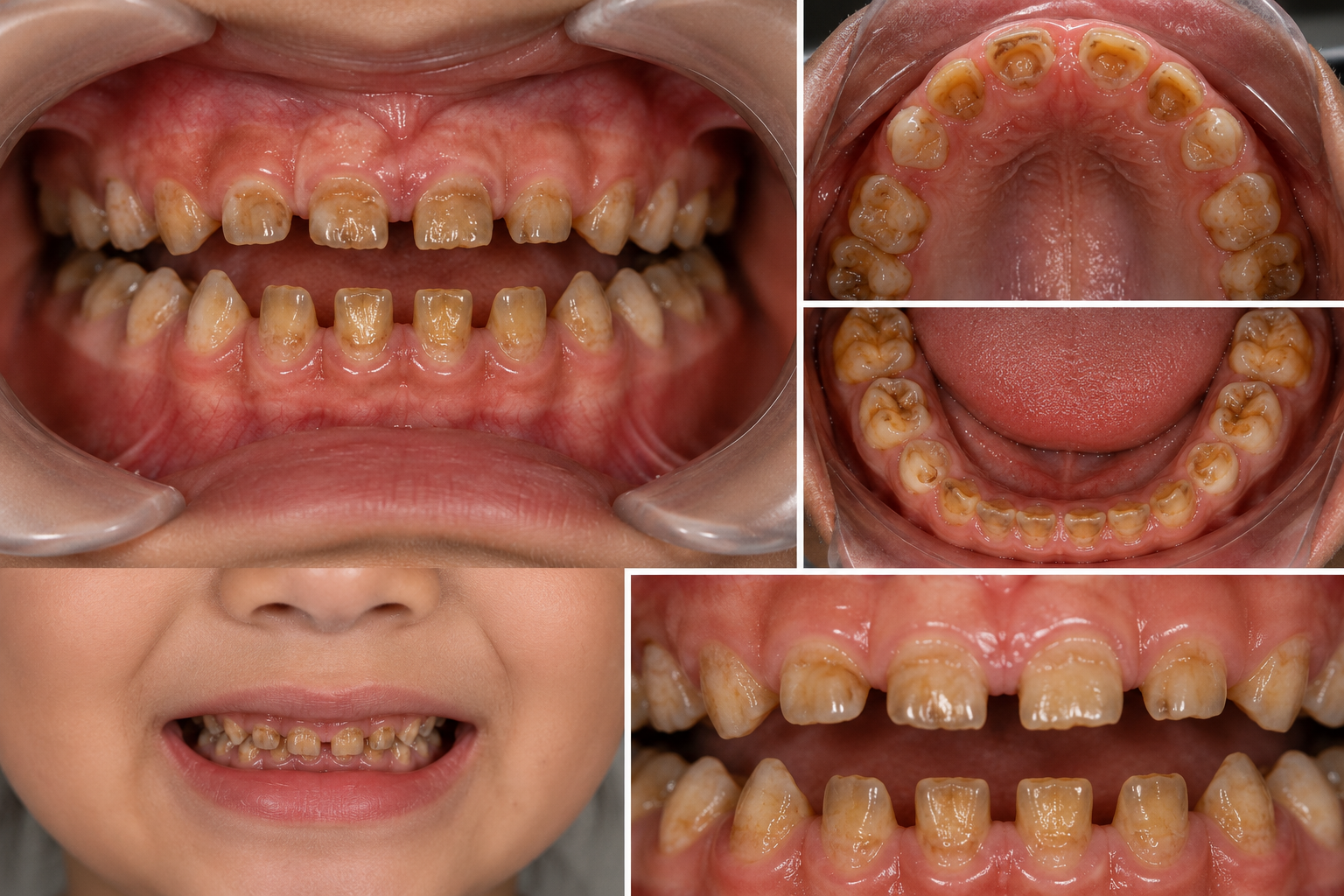
The teeth demonstrate findings highly suggestive of Dentinogenesis Imperfecta (DI), including:
- Generalized yellow-brown discoloration
- Severe enamel wear
- Flattened chewing surfaces
- Extensive dentin exposure
- Multiple chipped and fractured teeth
- Shortened clinical crowns
- Mixed dentition stage
- Uneven bite caused by excessive tooth wear
Estimated Severity
High
Multiple teeth appear structurally compromised and are at increased risk of additional fractures if treatment is delayed.
Most Likely Diagnosis
Primary Diagnosis
Dentinogenesis Imperfecta (DI)
This inherited dental disorder weakens the dentin, making the overlying enamel prone to breaking away. As a result, teeth wear rapidly, become sensitive, and may fracture even during normal chewing.
Other Conditions That Should Be Considered
- Amelogenesis Imperfecta
- Severe enamel hypoplasia
- Dental erosion from acidic foods or drinks
- Bruxism (teeth grinding)
- Other developmental tooth disorders
Clinical Management of Dentinogenesis Imperfecta: Severe Wear of Primary Teeth, Diagnostic Considerations, and Long-Term Protection
1. Why Severe Tooth Wear in Children Requires Early Dental Assessment
Severe wear of primary teeth is not always caused by poor oral hygiene or excessive chewing. When multiple baby teeth become shortened, discolored, flattened, or fractured at an unusually young age, dentists should investigate possible developmental abnormalities of the tooth structure.
One important consideration is dentinogenesis imperfecta (DI), an inherited disorder that affects dentin, the mineralized tissue beneath the enamel. Abnormal dentin can compromise the structural support of enamel, making affected teeth more susceptible to chipping, fracture, and progressive wear.
Both primary and permanent teeth may be affected. Early recognition is especially important because the condition can interfere with comfortable chewing, dental appearance, and the preservation of tooth structure during childhood.
In a child presenting with severe primary tooth wear, the clinical priority is to determine the cause, assess the remaining tooth structure, identify pain or infection, and develop an individualized plan to protect the teeth that can be maintained.
2. Clinical Findings and Their Significance
Features that may raise suspicion of dentinogenesis imperfecta include:
-
Abnormal tooth color: Teeth may appear blue-gray, amber, yellow-brown, or opalescent.
-
Progressive loss of tooth height: Chewing surfaces may become noticeably flattened or shortened.
-
Enamel chipping: The enamel may fracture because it is supported by structurally abnormal dentin.
-
Exposed dentin: Loss of the outer tooth structure may increase sensitivity and susceptibility to further wear.
-
Multiple affected teeth: Similar abnormalities involving several teeth can suggest a developmental or inherited condition rather than an isolated injury.
These findings are suggestive, not diagnostic on their own. Dental erosion, excessive mechanical wear, enamel-development disorders, and other conditions may produce overlapping appearances.
A photograph can help identify suspicious features, but it cannot reliably establish the precise DI subtype, determine whether the dental pulp is healthy, or exclude infection.
3. Why Primary Teeth Can Deteriorate Rapidly
In dentinogenesis imperfecta, abnormal dentin may not provide normal structural support for the overlying enamel. Once enamel fractures, the exposed dentin can wear down under ordinary chewing forces.
Several complications may follow:
Loss of tooth structure: Repeated wear can substantially shorten the clinical crowns and compromise their ability to function normally.
Sensitivity and discomfort: Exposed dentin may cause discomfort with temperature changes, sweet foods, or brushing. Some children, however, experience little pain despite substantial damage.
Pulpal complications: Advanced wear or fractures can expose or damage the dental pulp, potentially leading to inflammation, pulp necrosis, or infection.
Changes in the bite: Extensive loss of tooth height may affect occlusal relationships and chewing efficiency. The significance depends on the child's age, the number of affected teeth, and the extent of destruction.
Impact on daily life: Difficulty eating, visible discoloration, and repeated dental problems can affect nutrition, comfort, confidence, and school activities.
Severe wear does not automatically mean that a tooth requires extraction. The decision depends on restorability, pulp status, infection, the remaining tooth structure, and the child's developmental stage.
4. Diagnostic Assessment: What Should the Dentist Examine?
A comprehensive assessment should establish whether the clinical appearance is consistent with DI and determine the condition of each affected tooth.
Clinical examination
The dentist should assess:
-
The distribution and severity of wear.
-
Tooth color, enamel fractures, and exposed dentin.
-
Caries, cracks, tenderness, mobility, and signs of infection.
-
Pulpal and periapical health where clinically assessable.
-
Occlusion, remaining crown height, and chewing function.
-
The stage of primary, mixed, or permanent dentition.
Dental imaging
Radiographs should be selected according to the clinical question and the child's individual needs. Depending on the presentation, appropriate images may help assess root development, pulp-chamber appearance, periapical tissues, and the condition of the developing permanent teeth.
Pulp chambers and root canals may be reduced or partially obliterated in some forms of DI, but this finding is not universal. Imaging must be interpreted alongside the clinical examination.
Routine advanced imaging is not necessary for every child. Cone-beam computed tomography should be considered only when a specific diagnostic or treatment-planning indication justifies the additional radiation exposure.
Family and medical history
Ask whether parents or relatives have experienced unusually discolored, fragile, or rapidly wearing teeth. Also investigate any history of recurrent fractures or other medical findings that might suggest an associated systemic disorder.
DI type I is associated with osteogenesis imperfecta, a genetic condition affecting bone strength. If clinical history raises this possibility, coordination with the child's medical team and appropriate specialist referral are important.
Genetic consultation or testing may be useful in selected cases, particularly when the diagnosis or inheritance pattern remains uncertain.
5. Treatment Strategy: Protect Teeth While the Child Grows
There is no treatment that reverses the underlying genetic abnormality in dentinogenesis imperfecta. Management focuses on preserving teeth, preventing further structural damage, maintaining function, and treating complications.
A. Stabilize pain and infection first
If the child has severe pain, swelling, a draining sinus, fever, or suspected pulpal infection, the affected tooth requires prompt assessment.
Depending on the diagnosis, treatment may involve vital pulp therapy, root canal treatment when appropriate, drainage of an infection, or extraction of a tooth that cannot predictably be retained.
Antibiotics are not a substitute for definitive dental treatment and are not routinely indicated for uncomplicated tooth wear or localized pulpal pain. They may be required when infection has spread or systemic involvement is present, according to the treating clinician's assessment.
B. Protect severely worn primary molars
Preformed stainless steel crowns are commonly considered for primary molars with extensive structural loss when sufficient tooth structure remains and the teeth can be restored.
Potential benefits include:
-
Covering weakened tooth surfaces.
-
Reducing further wear and fracture.
-
Restoring chewing function.
-
Helping maintain appropriate occlusal relationships.
The suitability of a crown depends on the remaining tooth structure, root condition, pulp status, and time until natural exfoliation. A crown is not appropriate for every damaged tooth.
C. Restore affected front teeth
For anterior primary teeth, bonded composite restorations or other suitable restorative approaches may be considered when enough sound structure remains.
Treatment should balance durability, appearance, cooperation, and the child's age. Some teeth may need a different approach if the damage is extensive or the pulp is involved.
D. Protect newly erupting permanent teeth
Permanent teeth should be monitored as they erupt. Early preventive measures may include fluoride-based caries prevention, sealants where indicated, and timely restorative protection for teeth with significant structural defects.
Full-coverage restorations may be appropriate for severely affected permanent teeth, but material selection and timing should account for eruption, gum development, available tooth structure, and the child's growth.
Definitive rehabilitation should be planned in stages rather than assuming that every child will need the same crown or prosthetic treatment.
6. Home Care and Prevention of Additional Damage
Parents should help the child maintain a consistent, gentle oral-care routine.
-
Brush twice daily with an age-appropriate amount of fluoride toothpaste.
-
Use a soft-bristled toothbrush and avoid aggressive brushing.
-
Limit frequent sugary snacks and drinks.
-
Reduce frequent exposure to acidic drinks and foods that may contribute to erosion.
-
Avoid chewing ice, hard candies, and other particularly hard foods if the teeth are fragile.
-
Arrange regular dental reviews to monitor restorations, tooth wear, and eruption.
A child with significant structural abnormalities may require closer follow-up than a child with healthy teeth. Review intervals should be individualized according to disease severity, active symptoms, and the stability of the restorations.
7. Long-Term Prognosis
Dentinogenesis imperfecta requires ongoing dental management, but it does not mean that all affected teeth will inevitably be lost.
The outlook depends on the severity of the structural defect, early diagnosis, the condition of the pulp and roots, restorative options, and the child's ability to attend follow-up appointments.
Successful management aims to preserve natural teeth for as long as practical, maintain comfortable chewing, protect permanent teeth as they emerge, and support healthy oral development.
As the child matures, the restorative plan may need revision to accommodate growth, changes in occlusion, and the condition of existing restorations. Complex cases may benefit from coordinated care involving a pediatric dentist, restorative specialist, and medical or genetic specialist when indicated.
8. When Is Urgent Dental Care Needed?
Parents should seek urgent dental assessment if a child with severely worn teeth develops:
-
Facial or gum swelling.
-
Fever associated with dental symptoms.
-
Severe or persistent tooth pain.
-
Pus or a draining infection.
-
A fracture exposing the dental pulp.
-
Difficulty eating or drinking because of pain.
-
Rapidly worsening symptoms.
Facial swelling accompanied by difficulty swallowing or breathing, or swelling spreading toward the eye or neck, requires emergency medical evaluation.
Frequently Asked Questions
1. What is dentinogenesis imperfecta?
Dentinogenesis imperfecta is an inherited developmental disorder that affects dentin formation. Teeth may become discolored, fragile, and prone to wear or fracture. Both primary and permanent teeth can be affected.
2. Why are my child's baby teeth wearing down so quickly?
Possible causes include dentinogenesis imperfecta, other developmental tooth disorders, bruxism, and erosive tooth wear. When several teeth are affected unusually early, a dentist should evaluate the pattern and consider inherited abnormalities.
3. Does severe primary tooth wear confirm dentinogenesis imperfecta?
No. Severe wear is a clinical finding, not a diagnosis. Tooth color, distribution of damage, family history, examination findings, and appropriate radiographs help determine the most likely cause.
4. Can dentinogenesis imperfecta be cured?
There is currently no treatment that corrects the underlying inherited defect. Dental care can nevertheless protect weakened teeth, manage pain, preserve function, and reduce complications.
5. Can severely worn baby teeth be saved?
Many can be preserved, depending on the remaining tooth structure, root condition, and pulpal health. Restorations such as stainless steel crowns may protect suitable primary molars. Teeth that are infected or non-restorable may require other treatment.
6. Are stainless steel crowns always necessary?
No. They are often useful for extensively damaged primary molars, but the decision must be individualized. Less extensive defects may be managed with other restorations, while teeth with severe pulpal or root problems may need different treatment.
7. Will permanent teeth also be affected?
They may be. Dentinogenesis imperfecta can affect both dentitions, although the degree of involvement varies. Monitoring newly erupting permanent teeth allows preventive and restorative treatment to be provided when needed.
8. Is dentinogenesis imperfecta inherited from a parent?
Many forms are inherited, and a family history can provide an important clue. Some cases arise from a new genetic variant. A genetic counselor or appropriate specialist can explain the inheritance pattern once the likely diagnosis is established.
9. Is dentinogenesis imperfecta associated with fragile bones?
Dentinogenesis imperfecta type I is associated with osteogenesis imperfecta. Other forms may occur without this bone disorder. A child's medical history and clinical findings should guide whether further evaluation is appropriate.
10. Can brushing prevent the condition?
No. Brushing cannot prevent the inherited dentin defect. Good oral hygiene and fluoride use remain important because they help prevent dental decay and support the health of the remaining tooth structure.
11. How often should a child with severe tooth wear visit the dentist?
The interval depends on the severity of the condition, symptoms, and restorations. Children with active wear or complex restorative needs may need reviews every few months, with the schedule determined by the treating dentist.
12. Does severe tooth wear always lead to extraction?
No. Extraction is considered when a tooth cannot be predictably restored, has an unfavorable prognosis, or presents an infection that cannot be managed by a suitable tooth-preserving approach. Preserving natural teeth is preferred when clinically feasible.
Clinical Takeaway
Severe wear of primary teeth should prompt a structured diagnostic assessment rather than an assumption that the child simply has weak enamel or poor oral hygiene. Dentinogenesis imperfecta is an important possibility, particularly when discoloration, repeated fractures, and generalized wear occur together.
Early recognition, appropriate imaging, individualized restorative protection, and long-term monitoring can help preserve function and support the transition to permanent dentition. The diagnosis and treatment plan must be confirmed by a qualified dentist after examining the child.
Teeth Most at Risk
Based on the image, the following teeth appear most affected:
- Primary incisors
- Primary canines
- Primary molars
- Newly erupting permanent incisors
As permanent molars erupt, they may also require early protection if Dentinogenesis Imperfecta is confirmed.
Recommended Diagnostic Examination
Clinical Evaluation
- Complete oral examination
- Bite analysis
- Tooth mobility assessment
- Sensitivity testing
- Family medical and dental history
Dental Imaging
- Panoramic X-ray
- Bitewing X-rays
- Periapical X-rays
Additional Assessment
- Clinical photographs
- Growth monitoring
- Genetic consultation when appropriate
Recommended Treatment Plan
Immediate Protection (Day 1)
Treatment goals include:
- Prevent further tooth wear
- Cover exposed dentin
- Reduce pain and sensitivity
- Preserve chewing function
Recommended treatment may include:
- Stainless Steel Crowns (SSCs) for primary molars
- Composite resin restorations for front teeth
- Fluoride treatment
- Oral hygiene instruction
- Dietary counseling
Follow-Up Care
Every 3–6 months:
- Evaluate restorations
- Monitor eruption of permanent teeth
- Check bite development
- Assess oral hygiene
Protection of Permanent Teeth
As permanent teeth erupt, dentists may recommend:
- Ceramic crowns
- Composite crowns
- Partial coverage restorations
- Preventive sealants
- Bite adjustment when necessary
Healing Timeline
First 24 Hours
- Restorations are completed.
- Sensitivity begins to decrease.
- Soft foods are recommended.
Days 3–7
- Child becomes more comfortable while chewing.
- Bite starts adapting to restorations.
- Gum tissues continue healing.
Around 14 Days
Most children experience:
- Comfortable chewing
- Improved speech
- Better bite stability
- Significant reduction in tooth sensitivity
A follow-up visit confirms that restorations remain stable and comfortable.
What Happens if Treatment Is Delayed Beyond 14 Days?
Without treatment, the condition may continue to worsen.
Progressive Tooth Wear
Every meal can remove additional weakened tooth structure.
Larger Tooth Fractures
Thin enamel can continue breaking away, exposing deeper dentin.
Increased Tooth Sensitivity
Children may experience discomfort when consuming:
- Cold foods
- Hot drinks
- Sweet foods
- Cold air
Bite Collapse
Loss of tooth height may affect:
- Jaw development
- Chewing efficiency
- Tooth alignment
- Facial growth
Higher Risk of Infection
Deep wear may expose the dental pulp, increasing the likelihood of:
- Tooth abscess
- Severe toothache
- Infection
- Need for pulp therapy or extraction
More Complex Future Treatment
Delayed treatment may eventually require:
- Multiple crowns
- Root canal treatment (when appropriate)
- Tooth extraction
- Orthodontic treatment
- Prosthetic rehabilitation
Home Care Recommendations
Parents should:
- Brush twice daily using fluoride toothpaste.
- Use a soft-bristled toothbrush.
- Avoid hard candies, ice, and tough foods.
- Limit sugary snacks and acidic beverages.
- Attend regular dental checkups.
Long-Term Outlook
With early diagnosis and timely protection using full-coverage restorations, most children can maintain healthy function, preserve permanent teeth, and reduce the risk of future fractures.
Without treatment, continued wear may result in extensive tooth destruction and more complicated dental care.
When Immediate Dental Care Is Needed
Seek urgent dental evaluation if the child develops:
- Severe tooth pain
- Facial swelling
- Fever
- Pus around a tooth
- Difficulty chewing
- Broken tooth exposing the pulp
- Persistent bleeding
Find a Dental Clinic Near You
If your child has fragile teeth, rapid tooth wear, or frequent fractures, schedule an examination with a qualified dentist or pediatric dental specialist as soon as possible.
Search for a nearby dental clinic using our directory:
https://cebudentalimplants.com/map-dental-clinic
Expert Clinical Comment
The clinical appearance strongly suggests a hereditary tooth disorder affecting dentin strength. Early protection with Stainless Steel Crowns (SSCs) for primary molars and timely placement of full-coverage restorations on newly erupted permanent teeth offers the best opportunity to preserve tooth structure, maintain normal jaw development, reduce pain, and prevent long-term complications. A definitive diagnosis should always be confirmed through a comprehensive clinical examination and appropriate dental imaging.
Medical Guidance: What Parents Should Know About Dentinogenesis Imperfecta
Dentinogenesis Imperfecta (DI) is an inherited disorder affecting the development and structure of dentin, the hard tissue beneath tooth enamel. Because the dentin is abnormal, the enamel may have inadequate support and can chip or fracture, allowing rapid tooth wear to occur.
Children may develop teeth that appear blue-gray, amber, yellow-brown, or opalescent. Severe cases can show flattened crowns, extensive wear, exposed dentin, fractures, sensitivity, and changes in the bite. However, a photograph alone cannot establish a definitive diagnosis. A dentist should evaluate the child clinically and use appropriate dental radiographs and family history; genetic evaluation may be appropriate in selected cases.
Why Severe Tooth Wear Matters
When defective dentin is exposed, the tooth can become increasingly vulnerable to:
-
Further mechanical wear
-
Enamel and crown fractures
-
Tooth sensitivity
-
Pulpal inflammation or infection
-
Difficulty chewing
-
Loss of tooth height
-
Changes in the bite
The severity and progression vary considerably between patients. Therefore, treatment should be individualized rather than based solely on how the teeth appear in a photograph.
Expert Dental Perspective
From a pediatric and restorative dentistry perspective, the primary objective is preservation of tooth structure and function for as long as possible.
A dentist will typically consider:
-
How much tooth structure remains
-
Whether dentin or pulp is exposed
-
The child's age and stage of dental development
-
Whether the tooth is primary or permanent
-
The child's bite and vertical dimension
-
Presence of pain, infection, or tooth mobility
-
The ability of the child and family to maintain oral hygiene
-
The expected lifespan of the tooth
For severely affected primary molars, full-coverage restorations such as stainless steel crowns may be considered when clinically appropriate. Anterior teeth may sometimes be restored using composite or other suitable restorative materials. The treatment choice depends on the individual tooth and the child's overall dental development.
Important Correction About Treatment Timing
There is no universal “Day 1,” “14-day,” or fixed treatment schedule for every child with dentinogenesis imperfecta.
Some children require prompt treatment because of pain, fracture, infection, or rapidly progressing wear. Others may be managed through staged restorative treatment and careful monitoring.
Likewise, permanent teeth do not automatically require crowns immediately after eruption. The dentist must consider eruption status, remaining tooth structure, occlusion, pulp health, restorability, and the child's growth before selecting the appropriate restoration.
Protecting Newly Erupted Permanent Teeth
Permanent teeth deserve particular attention because they must ideally remain functional for many decades.
Parents should arrange regular examinations as permanent teeth erupt. Depending on the condition of each tooth, the dentist may consider preventive measures, sealants, adhesive restorations, partial-coverage restorations, or full-coverage restorations.
The goal is not simply to place as many crowns as possible. The goal is to preserve healthy tooth structure while protecting teeth that are structurally vulnerable.
Could Dentinogenesis Imperfecta Be Associated With Another Condition?
Some forms of dentinogenesis imperfecta occur as an isolated inherited dental disorder, while similar dentin abnormalities can occur in association with systemic genetic conditions, including osteogenesis imperfecta.
For this reason, the dentist may ask about:
-
Family history of unusual tooth discoloration or rapid tooth wear
-
History of frequent bone fractures
-
Diagnosed genetic disorders
-
Hearing problems or other relevant medical findings
-
Similar dental findings in parents or siblings
A medical or genetic referral may be appropriate when the clinical history suggests a broader inherited condition.
What Parents Can Do at Home
Until the child receives a professional assessment:
-
Brush twice daily with an age-appropriate fluoride toothpaste.
-
Use a soft-bristled toothbrush.
-
Avoid chewing ice and very hard candies.
-
Avoid biting directly on unusually hard objects.
-
Limit frequent sugary snacks and acidic drinks.
-
Do not attempt to file, scrape, or repair damaged teeth at home.
-
Keep regular dental appointments.
-
Tell the dentist if the child develops sensitivity, pain, swelling, or a new fracture.
Good home care cannot correct the underlying genetic abnormality, but it can help reduce additional dental disease and protect the remaining tooth structure.
When Is Urgent Dental Care Needed?
Seek prompt dental evaluation if a child with suspected or confirmed DI develops:
-
Severe or persistent tooth pain
-
Facial or gum swelling
-
Fever associated with dental symptoms
-
Pus or drainage
-
A major tooth fracture
-
A fracture that may have exposed the pulp
-
Difficulty eating or drinking because of pain
-
Significant tooth mobility
-
Persistent bleeding
Facial swelling accompanied by difficulty breathing or swallowing requires emergency medical attention.
Frequently Asked Questions About Dentinogenesis Imperfecta
1. Is dentinogenesis imperfecta a form of tooth decay?
No. Dentinogenesis imperfecta is an inherited disorder affecting tooth development and dentin structure. However, teeth affected by DI can also develop ordinary dental caries, so both conditions may occur in the same child.
2. Why do the teeth look blue, gray, brown, or amber?
The abnormal dentin changes how light passes through the tooth. Depending on the form and severity of the condition, teeth can have a blue-gray, amber, yellow-brown, or opalescent appearance.
3. Why does the enamel break away so easily?
The underlying dentin is abnormal and may provide inadequate support for the enamel. As a result, enamel can fracture and the softer underlying tooth structure can wear rapidly.
4. Can baby teeth be affected?
Yes. Dentinogenesis imperfecta can affect both primary and permanent teeth. Some children show substantial wear and structural damage in their primary dentition.
5. Can severely worn baby teeth be treated?
Often, yes. Depending on the amount of remaining tooth structure and the child's dental development, dentists may use full-coverage restorations such as stainless steel crowns on primary molars or tooth-colored restorative materials on appropriate anterior teeth.
The decision must be made individually for each tooth.
6. Will my child lose all of the affected teeth?
Not necessarily. The severity of DI varies. Early diagnosis, preventive care, appropriate restorations, and regular monitoring can help preserve teeth and function.
However, severely damaged teeth may sometimes require pulp therapy or extraction if they cannot be predictably restored.
7. Does DI always cause tooth pain?
No. Some children have extensive tooth wear with relatively little pain. Sensitivity or pain can develop when dentin becomes exposed or when the pulp becomes inflamed or infected.
8. Can dentinogenesis imperfecta affect the child's bite?
Yes. Severe loss of tooth structure can alter the height and shape of the teeth and may affect occlusion. Monitoring the bite is therefore an important part of long-term management.
9. Does every child with DI need dental crowns?
No. Treatment depends on the severity and location of the tooth damage. Some teeth may require only preventive care or conservative restorations, while severely weakened teeth may benefit from full-coverage protection.
10. Is a crown always the best treatment?
No. A crown is only one possible treatment. The dentist must consider the child's age, tooth type, remaining structure, pulp status, eruption stage, bite, and long-term prognosis before choosing a restoration.
11. Can permanent teeth be protected?
Yes. Preventive and restorative treatment can be used to protect permanent teeth. The exact approach depends on the individual tooth and its stage of development.
12. Is there a cure for dentinogenesis imperfecta?
There is currently no treatment that reverses the inherited dentin abnormality itself. Dental treatment focuses on protecting teeth, maintaining function, controlling symptoms, and preserving oral health over the long term.
13. Is DI inherited?
Many forms of dentinogenesis imperfecta are inherited, commonly through an autosomal dominant pattern, although the genetics can vary depending on the specific condition. A detailed family history and, when indicated, genetic assessment can help clarify the diagnosis.
14. Should parents have their other children examined?
If DI is suspected or confirmed, discussing the condition with a dentist is advisable. Because inherited dental disorders can run in families, examining siblings and reviewing the family's dental history may provide useful diagnostic information.
15. Can DI be confused with amelogenesis imperfecta?
Yes. Both conditions can cause abnormal tooth appearance, enamel breakdown, and significant dental problems. However, they affect different components of the tooth. A dentist uses clinical findings, radiographs, family history, and sometimes genetic testing to help distinguish them.
16. Can acidic drinks make the problem worse?
Frequent exposure to acidic drinks can contribute to dental erosion. It does not cause the inherited DI condition, but additional erosion can compound existing tooth wear. Limiting frequent acidic beverages is therefore sensible for children with vulnerable teeth.
17. What type of dentist should evaluate a child with suspected DI?
A pediatric dentist is often well suited to evaluate a child because management involves primary teeth, mixed dentition, growth, behavior, eruption, and long-term preservation of permanent teeth. Depending on the case, the child may also benefit from consultation with a restorative dentist, prosthodontist, endodontist, orthodontist, or genetic specialist.
18. How often should a child with DI see the dentist?
There is no single interval that applies to every child. Children with significant tooth wear or active restorative treatment may require more frequent monitoring than children with mild disease. The dentist should establish an individualized recall schedule based on disease severity, eruption, restorations, oral hygiene, and symptoms.
Expert Takeaway
Dentinogenesis imperfecta should be treated as a long-term tooth-preservation problem rather than simply a cosmetic discoloration.
The most important priorities are:
Early recognition → accurate diagnosis → prevention of additional wear → protection of vulnerable teeth → preservation of chewing function → monitoring of permanent teeth → lifelong dental maintenance.
A severely worn tooth does not automatically mean that extraction is necessary. Conversely, a tooth that looks severely damaged should not be assumed to be safely treatable without an examination and appropriate imaging.
The most appropriate treatment depends on the individual tooth, the child's age and development, the amount of remaining tooth structure, pulp health, occlusion, and overall medical and dental history.
Clinical Disclaimer
This information is for educational purposes and should not be used to diagnose or treat a child without professional evaluation. A clinical photograph can suggest possible dentinogenesis imperfecta, but it cannot confirm the diagnosis. Definitive assessment may require an in-person dental examination, dental radiographs, detailed family history, and genetic evaluation when clinically indicated.
If a child has severe pain, facial swelling, fever, pus, difficulty swallowing or breathing, or a serious dental injury, seek urgent professional care.
Frequently Asked Questions (FAQ): Dentinogenesis Imperfecta – Expert Answers from a USA Dentist
1. What is Dentinogenesis Imperfecta?
Dentinogenesis Imperfecta (DI) is a rare inherited dental condition that affects the inner structure of the teeth called dentin. Because the dentin is abnormal, the enamel lacks proper support and can easily chip, crack, or wear away. Children with DI often develop discolored, fragile teeth that require early dental treatment to preserve function and prevent extensive damage.
2. Why do children's teeth break so easily with Dentinogenesis Imperfecta?
Unlike healthy teeth, DI teeth contain defective dentin that cannot adequately support the enamel. Even normal chewing forces may cause enamel fractures, rapid tooth wear, or complete loss of tooth structure. In many cases, parents notice their child's teeth becoming shorter, flatter, or darker over time.
3. Is Dentinogenesis Imperfecta inherited?
Yes. Dentinogenesis Imperfecta is usually inherited through an autosomal dominant genetic pattern, meaning a parent with the condition has a significant chance of passing it to their child. A family history of fragile, discolored, or rapidly wearing teeth is an important diagnostic clue.
4. What are the earliest signs parents should watch for?
Common early signs include:
- Blue-gray, amber, or yellow-brown teeth
- Teeth that chip easily
- Rapid tooth wear
- Smooth, flattened chewing surfaces
- Sensitive teeth
- Shortened front teeth
- Frequent dental fractures
Early diagnosis greatly improves long-term outcomes.
5. Can baby teeth be saved?
In many cases, yes. Pediatric dentists commonly protect severely worn primary molars with Stainless Steel Crowns (SSCs) while restoring front teeth with tooth-colored composite materials when appropriate. Early protection helps preserve chewing ability, reduce pain, and maintain space for permanent teeth.
6. Why are Stainless Steel Crowns recommended for primary molars?
Stainless Steel Crowns completely cover weakened primary molars, protecting them from additional fractures and wear. They also restore chewing function, maintain bite height, and help preserve space for erupting permanent teeth. These crowns have an excellent long-term success rate in pediatric dentistry.
7. What happens when permanent teeth begin erupting?
Children with DI require close monitoring as permanent teeth emerge. Newly erupted permanent teeth often benefit from early full-coverage restorations such as ceramic or composite crowns once eruption is complete and gum tissues have matured. Early intervention helps prevent severe enamel fractures and long-term tooth destruction.
8. Does Dentinogenesis Imperfecta cause pain?
It can. Once enamel wears away, the underlying dentin becomes exposed, leading to sensitivity when eating hot, cold, sweet, or acidic foods. If wear progresses into the dental pulp, significant pain and infection may develop.
9. Can untreated Dentinogenesis Imperfecta become serious?
Yes. Delayed treatment can lead to:
- Progressive tooth wear
- Larger enamel fractures
- Bite collapse
- Difficulty chewing
- Tooth abscesses
- Chronic pain
- Premature tooth loss
- More extensive restorative treatment later in life
Early protection significantly reduces these risks.
10. How is Dentinogenesis Imperfecta diagnosed?
Diagnosis typically includes:
- Comprehensive dental examination
- Family history review
- Dental X-rays
- Clinical photographs
- Bite evaluation
- Genetic consultation when indicated
These findings help distinguish DI from other developmental enamel disorders.
11. How long does treatment take?
The timeline depends on the severity of the condition and the number of teeth involved.
- Day 1: Examination, diagnosis, and treatment planning
- Within 1–2 weeks: Placement of restorations or stainless steel crowns when indicated
- Every 3–6 months: Follow-up examinations to monitor eruption and crown integrity
- Long-term: Ongoing protection of permanent teeth as they erupt
Children generally adapt well to restorations within approximately two weeks.
12. Will my child need dental crowns for life?
Not necessarily. Stainless Steel Crowns placed on primary teeth remain until those teeth naturally fall out. Permanent teeth may require long-term protective restorations depending on the severity of DI, but treatment is individualized based on clinical findings and growth.
13. Can children with Dentinogenesis Imperfecta eat normally?
Yes, after appropriate treatment. Once weakened teeth are protected, most children can return to a normal diet, although dentists usually recommend avoiding hard candies, chewing ice, popcorn kernels, and other foods that increase fracture risk.
14. Is there a cure for Dentinogenesis Imperfecta?
There is currently no cure because it is a genetic condition. However, modern pediatric restorative dentistry can successfully protect teeth, improve function, reduce pain, preserve jaw development, and maintain an attractive smile throughout childhood and adulthood.
15. When should parents seek immediate dental care?
Contact a dentist immediately if your child develops:
- Sudden tooth fracture
- Severe tooth pain
- Facial swelling
- Fever with dental pain
- Pus around a tooth
- Difficulty eating due to pain
- Loose or broken restorations
- Bleeding that does not stop
Prompt treatment helps prevent infection and more extensive tooth damage.
Expert Commentary from a USA Dentist
"Dentinogenesis Imperfecta is one of the most challenging hereditary dental conditions we treat in children, but early intervention can dramatically change a child's future. By protecting primary teeth with full-coverage restorations and carefully monitoring erupting permanent teeth, we can preserve chewing function, support normal jaw growth, reduce discomfort, and minimize the need for complex procedures later in life. Parents should never ignore rapid tooth wear or repeated tooth fractures, as timely treatment offers the best long-term prognosis."
Medical disclaimer: This educational case discussion is not a substitute for an in-person dental examination. A diagnosis, DI subtype, and treatment recommendation cannot be established from photographs alone.
Clinical References
-
MedlinePlus Genetics. Dentinogenesis imperfecta. https://medlineplus.gov/genetics/condition/dentinogenesis-imperfecta/
-
American Academy of Pediatric Dentistry. Management of the Developing Dentition and Occlusion in Pediatric Dentistry. https://www.aapd.org/research/oral-health-policies--recommendations/management-of-the-developing-dentition-and-occlusion-in-pediatric-dentistry/
-
MedlinePlus Genetics. Amelogenesis imperfecta. https://medlineplus.gov/genetics/condition/amelogenesis-imperfecta/
Related Clinical Cases
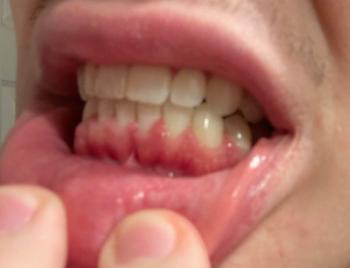
Patients with lower front gum inflammation may also experience tartar buildup, periodontal disease, gum abscesses, or tooth decay. Explore these related clinical case studies.