Smile Again with Comfort and Confidence.

Is Swiss Dental Insurance Worth It in 2026? A USA Dentist Explains the Pros, Cons, Costs, and Alternatives
Language :
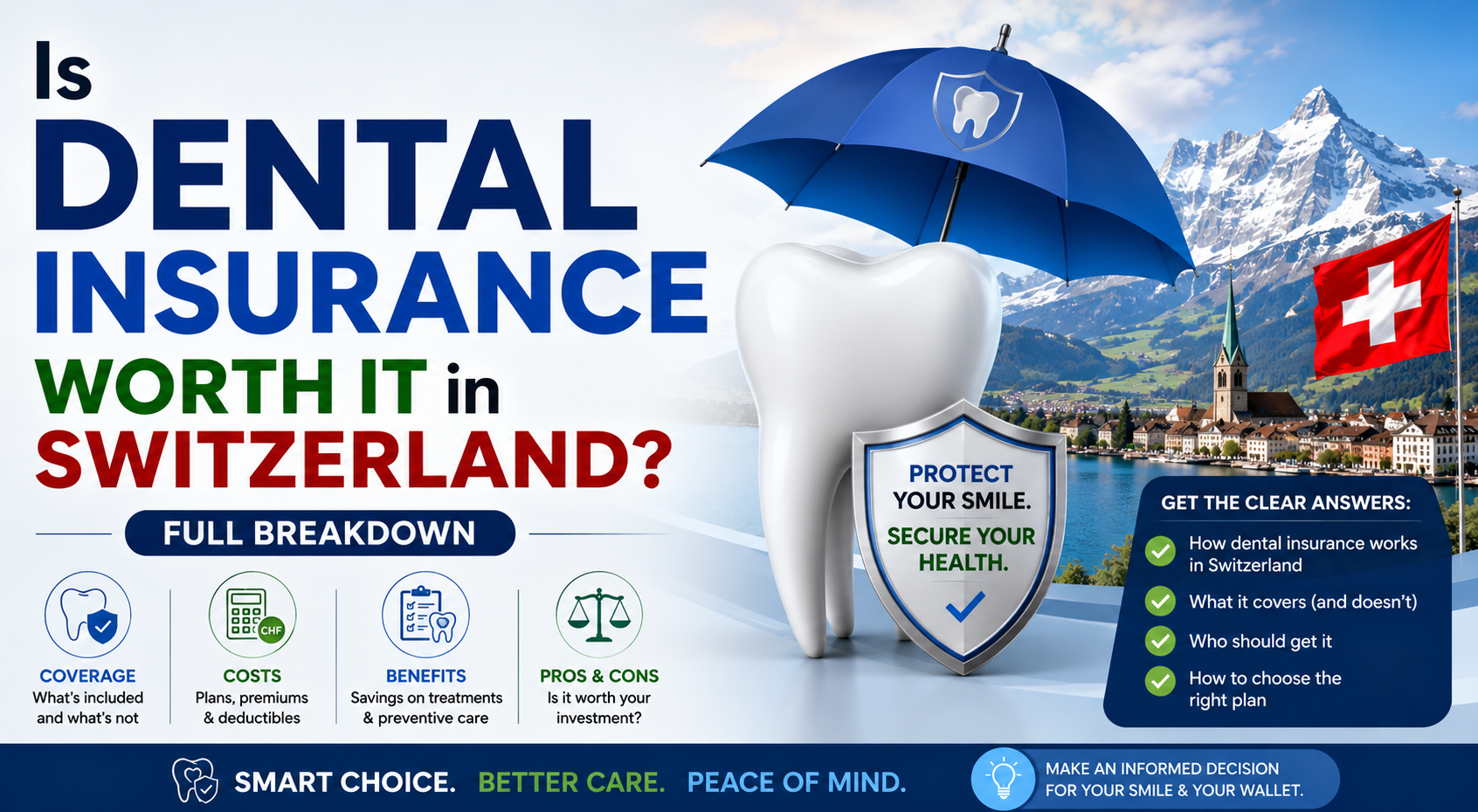
One of the most common questions I receive from patients living in Europe, expatriates, retirees, and international travelers is whether Swiss dental insurance is actually worth purchasing. The answer is not as straightforward as many people expect.
Unlike many healthcare systems around the world, Switzerland separates dental care from its mandatory health insurance structure. While Swiss residents are required to purchase basic health insurance under the KVG (Krankenversicherungsgesetz) system, routine dental care is generally not included. This means that patients are responsible for paying for cleanings, fillings, crowns, bridges, root canals, implants, and orthodontics out of their own pockets unless they purchase separate supplementary dental coverage.
As a dentist who has worked with patients from the United States, Europe, and Asia, I often explain that dental insurance should not be viewed as a healthcare necessity. Instead, it should be viewed as a financial planning tool. Whether it provides value depends largely on your age, oral health status, family situation, and future dental treatment needs.
In this guide, we'll examine Swiss dental insurance in detail, compare it with dental systems in the United States and the Philippines, discuss who benefits most from coverage, and explore why many patients are increasingly considering dental tourism as an alternative strategy.
Understanding How Swiss Dental Insurance Works
Before determining whether Swiss dental insurance is worthwhile, it is important to understand how the Swiss healthcare system handles dental care.
In Switzerland, mandatory health insurance generally covers medical treatment, hospital care, medications, and emergency services. However, routine dental care is excluded except in very specific circumstances involving severe diseases, congenital conditions, or medically necessary procedures.
As a result, most residents face three options:
- Pay entirely out of pocket.
- Purchase supplementary dental insurance.
- Use a combination of savings and selective insurance coverage.
This structure differs significantly from countries where dental insurance is commonly provided through employers or government-supported healthcare programs.
For most Swiss residents, supplementary dental insurance is optional rather than essential.
When Swiss Dental Insurance Is Worth It
There are specific situations where dental insurance can provide significant financial value.
Families With Children
Families with young children often receive the greatest benefit from Swiss dental insurance.
Orthodontic treatment is one of the most expensive dental services in Switzerland. Braces and other corrective treatments commonly cost between CHF 6,000 and CHF 10,000.
Many supplementary dental plans cover a substantial portion of orthodontic expenses, sometimes reimbursing up to 75% of treatment costs.
For example:
- Orthodontic treatment cost: CHF 8,000
- Insurance coverage: 75%
- Reimbursement: CHF 6,000
- Family out-of-pocket expense: CHF 2,000
This type of coverage can save thousands of francs.
Many insurers also encourage early enrollment. Children enrolled before age five often avoid extensive dental examinations or underwriting requirements.
Because orthodontic issues frequently emerge during adolescence, early enrollment may provide substantial long-term financial benefits.
Adults Planning Major Dental Work
Dental insurance can also be beneficial for adults anticipating significant restorative treatment.
Examples include:
- Dental implants
- Dental bridges
- Crowns
- Extensive periodontal treatment
- Root canal therapy
The key issue is timing.
Swiss insurers typically exclude pre-existing dental conditions.
If a dentist has already diagnosed a missing tooth, cavity, gum disease problem, or need for an implant before you apply for insurance, coverage may be denied for those specific treatments.
This means patients should purchase insurance before major dental problems are officially documented.
For individuals expecting future restorative work, insurance can substantially reduce costs.
Adults Over Age 50
As patients age, dental maintenance requirements typically increase.
Common issues include:
- Tooth wear
- Gum recession
- Cracked teeth
- Crown replacement
- Bridge replacement
- Implant maintenance
Supplementary insurance may help stabilize annual dental expenses and reduce unexpected financial surprises.
Many older adults appreciate the predictability that insurance offers, even when total savings are modest.
For retirees living on fixed incomes, budgeting certainty can be just as valuable as reimbursement itself.
When Swiss Dental Insurance May Not Be Worth It
Insurance is not automatically beneficial for every individual.
In many situations, paying directly for care may actually be the smarter financial choice.
Healthy Adults Under 40
Young adults with excellent oral health often receive limited value from dental insurance.
Consider a common scenario:
Annual Premium:
CHF 40 per month
Annual Cost:
CHF 480
Annual Benefits Used:
- One cleaning
- One examination
- Routine X-rays
Total Value Received:
Approximately CHF 200–300
In this situation, the patient pays more in premiums than they receive in benefits.
This is why many healthy adults choose to self-fund routine dental care rather than purchase insurance.
Short-Term Residents
Many Swiss dental insurance plans impose waiting periods ranging from six to twelve months.
If you are:
- Working temporarily in Switzerland
- Studying abroad
- Planning relocation within two years
You may not remain enrolled long enough to receive meaningful benefits.
Paying premiums during waiting periods can significantly reduce the overall value of coverage.
For short-term residents, direct payment often makes more financial sense.
Individuals With Existing Dental Problems
One of the most frustrating realities of Swiss dental insurance is the pre-existing condition limitation.
Insurance companies frequently conduct dental evaluations before approving coverage.
If you already have:
- Missing teeth
- Existing implants
- Cavities
- Periodontal disease
- Recommended crowns
The insurer may exclude those conditions entirely.
Patients often assume insurance will help pay for existing problems, only to discover that coverage applies only to future issues.
Comparing Dental Insurance Systems: Switzerland, USA, and Philippines
Understanding international differences can provide valuable perspective.
Switzerland
Basic Coverage:
None for routine dental care
Primary Model:
Private supplementary insurance
Dental Implant Coverage:
Usually limited
Patient Cost:
High
Average Premium:
CHF 20–50+ monthly
United States
Basic Coverage:
Rarely included in medical insurance
Primary Model:
Employer-sponsored or private dental plans
Dental Implant Coverage:
Often limited or excluded
Patient Cost:
Moderate to high
Average Premium:
$30–80 monthly
Philippines
Basic Coverage:
Generally not insurance-based
Primary Model:
Direct payment
Dental Implant Coverage:
Paid out of pocket
Patient Cost:
Much lower
Average Premium:
Not applicable
The Real Math Behind Dental Insurance
As a dentist, I encourage patients to perform a simple calculation before purchasing any policy.
Ask two questions:
- What are my annual premiums?
- What is the maximum annual reimbursement?
Example:
Annual Premium:
CHF 600
Annual Benefit Cap:
CHF 500
In this scenario, even if you maximize your benefits, you still lose money overall.
Insurance becomes valuable only when:
- Major procedures are expected.
- Orthodontic treatment is likely.
- Premiums remain reasonable.
- Reimbursement rates are generous.
Patients who never perform this calculation often overestimate the value of coverage.
Understanding Annual Benefit Caps
Many people focus solely on reimbursement percentages.
However, annual benefit caps are equally important.
For example:
Insurance states:
"80% coverage on implants."
Sounds excellent.
However:
Annual maximum benefit:
CHF 1,500
Implant cost:
CHF 4,500
Actual reimbursement:
CHF 1,500
Actual patient cost:
CHF 3,000
Always examine reimbursement limits before purchasing coverage.
The Pre-Existing Condition Trap
This is perhaps the most misunderstood aspect of Swiss dental insurance.
Insurance companies are not designed to pay for existing problems.
They are designed to protect against future risk.
If a dentist documents:
- Tooth decay
- Missing teeth
- Bone loss
- Gum disease
Before insurance enrollment, treatment may be excluded indefinitely.
Many patients discover this limitation only after purchasing a policy.
This is why timing is critical.
Why Dental Implants Are a Major Financial Concern
Dental implants represent one of the largest dental expenses worldwide.
In Switzerland, a single implant often costs:
CHF 3,000–5,000+
Depending on:
- Implant brand
- Bone grafting requirements
- Surgical complexity
- Clinic location
Even patients with supplementary insurance frequently pay significant out-of-pocket costs.
This expense has contributed to the growing popularity of dental tourism.
Dental Tourism and the Philippines
The Philippines has emerged as a leading destination for affordable, high-quality dental treatment.
Major cities such as:
- Manila
- Cebu
- Davao
Offer modern clinics equipped with advanced technology and internationally recognized implant systems.
Common implant brands include:
- Straumann
- Nobel Biocare
- Osstem
- Megagen
These are the same implant systems commonly used in Europe and North America.
How Much Can Patients Save?
Compared with Swiss prices, patients may save between 70% and 90% on major procedures.
Example:
Switzerland:
Single Implant = CHF 4,500
Philippines:
Comparable Implant = CHF 1,200–2,000
Potential Savings:
CHF 2,500–3,300+
For patients requiring multiple implants, full-mouth rehabilitation, or extensive restorative work, savings can become substantial.
Can Swiss Insurance Be Used in the Philippines?
In most cases, no.
Swiss dental insurers typically restrict reimbursement to approved providers and local treatment networks.
Patients receiving treatment abroad usually pay entirely out of pocket.
This means dental tourism should be evaluated independently from insurance coverage.
Many patients mistakenly assume they can combine both benefits.
The Self-Insurance Strategy
An increasing number of financially savvy patients choose self-insurance.
Instead of paying monthly premiums, they deposit the same amount into a dedicated savings account.
Example:
Monthly Premium:
CHF 50
Annual Savings:
CHF 600
Five-Year Savings:
CHF 3,000
Ten-Year Savings:
CHF 6,000
Combined with interest earnings, these funds can be used directly for future dental treatment.
For healthy adults, self-insurance often provides greater flexibility than traditional coverage.
Who Should Definitely Consider Swiss Dental Insurance?
You should strongly consider coverage if:
- You have young children.
- Orthodontic treatment is likely.
- You are over 50.
- You expect major restorative procedures.
- You plan to remain in Switzerland long term.
- You qualify before dental problems develop.
Who Should Probably Skip It?
You may want to reconsider if:
- You are under 40 and healthy.
- You have excellent oral hygiene.
- You are a short-term resident.
- You already have diagnosed dental problems.
- The annual premiums exceed likely benefits.
Expert Recommendation for Residents in the Philippines
If you currently reside in the Philippines, purchasing Swiss dental insurance generally makes little sense.
The insurance is structured around Swiss treatment costs and Swiss healthcare infrastructure.
You would likely:
- Pay premiums in Switzerland.
- Receive little or no usable benefit.
- Face reimbursement limitations.
- Encounter network restrictions.
Instead, focus on finding reputable clinics with transparent pricing and internationally recognized standards.
Cities such as Cebu and Manila offer excellent options for preventive care, cosmetic dentistry, and implant treatment at significantly lower costs than Switzerland.
Final Thoughts
Swiss dental insurance can be a valuable financial tool under the right circumstances, particularly for families with children, adults planning major restorative work, and individuals over age 50. However, for many healthy adults, the numbers simply do not justify the premiums.
The most important factors are timing, oral health status, expected treatment needs, and long-term residency plans. Before purchasing coverage, calculate annual premiums, examine reimbursement limits, understand waiting periods, and carefully review pre-existing condition exclusions.
For individuals living in the Philippines or considering dental tourism, direct payment at reputable clinics often delivers greater value than maintaining expensive foreign dental insurance policies.
As with any financial decision, the best choice is not necessarily the one with the most coverage—it is the one that provides the greatest value for your specific dental needs, lifestyle, and long-term goals.
Can tooth extraction cause infection? Mild inflammation is normal, but increasing swelling, fever, or severe pain may indicate infection. Learn more about post-extraction infection warning signs in this detailed guide.
Book a consultation with our Cebu dental specialists for proper evaluation and care.
Ready to get expert guidance?
If you’re experiencing severe pain or delayed healing, book a consultation with our Cebu dental specialists to get proper evaluation and care.
Consultation or contact page .
Book a Consultation
For severe discomfort or delayed healing, book a consultation with our Cebu dental specialists today.
Looking for a dentist? Browse our Cebu dental directory to find trusted clinics near you.
Medical Review and Clinical Basis
This article is based on clinical dental guidelines and real patient recovery patterns observed after tooth extraction procedures. The information reflects common post-extraction healing stages, including normal clot formation, gum tissue repair, and signs of possible complications such as dry socket or infection.
While mild discomfort is expected after a dental extraction, worsening pain after Day 3, bad odor, exposed bone, or spreading pain may require professional evaluation. These symptoms are consistent with known post-extraction complications described in standard dental practice.
About Cebu Dental Implants
Cebu Dental Implants provides comprehensive tooth extraction, surgical procedures, and dental implant services in the Philippines. Our team evaluates post-extraction healing, manages complications such as dry socket, and advises patients on proper aftercare to prevent infection and delayed healing.
If you experience severe pain or unusual symptoms after extraction, early professional assessment is recommended to prevent further complications.
Important Medical Disclaimer
This content is for educational purposes only and does not replace professional dental diagnosis. Every patient heals differently. If symptoms worsen or do not improve within a few days, consult a licensed dentist for proper evaluation and treatment.
Author
This article was prepared by the Cebu Dental Implants content team in consultation with licensed dental professionals experienced in tooth extraction and implant procedures.
Related Clinical Cases
Patients with lower front gum inflammation may also experience tartar buildup, periodontal disease, gum abscesses, or tooth decay. Explore these related clinical case studies.



Other topics:
Other Dental Clinic