Healthy Teeth, Happy Life.

Full Mouth Rehabilitation - From Severe Decay to a Perfect Smile Transformation
Image:
Severity:
Teeth Problems:
When Severe Tooth Decay Begins to Affect Everyday Life
Severe tooth decay can affect much more than the appearance of a smile. When cavities become extensive, teeth may fracture, chewing can become uncomfortable, and infection may develop inside the tooth or around its roots. Missing teeth and advanced gum disease can further complicate treatment.
Full-mouth rehabilitation is a comprehensive dental treatment approach designed to restore oral health, chewing function, bite stability, and appearance. Depending on the patient's condition, it may involve fillings, root canal treatment, crowns, periodontal therapy, bridges, or dental implants.
The goal is not simply to create a beautiful smile. It is to control disease, preserve teeth whenever possible, and establish a result that the patient can maintain through proper oral hygiene and regular dental care.
A Short Story: An IT Manager’s Journey from Severe Decay to a Healthier Smile
This is a fictional educational story. The patient and events are illustrative, not a verified clinical case.
Mark, a 42-year-old IT manager in Cebu, spent most of his working hours troubleshooting servers, managing databases, and resolving urgent technical problems. He was good at identifying system failures, but he repeatedly postponed his dental appointments.
Over the years, frequent sugary snacks, irregular meals, and inconsistent oral hygiene contributed to his dental problems. Several teeth developed large cavities, an old filling broke, and one of his back teeth became painful when he chewed.
During video meetings, Mark became increasingly self-conscious about his teeth. Eventually, he began avoiding certain foods and chewing on only one side of his mouth.
One evening, the pain became difficult to ignore. He scheduled a dental examination.
The Dental Examination
The dentist performed a comprehensive oral examination and recommended dental X-rays to assess the extent of the decay, the roots of the affected teeth, and the surrounding bone.
The findings revealed several teeth with extensive decay, a damaged restoration, and possible involvement of the dental pulp in one tooth. The dentist also assessed Mark's gums, bite, and remaining healthy tooth structure.
Rather than recommending that every damaged tooth be extracted, the dentist explained that each tooth needed an individual assessment.
Some teeth might be restored with fillings or crowns. A tooth with irreversible pulp damage might require root canal treatment followed by an appropriate restoration. A tooth that could not be predictably restored might need extraction.
Mark finally understood that comprehensive dental care required a planned sequence of treatments rather than a single cosmetic procedure.
Building a Personalized Treatment Plan
The dentist divided Mark's treatment into manageable phases:
Phase 1: Control pain and disease
The priority was to address urgent dental problems, assess any infection, and stabilize teeth where possible. Professional cleaning and gum treatment were planned according to his periodontal condition.
Phase 2: Preserve restorable teeth
Teeth with cavities were evaluated for appropriate fillings or other restorations. A tooth with pulp damage could require root canal treatment if it remained restorable. A crown might be needed to protect a significantly weakened tooth.
Phase 3: Replace teeth when necessary
If a tooth could not be saved, the dentist discussed extraction and suitable replacement options. Depending on bone support, gum health, medical history, and patient preference, these could include a bridge, removable partial denture, or dental implant.
Phase 4: Restore the bite and appearance
Once active disease was controlled, the dentist assessed how the teeth fitted together and planned the final restorations. The objective was to achieve comfortable chewing, appropriate bite contacts, and a natural-looking smile without unnecessary removal of healthy tooth structure.
The Result: A Healthier Foundation for a Better Smile
Over the course of his individualized treatment, Mark learned that restoring his teeth was not merely a cosmetic investment. It was also about reducing pain, improving chewing, and protecting the teeth that could still be saved.
His final results depended on the condition of each tooth, the response of his gums, and the success of the selected treatments. Regular check-ups and daily oral hygiene became essential parts of maintaining his rehabilitation.
Mark's experience taught him an important lesson: even people who are skilled at managing complex technical systems can neglect their own health. Recognizing a problem early and following a structured treatment plan can help prevent further complications.
What Does Full-Mouth Rehabilitation Involve?
Full-mouth rehabilitation is not one standardized procedure. The dentist combines appropriate treatments based on the patient's clinical findings.
1. Comprehensive Examination and Diagnosis
The initial assessment may include:
-
Examination of cavities, fractured teeth, and old restorations.
-
Evaluation of gum inflammation, periodontal pockets, and bone support.
-
Dental X-rays when clinically indicated.
-
Assessment of tooth mobility, bite alignment, and missing teeth.
-
Review of medical history, medications, oral hygiene, and caries risk.
Additional imaging or diagnostic procedures may be appropriate when complex restorative or implant treatment is being considered.
2. Treatment of Severe Tooth Decay
The treatment depends on how much healthy tooth structure remains and whether the pulp is affected.
-
Small or moderate cavities: Appropriate fillings may restore the damaged tooth.
-
Extensive structural damage: A crown or another suitable restoration may be recommended when enough healthy tooth structure remains.
-
Pulp inflammation or infection: Root canal treatment may be indicated if the tooth can be predictably restored.
-
Non-restorable teeth: Extraction may be necessary when the tooth cannot be saved safely or predictably.
The American Dental Association recommends evidence-based approaches to caries removal and restoration. Preserving healthy tooth structure is important whenever clinically appropriate. https://www.ada.org/resources/research/science-and-research-institute/oral-health-topics/caries-management-clinical-practice-guidelines
3. Gum Disease Management
Healthy supporting tissues are important for long-term restorative success. Depending on the diagnosis, treatment may include professional scaling, root planing, improved home care, and additional periodontal treatment when indicated.
Gum disease should not be assumed to be present simply because teeth are discolored or decayed. It requires a proper clinical assessment.
4. Crowns, Bridges, and Dental Implants
Different restorative options serve different purposes.
-
Dental crowns cover and protect appropriately selected damaged teeth.
-
Dental bridges replace missing teeth by attaching artificial teeth to supporting teeth or other suitable structures.
-
Dental implants support replacement teeth when the patient is an appropriate candidate.
Implants are not automatically the best choice for every missing or damaged tooth. Bone volume, gum health, medical considerations, treatment costs, and long-term maintenance all influence the decision.
How Long Does Full-Mouth Rehabilitation Take?
Treatment time varies considerably. Some patients can complete straightforward restorative treatment within a relatively short period, while complex cases may require several months or longer.
The schedule depends on the number of affected teeth, the presence of infection, the need for root canal treatment or extractions, periodontal healing, implant integration, and laboratory fabrication of restorations.
A dentist should provide a realistic timeline after completing the examination and discussing the treatment sequence. A dramatic before-and-after appearance does not establish that the same results or timetable are achievable for every patient.
Frequently Asked Questions
Can severely decayed teeth still be saved?
Sometimes. A dentist evaluates the remaining tooth structure, root condition, periodontal support, and extent of infection. Some teeth can be restored, while others have a poor prognosis and may require extraction.
Does full-mouth rehabilitation always require dental implants?
No. Rehabilitation may use fillings, crowns, bridges, dentures, or implants, depending on the patient's needs. Some patients retain most or all of their natural teeth.
Can a crown repair a tooth with severe decay?
A crown may restore a severely damaged tooth when the remaining structure and supporting tissues are suitable. If the pulp is irreversibly damaged, root canal treatment may be necessary first. A crown cannot make every non-restorable tooth salvageable.
Are antibiotics enough to treat a dental infection?
No. Antibiotics alone do not remove tooth decay or eliminate the underlying source of most dental infections. Definitive treatment may require drainage, root canal treatment, or extraction. Antibiotics are reserved for appropriate clinical indications, particularly when infection is spreading or systemic involvement is present.
Is full-mouth rehabilitation painful?
Discomfort varies by procedure and individual. Local anesthesia and other appropriate pain-control measures can help manage treatment discomfort. Some temporary sensitivity or soreness may occur afterward, and persistent or worsening symptoms should be assessed by the dentist.
How can patients protect their new restorations?
Brush twice daily with fluoride toothpaste, clean between the teeth every day, reduce frequent exposure to sugary foods and drinks, and attend individualized dental maintenance visits. Patients who grind their teeth may benefit from a professionally assessed protective appliance.
When to Seek Urgent Dental Care
Do not delay professional assessment if you have severe or persistent tooth pain, a broken tooth with significant pain, pus, or swelling around a tooth.
Seek emergency medical care immediately if facial or neck swelling is rapidly increasing or you develop difficulty breathing, swallowing, or speaking. Fever with facial swelling or other signs of spreading infection also requires urgent assessment.
Final Thoughts
Full-mouth rehabilitation can help selected patients regain comfortable chewing, improve the appearance of their teeth, and restore damaged dental structures. Successful treatment begins with accurate diagnosis, control of active disease, preservation of teeth whenever feasible, and a realistic, individualized plan.
For patients with severe tooth decay, the most important first step is not choosing a crown, veneer, or implant. It is obtaining a comprehensive examination from a qualified dentist who can explain the available options, expected benefits, limitations, costs, and long-term maintenance requirements.
Medical disclaimer: This article is for general educational purposes only and does not replace an in-person dental examination, diagnosis, or individualized treatment advice.
Full Analysis and Diagnosis
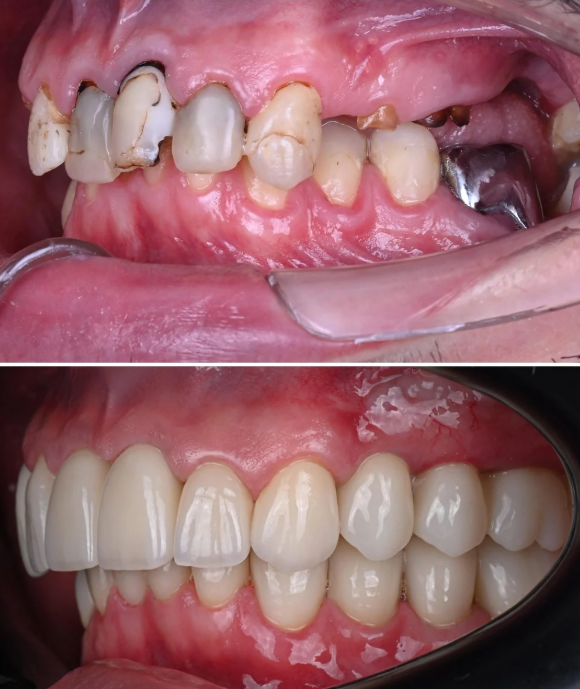
Upon examining the two images (before and after):
Before Treatment (Top Image):
-
Severe tooth decay and discoloration: Multiple teeth show deep caries and enamel loss, particularly on the upper front and premolar areas.
-
Fractured crowns and metal restorations: Indicate previous dental work that has failed or aged significantly.
-
Gum inflammation: Swelling and redness suggest chronic gingivitis or periodontal disease.
-
Malalignment and bite collapse: Uneven occlusion with possible overclosure due to missing posterior support.
-
Possible pulp exposure or infection: Pain reported by the client could indicate irreversible pulpitis or periapical involvement.
After Treatment (Bottom Image):
-
Complete prosthetic rehabilitation: New ceramic or zirconia crowns/veneers appear to have restored form, color, and bite alignment.
-
Healthy gum contour: The gingiva looks pink and firm, showing successful periodontal healing.
-
Proper occlusion and esthetics: Teeth now exhibit correct height, alignment, and natural translucency.
Treatment Process Overview
-
Initial Phase (0–7 days):
-
Deep cleaning (scaling and root planing) to control infection.
-
Root canal therapy on infected teeth.
-
Temporary crowns to restore bite and function.
-
-
Rehabilitation Phase (7–14 days):
-
Tooth preparation and impression-taking for permanent crowns.
-
Fitting and cementation of all-ceramic restorations.
-
Occlusal adjustments for comfort and bite stability.
-
Estimated Healing and Adjustment Time
-
Soft tissue (gum) healing: 10–14 days post final cementation.
-
Full bite adaptation: Up to 4 weeks for muscles and joints to fully adjust.
-
Sensitivity and mild discomfort: Common for 1–2 weeks as tissues settle.
If Pain Persists Beyond 14 Days
Possible causes include:
-
Occlusal high spot: Crown too high, causing pressure.
-
Residual infection under a crowned tooth.
-
Gingival irritation due to cement residue or improper margins.
-
Bruxism (night grinding) stressing the new crowns.
When the client first came in, they said:
“Hi, my teeth hurt. I can’t eat properly anymore.”
Upon close examination, severe dental decay and multiple broken crowns were found. The front teeth had deep cavities and worn enamel, while the back teeth showed metal restorations that had failed over time. The gums were swollen, indicating possible infection beneath the roots — a classic case of chronic pulp and periodontal damage.
The bite had also collapsed due to missing teeth and uneven alignment. This caused jaw strain, facial asymmetry, and constant sensitivity.
Step-by-Step Treatment Process
Infection Control and Cleaning (Days 1–7)
-
Deep dental cleaning to remove all plaque, tartar, and infection.
-
Root canal treatments on painful and infected teeth.
-
Temporary crowns placed to restore comfort and basic chewing ability.
Tooth Preparation & Design (Days 8–10)
-
Teeth reshaped and scanned for crown fitting.
-
Digital smile design used to match shape, color, and proportion.
-
Gums allowed to rest before final placement.
Permanent Crowns and Bite Alignment (Days 11–14)
-
Final ceramic and zirconia crowns installed for maximum durability.
-
Bite checked and refined for even contact.
-
Pain and pressure points eliminated during final fitting.
Related Clinical Cases
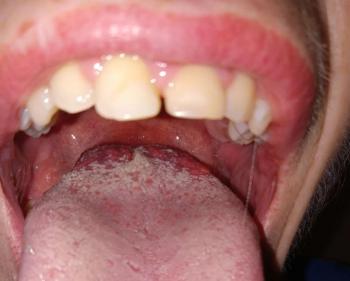
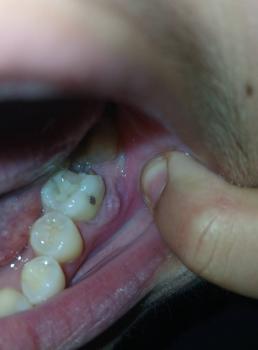
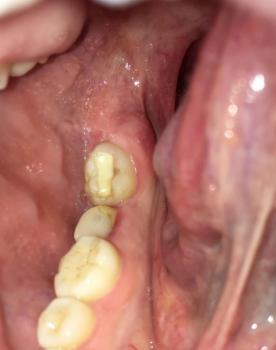
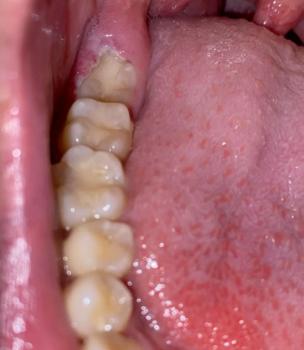
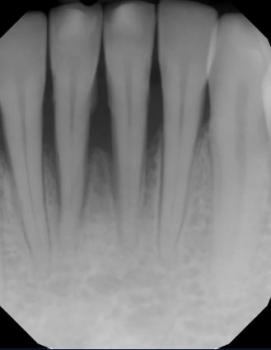
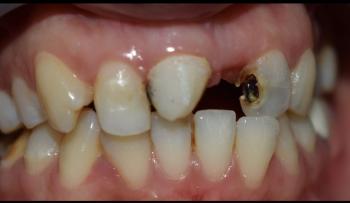
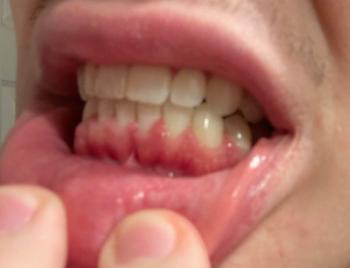
Patients with lower front gum inflammation may also experience tartar buildup, periodontal disease, gum abscesses, or tooth decay. Explore these related clinical case studies.
Other topics:
Other Dental Clinic